Showing posts with label article. Show all posts

Friday, September 26, 2014

Texas homecoming queen gives crown to bullied friend

NBC
Your warm and fuzzy story of the day involves hateful high-schoolers and a homecoming queen with a heart of gold.

Some mean girls at Grand Prairie High School in North Texas thought it would be funny to make their classmate, Lillian Skinner, think that she had been nominated for homecoming queen.

“They make fun of my teeth, my hair — you know I have short hair — people call me Chucky and buck teeth,” Lillian told NBC News.

But when the two girls who had really been nominated for queen heard about the cruel prank they decided that if either of them won, they would give the crown to Lillian, their friend since 7th-grade choir.

And they did.

When Anahi Alvarez’s name was called at the Sept. 12 football game, she handed the crown to her longtime friend, who felt like she was in a dream.

“It was just a way that we could, we’re gonna make Lilly feel good, we’re going to let her know that she deserves the crown,” Anahi told NBC.

“Whoever told her that she’d been nominated — they’re going to see that there’s people that are going to stop them, that are going to stand up for all the innocent people that can’t defend themselves.”

The act of kindness has gone viral on Twitter and Facebook, where millions have read of it. And this week Anahi, Lillian and Naomi Martinez, the other girl nominated for queen, asked the school’s students to sign a pledge against bullying.

Told you. Hearts of gold.

Source


Read more here: http://www.kansascity.com/entertainment/ent-columns-blogs/stargazing/article2241654.html#storylink=cpy

Saturday, October 26, 2013

How the Pope could tear apart the religious right


As political spectators gawk at the “civil war” currently engulfing Congressional Republicans in the wake of the government shutdown, a potentially more consequential rift is beginning to form within the party’s traditional coalition of conservative Christian value voters. Blame the Vicar of Christ.

In a series of interviews earlier this year, Pope Francis repeatedly signaled a desire for his flock to disengage from the culture wars — complaining that the church had become “obsessed” with issues like marriage and abortion, actively seeking common ground with atheists, and even appearing to flirt with moral relativism. While the new tone coming out of the Vatican has drawn plaudits from progressives, it has also driven a wedge into the powerful political alliance between conservative Catholics and Evangelical Christians that’s been instrumental in electing hundreds of Republicans over the past four decades.

Bryan Fischer, a senior analyst at the American Family Association and devout Christian, said he was “disappointed and alarmed at some of the things the pope said” — a sentiment shared by many of the protestant culture warriors on America’s religious right.

“It raises questions in our mind because the Catholic Church has always been a faithful shoulder-to-shoulder ally to social conservatives in the fight to protect unborn human life” and the sanctity of marriage, Fischer said. “We simply have questions of whether we’ll be able to count on the Catholic Church to be comrades-in-arms to continue to fight these battles.”

Russell Moore, president of the Southern Baptist Ethics and Religious Liberty Commission, struggled to find theological justification for the pope’s comments. In a column earlier this month, he concluded that Francis was guilty of “severing the love of God from the holiness of God” — even as he mused that he was not interested in “refighting the protestant reformation.”

And when Francis seemed to suggest that salvation was possible for atheists as long as they lived moral lives, Christian Broadcasting Network reporter David Brody tweeted, “Say what? Catholics please explain this… Evangelicals are NOT kosher with this.”

From the start of their unlikely alliance, Catholics and evangelicals have always made for strange bedfellows. Before the 1970s, American protestants and Roman Catholics had been locked in a religious rivalry that sometimes expressed itself in nuanced theological debates and just as often devolved into pulpit-pounding sermons rife with fire and brimstone. Considerable swaths of each faith were convinced the other side was going to hell.

It wasn’t until the Supreme Court’s Roe v. Wade decision — and the sexual revolution that presaged it — that the two religions were united in an awkward but enduring marriage of convenience. For the better part of 40 years, Evangelicals and Catholics stood side by side battling the encroachment of secularism, the collapse of traditional sexual ethics, and the general rot of American culture. When Jerry Falwell formed the Moral Majority, he insisted that Catholics be among the leadership. And the coalition only became more focused and influential after the Soviet Union collapsed, when politically-minded priests in the U.S. who had spent much of their energy railing against the evils of communism shifted their homilies to pro-life commentary.

Their combined political influence became a driving force in the Republican Party, forming a movement that launched a thousand HBO boycotts and helped elect George W. Bush. Then Pope Francis came along.

To be clear, conservative Catholics in the U.S. are not exactly laying down their weapons of culture war and withdrawing from the battle en masse. They believe the secular media have blown the pope’s recent remarks out of proportion, and they note that the church’s doctrine has not changed. Matt Smith, president of the conservative organization Catholic Advocate, said there is nothing new in what Francis has been saying. “It’s hate the sin, love the sinner,” he said. “He’s encouraging folks to make sure that we’re still loving the person. In no shape or form is he endorsing same-sex marriage.”

But Francis’ approach has managed to resurface evangelical activists’ long held — and long concealed — skepticism toward their Catholic peers. It’s a dynamic that was on display earlier this month at the Values Voter Summit in Washington.

Asked if he was concerned that the new pope would lead catholics away from political engagement on social issues, Family Research Council President Tony Perkins demurred: “I’ve only seen the articles. You cannot base a conclusion on one article, one statement, one speech. It’s cumulative.”

But then he offered what seemed like a veiled admonishment: “Those that subscribe to Biblical orthodoxy know what the teachings are when it comes to sexual morality. You can’t change that unless you ignore or change the word of God.”

Meanwhile, away from the gaggle of reporters, Tracy Pyland, a born again Christian and Maryland mother of five who came to the conference with her husband and two youngest children, was less diplomatic when asked about the pope’s recent comments.

“That’s infuriating. That man needs to read his Bible,” she said.

She hastened to add, “I don’t mean any disrespect, but that man garners a lot respect and he should earn that respect. He should not have done that… He’s not doing the job he was given, which is to represent Christ in a positive light.”

Friday, October 11, 2013

Pope Francis is serious about cleaning up the Catholic Church

In some respects, the Catholic Church is like any giant, multinational organization. It has some amount of corruption, bureaucratic dysfunction, even crime. But it's also a religious institution, which we generally (and rightly) hold to higher ethical standards than, say, Coca-Cola or ExxonMobil. The Catholic Church is also different in that its chief executive, the pope, has more control over his organization than any CEO.

Since his election in March, and especially in the past few months, Pope Francis has really shaken up the tone and timbre of the church, particularly in its attitude toward controversial issues like gay marriage and abortion. And people have noticed. Even observers prone to be more critical of the Holy See, like The Daily Show's Jon Stewart, are cautiously welcoming a new morning at the Vatican. On Wednesday, President Obama shot some praise the pope's way, too. "I have been hugely impressed with the pope's pronouncements," Obama told CNBC, when asked.

Obama added that Pope Francis' open-armed "spirit, that sense of love and unity, seems to manifest itself in not just what he says, but also what he does." But that touches on one of the criticisms (or accolades, depending whom you ask) of the new pope: He says all the right things, but outside of his personal habits and interactions, he isn't really backing up those words with action.

That may be changing.

On Tuesday, the 125-year-old Vatican Bank — formally called the Institute for Religious Works —released its first earnings report. Ever. That's not all Pope Francis' doing. He has cracked down on financial malfeasance and created a new commission to audit the bank, but Italian financial authorities got the ball rolling in 2010 by seizing $30 million in bank assets and investigating its (now former) president in connection with money laundering. Pope Benedict XVI set up a Financial Intelligence Authority to keep the bank honest in 2011.

Also this week, Pope Francis met with a special council of eight cardinals he has impaneled to make recommendations on how to reform the church, which possibly includes a big shake-up of the Vatican's infamous Curia, or bureaucracy. It was the group's first meeting. On Wednesday, Vatican spokesman Rev. Federico Lombardi called the summit "encouraging," but said the council wouldn't release any documents or public statements.

The same day, however, Andrea Tornielli at La Stampa's Vatican Insider got a pretty big scoop: The pope proposed to his gathered cardinals a revamping of the way the church litigates sexual abuse allegations against priests and other Catholic clergy. The idea is to set up regional or country-specific ecclesiastical courts that would handle sex abuse cases. This is potentially a very big deal.

"Although Pope Francis has earned a reputation for taking on tough questions and shaking up the status quo," says John Allen Jr. at the National Catholic Reporter, "so far he's been relatively quiet on at least one issue that's arguably done greater harm to the image and morale of the church over the last decade than any other: The child sexual abuse scandals." Allen explains what the new system would look like:
At the moment, church law requires bishops to submit charges of abuse against clergy to the Congregation for the Doctrine of the Faith in Rome, which determines if there's sufficient basis to proceed. After its review, the congregation generally sends the case back to a local court, but those bodies sometimes lack the personnel and resources to handle [such cases] efficiently. 
The idea behind national or regional tribunals would not only be to ensure that cases are processed swiftly, but also to enforce a uniform standard of justice, so that outcomes don't hinge on where the case originated. If Francis makes creating such tribunals a priority, it would be read as a clear signal that he wants to fill the gaps in the church's response. [National Catholic Reporter]
If, on the other hand, the pope takes a lesser step, like transferring authority over sex abuse cases from the powerful Congregation for the Doctrine of the Faith to the sometimes inefficient Roman Rota court, says Allen, "insiders might read it as downgrading the importance of the effort" to combat child sex abuse. Francis could also take bolder measures, like creating a new Vatican department focus on sexual abuse, or start tossing out bishops who mishandle abuse cases.

But that might be a step too far, even for this pope. "He has only been in the job for six months, and his promise of reforming the Curia may just be the tip of the iceberg," says Barbie Latza Nadeau at The Daily Beast. His moves so far — replacing Secretary of State Tarcisio Bertone, stopping the practice of granting elite priests the title of "monsignor," and suggesting that divorce and abortion may not bar contrite Catholics from taking Communion — have already "upset many of the Vatican's traditional insiders," Nadeau adds.
When the G-8 cardinals finish their reform summit, they will accompany Francis on his Assisi pilgrimage before going back to their home diocese. Then the pope is expected to get to the real work of tough reform, using the summit as a launching pad. No one knows exactly what those reforms will look like, or whether they will eventually dip into doctrine, but one thing is clear: The road ahead will not be an easy path to follow, even for a pope as popular as this one. [Daily Beast]
Still, in the church, words and tone matter. Giving wide-ranging, unguarded interviews to atheists and Jesuits makes a difference. For conservatives dismayed by Francis' freewheeling papacy, says Matthew Schmitz at First Things, "it is no use pretending there's nothing significant in this new approach."
Francis really does mean to reform the Curia and renew the church, tasks that are both urgently needed and impossible to do in a way that will please all. His initial moves in this area are overwhelming positive, I think, but only time will tell. Pope Francis wants a dialogue with the world conducted in the manner of an after-dinner conversation. We might question Francis' choice, but demanding precision once it's been made is as pointless and ill-mannered as quibbling after dessert. [First Things]
Source

Tuesday, August 6, 2013

Shocking ways that America leads the world

People uninterested in change and progress tend to cling to the jingoistic fantasy that America is an exceptional country. Often this implies that the U.S. is somehow superior to other nations. Some, like the neocons, have taken the idea of exceptionalism to mean that America should be above the law and that other countries should be remade in our image. Others, like conservative evangelicals, believe that America's supposed exceptionalism is God's will.

In recent decades, America has indeed pulled ahead of the global pack in a number of areas. But they aren’t necessarily things to go waving the flag over. If we can't address the following trends, we'll end up snuffing out the things that truly have made the country great, like opportunities for mobility and a decent social safety net.

1. Most expensive place to have a baby. In the U.S., having a baby is going to cost you, big-time, before you even get that bundle of joy home. The New York Times reports that on average, a hospital delivery costs $9,775 — and make that $15,041 if you’re having a Cesarean. No other first-world country on earth expects new parents to shell out that kind of money just for the privilege of procreating.

You might think insurance would help. You’d be wrong. A staggering 62 percent of private plans come with zilch in the way of maternity coverage. Mothers-to-be are dragged through what the Times calls “an extended shopping trip though the American healthcare bazaar” where they try to figure out the cost of things like ultrasounds and blood tests. Pricing is often opaque and widely variable, and it’s common for mothers to receive treatments they don’t necessarily need. Even when insurance does cover maternity care, between the deductibles and co-insurance fees, women can expect to shell out thousands in out-of-pocket expenses: an average of $3,400.

Do American mothers get some kind of unusual care for all that dough? Nope. They receive the same services moms receive in other first-world countries; they just pay for them individually and at higher rates.

2. Obesity. The U.S. has been ranked as the most obese country in the world, though a recent report by the U.N. says that Mexico is pulling ahead of us. Not surprisingly, obesity is considered a national health crisis and contributes to an estimated 100,000 to 400,000 deaths in the U.S. per year. In 2010, the Centers for Disease Control and Prevention reported that 35.7 percent of American adults are obese, and 17 percent of American children. More than two-thirds of American adults are either overweight or obese.

Americans are ballooning for a number of reasons, including our fondness for fried food, sugary drinks, cheap, pre-packaged foods, processed meats, our sedentary lifestyle, particularly television-watching, too little sleep, and a lack of exercise. Obesity is associated with diabetes, heart disease, complications in pregnancy, strokes, liver disease —the list goes on and on. The obesity epidemic is also responsible for increased healthcare use and expenditures. Kentucky is the most obese state, and Colorado is the least obese.

Researchers predict that the cost of obesity in the U.S. is likely to reach $344 billion by 2018.

3. Anxiety disorders. Americans are freaking out. Researchers have looked at the prevalence of various types of mental illness around the globe and found that the U.S. is the world champion in anxiety. According to the 2009 results of the World Health Organization’s World Mental Health Survey, 19 percent of Americans were found to experience a clinical anxiety disorder over a given 12-month period. The National Institutes of Health puts the number at 18 percent of adults, which means that at least 40 million Americans are suffering.

Researchers have found that anxiety disorders, which include several varieties such as generalized anxiety disorder, obsessive-compulsive disorder, and post-traumatic stress disorder,take a tremendous toll on the population. Often, anxiety disorders are associated with other ailments such as chronic pain and they tend to limit the sufferer’s participation in daily activities. The disorders are more prevalent in women, and only a third of sufferers receive treatment specifically addressed at anxiety.

The Anxiety and Depression Association of America finds that people suffering from anxiety disorders are up to five times more likely to go to the doctor in general and six times more likely to be hospitalized for psychiatric disorders than others.

Thursday, July 25, 2013

Kate Middleton probably spent less on childbirth than the average American

In case you hadn't heard, Kate Middleton recently had a baby boy. The Duchess of Cambridge gave birth at the private Ludo Wing of St. Mary's Hospital in central London, which, according to The Daily Mail, includes complimentary breakfast, satellite TV, internet access, and a comprehensive wine list.

The cost for such royal treatment?
A natural birth is pegged at £4,965, or $7,621, for a one-night stay, with additional nights costing an extra £1,000 each. A long stay by the Duchess could have cost her a whopping £10,000, or just over $15,000, notes The Daily Mail.

That might seem like a princely sum, except when you consider that it is less than what the average U.S. hospital charges to deliver a baby in a non-exclusive room that, presumably, doesn't offer a selection of fine wines.

Elisabeth Rosenthal, who investigated the exceptionally high costs of U.S. childbirth for The New York Times last month, expressed her royal confusion on Twitter:

Rosenthal is referring to the average total price charged for a vaginal delivery in the United States, which was $30,000, with the average commercial insurer paying $18,329. Granted, we don't know what exactly is included in the Ludo Wing's $7,621 "normal delivery package," but it's still a luxury, private birthing suite charging less than the average U.S. hospital.

If we set aside the royal family, the picture gets even more depressing. At $9,975, the average American woman spends more than triple on childbirth than what the average British woman does. That is despite the fact, according to Rosenthal's report, that women do not get better care in the United States than they do in other developed countries.

The reason American deliveries cost so much is that pregnancies are billed item by item, unlike in Europe, where hospitals charge a flat free for childbirth.

"We’ve created incentives that encourage more expensive care, rather than care that is good for the mother,” Maureen Corry, executive director of Childbirth Connection, told Rosenthal.

Then, of course, there is the issue of what uninsured American women have to pay for childbirth. Renée Martin, whose health insurance didn't include maternity coverage, told The New York Times that her hospital quoted her a price as high as $45,000 for total maternity care.

Unlike Kate Middleton, however, she couldn't have the Royal Family pick up the tab.

Monday, July 8, 2013

Reading slows cognitive decline


The more time you spend on cerebral activities, the better prepared your brain is to withstand the ravages of age.

That’s the takeaway from research just published in the journal Neurology that confirms—and helps explain why—people who habitually read, write, and otherwise process information are less likely to experience mental declines late in life.

The study suggests that while a mentally active lifestyle may not prevent formation of the plaques and tangles associated with Alzheimer’s disease, it makes it less likely their presence will impair one’s mental functioning.

“Habitual participation in cognitively stimulating pursuits over a lifetime might substantially increase the efficiency of some cognitive systems,” writes a research team led by neuropsychologist Robert Wilson of Chicago’s Rush University Medical Center. This efficiency apparently counteracts the often-devastating effects of nervous system diseases.

Wilson and his colleagues describe a study of 294 elderly people, who began by reporting their level of cognitive activity—not only at the present time, but also during childhood, young adulthood, and middle age. They specifically noted how often they performed such activities as reading books, writing letters, or visiting a library at each stage of their lives.

Their cognitive functioning was then examined on a yearly basis up until their death. Tests were given to measure a variety of skills, including long-term memory, working memory, and visuospatial ability. Finally, within hours after their deaths, their brains were removed and examined for evidence of various diseases.

The key result: “More frequent cognitive activity can counterbalance the cognitive loss associated with neuropathological conditions.”

In the words of an accompanying editorial, the researchers found that “individuals with high lifetime levels of cognitive activity show slower decline, despite the presence of underlying pathology.”

“Interestingly,” the editorial continues, “both more frequent current and early-life engagement in cognitively stimulating activities were shown to independently slow late-life cognitive decline.” This suggests it’s never too late to start, but earlier is better.

A study published last year also reported a link between mental activity and old-age neurological disorders. It found people who were mentally active throughout their lives had, in their later years, lower levels of beta-amyloids—clumps of proteins that build up into the plaques associated with Alzheimer’s Disease.

That would certainly be a good thing. But even if it’s ultimately disproved, this new research suggests regular mental stimulation is still extremely valuable in that it reduces the insidious ability of such neurological disorders to impair our thinking.

Either way, the studies point toward the same prescription. As the Neurology editorial notes, we all “ask ourselves from time to time, can we do anything to slow down late-life cognitive decline? The results suggest yes—read more books, write more, and do activities that keep your brain busy, irrespective of your age.”

Saturday, October 20, 2012

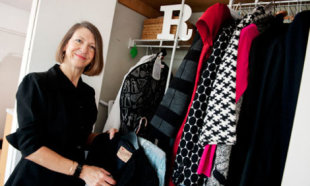
Woman gives up shopping for a year

Experts say that one sure way to save money is to shop your closet; most people own more trendy clothes than they realize, and old favorites often come back in style. That's what Rebecca Smithers realized when she rediscovered an old favorite buried in the back of her closet.

It was a handmade cable knit sweater that she hadn't worn in years. Her mother had made it about 16 years before, and wearing it felt like meeting up with "an old and very special friend."

That sweater, and the reappearance of other old favorites, inspired Smithers to see if she could spend an entire year without buying new clothes. A consumer affairs correspondent for the British newspaper The Guardian, she decided to document her fashion-free New Year's resolution.

"I will even resist the temptation to buy second-hand from charity shops—including my favorite on London's Marylebone High Street," she wrote in The Guardian. "It will remain nameless here, dear readers, as it is far too good a secret to share. Even "swishing parties"—or organized clothes swaps—are out, as the idea is not to accumulate any more."

It was a decision she did not take lightly. Clothes have always played an important role in Smithers's life. Her mother was a fashion historian, and Smithers points out, "Fashion is not a trivial, fluffy thing—it is about who we are and the statements we want to make." When she was diagnosed with breast cancer in 2008, she wore bright clothes to combat dark thoughts.

"I didn't have a choice about having cancer, but I could choose how I dealt with it and being cheerful and careful about my appearance was part of my coping strategy," she told The Daily Mail. "I wanted to stand out, not fade away. When I went for treatment, there was a great bunch of nurses who would comment on what I was wearing and that made me feel like I wasn't just a cancer person—I was still me underneath."

Still, the sheer amount of clothing she already owned made the challenge of going without seem easier. She upped the ante by putting shoes, boots, underwear, and even pantyhose on her do-not-buy list, opting instead to mend holes and wear what she already had until it wore out. She inventoried her wardrobe, sorting through items stuffed in boxes, bags, and closets.

"More than 50 pairs of shoes, eight pairs of boots, 26 coats—to my embarrassment, I gave up after that," she wrote in The Guardian. "I seem to have the equivalent of a Tardis full of little black coats."

Her fashion-forward friends were horrified about her plans to stay out of stores.

"One told me that I am completely mad and cheerfully predicted that, given my love of a bit of retail therapy, I would not last out the month," she wrote.

She quickly noticed that her style has stayed the same over the years, and while her closets aren't bursting with expensive designer labels, she does have plenty of well-made, "high street" items. And not buying new clothes allowed her to focus on keeping the ones she already has in top condition.

Ten months later, she still hasn't broke her resolution.

"Friends are astonished that I am taking the trouble to mend tights laboriously (admittedly opaques rather than sheer) but it strikes me as wasteful to throw out a pair just because they have sprung a hole in the toe or heel," she noted. "So far, so good, on that front."

It turned out that summer was the easiest time to stick with the clothes she already owned. Pulling out her winter wardrobe forced her to do quite a bit mending—in the past, if moths had snacked on a sweater or two, she would simply go out and buy new ones, but now, she has to rely on skills she learned long ago.

"Fortunately my mother taught me how to darn and mend tights and socks, which I have got used to doing," she wrote.

One of the biggest challenges in her non-buying spree is finding new ways to accessorize. "I've got my eye on the luminous orange chunky scarf my daughter started knitting last year," she confessed. "It is only a square at the moment but I am an eternal optimist."

She is determined to make it through the year without giving in to the latest style temptations.

"I am heading into the last lap of what has been a life-changing exercise, and one which has definitely helped my bank balance," she wrote on Thursday. "Though I'm not looking forward to the racks of party dresses and evening wear that will be wheeled out in the run-up to Christmas."

Friday, October 19, 2012

New way police are catching people who text and drive


As more states ban texting behind the wheel in a fight against deadly driver distractions, police departments around the country have found enforcing those laws difficult, if not impossible. Now a new federal grant will pay for experimenting with the only technique shown to work so far -- spying on motorists while they drive.

The $550,000 grant announced this week by the National Highway Traffic Safety Administration will let police departments in Connecticut and Massachusetts test a variety of anti-texting moves over the next two years, from ad campaigns to roving patrols. The aim: To find "real-world protocols and practices to better detect if a person is texting while driving," said NHTSA chief David Strickland.

While 38 states ban texting behind the wheel, proving that someone is using their phone to type text rather than look at a map or some other permitted use has become a roadblock for law enforcement agencies. Only 10 states ban all hand-held cellphone use behind the wheel, so in most states with a texting ban, simply holding a phone in your hand isn't enough for a ticket; officers have to see a driver thumb type before they can pull them over. In Minnesota, police wrote 1,200 tickets for texting in 2011, compared to 200,000 for speeding, according to the Minneapolis Star-Tribune. In Scranton, Penn., police issued 10 tickets in six months after that state's ban went into effect -- and one of those was to a driver who admitted texting after a crash.

That's why the NHTSA grant will pay for "spotters on overpasses" and other roadways who could identify drivers while they type, and there's already evidence for how such a program can work. In Bismarck, N.D., police wrote 31 distracted driving tickets in two days during a crackdown earlier this month where they used unmarked, high-riding trucks or SUVs to peer down into cars and catch texters in the act. Since North Dakota bars not just texting but Internet browsing behind the wheel, officers had to see what specific apps drivers were using, with one officer telling The Bismarck Tribune that they could have written twice as many tickets, but couldn't get enough evidence.

While some safety groups have called for an outright ban of cellphone use behind the wheel, such proposals haven't gained much support in Congress or legislatures around the nation. No federal agency has the power to control what people do with smartphones while driving, and there's still an open debate about how serious a risk texting or other electronic distractions pose compared with better-known dangers such as drunk driving. Thousands of Americans have already been the victim of a motorist who should have been steering instead of typing, and the U.S. Supreme Court has said there's no expectation of privacy when driving on public roads. But if the only way to enforce texting bans involves undercover police reading cellphone screens over driver's shoulders, the debate over how to make roads safer will take a different route.

Source

Wednesday, September 19, 2012

Why you can't get a job

It’s tough to get a job if you have a criminal record. But according to a new survey of recruiters, it’s even tougher if you’ve been unemployed for two years.

In this jobless recovery, that’s not so rare. The Labor Department estimates that almost 2 million people have been unemployed for two years. Millions more have spent at least two years working part-time for economic reasons, or given up the job search entirely.

It’s bad enough that the economy added only 96,000 jobs in August, far too few to keep up with population growth. But the labor market is lurching in other, even worse ways. Millions more Americans are giving up the job search altogether, and dropping out of the labor force. Moreover, the median duration of unemployment is now at its lengthiest since the recession: four and a half months. While corporations sit on trillions in cash, they decline to fill job openings, which are paradoxically at their highest level since 2009.

Bullhorn, a large recruiting-software company, ran the anonymous survey of 1,500 recruiters and hiring managers. When it comes to long-term unemployment, job hopping, and waning skills, the news isn’t good.

According to 36 percent of recruiters, it becomes “difficult” for an applicant to find a job if he or she is unemployed for as little as six months. Twenty-one percent say that spells of joblessness shorter than six months could kill your hiring prospects. In short, “unemployment can lead to being unemployable.”

In a slack labor market, many workers survive by hopping from job to job. But even that makes an applicant look bad. The survey reports that a 55-year-old with steady employment will find it easier to find a new job than a 30-year-old who has left a company before one year of work. And that’s despite the fact that 70 percent of recruiters say that candidates in their 30s are the easiest group to place.

The biggest obstacles for an unemployed candidate? Thirty-nine percent say hopping jobs. Thirty-one percent say being unemployed for more than a year. And 28 percent say gaps in employment history. Given the shrinking labor force and the rise in marginal job attachment, those three phenomena are growing more and more common.

There’s other troubling news. Thirty-one percent of recruiters say that if your skills are “no longer in demand,” you may be screwed. Another 26 percent say the worst hiring factor is being “out of touch with modern technology” or the “modern workplace.” That should give more evidence to the controversial “skills gap,” which some puzzled economists have blamed for the slow pace of post-recession job growth. The idea is that businesses, after hemorrhaging workers amid the crisis, have learned to get by with newer technology and fewer warm bodies. Unskilled workers can no longer compete.
Finally, although most recruiters don’t think that being laid off will hurt you the most, 78 percent said that getting fired would be the “most severely damaging to a candidate’s future employment prospects.”

It’s no surprise that unemployment breeds unemployment. But when all the labor market’s specific woes line up so well with all that recruiters most fear, you begin to see why the recession’s shadow seems so long.

Source

Sunday, September 9, 2012

Yes, arcade claw games are rigged

You’ve probably always suspected that those crane games at arcades were rigged. Of course, that hasn’t stopped you from pumping quarters in and being disappointed when a plush My Little Pony fails to come out. But, sadly, your suspicions are correct. Crane games are designed not to reward skill, but luck.

Zack Baker, a video game programmer, answered the question on Quora:
Basically, most crane games are designed so the claw is randomly (and only once in many games) strong enough to let players win. Some even weaken in strength after a short time so players get close to victory only to see it slip from their grasp! Since the manuals for many skill games are available online, this is not hard to verify.
He points to the owner’s manual for the Captain Claw crane game. In the manual, it explains that the default setting is to randomly assign a strong enough claw to one in every 18 people who play. Another manual, for Panda Vending’s Treasure Centers, explains that there are multiple settings that can control the strength of the claw and the length of time it holds that strength.

Another video game expert answered a similar question on a Reddit IAmA thread. Redditors asked: Are the claws rigged? An arcade owner answered:
Yes Indeed they are!
Most machines have a CMS (Command Module Settings) which allow the owner to change a couple factors:
* Chance of winning. Win/Loose, typically 1/12 In Cali or 1/15 In Nevada!
* PSI of claw. Most claws are 5-8 PSI requiring 10-13 to grab an item. Note, the setting module for the PSI is usually manual, there are springs on the claw that have little red marks. The module will tell you which mark to tighten the spring for the desired effect
* Cost/Accepted Money. Either DBA(Dollar Bill Acceptor) or Coin
Under California law my claws are set to 1/12 which means 1/12 players will have a chance to win. The example I used before is a ‘toy’ requires 10 PSI to lift. My claw during 11/12 tries will apply 4-6 PSI, or just enough to shuffle it or barely pick it up. During the 1/12 tries the claw will apply 9-11 PSI, sometimes picking it up and dropping, some successful

So, try as you might, you’re probably not going to win that stuffed toy. Unless you’re willing to play about 18 times.

Source

Wednesday, August 8, 2012

The science behind "breaking the seal"

If you like beer, and like it in large quantities, this might be a familiar scenario: You sit down at the bar, get a beer and drink it. You drink another one. Maybe a third. Things have gone well up to this point, but now you have to pee. So you go. Once you return to your seat and keep drinking, though, it feels like you’ve crossed a point of no return, and you have to pee again and again.

You’ve “broken the seal.” After that initial pee, you seem to have to run to the bathroom every 15 to 20 minutes for the rest of the night, and the urine just won’t stop flowing. What’s going on?

Part of what makes you pee so much while boozing is that alcohol inhibits arginine vasopressin, also known as antidiuretic hormone or ADH. ADH is made in the part of the brain called the hypothalamus, and then stored and released from the pituitary gland at the base of the brain. Its job is to conserve water in the body by reducing its loss in urine. It binds to receptors on the kidneys and promotes water reabsorption, a decrease in the volume of urine sent to the bladder, and excretion of more concentrated urine.

Alcohol throws a wrench into the works, though, and blocks certain nerve channels that help get ADH secreting out into your system. Without ADH carrying on about conserving water, the kidneys don’t reabsorb water as easily and excess water winds up getting dumped into urine to leave the body. With alcohol keeping ADH from doing its job, you produce a lot more water-diluted urine, which fills the bladder quickly and makes you have to pee more often.

So, there’s really no seal to break, no dam to crack open. If anything, the damage was done when you took your first drink and started suppressing your ADH, not when you took your first pee.

Keep Going
But how come you can hold your pee just fine until that first bathroom break, and then it seems you have to go constantly?

First, it takes a little bit of time for alcohol to suppress ADH and for the kidneys to ramp up the water works. When you crack open your first beer, you may have some urine in your bladder already, but also some ADH in your system to keep things from getting out of hand. As you continue to drink, though, your ADH levels drop and your urine production increases. By the time your bladder has filled and you’re ready to go to the john, you’ve probably had a few more drinks. Your ADH is more suppressed and your kidneys are working at full tilt, so you’re going to have to go more often.

Additionally, alcoholic beverages can be a bladder irritant for many people and the carbonation of drinks like beer and champagne can cause gas and pressure that contribute to that irritation. As your bladder fills up again after the initial pee, all that irritation can create a very strong urge to pee some more and make your bladder feel fuller than it really is, sending you running to the bathroom over and over again throughout the night.

Source

Thursday, July 26, 2012

The scientific power of "awe moments"

A breathtaking view could be just what the doctor ordered. A new study from Stanford University finds that an awe-inspiring experience — or a moment that overwhelms to the point that time seems to stand still — can improve our mental state and make us nicer people overall. What exactly is "awe therapy," and why are perfectly reasonable researchers lending the concept credence? Here, a concise guide:

What kind of experiences are we talking about?
Stanford psychologists say that awe is the emotion we feel when we encounter something so beautiful that it changes our perspective, at least for the moment. That could range from finding yourself entranced underneath the northern lights to gazing out at a perfect sunset over the Pacific to feeling tiny underneath a moonlit sky full of stars.

What happened in the study?
Researchers conducted multiple experiments to see if there was a correlation between awe and happiness. Two kinds of videos were shown to participants: The "awe video" showed ordinary people encountering "vast, mentally overwhelming, and seemingly realistic images" like waterfalls, whales, and astronauts in outer space; the "happiness video" showed things like rainbow confetti falling from the air and parades of smiling, joyful people. Other experiments had people recount memories of their own trips or experiences, while another had participants read a story about climbing the Eiffel Tower and imagining what it'd be like to look out over Paris.

What was the effect?
By fixating on the moment, time seemed to slow down, making participants feel like they had more of it to spare. This led them to feel more patient, less materialistic, and more willing to help others. "People increasingly report feeling time-starved, which exacts a toll on health and well-being," says study author Melanie Rudd. The study shows that "being in the present moment elongates time perception," and makes people want to "partake in experiential goods over material ones." In short: Feeling like they had more time seemed to make them better people.

So I have to travel to benefit from awe therapy?
"Awe can be elicited by a walk down memory lane, a brief story, or even a 60-second commercial," says the Independent, so you needn't necessarily book a trip to experience a Hawaiian sunset to reap the benefits. The lesson, researchers add, "underscore[s] the importance and promise of cultivating awe in everyday life."

Source

Sunday, July 22, 2012

How the Wu Tang Clan are marketing geniuses

One of the most important singles in hip-hop history wasn’t great, or even particularly good. In fact, it was terrible. Even the most die-hard hip-hop fans probably haven’t heard “Ooh I Love You Rakeem,” the title track of Prince Rakeem’s 1991 debut EP, and there’s a reason for that.

Prince Rakeem, a cartoonish, vaguely international ladies’ man, was a character foisted on rapper Robert Diggs by his record label. The Prince had just one concern. Women loved him too much, and he rapped about it. When the EP flopped, Prince Rakeem effectively died. But it wasn’t in vain—his demise gave birth to hip-hop’s greatest supergroup: The Wu-Tang Clan.

Diggs’s failure as Prince Rakeem was actually a common career arc among his contemporaries. As Michael Skolnik, editor-in-chief of Russell Simmons’s website, Global Grind, tells it, in 1991 hip-hop was still confused about its identity.

“Rap was just starting to get commercial and the record industry was trying to sell that to Middle America,” Skolnik says. “They didn’t want to scare people.”

Looking back, the Prince Rakeem gimmick seems impossibly campy. It was a lesson for Diggs. In his attempt to sell records, he’d sanded away his edges until he resembled a bubblegum caricature—a slightly raunchier version of Will Smith. And none of that led to sales.

The record industry isn’t famous for handing out second chances. But instead of calling it quits, Diggs doubled down. For nearly two years, he meditated on how to break back into the business. Rather than cave to the record companies’ demands, Diggs dreamed of unleashing gritty, authentic hip-hop on Middle America.

Diggs’s main problem as Prince Rakeem was pretty basic. He was miscast as the suave, approachable Casanova. Far from a lothario, he was something much more interesting: a chess player from the projects who was obsessed with old kung fu movies. If he was going to resuscitate his flagging hip-hop career, he needed support. Diggs drew inspiration from one of his favorite kung fu films, Five Deadly Venoms—he wanted to stand with an army of warriors.

Back in Staten Island, Diggs decided to build a hip-hop supergroup from the ground up. He joined forces with his cousins Russell Jones (better known as Ol’ Dirty Bastard) and Gary Grice (otherwise known as the GZA) and six other friends to form the Wu-Tang Clan, a name poached from the kung fu flick Shaolin & Wu Tang. From that point forward, Diggs wasn’t Diggs anymore. He was reborn as RZA.

The Benevolent Dictator
There was only one rule in the Wu-Tang Clan: RZA was in charge. The rapper made a pact with his soldiers. He would become the de facto CEO of their musical tribe for its first five years, calling all the shots and producing all the albums. In return he promised that each member would become a famous MC in his own right. Instead of nine guys making grabs for the spotlight, the Clan would take their turns strategically, each raking in as much money as he could. RZA viewed the business plan as a high-stakes game of chess.

After getting the eight headstrong MCs to sign on to the plan, RZA started doing market research. He quickly realized the power of good branding. If he could sell a rap group the same way corporate America peddled Pepsi or Nike, he could build an empire. But how do you sell rap like soda or sneakers? The solution was simple. “From day one, Wu-Tang had a logo—its iconic W—that was pushed across as many platforms as possible and stamped on every release,” Billboard’s Benjamin Meadows-Ingram says. “Wu-Tang worked its brand in every arena, famously establishing a wide business portfolio that included everything from T-shirts to skateboards to 1-900 numbers.”

But even the world’s greatest marketing plan won’t work if the underlying product is weak. Luckily, the Wu-Tang Clan’s music was almost as revolutionary as its business model. RZA proved to be a genius as a producer. His sparse, repetitive loops sampled everything from old soul records to his beloved kung fu flicks, and the beautifully raw, eerie tracks provided the perfect canvas for the members’ rapping styles. The other eight MCs held up their end of the bargain, seamlessly slipping in and out of the beats, dropping hard-edged lyrics that managed to be aggressive and clever while tying in kung fu mythology. This wasn’t a manufactured sound—the words and music felt authentic, capturing all the harshness of the projects. Yet the tunes were catchy enough to win over suburban audiences.

The group released its first single, “Protect Ya Neck,” on its independent label in 1992, and the song became an instant hit. To keep the momentum rolling, the members plastered the W logo all over New York City and outside any venue where they performed. The single’s grassroots success had record labels salivating to sign the group.

But finding a company that would agree to rep Wu-Tang while still allowing the members to pursue solo projects was no small task. Amazingly, RZA convinced Loud/RCA to sign the act on his terms, and each rapper became a free agent.

If RZA was a chess master, the record industry was an overmatched opponent. The group’s debut album, Enter the Wu-Tang (36 Chambers), went platinum, and it kicked off a streak of incredible commercial and critical success. When the first Wu-Tang solo record, Method Man’s Tical, sold more than a million copies, the message was clear. These kung fu aficionados weren’t typical rappers, they were a force to be reckoned with.

Suddenly, there was no stopping the Wu-Tang Clan. And as promised, each MC got his moment in the sun. Raekwon’s Only Built 4 Cuban Linx… and the GZA’s Liquid Swords dropped in 1995. Both went gold and are considered hip-hop classics. Ghostface Killah followed suit with the critically lauded Ironman the next year. With the core music business thriving, the Wu-Tang Clan did what any successful brand does: it started franchising. A slew of affiliates released records of their own, and the group launched its own clothing line, Wu-Wear, grossing more than $5 million by 1998.

And with each step, RZA seemed perfectly in control. He sat perched over the enterprise, carefully timing the release of solo records and crafting beats to complement the members’ wildly different styles, from Method Man’s throaty bravado to Ol’ Dirty Bastard’s half-sung warbling. As his coauthor on The Wu-Tang Manual, Chris Norris, put it, RZA was the benevolent dictator who made the whole project work. RZA’s five-year stint as CEO culminated with 1997’s Wu-Tang Forever. The double album entered the charts at number one and eventually sold just over 4 million copies.

When RZA and his Clan mates began their assault on the record industry, branding was a foreign concept in the hip-hop world. Two decades later, rappers like Jay-Z rule over giant empires of clothing lines and energy drinks. The Wu-Tang’s novel brand-first business model has become standard practice in the hip-hop world, and with good reason. You can’t improve on perfection.

Source

Friday, July 13, 2012

Why women watch the Olympics but tune out for other sports

With the London Olympics a few weeks away, a new study shows that women will be watching the Games, but that they will likely go back to tuning out from sports after the last medal is awarded.

Since Title IX was passed in 1972, requiring that girls have equal opportunities to participate in sports at federally funded schools, more women have taken advantage of the chance to join school teams or enjoy sports recreationally. Within six years of the law’s passage, for example, the number of high school girls participating in sports jumped six fold. Marketers eager to tap into a new sports-enthused population willing to watch female athletes on television, however, has been disappointed, since this viewing audience has yet to materialize.

In a new study published in Communication, Culture & Critique, Erin Whiteside, an assistant professor in the school of journalism and electronic media at the University of Tenn., and Marie Hardin, at the College of Communication at Penn State University, explore why women may be participating in sports but not watching it on TV. The researchers interviewed 19 women aged 26 to 43 in small groups for about 90 minutes each. They asked the participants about what sports they watched on television, why they watched, and what factors influenced their viewing habits. Overall, it’s clear that despite participating in sports, women still don’t watch athletic events on television for a variety of surprisingly gender-based reasons.

“The public narrative that as more women play sports, more women are going to watch sports, is simply not happening,” says Whiteside. “And one reason for that is the role that women have in the family unit. Their role as domestic caretakers trumps their role as fan.”

In the interviews, the women, some of whom were stay-at-home moms, and others who worked outside the home, all acknowledged that household chores such as cleaning, and family responsibilities such as driving their children to school and after-school activities, took priority over watching sports on TV. And when they did watch sports, they rarely caught events in their entirety, catching sporadic bits and pieces instead. “Women’s TV sports consumption habits were more mediated by their personal schedules than by team schedules or TV schedules,” says Whiteside.

That could explain why, despite high hopes for the Women’s National Basketball Association when it debuted in 1997, broadcasters have been reluctant to air games and tournaments since the league hasn’t found an audience yet that marketers can target.

Unanimously, however, the women said they preferred watching the Olympics, because of the way the programming is packaged and delivered in compressed and easy-to-follow narratives. The vignettes that bring viewers up to date on the athletes to follow, and the relevant highlights of their personal struggles during their journey to the Games, appeal to women who don’t have time to follow athletes during an entire season, much less over several years.

But even with the Olympics, say Whiteside and Hardin, gender-based influences dictate what women watch. The participants in the study preferred the watching women in sports that featured traditionally feminine features, such as grace and elegance rather than sports in which more masculine characteristics, such as physicality and aggressive strategies drive the outcome. By far, the women said that if they watched female Olympic events, they watched sports such as gymnastics, figure skating and tennis, where a premium is placed on women’s style over their aggressiveness.

While some of the women were able to take full advantage of Title IX changes to women’s sports, the small size of the study may not reflect larger trends in how women watch sports on television, admits Whiteside. But, she says, “Thinking about the future of women’s sports, and building an audience for women’s sports, our study is not necessarily positive in that regard. The women in our study were still dependent on the father figure in terms of what they are watching.”

That means that while girls may be participating in sports at school, or even outside of school, they still aren’t watching women’s sports on television. Part of that has to do with the fact that women’s sports don’t receive the same prime time broadcasting that male sports do, but more than that, it may be that at home, viewing patterns still driven by male-dominated sports.

Source

Sunday, July 8, 2012

The furby is back

Furby is back.

After 14 years and a lengthy hibernation, Hasbro is reviving one of its most famous toys for this fall, with new technology, a hefty price tag ($60) and an app connection.

This Furby is more huggable, with soft fur that hides touch sensors, and more expressive, with rubbery ears that twitch and a pair of backlit LCD eyes with mechanical eyelids that blink, look around or respond to the sounds picked up by Furby's onboard microphone.

According to Don Cameron, a Hasbro engineer, novelty is an essential part of Furby's appeal. "You never know what Furby might do or say." For example, Furby can differentiate between the tone of your spoken language, the sound of another Furby or the rhythm of a song for dancing. Furby can understand high frequency audio codes to "talk" with your iPad or another Furby.

In case you missed the '98 Furby phenomena, the reason the five-inch robot is both beloved by children and despised by quiet-seeking adults is that it learns and changes, like a real child, talking the entire time. The more you pull Furby's tail or hang him upside down, the quicker the next stage might come. There is no off or mute switch; the only way to make the babbling stop is to leave the room or remove one of the four AA batteries.

Or you can wait for about two minutes until Furby dozes off. If Furby is bumped, those eyes may pop open, which is why there's an old model Furby still living in our attic. In other words, this is not the type of toy you want to be near on a long-distance flight.

Source

Saturday, July 7, 2012

Over-involved parents may do more harm than good

Data on the mental health effects of parenthood has been mixed — many studies have found that having kids actually makes people less happy, but a few have found the opposite. Psychologists at Virginia's University of Mary Washington wanted to find out if people's parenting philosophies influenced how their kids made them feel. They discovered that certain beliefs associated with very involved parenting did made mothers feel worse about their lives.

Study authors Kathryn Rizzo, Holly Schiffrin and Miriam Liss asked 181 moms how much they agreed with a variety of statements associated with "intensive" or highly-involved parenting. The statements included, "Although fathers may mean well, they generally are not as good at parenting as mothers," "It is harder to be a good mother than to be a corporate executive" and "Children’s needs should come before their parents’." They also gave them questionnaires designed to measure their depression, stress, and general satisfaction with life.

The researchers found that mothers who believed that that moms were naturally better and more important parents than dads — a belief they termed "essentialism" — were more stressed and less satisfied with life than moms who didn't have this belief. Believing that parenting was very hard was also associated with stress, lower satisfaction and depression. And the "child-centered" belief that parents should always put their own needs second to their children's was correlated with lower satisfaction as well.

Study co-author Miriam Liss told BuzzFeed Shift that moms who believe they're naturally better parents may refuse help from dads and others, making the moms stressed and overwhelmed. But, she noted, moms who held essentialist beliefs had lower life satisfaction even if they felt they had a lot of support from other people in their lives. This belief, said Liss, is "really problematic" and "something that we should be discouraging people from holding."

Liss was hopeful that greater awareness of the downsides of intensive parenting philosophies might make them less prevalent: "the best way to change is understanding that these beliefs aren't so good for us."

They may not even be good for children. Moms who reject help from others or sacrifice their needs for their kids may think it's just what they have to do to help their kids become healthy adults who will succeed in life. Actually, though, excessive parental involvement can cause problems for kids. And, said Liss, "if we're depressed, that's not good for our children." So while making kids the center of life may have become the gold standard for a certain set of parents, it may not really be good for anyone.

Source

Thursday, July 5, 2012

Cities are outpacing suburbs for the first time since the 1920's

Dreaming of a white picket fence? You may have to settle for a fifth-floor walk-up.

U.S. cities are growing faster than the suburbs for the first time since the 1920s. Twenty-seven of the nation’s 51 largest metropolitan areas exceeded their suburbs in population growth in the nine months between July 1, 2011, and April 1, 2012, according to census data.

“This is the culmination of a trend that’s been going on the last several years,” says William Frey, a demographer and Senior Fellow at the Brookings Institution. “Using other data sets, you can see that this trend was kind of starting already around 2007.”

But while the trends aren’t new, 2012 became the tipping point when cities finally overtook the suburbs. The data even showed growth in areas that historically had been declining in population. Midwest cities like Chicago, Milwaukee and Minneapolis all gained in population in the past year, despite in some cases a decadelong decline. Even Detroit and Cleveland showed smaller population losses than they had suffered in the 10 years prior.

But just because these cities are growing doesn’t mean that people want to be there. Experts say that even though the recent crash in property prices has made the suburbs more affordable, because of a lagging economic recovery, people can’t afford to move out of urban areas. Young families who would normally lead the exodus to the suburbs are “hunkering down” in cities, Frey says. Young professionals, especially, are living in low-rent apartments with roommates or moving in with parents rather than buying a house in the burbs.

Urban growth isn’t all bad. “The crash also gives younger people and other households a chance to give cities a second look,” Frey says. Denver, Washington, Austin, Seattle and Atlanta have become “youth magnets” — areas that have had an influx of young people looking for jobs.

Which metropolis topped the list of fastest-growing cities? New Orleans came in at No. 1, growing 4.9% to 360,740 people, reflecting an ongoing return to the area after Hurricane Katrina six years ago (the Big Easy’s suburbs grew as well). The city’s population is now at 79.2% of pre-Katrina population estimates.

Texas cities are also exploding, accounting for eight of the 15 fastest-growing urban centers. Overall, the population of U.S. cities grew 1% in 2010 and ’11, with large cities growing at an accelerated rate of about 1.3%.

Source

Saturday, June 30, 2012

Secrets from flight attendants

1. IF THE PLANE DOOR IS OPEN, WE’RE NOT GETTING PAID.

You know all that preflight time where we’re cramming bags into overhead bins? None of that shows up in our paychecks. Flight attendants get paid for “flight hours only.” Translation: The clock doesn’t start until the craft pushes away from the gate. Flight delays, cancellations, and layovers affect us just as much as they do passengers—maybe even more.

Airlines aren’t completely heartless, though. From the time we sign in at the airport until the plane slides back into the gate at our home base, we get an expense allowance of $1.50 an hour. It’s not much, but it helps pay the rent.

2. LANDING THIS GIG IS TOUGH.

Competition is fierce: When Delta announced 1,000 openings in 2010, it received over 100,000 applications. Even Harvard’s acceptance rate isn’t that low! All that competition means that most applicants who score interviews have college degrees—I know doctors and lawyers who’ve made the career switch.

But you don’t need a law degree to get your foot in the jetway door. Being able to speak a second language greatly improves your chances. So does having customer service experience (especially in fine dining) or having worked for another airline, a sign that you can handle the lifestyle.

The 4 percent who do get a callback interview really need to weigh the pros and cons of the job. As we like to say, flight attendants must be willing to cut their hair and go anywhere. And if you can’t survive on $18,000 a year, most new hires’ salary, don’t even think about applying.

3. WE CAN BE TOO TALL OR TOO SHORT TO FLY.

During Pan Am’s heyday in the 1960s, there were strict requirements for stewardesses: They had to be at least 5-foot-2, weigh no more than 130 pounds, and retire by age 32. They couldn’t be married or have children, either. As a result, most women averaged just 18 months on the job.

In the 1970s, the organization Stewardesses for Women’s Rights forced airlines to change their ways. The mandatory retirement age was the first thing to go. By the 1980s, the marriage restriction was gone as well. These days, as long as flight attendants can do the job and pass a yearly training program, we can keep flying.

As for weight restrictions, most of those disappeared in the 1990s. Today, the rules are about safety: Flight attendants who can’t sit in the jump seat without an extended seat belt or can’t fit through the emergency exit window cannot fly. The same goes for height requirements: We have to be tall enough to grab equipment from the overhead bins, but not so tall that we’re hitting our heads on the ceiling. Today, that typically means between 5-foot-3 and 6-foot-1, depending on the aircraft.

4. WE CAN BE FIRED FOR BIZARRE REASONS.

Newly hired flight attendants are placed on strict probation for their first six months. I know one new hire who lost her job for wearing her uniform sweater tied around her waist. Another newbie got canned for pretending to be a full-fledged attendant so she could fly home for free. (Travel benefits don’t kick in until we’re off probation.) But the most surprising violation is flying while ill: If we call in sick, we aren’t allowed to fly, even as a passenger on another airline. It’s grounds for immediate dismissal.

5. DIET COKE IS OUR NEMESIS!

Of all the drinks we serve, Diet Coke takes the most time to pour—the fizz takes forever to settle at 35,000 feet. In the time it takes me to pour a single cup of Diet Coke, I can serve three passengers a different beverage. So even though giving cans to first-class passengers is a big no-no, you’ll occasionally spy 12 ounces of silver trimmed in red sitting up there.

6. IF YOU TRY TO SNEAK A DEAD BODY ONTO A PLANE, WE WILL NOTICE.

You may have heard the story of a Miami passenger who tried to board a flight with his dead mother inside a garment bag. Why would someone do such a thing? Because it’s expensive to transport human bodies! Prices vary by destination, but delivering a body on a flight can cost up to $5,000. Commercial carriers transport bodies across the country every day, and because the funeral directors who arrange these flights are offered air miles for their loyalty, they’re not always concerned about finding the lowest fare.

Thankfully, I’ve never had someone sneak a deceased passenger on board, but my roommate did. She knew the man was dead the moment she saw him looking gray and slumped over in a wheelchair, even though his wife and daughter assured her he was just battling the flu. Midway through the flight, the plane had to make an unscheduled landing when it became apparent that no amount of Nyquil was going to revive him.

No one officially dies in-flight unless there’s a doctor on board to make the pronouncement. On these very rare occasions, the crew will do everything possible to manage the situation with sensitivity and respect. Unfortunately, most flights are full, so it’s not always possible to move an “incapacitated” passenger to an empty row of seats. Singapore Airlines is the most prepared. Its planes feature a “corpse cupboard,” a compartment for storing a dead body if the situation arises.

7. WE’LL ALSO NOTICE IF YOU TRY TO JOIN THE MILE HIGH CLUB.

It’s usually the long line of people waiting to use the bathroom that gives you away, and nine times out of 10, it’s a passenger who asks the flight attendants to intervene. Strictly speaking, it’s not against the law to join the Mile High Club. But it is against the law to disobey crew member commands. If we ask you to stop doing whatever it is you’re doing, by all means, stop! Otherwise, you’re going to have a very awkward conversation when you meet your cell mate.

8. WE’RE THE FIRST LINE OF DEFENSE AGAINST HUMAN TRAFFICKING.

When I started flying, I never dreamed I’d be working with the police, but it’s become an important part of the job. This new role started with Sandra Fiorini, an American Airlines flight attendant who testified to Congress about an 18-year-old male passenger carrying a newborn with its umbilical cord still attached. No mother in sight, just one bottle of milk and two diapers stuck in his pocket for the six-hour flight. When Fiorini reported her suspicions to the authorities, she got no response.

9. SENIORITY MEANS SHORTER SKIRTS.

Our tenure on the job doesn’t just determine which routes we fly and which days we get to take off; it also affects the hierarchy in our crashpad, an apartment shared by as many as 20 flight attendants. Seniority is the difference between top or lower bunk, what floor your bed is on, and just how far away your room is from noisy areas such as doors or stairwells.

Seniority even determines the length of our skirts—we can’t hem them above a certain length until we’re off probation. Afterward, it’s OK to shorten the hem and show a little leg. Some of the friskier pilots take advantage of the long hems; they know that new hires tend to be more flattered by their advances than senior flight attendants. (One senior flight attendant I know intentionally left her skirt long just to keep these guys interested!)

10. YOU’VE NEVER EXPERIENCED EXTREME TURBULENCE.

More than 2 million people fly in the United States each day, and yet since 1980, only three people have died as a direct result of turbulence. Of those fatalities, two passengers weren’t wearing their safety belts. During that same time period, the Federal Aviation Administration recorded just over 300 serious injuries from turbulence, and more than two-thirds of the victims were flight attendants. What do these numbers mean? As long as your seat belt is on, you’re more likely to be injured by falling luggage than by choppy air.

Interestingly, on some airlines, a flight attendant’s injuries in flight can’t be officially classified as an on-duty injury unless it happens during what’s known as “extreme turbulence”—where the captain loses control of the plane or the craft sustains structural damage. In both of those cases, the aircraft must be grounded and inspected. Because no one wants to ground a plane, captains are very hesitant to hand out the “extreme turbulence” label. A friend of mine who works closely with airline management said he’s never seen a pilot label rough air as “extreme turbulence.” So the next time you’re nervous about some mid-flight bumps, just take a deep breath and remind yourself, “This isn’t extreme!”

Source

Friday, June 29, 2012

Touching article

She was born nine years ago on June 20, and it was the best of times and the worst of times.

Lucy’s being here was what we had prayed for, what we had begged for. But not exactly. Because she was not the child we had imagined.

At first she was. Ten fingers, ten toes. Blond hair. Blue eyes. “Isn’t she perfect, Mom?” my daughter said, cradling her new daughter. She is, I agreed. We were all smiles.

It was the best of times. My daughter was happy. Life was good.

Minutes later, everything changed. Trisomy 21, a doctor said. Down syndrome. And Paradise was lost.

We had been in the Garden of Eden a mere 12 hours. Now we were in deep woods imagining quicksand and quagmires and animals ready to attack, our joy obliterated by fear — Where do we go? What do we do? How do we get out of here? — though not a single thing had changed.

But we had changed. We now saw with different eyes. We saw what we were told to see.

This was the worst of times.

Nobody picked up Lucy and said, “Look at the miracle she is. Look at those fingers and toes. See how she stares at you. Watch how she kicks and coos. She will be fine. Your family will be fine.”

Nobody knew what to say. Friends hugged us. Nurses looked at us with sad eyes. The doctor unswaddled Lucy’s blanket and pointed out the space between her big toe and her other toes, the single line on her palm, the skin folds near her eyes. All indicative of Down syndrome, he said.

And where we had seen only perfection minutes before, we now saw only flaws.

People with Down syndrome have low muscle tone, heart problems, hearing problems, digestive problems, and a higher incidence of childhood leukemia, he continued.

When he finally left the room, we cried.

Lucy did have heart problems. When she was 2 months old, she had surgery. Two months later, she was back in the hospital.

She had a rough start.

There have been other rough patches, not medically, yet hard, still, very hard, because it isn’t easy being different. It takes Lucy a long time to learn. Her cousin, Charlotte, mastered doing a cartwheel last week in just one hour. It will take Lucy lots of hours.

But she will do it.

She’s been singing “It’s a Hard Knock Life” since she was 4. This year she sang it in a drama class. Last week she sang and acted it out on a stage with a group of children at a packed recital.

Lucy does what she sets her mind on doing.

It’s hard to watch her work so hard at things that most kids learn by osmosis. But she plugs along, trying and trying, and succeeds just when we’re about ready to give up, when we think she is never going to sip from this cup, say a full sentence, engage in a real conversation.

And then she does.

Lucy wakes up smiling every day. She always has. On long car trips, she sings away the miles. She knows when someone needs a hug.

And when someone cries, she cries, too. If a child falls at a playground and wails in pain, Lucy sobs whether the child is a friend or a stranger. She is pure empathy.

Who wouldn’t want a child like this?

Nine years ago, we shed a lot of tears worrying about the future. Now it is that future. And it is not a deep, dark, scary woods. Not always, anyway. Sometimes it’s pink balloons and pink plates and pink napkins and a pink tablecloth and even pink frosting because it’s Lucy’s birthday and Lucy wants pink.

Everybody’s life has challenges. Lucy’s has a few more. But what Lucy’s life is is not a tragedy. What Lucy’s life is is not a burden. What Lucy’s life is is not what we were led to believe it would be: sad and joyless and not worth living.

Her life is full of joy. Lucy is a happy child. She makes our lives worth living.

She is not the child we imagined. Nine years ago we cried over this. Sometime we still cry. But not because Lucy isn’t who we want. She is exactly who we want.

We cry because Lucy is sweet and good and imaginative and kind and funny and caring, and the world doesn’t see any of this. The world sees only a little girl with Down syndrome.

We cry now, not because of Lucy, but because of the world.

Source

Wednesday, June 27, 2012

Your questions about the Obamacare Supreme Court case answered

What’s happening at the Supreme Court on Thursday?
This Thursday, the Supreme Court will aim to answer several questions about President Obama’s Patient Protection and Affordable Care Act.

Before we get to what those questions are, let’s back up a little. What, exactly, is the Patient Protection and Affordable Care Act, anyway?
The PPACA, also known as Obamacare, is President Obama’s signature policy that was passed by a majority Democratic Congress in 2010. At around 2,700 pages with some 450 provisions—it is one dense piece of legislation and, as such, extremely confusing and intimidating to tackle. Bottom line, though, is that it’s intended to get more Americans insured, and make insurance more affordable. A lot of people (mostly Democrats) like it well enough, others (mostly Republicans) kind of hate it, and some (mostly average Americans) just don’t know what to think.

If it was already passed in 2010, why are we still debating it?
Though the law passed through Congress, not everyone was excited about it. So 26 states, lead by Florida, filed a series of appeals against the law to the Supreme Court challenging, specifically, “the individual mandate,” which threatens a financial penalty for most citizens who do not purchase health insurance by 2014. For a more detailed explanation of how Obamacare landed on the Supreme Court steps, click through The Washington Post’s interactive guide to states that have already determined the law unconstitutional.

Can the federal government actually require people to buy insurance?
That’s one of the questions the Supreme Court is trying to answer. Those states that brought the legislation to court argue that requiring people to purchase health insurance is a violation of the Commerce Clause of the Constitution.

What is the Commerce Clause, you ask?
It’s a part of the U.S. Constitution that makes it illegal for the federal government to force its citizens to make any commercial purchases they may not want or need. If the Supreme Court justices agree that requiring people to buy health insurance is, in fact, a violation of this clause, then they’ll deem the health-care legislation unconstitutional.

OK, got it. What are the other questions the court will answer?
If the individual mandate is deemed unconstitutional—then the court has to decide whether that means the entire law is invalid as well. Can the court strike down the mandate separately, or if that provision goes down will the whole thing crumble? This will be determined Thursday.

Wait, is all this fuss just over the individual mandate?
People are pretty hyped about the individual mandate, but no, it’s not the only point of contention. Obamacare also aims to expand Medicaid—the current federal health-care system offered to those lacking in financial resources—to cover 16 million more Americans than it already does. Now that the constitutionality of the law is being questioned—so is the Medicaid provision. The Atlantic offers an excellent, detailed guide to what this expansion actually means and why—constitutional or not—it might actually hurt those people it aims to help.

Are we freaking out for no reason? What’s this talk of the court not even being able to consider the case until 2015?
The funny thing about court cases is seeing what laws or precedents lawyers for either side will throw against the wall in hopes that one will stick. The Anti-Injunction Act has been dusted off from 1867 to make the case that Obama’s health-care law can’t even be argued in court right now. That act—sometimes referred to vaguely as the tax law—says no one can pursue a lawsuit against a tax or fine that hasn’t been paid. In other words, since the rules of the Obamacare individual mandate don’t kick in until 2014, a court case really can’t be argued until 2015. The chances that this argument will work to scrap the case altogether are slim, however. Legal experts and the Justice Department have doubted that argument’s effectiveness in stopping the suit from being heard.

Let’s say the entire law is struck down. Who will be affected?
Everyone from high school grads to Southerners to people who have sex for fun.

The Washington Post has a simple interactive graphic that explains exactly how you will personally be affected by each possible outcome. It’s kind of like a Cosmo quiz, but for the Supreme Court.

Is striking down what is arguably the most significant legislation of President Obama’s presidency really something the Supreme Court would do?
According to Mother Jones, the current Supreme Court justices, led by Chief Justice John Roberts, is the most conservative bunch the U.S. has seen since the early 1970s. Striking down Obamacare will only solidify this reputation. Even Ruth Bader Ginsburg, the high court’s most liberal member, is actually a lot less liberal than previous lefty justices. Check out MJ’s graph on just how conservative the Supreme Court has gotten over the past 75 years.

Source