Showing posts with label gay rights. Show all posts
Showing posts with label gay rights. Show all posts
Wednesday, April 8, 2015

Monday, January 12, 2015
Tiffany & Co. features same-sex couple in engagement ad
 |
| Tiffany & Co. |
Along with a slew of professional models, the jewelry giant's campaign also features a same-sex, real-life couple. This campaign marks the first time Tiffany & Co. has featured a same-sex couple in an advertising campaign.
While the names of the two men featured in the campaign imagery have not been released, Fashionista confirmed that the New Yorkers are dating in real life, which makes the campaign picture even more adorable.
Professional models Andreea Diaconu, Joséphine Le Tutour, Luca Gadjus and Cora Emmanuel also appear in the campaign.
In January 2014, Barneys New York made headlines after featuring 17 transgender men and women in its spring 2014 ad campaign. Additionally, the retailer enlisted the help of Vanity Fair's Patricia Bosworth to interview each model who appeared in the Bruce Weber-shot campaign.
"Our goal was to convey the strength, beauty and courage of these extraordinary individuals through the iconic photographs and films of Bruce Weber, as well as the insightful writing of Patricia Bosworth," Barneys creative director Dennis Freedman said in a statement.
"Great progress has been made in regards to the lesbian, gay and bisexual community. Unfortunately, the struggle for transgender equality continues. In the end, it is our hope that that we can make a difference through this campaign."
Other brands and retailers, such as Gap, Banana Republic and J. Crew, have also featured same-sex couples in ad campaigns and other promotional materials.
Saturday, January 10, 2015
Federal Appeals Court appears poised to strike down three Southern states' same-sex marriage bans
 |
| Chris Geidner |
If the court upholds the lower court decisions striking down the Mississippi and Texas bans and reverses the trial court decision upholding Louisiana’s ban, it could have the effect of bringing marriage equality to three Deep South states — and it could come before the Supreme Court acts on pending marriage cases.
More than halfway through the morning’s arguments, an exasperated Justin Matheny, the assistant attorney general in Mississippi charged with defending the state’s ban, tried to change his tune during his rebuttal arguments.
When it became clear that the three-judge panel was leaning against upholding the bans, Matheny acknowledged that the “trajectory” for marriage rights for same-sex couples is “undeniable” — but added his new argument: “it’s not there yet.”
Judge Patrick Higginbotham, born in Alabama almost eight decades ago and appointed to the appeals court by President Reagan more than three decades ago, spoke up. And though the older judge was hard to hear at times, he spoke loudly and clearly when he responded to Matheny: “Those words, ‘Will Mississippi change its mind?’ have resonated in these halls before.”
Throughout the arguments, in fact, ghosts of court hearings past and court hearings future were a constant presence in the discussion.
Shortly into the arguments came the first mention of the fact that the Supreme Court was meeting at the same time as the 5th Circuit arguments in a private session to discuss, among other cases, whether to hear one or more appeals of five challenges to states’ marriage bans.
Although the Supreme Court took no action on the pending requests on Friday, most court observers expect the court to take an appeal of at least one of the petitions pending for review in the coming weeks. The matter was complicated further by the fact that one of the parties before the 5th Circuit on Friday — the Louisiana case plaintiffs — already has asked the Supreme Court to review their case before the 5th Circuit even rules on the intermediate appeal.
Along with that future, the South’s history with regards to federal court intervention to help enforce civil rights laws appeared to weigh heavily, particularly on Higginbotham.
At another point, when talking with the lawyer challenging Texas’ ban about the timing of marriage cases, Higginbotham asked, rhetorically, “When do you challenge Plessy?” — a reference to the 1896 Supreme Court decision upholding the constitutionality of “separate but equal.”
Higginbotham, along with Judge James Graves Jr., grew increasingly skeptical of the three states’ arguments as the morning wore on, with Judge Jerry Smith at times interjecting to slow down one of his colleagues’ lines of questioning in the courtroom.
More than 150 observers cycled through the courtroom between the three cases, with many same-sex couples traveling from each of the states involved. There were about 120 people in the room at any time, a number that included about 20 reporters and as many as 30 or 40 lawyers and court staff in the front portion of the courtroom beyond the public seating.
When the arguments began a little after 9 a.m. Central Time, Camilla Taylor, the Lambda Legal lawyer representing the Louisiana same-sex couples, went for several minutes at a time with no interruption from the judges. It was a marked contrast from other appellate marriage hearings — where questions began almost immediately and continued throughout the allotted time.
Roberta Kaplan, the Paul Weiss lawyer representing the Mississippi couples, and David McNeel Lane, the Akin Gump lawyer representing the Texas couples, faced similar extended periods where they spoke without interruption from the bench.
The states’ lawyers, on the other hand, faced a nearly constant stream of skeptical questioning from Higginbotham and Graves. Even Smith, who mostly served as a counterpoint to his colleagues, occasionally raised skeptical questions.
By the time outgoing Texas Solicitor General Jonathan Mitchell took to the podium at about 11:30 a.m. Central Time, the states’ central argument — that they should only need to prove that the bans advance a legitimate state interest and that these bans meet that “rational basis” test — was hitting a brick wall from Higginbotham and Graves.
When Mitchell argued that marriage is, effectively, a subsidy given to opposite-sex couples because they could have children and the state wants parents raising their natural children to be married, Graves asked whether that “justif[ies] a wholesale withholding of the right” from same-sex couples.
When Mitchell argued in support of the states’ other interest — couched as a “wait-and-see” approach or allowing the “democratic process” to play out — Graves asked how long the wait should be and Higginbotham drilled down further, asking, “What is the concern that we’re waiting to see?”
For his part, Smith pressed two main points, both countered repeatedly by his colleagues on the bench. First, he argued that the 1972 Supreme Court summary dismissal in Baker v. Nelson, where the court said a marriage claim brought by a same-sex couple lacked “a substantial federal question,” was still binding on the appeals court. The time since that decision included a “sea change” in courts’ interpretation of equal protection law, Higginbotham said at one point by way of response.
“All this talk about Baker and the ’70s is making me nostalgic for my Afro and my 8-track tapes,” Graves, sporting a bald-headed look these days, quipped near the end of the morning’s arguments.
Second, Smith referenced a 2008 Supreme Court decision for the fact that, under rational basis review, a law can have an “imperfect fit” between the state’s interest and the means of addressing that interest. Higginbotham countered that while an “imperfect fit” is OK, a law or policy with “no fit” between the interest and the law or policy would not be allowed — which is precisely what lawyers for the same-sex couples argued on Friday.
There is no set timeline for when the 5th Circuit would need to rule on the three states’ bans, and it is not immediately clear whether the 5th Circuit will issue a ruling on the appeals should the Supreme Court decide to review one or more of the pending petitions before it.
Saturday, April 5, 2014
Wednesday, February 19, 2014
Facebook goes beyond 'male' and 'female' with new gender options
In a nod to the "it's complicated" sexual identities of many of its users, the social network on Thursday added a third "custom" gender option for people's profiles. In addition to Male or Female, Facebook now lets U.S. users choose among some 50 additional options such as "transgender," "cisgender," "gender fluid," "intersex" and "neither."
Users also now have the ability to choose the pronoun they'd like to be referred to publicly: he/his, she/her, or the gender-neutral they/their.
"When you come to Facebook to connect with the people, causes, and organizations you care about, we want you to feel comfortable being your true, authentic self," Facebook said in a post on its Diversity page.
"An important part of this is the expression of gender, especially when it extends beyond the definitions of just 'male' or 'female,' " the post continued. "So today, we're proud to offer a new custom gender option to help you better express your own identity on Facebook."
Facebook said it worked with a group of leading lesbian, gay, bisexual and transgender advocacy organizations to come up with the new gender categories.
"Facebook users from across the country have been asking for the ability to reflect their gender accurately, and today Facebook showed they have been listening," said Allison Palmer, a former GLAAD vice president, who worked on the project with Facebook.
To edit your gender status (or other personal information), Facebook offers these instructions:
Go to your Timeline (which we sometimes refer to as your profile).
Click Update Info at the bottom of your cover photo.
Click Edit in the top right of the section you'd like to change. (The new gender options are only accessible within an autocomplete drop-down menu, so you have to begin typing to see them appear.)
Enter your new info and click Save.
Among other new gender options identified on Facebook so far: Trans Female, Trans Male, Trans Person, Gender Variant, Gender Questioning, Bigender, Androgynous, Pangender and Transsexual.
Facebook also tweaked its privacy settings to let users control with whom they share their custom gender.
Reaction on social media Thursday was largely positive, although some people joked they would need a dictionary to look up many of the gender-identity terms.
The social network did not say Thursday when the new gender options might be available to users outside the U.S.
Tuesday, February 11, 2014
Sunday, February 9, 2014
Thursday, January 23, 2014
Virginia to fight same-sex marriage ban
 |
| Mark Herring |
The action will mark a stunning reversal in the state’s legal position on same-sex marriage and is a result of November elections in which Democrats swept the state’s top offices. Herring’s predecessor, Republican Ken Cuccinelli II, adamantly opposes gay marriage and had vowed to defend Virginia’s constitutional amendment banning such unions, which was passed in 2006 with the support of 57 percent of voters.
Herring, too, had voted against same-sex marriage eight years ago, when he was a state senator. But he has said that his views have changed since then and that on Thursday he will file a supportive brief in a lawsuit in Norfolk that challenges the state’s ban, said two people familiar with his plans.
Herring will say that Virginia has been on the “wrong side” of landmark legal battles involving school desegregation, interracial marriage and single-sex education at the Virginia Military Institute, one official said. He will make the case that the commonwealth should be on the “right side of the law and history” in the battle over same-sex marriage.
He has not informed Republicans in Richmond about his plans; an uproar is likely. GOP lawmakers have worried that Herring would change the state’s position — such decisions are up to the attorney general — and have contemplated legislation that would allow them to defend the law in court.
The attorney general thinks that is unnecessary, the official said. The clerks of the circuit court in Norfolk and Prince William County are defendants in the suit, and both are represented by independent counsel.
Janet Rainey, the state registrar of vital records, is also a defendant. Although she and Herring will urge the court to strike down the ban, she will continue to enforce it until the courts act.
The move in Virginia is part of a quickly changing legal landscape reshaped by the Supreme Court’s rulings in two cases on same-sex marriage in June.
In one, U.S. v. Windsor, the court voted 5 to 4 to find unconstitutional a key part of the Defense of Marriage Act, which withheld federal recognition of same-sex marriages performed where they are legal and denied federal benefits to those in such unions.
In the other, it allowed to stand a federal judge’s opinion that California’s Proposition 8, which bans same-sex marriage, was unconstitutional. The court ruled that the case was not before it in a way that allowed a ruling on the merits.
The justices sidestepped a critical question: whether state bans on same-sex marriage violate the Constitution’s guarantees of equal protection and due process.
But federal judges in Utah and Oklahoma have said that the reasoning used by the court majority meant that constitutional amendments in those states banning same-sex unions cannot stand. Gay marriages took place in Utah, but both decisions are now stayed pending appeal.
The highest courts in New Jersey and New Mexico have held that gay couples have the right to be married there. The District of Columbia and 17 states — including Maryland but not counting Utah and Oklahoma — now allow such unions.
The Obama administration took a position similar to Herring’s when it announced it would not defend DOMA, which Congress passed in 1996 and President Bill Clinton signed into law. Attorney General Eric H. Holder Jr. joined the legal challenge against the key part of the law, and House Republicans hired a lawyer in an unsuccessful bid to save it.
Similarly, Democratic attorneys general in other states have said they think their bans are unconstitutional. Democrats in California refused to defend Proposition 8. And last summer, Pennsylvania Attorney General Kathleen Kane bowed out of challenges to her state’s law.
Herring, whose race against Republican Mark D. Obenshain was so close it was not decided until Dec. 18, has been in office just two weeks. But he faced a tight deadline in deciding whether to change the state’s legal position.
U.S. District Judge Arenda L. Wright Allen has scheduled oral arguments for Jan. 30 in the Norfolk case. It received a jolt of attention last fall when lawyers Theodore B. Olson and David Boies, who brought the federal challenge of Proposition 8, announced that they were joining the plaintiffs’ side.
In addition, the American Civil Liberties Union is challenging the Virginia ban in a federal suit in Harrisonburg. That case is not as far along.
Virginia has been a particularly appealing place for a challenge by supporters of gay rights because of the Supreme Court’s 1967 decision in Loving v. Virginia, which struck down laws against interracial marriage. Those who support same-sex unions often draw a parallel.
Herring will make the same point, according to a person who has seen the brief he will file. The state will say that Loving upheld the fundamental right to marriage, not the right to interracial marriage. The question at stake now, the brief states, is not a right to same-sex marriage but whether the fundamental right to marriage can be denied to “loving couples based solely on their sexual orientation.”
Democrats are sensitive to charges that it is Herring’s duty to defend Virginia’s law regardless of whether he agrees with it. They point out that Cuccinelli refused to defend one of then-Gov. Robert F. McDonnell’s education reforms in court, saying he believed that the legislation (for state takeovers of failing schools) was unconstitutional.
Herring also will say that the state’s law will be defended in the Norfolk challenge. Norfolk clerk George E. Schaefer is represented by a private lawyer paid by the state’s Department of Risk Management. Prince William clerk Michèle B. McQuigg, who asked to intervene in the case, is represented by the conservative legal group Alliance Defending Freedom.
Sunday, January 19, 2014
America is becoming more liberal
 |
| Reuters |
But after two consecutive elections in which the Democratic candidate for president garnered more than 50 percent of the vote — a one-two punch last achieved by Franklin Roosevelt — it is worth questioning that assumption. The country is getting more diverse, and as the proportion of white voters shrinks, so, too, does the conservative base. As demographics shift, so do political preferences — in this case, toward the left. A close examination of U.S. attitudes in the past decade-plus reveals that the United States is steadily becoming more progressive.
It’s been well publicized how America has “evolved” on marriage equality. Washington Post/ABC News polling last year found that, by a margin of 58 percent to 36 percent , people believe their fellow Americans should be able to marry whomever they choose — something that would have been unthinkable less than a decade ago.
This progressive trend isn’t isolated to this issue. Over the past 10 or so years, national polls have shown that the general public is becoming more liberal on:
● Immigration. The last time the nation considered immigration reform, in 2006, 52 percent of respondents told Gallup that the priority should be halting the flow of illegal immigration. Just 43 percent preferred to deal with the undocumented immigrants already here. When Gallup asked the same question last July, the numbers had flipped: 55 percent thought the focus should be on immigrants already here, while 41 percent said the priority should be strengthening U.S. borders.
● Marijuana. In 2000, just 31 percent of Americans believed marijuana should be legalized, Gallup found, and 64 percent were opposed. The pro-legalization number has since tracked steadily upward. In October Gallup polling, 58 percent of respondents favored legalization and just 39 percent were opposed.
● Big business. Americans have grown more mistrustful of big business since 2002, when 50 percent of respondents told Gallup they were “very or somewhat satisfied” with the influence of major corporations. This number bottomed out at 29 percent in 2011 and 30 percent in 2012.
Attitudes are shifting in the states as well. In recent elections, states that were once reliably Republican red in presidential elections — including Colorado, North Carolina and Nevada— have become competitive or even solid Democratic blue.
In the November election in Virginia, issues well to the left of the “Old Virginia” (read: conservative) mainstream not only failed to hurt Democrats but might even have helped them. Gubernatorial candidate Terry McAuliffe (D) was vocal about his support forexpanding Medicaid under the Affordable Care Act, while Republican Ken Cuccinelli harped on Obamacare to curry favor with voters unhappy with the law. In the end, of course, McAuliffe won, and there was little evidence that health care hurt him or helped Cuccinelli’s final numbers. In the attorney general’s race, Democrat Mark Herring defied long-standing conventional wisdom and played up his position on gun safety. Herring defeated his opponent by pointing out Republican Mark Obenshain’s weak record on common-sense gun legislation such as comprehensive background checks and closing the gun-show loophole.
In the swing state of Iowa, recent extreme weather has convinced more people that the science behind climate change is real. In an Iowa State University annual poll of farmers — a traditionally conservative set — the share who believed in climate change last year was 74.3 percent, a significant jump from 67.7 percent in 2011, when the question was first asked.
It is more than an interesting observation that America now leans left. This should be a guiding light for politicians. With the knowledge that most Americans are, in fact, behind them, Democrats no longer need to fear running on their beliefs. They should stop letting special interests on the right hold ideas and ideals hostage and start listening to voters.
And what are the American people saying? That they’re fed up with political obstructionism and conservative policies that have left the country at a standstill. They want a new direction.
Progressives have an opportunity not only to come into the mainstream but also to lead — and shape public opinion. President Obama began to do just that last month with a speech decrying income inequality. To feed the vacuum of economic discontent, Democrats ought to argue for populist solutions such as raising the minimum wage, raising taxes on millionaires and corporations, rebuilding infrastructure, investing in education and instituting paid sick leave. Americans crave solutions, and they are moving to the left to find them. Smart politicians ought to get ahead of them.
This progressive trend isn’t isolated to this issue. Over the past 10 or so years, national polls have shown that the general public is becoming more liberal on:
● Immigration. The last time the nation considered immigration reform, in 2006, 52 percent of respondents told Gallup that the priority should be halting the flow of illegal immigration. Just 43 percent preferred to deal with the undocumented immigrants already here. When Gallup asked the same question last July, the numbers had flipped: 55 percent thought the focus should be on immigrants already here, while 41 percent said the priority should be strengthening U.S. borders.
● Marijuana. In 2000, just 31 percent of Americans believed marijuana should be legalized, Gallup found, and 64 percent were opposed. The pro-legalization number has since tracked steadily upward. In October Gallup polling, 58 percent of respondents favored legalization and just 39 percent were opposed.
● Big business. Americans have grown more mistrustful of big business since 2002, when 50 percent of respondents told Gallup they were “very or somewhat satisfied” with the influence of major corporations. This number bottomed out at 29 percent in 2011 and 30 percent in 2012.
Attitudes are shifting in the states as well. In recent elections, states that were once reliably Republican red in presidential elections — including Colorado, North Carolina and Nevada— have become competitive or even solid Democratic blue.
In the November election in Virginia, issues well to the left of the “Old Virginia” (read: conservative) mainstream not only failed to hurt Democrats but might even have helped them. Gubernatorial candidate Terry McAuliffe (D) was vocal about his support forexpanding Medicaid under the Affordable Care Act, while Republican Ken Cuccinelli harped on Obamacare to curry favor with voters unhappy with the law. In the end, of course, McAuliffe won, and there was little evidence that health care hurt him or helped Cuccinelli’s final numbers. In the attorney general’s race, Democrat Mark Herring defied long-standing conventional wisdom and played up his position on gun safety. Herring defeated his opponent by pointing out Republican Mark Obenshain’s weak record on common-sense gun legislation such as comprehensive background checks and closing the gun-show loophole.
In the swing state of Iowa, recent extreme weather has convinced more people that the science behind climate change is real. In an Iowa State University annual poll of farmers — a traditionally conservative set — the share who believed in climate change last year was 74.3 percent, a significant jump from 67.7 percent in 2011, when the question was first asked.
It is more than an interesting observation that America now leans left. This should be a guiding light for politicians. With the knowledge that most Americans are, in fact, behind them, Democrats no longer need to fear running on their beliefs. They should stop letting special interests on the right hold ideas and ideals hostage and start listening to voters.
And what are the American people saying? That they’re fed up with political obstructionism and conservative policies that have left the country at a standstill. They want a new direction.
Progressives have an opportunity not only to come into the mainstream but also to lead — and shape public opinion. President Obama began to do just that last month with a speech decrying income inequality. To feed the vacuum of economic discontent, Democrats ought to argue for populist solutions such as raising the minimum wage, raising taxes on millionaires and corporations, rebuilding infrastructure, investing in education and instituting paid sick leave. Americans crave solutions, and they are moving to the left to find them. Smart politicians ought to get ahead of them.
Monday, January 13, 2014
Monday, November 25, 2013
Gay waitress denied tip giving donations to Wounded Warrior Project
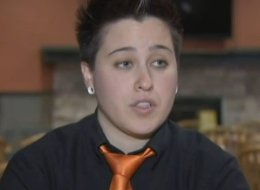
Dayna Morales, a server at Gallop Asian Bistro in Bridgewater, N.J., made headlines last week when she posted her encounter with homophobia to the "Have A Gay Day" Facebook page. Instead of leaving a tip on a $93.55 bill, a family of diners ridiculed Morales and scrawled an anti-gay note on the receipt, that read: "I'm sorry but I cannot tip because I don't agree with your lifestyle & how you live your life."
She took to Facebook to air her grievances about such treatment, explaining, "I served in the Marines to keep ignorant people like them free."
The story wound up exploding online, and Morales received an influx of messages and donations from around the globe.
"People have sent me tips from all over the world just to show support. I have had people from Germany to South Africa, Australia to the U.K., San Diego, everywhere," she told CNN, adding that she received around $2,000. "It wasn't for the money. I never planned on this. I just wanted to vent. The purpose was to inform people it wasn't OK."
Now Morales wants to help others by giving a portion of the donations to the Wounded Warrior Project to help injured servicemen and women, according to NJ.com.
"I plan -- being a veteran -- to send a portion of it to the Wounded Warrior Fund," she told WNBC. "It's great to see everybody's support and I'm thankful for it, but it doesn't excuse or change the fact that it actually did happen."
Morales' employer reportedly plans to match every donation.
The waitress also told the Asbury Park Press that her boss was not mad she posted the check to Facebook.
“We are kind of a big family so they all took it to heart," Morales said about her coworkers' support. "My manager assured me that if they had seen the check before the family left they would have confronted them."
Morales served in the Marines from 2009 to 2011.
Monday, November 11, 2013
Saturday, October 19, 2013
The marriage equality movement could change dramatically in the next two weeks
It’s been less than four months since the Supreme Court struck down the Defense of Marriage Act and put an end to California’s marriage amendment, but advocates have been busy over the summer — setting the stage for a very busy two weeks that could rock the marriage equality landscape and change the country.
The calendar for the rest of the month is packed with a dizzying array of potential developments: decisions and movement in lawsuits that are multiplying by the week, possible votes from lawmakers being prodded to action by governors in their states, and — for the state of New Mexico — a hearing at the state Supreme Court to resolve once and for all whether same-sex couples can marry in a state that doesn’t specifically ban or allow such marriages.
The coming weeks also will feature the first action in the federal appellate courts since the Supreme Court rulings, with a filing in the 9th Circuit in a challenge to Nevada’s marriage law. The quick reemergence of a marriage case at the appellate level is notable because that’s the path back to the Supreme Court, where marriage equality advocates are still seeking a ruling that would bring marriage equality to all 50 states.
From a Wednesday hearing in Michigan to a hearing regarding a challenge to Virginia’s marriage law on Oct. 29, here’s what you need to know:
1. Michigan
The calendar for the rest of the month is packed with a dizzying array of potential developments: decisions and movement in lawsuits that are multiplying by the week, possible votes from lawmakers being prodded to action by governors in their states, and — for the state of New Mexico — a hearing at the state Supreme Court to resolve once and for all whether same-sex couples can marry in a state that doesn’t specifically ban or allow such marriages.
The coming weeks also will feature the first action in the federal appellate courts since the Supreme Court rulings, with a filing in the 9th Circuit in a challenge to Nevada’s marriage law. The quick reemergence of a marriage case at the appellate level is notable because that’s the path back to the Supreme Court, where marriage equality advocates are still seeking a ruling that would bring marriage equality to all 50 states.
From a Wednesday hearing in Michigan to a hearing regarding a challenge to Virginia’s marriage law on Oct. 29, here’s what you need to know:
1. Michigan
Same-sex couples could be able to marry in some counties in Michigan on Wednesday, advocates hope, if a federal judge there rules Wednesday on a challenge to the state’s constitutional amendment prohibiting same-sex couples from marrying.
Judge Bernard Friedman has pressed the case — which has traversed a winding path — forward, ruling against the state of Michigan earlier this year in refusing to dismiss the challenge.
Discussing the Supreme Court opinion striking down DOMA, United States v. Windsor, Friedman wrote, “[P]laintiffs are prepared to claim Windsor as their own; their briefs sure to be replete with references to the newly enthroned triumvirate of [pro-gay rights cases of] Romer v. Evans, Lawrence v. Texas, and now Windsor. And why shouldn’t they?”
Although clerks in at least 10 of the state’s counties have said they will issue marriage certificates to same-sex couples if Friedman’s ruling allows them to do so, it is not yet clear whether and when they will be allowed to do so.
It is not certain that Friedman will even rule on the case following Wednesday’s hearing or, if he does, that he will rule that marriage equality is constitutionally guaranteed. What’s more, even if he does rule for marriage equality, there remains the question of whether he will issue a stay, which would put the case on hold pending an inevitable appeal by state officials.
 If he rules in favor of marriage equality and does not issue a stay, however, the 6th U.S. Circuit Court of Appeals could put a halt to any marriages within hours or days, a stay it likely would leave in place if it does so while it considers an appeal.
2. New Jersey
On Oct. 21, under current orders from Judge Mary Jacobson, same-sex couples in New Jersey can marry. Before then — any day now — the state Supreme Court is expected to rule on whether it will put that order on hold, leaving same-sex couples waiting into the new year for a chance to marry in the Garden State.
Gov. Chris Christie’s administration appealed Jacobson’s decision to the state’s Supreme Court, which will be hearing arguments on whether same-sex couples need to be allowed to marry in the state. Currently, civil unions — but not marriages — are available to same-sex couples.
But that appeal doesn’t stop Jacobson’s order from going into effect during the appeal process. That requires a stay, which would prevent marriages between same-sex couples for the time being. Over the past few days, the parties have briefed the state Supreme Court on the question of whether the court should issue such a stay — keeping same-sex couples from marrying until a final decision is rendered in the case sometime next year.
Outside of all of the legal maneuvering, advocates also are pressing lawmakers to override Christie’s veto of the legislative effort to bring marriage equality to New Jersey.
3. Nevada
The 9th U.S. Circuit Court of Appeals — which allowed same-sex couples to begin marrying in California days after the Supreme Court dismissed an appeal of the case challenging the state’s marriage amendment — will start considering whether Nevada can ban same-sex couples from marrying when the couples file their brief with the court by Oct. 18.
The federal trial-court judge who first considered the challenge, Judge Robert C. Jones, ruled against the same-sex couples challenging the ban, concluding the Constitution does not “[prohibit] the People of the State of Nevada from maintaining statutes that reserve the institution of civil marriage to one-man–one-woman relationships.”
The case was brought by Lambda Legal, and it represents one of the few losses marriage equality advocates have faced in the courts in recent years.
Judge Bernard Friedman has pressed the case — which has traversed a winding path — forward, ruling against the state of Michigan earlier this year in refusing to dismiss the challenge.
Discussing the Supreme Court opinion striking down DOMA, United States v. Windsor, Friedman wrote, “[P]laintiffs are prepared to claim Windsor as their own; their briefs sure to be replete with references to the newly enthroned triumvirate of [pro-gay rights cases of] Romer v. Evans, Lawrence v. Texas, and now Windsor. And why shouldn’t they?”
Although clerks in at least 10 of the state’s counties have said they will issue marriage certificates to same-sex couples if Friedman’s ruling allows them to do so, it is not yet clear whether and when they will be allowed to do so.
It is not certain that Friedman will even rule on the case following Wednesday’s hearing or, if he does, that he will rule that marriage equality is constitutionally guaranteed. What’s more, even if he does rule for marriage equality, there remains the question of whether he will issue a stay, which would put the case on hold pending an inevitable appeal by state officials.
 If he rules in favor of marriage equality and does not issue a stay, however, the 6th U.S. Circuit Court of Appeals could put a halt to any marriages within hours or days, a stay it likely would leave in place if it does so while it considers an appeal.
2. New Jersey
On Oct. 21, under current orders from Judge Mary Jacobson, same-sex couples in New Jersey can marry. Before then — any day now — the state Supreme Court is expected to rule on whether it will put that order on hold, leaving same-sex couples waiting into the new year for a chance to marry in the Garden State.
Gov. Chris Christie’s administration appealed Jacobson’s decision to the state’s Supreme Court, which will be hearing arguments on whether same-sex couples need to be allowed to marry in the state. Currently, civil unions — but not marriages — are available to same-sex couples.
But that appeal doesn’t stop Jacobson’s order from going into effect during the appeal process. That requires a stay, which would prevent marriages between same-sex couples for the time being. Over the past few days, the parties have briefed the state Supreme Court on the question of whether the court should issue such a stay — keeping same-sex couples from marrying until a final decision is rendered in the case sometime next year.
Outside of all of the legal maneuvering, advocates also are pressing lawmakers to override Christie’s veto of the legislative effort to bring marriage equality to New Jersey.
3. Nevada
The 9th U.S. Circuit Court of Appeals — which allowed same-sex couples to begin marrying in California days after the Supreme Court dismissed an appeal of the case challenging the state’s marriage amendment — will start considering whether Nevada can ban same-sex couples from marrying when the couples file their brief with the court by Oct. 18.
The federal trial-court judge who first considered the challenge, Judge Robert C. Jones, ruled against the same-sex couples challenging the ban, concluding the Constitution does not “[prohibit] the People of the State of Nevada from maintaining statutes that reserve the institution of civil marriage to one-man–one-woman relationships.”
The case was brought by Lambda Legal, and it represents one of the few losses marriage equality advocates have faced in the courts in recent years.
Monday, September 16, 2013
Seven surprisingly gay-friendly companies
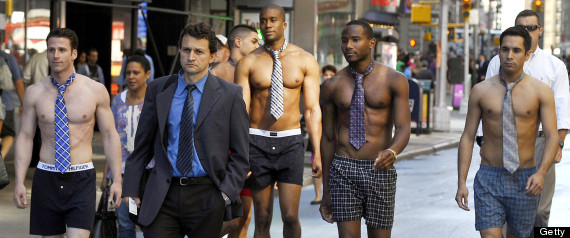
Although it's been regarded as a historic move (and it is!), since it is Walmart after all, it should be noted that it's actually about dollars and cents. As Walmart's senior vice president Sally Welborn explained in a letter to the management of the retail stores:
It's a business decision, not a moral or political decision. We operate in 50 states, hundreds of municipalities and Puerto Rico, and as clarified under the Supreme Court’s decision to strike down section 3 of the Defense of Marriage Act (DOMA), each of these states are developing different definitions of marriage, domestic partner, civil union, etc. By developing a single definition for all Walmart associates in the U.S. and Puerto Rico, we are able to ensure consistency for associates across our markets.
The Affordable Care Act (commonly referred to as "ObamaCare") inextricably linked health insurance with employment. As such, for our associates for whom we offer health insurance, we want to be sure we are providing access to as many individuals and their families as possible.
Given the diverse world we live in today, a comprehensive benefit package that includes domestic partner benefits appeals to the contemporary workforce. Many companies, including most of our competitors, already offer spouse/partner benefits to their employees. Of 30 retail competitors, all but two (Publix and Stop and Shop union plan) provide either same- or opposite-sex domestic partner coverage.Basically, it's not so much about supporting the LBGT community, as much as they want to save face in a changing world. However, if our gay and lesbian friends are getting the benefits they deserve, who are we to nitpick? And having such a big company, especially one that is seemingly unprogressive (they only sell censored music) in many ways, is hopefully what so many other companies need to get themselves in gear and do what’s right.
According to the Human Rights Campaign, who keeps their eyes on these things, 62 percent of Fortune 500 companies offer benefits to the domestic partners of their employees. So who else is on that list?
1. StarbucksNot only does the company offer benefits for same-sex partners, but last year it announced its support of gay marriage. The National Organization for Marriage, who has yet to get the memo of "live and let live" immediately launched a boycott. Although the first quarter after the announcement sales weren't exactly up to par, Starbucks didn't back down. Unlike Walmart who's adamant about their decision being a business one, Starbucks chief executive Howard Schultz said otherwise: "It is not an economic decision to me. The lens in which we are making that decision is through the lens of our people. We employ over 200,000 people in this company, and we want to embrace diversity. Of all kinds."
2. The Village VoiceThe iconic newspaper was launched by Norman Mailer and a few others in 1955 from a two-bedroom apartment in New York City's Greenwich Village. Always ahead of their time, the Voice was the very first privately owned company to offer domestic partner benefits to their employees. That was in 1982; it's sad that so many companies haven't taken a cue (and a clue) from this company who broke the ranks over 30 years ago.
3. GoogleAlways known for their diversity and quirky ways of running a company, Google is so gay friendly that it's going above and beyond. Not only do they offer benefits for the partners of same-sex couples, but a policy that went into effect in 2010, "will be compensating employees for taxes paid on domestic partners' health benefits — but only if they're gay."
4. Men’s WearhouseYou've seen the commercials: the mustached man comes on at the end to tell the consumer, "You’ll love the way you look. I guarantee it." Well, they guarantee a lot of things. Despite being based in Texas, a state notoriously known for squashing the rights of their residents, Men's Wearhouse not only offers benefits for domestic partnerships, but after five years, all employees get an automatic three weeks paid vacation. Sign me up!
5. General MillsThis company is winning all over the place. In addition to the adorable Cheerios commercial that featured an interracial couple that created a firestorm from racists everywhere, acceptance, in all its forms, is the name of the game at General Mills who also offers benefits to same-sex partners.
6. American ExpressI’ve had a beef with American Express since I realized that they have a fancy black AmEx that I'll probably never get my hands on. However, if I were their employee, I'd probably get better treatment. The huge credit card company offers benefits for same-sex partners, and also has a turnover rate of only 7 percent for full-timers. See? They totally treat their employees like royalty.
7. Marriott International With hotels all over the world, Marriott knows the best way to succeed with employees and patrons is to keep up with times. Yep, this one is on the list, too.
Thursday, September 5, 2013
Saturday, August 17, 2013
Friday, July 12, 2013
Tuesday, April 2, 2013
Jimmy Kimmel asks: Are you for or against same-sex marriage?
Jimmy Kimmel wanted to see if his audience members could tell if a person was for or against same-sex marriage based on sight alone, so, for the latest edition of "The Pedestrian Question," he sent an interviewer out into the street to ask random people for their views on the subject.
Sunday, March 24, 2013
Starbuck's CFO slams anti-gay marriage shareholder

At Starbucks' annual shareholders meeting in Seattle, Wash., on Wednesday, CEO Howard Schultz told off an investor who tried to argue that the company's support for gay marriage is bad for business.
NPR affiliate KPLU captured audio of the heated exchange:
"In the first full quarter after this boycott was announced, our sales and our earnings -- shall we say politely -- were a bit disappointing," Starbucks shareholder Tom Strobhar said, referring to the National Organization for Marriage's boycott of the coffee company.
Schultz replied bluntly that Starbucks's endorsement of marriage equality wasn't about making money, but about the principle of diversity.
“If you feel, respectfully, that you can get a higher return than the 38 percent you got last year, it’s a free country. You can sell your shares of Starbucks and buy shares in another company. Thank you very much," Schultz said, to applause from the audience.
Last year, Starbucks endorsed a Washington state bill to legalize gay marriage, andreleased a statement saying it was "deeply dedicated to embracing diversity." The bill later became law.
Strobhar, who is the founder of the anti-abortion, anti-gay marriage Corporate Morality Action Center, has been a vocal opponent of progressive causes in the past. He is also the chairman of Life Decisions International, a Virginia-based non-profit that has been fighting to oppose Planned Parenthood since 1992. His website boasts that he has fought against corporate involvement in gay marriage, abortion and pornography at major U.S. companies from Microsoft to Pfizer.
At last year's Starbucks shareholders meeting, Strobhar asked Schultz to stop endorsing liberal issues because they were bad for business, Yahoo reported at the time.
Thursday, March 21, 2013
How Facebook knew a man was gay before he came out

No one learned that lesson harder than a man who simply calls himself Matt. In an email to BuzzFeed, he tells a story about how Facebook's algorithms somehow figured out he was gay, despite Matt relaying his closely guarded secret to just one friend over the phone.
What did Facebook do, exactly? In his news feed, Facebook targeted Matt with a suggested page for Rick Clemons, an author who describes himself as "the coming out coach."
What's weirder, though, is that Matt didn't leave any obvious clues about his hidden sexual preference. His only "liked" pages included a politician and a local bar he enjoyed drinking at. Naturally, Matt was more than a little creeped out. Here's what he wrote to BuzzFeed:
As many LGBT individuals know, for a time, the most closely held secret we have is our sexuality. Several nights ago, I texted a close and dear friend for advice on revealing such sensitive personal information. The next morning, I woke up to a "sponsored story" on my Facebook page that asked "Coming Out? Need help?" How did Facebook know such a specific ad would apply to my profile? [BuzzFeed]The answer may have had to do with his commenting history. Many websites use Facebook's API to power their comment sections. A quick investigation of Matt's Activity Log showed he had commented twice on a BuzzFeed article called "Ohio senator Rob Portman announces support for marriage equality."
Of course, that's just the part of the story we're privy to. (What other websites had he visited? Etc.) Like Matt, if most people knew the extent of Big Data's tab-keeping on would-be customers, they too would be mortified.
In the book The Power of Habit, author Charles Duhigg tells a story about a pregnant teenager who hadn't yet told her parents about her situation. One day, Target began mailing her coupons for diapers and cribs, determining she was due in August. Her parents caught on, and she was forced to tell them that, yes, she was with child. The retailer's sophisticated algorithms had apparently tattled on her based on what she was buying in the checkout line.
Scary? You bet. It should be noted, however, that Big Data isn't always so bad. Earlier this month, The New York Times reported that researchers have successfully used Google, Bing, and Yahoo's internet search data to discover dangerous, unreported side effects of prescription drugs — information that may not have been revealed any other way.
The moral of the story, though, is that Facebook, Google, Target, and innumerable faceless corporations know a whole lot about you — whether you like it or not. Matt's story is unnerving, yes. And unless we all pack up and move to a deserted island somewhere, it most certainly won't be the last.
Subscribe to:
Posts (Atom)