Showing posts with label dc. Show all posts

Tuesday, March 17, 2015

New browser extension may get you to visit the DC library more

Kurt Goetsch
The D.C. Public Library does a lot of great work in the community — from expanding outreach for homeless patrons to creating cool special programming built around authors like George Orwell. But when compared with the ease of shopping on Amazon or exploring new releases on the social media site Goodreads, the DCPL online catalog be downright cumbersome.

That's where "Books for D.C." — a new extension for the Google Chrome browser — comes in. It automatically searches the DCPL catalog when you view a book's page on Amazon, Barnes & Noble or Goodreads, and tells you whether you can find a copy at the local library.

Yes, Amazon Kindle owners, this includes eBooks as well.

You can see a GIF of it in action here.

Emanuel Feld, the programmer behind the extension, says the idea occurred to him because it always seems to be Amazon — and not the library — that shows up at the top of a Google search for a book. He wanted to level the playing field.

"It seemed like the sort of issue that was ripe for tackling. I spend a lot of time at the library, and they're doing all sorts of really great things — they're very forward-thinking," Feld says. "I thought this would be a good project to show what the library has to offer."

Feld doesn't have any official relationship with the D.C. Public Library, but says he did consult them for information about how their catalog works and received lots of positive feedback.

The extension is actually Feld's second effort to make it easier for the public to get information about what's available at the local library. He also recently launched a @booksfordc Twitter account that uses a script to scan the library's catalog every hour to look for recent additions and tweet them out to the public — functionality that their existing catalog technology just doesn't have.

He says he's also thinking about ways to use his coding skills to address a problem recently covered in the Washington Post: the unequal distribution of resources at D.C.'s school libraries.

"I wanted to build a bunch of tools that were mutually self-supporting, so this is part of that," he says.

The extension is still a work in progress, and Feld is soliciting feedback on his website. Other civically-minded techies who want to get involved are encouraged to shoot him an email or seek him out at Code for D.C. meetups.

Wednesday, March 4, 2015

D.C. man asks police for his weed back...and gets it

D.C. police often confiscate drugs during the course of searches and arrests, but now D.C. residents are legally allowed to ask for them back — and one recently did.

According to D.C. Council member Yvette Alexander (D-Ward 7), a resident walked into the Sixth District police station in Ward 7 on Monday and asked an officer on duty to return his marijuana to him, which had been confiscated during a prior arrest.

"He walked in to recover his property from a recent arrest," said Alexander, who was told of the exchange by a staff member who witnessed it. "He walked in and said, 'I want my property back, and want to make sure I get my weed back.'"

Alexander says that while the officer on duty was initially confused, the man did eventually recover his marijuana. "They gave him his weed back!" she said.

Under the marijuana legalization law that took effect last Thursday, residents over the age of 21 are allowed to possess up to two ounces of pot on their person, as well as use and grow marijuana within their private residence.

While police are allowed to confiscate the marijuana if no proof of age is provided or if an arrest for another offense occurs, a Special Order distributed to all officers last week specifies that the individual whose marijuana is seized is legally allowed to go to a police station to request that it be returned to them.

"A person whose marijuana or marijuana-infused edible goods was seized... may seek the return of their property by visiting the station in the District where the marijuana was seized no sooner than 24 hours after the seizure," says the order.

If the marijuana is not claimed within 30 days, it is destroyed as contraband.

"Only in 6D," laughed Alexander, referring to the police district that serves her ward.

Monday, February 2, 2015

You need to make $108,092 a year to live comfortably in D.C., report says


Another week, another breathless report showing how darn expensive and wealthy D.C. is. Last week, we reported that D.C. ranked 10th in the most millionaires in the country per capita category when compared with states. (Maryland had the most, and Virginia came in at No. 6.)

This week, a report from Cheat Sheet says D.C. has the third-highest percentage of households earning at least $150,000 a year among cities with at least 500,000 people. San Francisco and San Jose ranked first and second, respectively.

Cheat Sheet then determined how much a household would need to earn a year in order to live “comfortably.” The report used $75,000 as the “magic salary number” based on a 2010 Proceedings of the National Academy of Sciences study indicating that someone’s day-to-day emotional well-being doesn’t increase after a household income hits the $75,000 threshold. Cheat Sheet then adjusted that income level up or down using a cost-of-living calculator and comparing each city to Phoenix — “a city with a moderate cost of living and a median income that’s close to the national average.”

From there, it concluded a person would need $108,092 to live comfortably in D.C. (Note: The report indicates an individual would need this amount to live comfortably, while the 2010 Proceedings of the National Academy of Sciences study determined that $75,000 was the amount of money a household needs to hit the happiness threshold.)

Here’s how the cost of comfortable living in D.C. compares with the other most expensive locations.

Friday, October 3, 2014

Signature DC dishes

DC isn't just about half smokes (it's definitely all about the half smokes, but that's different). The dishes that define our burgeoning culinary scene range from old-school to cutting edge, from spicy to sloppy. How many of these 15 signature DC dishes have you eaten your way through?

CENTRAL MICHEL RICHARD 

Fried Chicken
Central Michel Richard (address and info)
Downtown
Yes, a French culinary icon can make a mean fried chicken. The secret? It’s in the crust. Chef Richard breads the chicken with lumps of country bread before frying it in clarified butter. Central serves the golden brown goodness with mashed potatoes that are just as addictive. Wanna try to make it at home? Pick up a copy of Richard’s Happy in the Kitchen cookbook. Then go back to his place when you inevitably fail.

Ben's Chili Bowl (address and info) & Jumbo Slice (address and info)
U Street

This "U Street Taco" is so magical that it actually contains two sig dishes all rolled (literally!) into one. First, the famous Ben’s Chili Bowl half smoke that’s been devoured by a bunch of presidents and Bill Cosby. Then, there’s the Jumbo Slice, which you’ll claim is the best pizza in DC, if someone asks you at 3am.

LAURA HAYES 

Chicken Thighs with Pepperoni Sauce
Graffiato (address and info)
Chinatown

It’s hard to make Top Chef judges swoon, so it was quite a surprise when Mike Isabella’s pepperoni sauce turned out to be a real panty dropper on the show. Padma and Tom both went wild for it. Fortunately though, you don’t have to crawl into your TV to try it. Just head to Graffiato, where it’s served with Amish chicken thighs. Again: liquid pepperoni!

Senate Dining Room (address and info)
Capitol Hill
This soup is about as boring as politics, but this list wouldn’t be legit without it since it’s mandated that it be available in the Senate Dining Room every day. People have been slurping this slop of navy beans and smoked ham since the early 20th century. Even Oliver Twist wouldn’t ask for more. Pro tip: the public can dine in the SDR, but you need a reservation and Congress must be in session.

Tuesday, May 13, 2014

Lawyers Have Heart Race


Hi my lovely readers!

I'd like to take a moment to announce that I am running in a 10K race (my first!) for the Lawyers Have Heart foundation to support the American Heart Association. This event will help raise money for heart disease and stroke education and prevention. My grandfather passed away last year after suffering from a stroke and I am running in his honor.

I am currently 20% towards my goal of $500. Any contribution is appreciated! No donation is too small: http://www.RunLHH.org/debraewong

Thank you!

Wednesday, April 16, 2014

If a nuclear bomb exploded in downtown Washington, what should you do?

Funny question in the headline, yes?

But since President Obama worries more about the threat of terrorists' improvised nuclear device going off in a major American city than anything Russia can throw at us, I was wondering if the government had deigned to share with us citizens any tips for, you know, surviving something their own intelligence points to as the likeliest unlikely Black Swan event.

Well, no. And yes.

No — very few people in Washington, D.C., who work for the government have any idea what they would do if a 10-kiloton nuclear device exploded at the intersection of 16th and K streets.

You can always look to movies to figure this stuff out, right? And in movies, since nuclear radiation is BAD, the thing to do is to get away from it as quickly as possible. In the movies, electronics are fried, too, the response is chaotic, and hundreds of thousands of people die.

Interestingly enough, though, the government has done quite a bit of work to figure out what exactly would happen if a suitcase nuke — which, I know, doesn't really exist, but, for the sake of this example, bear with me — actually did explode a few blocks from the White House.

And curiously, and perhaps hearteningly, it turns out that there is quite a lot that you or I can do if we get stuck in Washington when something like that happens. Choices we make could very well make the difference between our imminent death and a relatively full and happy life, assuming the bomb is a one-off.

The Lawrence Livermore National Laboratory released a report in 2011 that spells all this out. It hasn't gotten nearly the attention it deserves.

It's called the "National Capital Region Key Response Planning Factors for the Aftermath of Nuclear Terrorism" and it makes for fascinating reading.

Did you know, for example, that:

1. The WORST thing for someone to try to do, in the aftermath of a nuclear explosion that they survive, is to get in a car and drive away.

2. Unless you're within about a third to a half a mile radius of ground zero and the shelter options are poor, the BEST thing for someone to do is to find a stable location inside a well-built apartment or office building — the majority of which will remain standing outside that half mile radius — and stay there for 24 hours.

And if you were very close to ground zero and you did survive — and a lot of folks will — the best thing for you to do is to:

A. Take immediate shelter somewhere, because fallout will rain down on you if you don't.

B. Wait an hour.

C. Then, walk about a half-dozen blocks laterally until you find intact large buildings to shelter you.

3. The electromagnetic pulse from a ground burst will NOT, in fact, knock out all types of communication. Some? Maybe.

4. If you live in a single-family house with thin walls, your chances of surviving in the immediate aftermath of a blast and not getting cancer later are exponentially higher than if you seek shelter in a bigger building, even one that might literally be next door.

5. Rescuers should NOT put on radiation protection gear if it will slow them down. So long as the fallout has stopped falling, they're best advised to turn out in their normal gear.

6. Though thousands of people will die from the blast effects, almost all — about 96 percent — of the other potential casualties could be avoided if people understood the basics of what to do in the event of mass radiation exposure.

7. Did I mention that the worst place to be in the immediate aftermath of a nuclear blast is in a car trying to get away? The so-called DFZ — the Dangerous Fallout Zone — will extend out as much as 20 miles, but it is likely to be extremely narrow. (If it's not, that means the concentration of radioactive particles will be lower.) The vector and location of this zone depends on the wind. And its size will shrink with every passing hour.

8. Penetrating trauma from broken glass is probably the largest treatable cadre of blast injuries.

I admit that I don't know what forum the president or anyone else could use to educate people in major cities about this stuff. Government never wants to alarm people. But maybe a little bit of alarmism is worth it, if it turns out that a terrorist's nuclear blast is a lot more survivable than we might think, if only we do certain things.

Source

Thursday, March 20, 2014

The best walks in the U.S.'s most walkable cities

New York City

The Big Apple earns Most Walkable City distinction, thanks to its high density of cultural institutions, restaurants, parks, and public transportation services (for the return trip, if you don’t care to hoof it), especially in the boroughs of Manhattan and Brooklyn. In fact, many New Yorkers go their entire lives without ever owning a car.

Best Walk: Central Park
You can’t beat the smooth, rolling hills and lush greenery of Central Park, says Lon Wilson, president of the New York Walkers Club and a national racewalking champion. (In fact, his club holds walking clinics in the park every Saturday at 9:30 a.m.) For a nice 4.1-mile jaunt around the park’s famous Jacqueline Kennedy Onassis Reservoir, enter at East 90th Street and 5th Avenue and turn right, heading north, onto East Drive. Turn left at the transverse at roughly 106th Street, then left again (heading south) onto West Drive. Make another left at the 72nd Street Transverse (also known as Terrace Drive), and one more (heading north again) onto East Drive, back to 90th Street. To access the map, click here.

Alternate Walk: Lower Manhattan and Brooklyn Bridge

For a more urban stroll, start at the 9/11 Memorial on Liberty Street in downtown Manhattan. Walk west to the Hudson River, where you’ll turn left onto the waterfront esplanade. Follow this tranquil walkway around the bottom tip of the island, through South Cove Park and Battery Park and past the Staten Island Ferry and the historic Battery Maritime Building. Continue northeast along what is now the East River Waterfront Esplanade. Just past the South Street Seaport, pass under the FDR Drive and make a left onto Beekman Street, a right onto Pearl Street, a left onto Frankfort Street, and a sharp right onto Park Row, which will take you to the pedestrian entrance (via a tunnel and staircase) for the Brooklyn Bridge. After your 1.5-mile trek across the bridge (four miles for your total trip), take the subway or ride a Citibike back to Manhattan.

San Francisco
California’s City by the Bay has plenty of rewarding views for willing pedestrians. Its 42 hills and more than 600 stairways add an extra challenge, says Aaron Dence, a personal trainer and walk leader for the nonprofit organization Walk SF, but locals and tourists alike learn to love them for the built-in workouts and breathtaking vistas they provide. “Give yourself more time than you think you need for these walks,” says Dence, “since you’ll want to take your time on your way up.”

Best Walk: Chinatown, North Beach, Telegraph Hill, and Jackson Square
Begin this three-mile walk at San Francisco’s iconic Transamerica Pyramid Center, at the intersection of Merchant and Montgomery streets. Walk south on Montgomery and then right onto Clay Street. At the end of Portsmouth Square Plaza, turn right onto Walter U. Lum Place. Walk to the end of the plaza, then turn left on Washington Street. Make a right onto Ross Alley (grab a sample at the Golden Gate Fortune Cookie Factory!), a right onto Jackson Street, and a left onto Grant Avenue. Turn right on Jack Kerouac Alley to pass the famous beat poet hangout City Lights Booksellers, then turn left on Columbus Avenue. At Broadway Street, make a left and walk about 250 feet, then turn around and look up to catch a glimpse of the “Language of the Birds” sculpture, a collection of books seemingly frozen in thin air. Walk back to Columbus Avenue, making a left. Bear right at Stockton Street and walk along—or stroll through—Washington Square Park. At its northern border, turn right on Filbert Street. Follow Filbert Street as it twists and turns and becomes the Filbert Steps, and wander down the intersecting alleys to see picturesque San Francisco homes and gardens. In Levi’s Plaza, bear left at the circle and head north. Make a right onto Battery Street, then a quick left onto Greenwich Street. Follow the road (and stairs) to Telegraph Hill Boulevard, where you can check out a statue of Christopher Columbus overlooking the city. Turn back and head southeast on Telegraph Hill Boulevard to explore Coit Tower and its surrounding grounds. Return to Greenwich Street and turn left (west) out of the park. Turn left on Grant Avenue, then left on Vallejo Street. After the Vallejo Street stairs, turn right on Montgomery Street. Make a left on Gold Street, a right on Balance Street, a right on Jackson Street, and a left on Hotaling Street. Finally, make a left on Washington Street and a right into Transamerica Redwood Park, where your tour comes to an end. To access the map, click here.

Alternate Walk: Nob Hill and Russian Hill
This walk starts outside of Grace Cathedral, at the corner of Sacramento and Taylor streets. Head east on Sacramento Street and turn left on Mason Street, where you’ll pass the San Francisco Cable Car Museum. Turn left on Vallejo Street and follow it up one set of stairs, through Ina Coolbrith Park, and then up another set. Turn right on Jones Street, right on Green Street, left on Taylor Street, and left on Macondray Lane. Continue zigzagging through Russian Hill, turning right on Leavenworth Street, left on Greenwich Street, right on Larkin Street, left on Chestnut Street, and right on Polk Street. From here, turn right on Francisco Street, which curves north into Russian Hill Park. At the end of the park, turn right on Hyde Street and left back onto Francisco Street. Turn right on Leavenworth Street to head south, then make a right on Lombard Street to travel down the city’s “crookedest street,” consisting of eight hairpin turns and flanked by beautiful homes and gardens. To finish the 3.3-mile tour, turn left on Hyde Street, left on Filbert Street, right on Jones Street, left on Vallejo Street, right on Florence Street, left on Broadway Street, and right on Taylor Street to return to Grace Cathedral.

Tuesday, February 11, 2014

Lawmakers warn NFL about the Redskins

AP
The fight to change the Redskins' name won't die. And it's become an issue among the nation's lawmakers.

Two members of Congress will send a letter to NFL commissioner Roger Goodell on Monday, telling him to publicly announce support for a name change -- and that the NFL can no longer ignore the issue.

The letter, obtained by multiple media outlets, was written by Sen. Maria Cantwell (D-Wash.) and Rep. Tom Cole (R-Okla.). Cantwell is chairman of the Senate Indian Affairs Committee, while Cole is a senior member of the appropriations committee -- and a member of the Chickasaw Nation.

"The National Football League can no longer ignore this and perpetuate the use of this name as anything but what it is: a racial slur," the letter stated.

Cantwell told the newspaper the Indian Affairs Committee would "definitely" examine the NFL's tax-exempt status as a means to apply pressure.

"You're getting a tax break for educational purposes, but you're still embracing a name that people see as a slur and encouraging it," Cantwell told The New York Times.

The letter reiterated that stance, telling the NFL it's on the "wrong side of history." That's why, it stated, the NFL should "take a formal position in support of a name change."

The Redskins have received "more than 7,000 letters and emails" in favor of keeping the name, with "almost 200 from people who identified themselves as Native Americans or as family members of Native Americans," the team said in a statement released Monday.

The statement included three letter excerpts from fans of Native American descent, all either supporting the Redskins' name or saying it was not offensive to them.

The Redskins also cited a 2004 survey that said 90 percent of Native Americans were not bothered by the Redskins' name. The lawmakers' letter criticized the team for clinging to "decade-old public opinion polling."

Goodell has declined to take a formal stance on the debate in the past. Before the Super Bowl, he told reporters, "I've been spending the last year talking to many of the leaders in the Native American communities. We are trying to make sure we understand the issues. Let me remind you: This is the name of a football team, a football team that's had that name for 80 years and has presented the name in a way that it has honored Native Americans."

The lawmakers' letter rebutted Goodell's statement, calling the name "an insult to Native Americans."

Redskins owner Dan Snyder has been adamant that he won't change the name. But he has received steady pressure, and protests, over the past year. In May, 10 members of Congress sent letters to Snyder, Goodell, the 31 other owners and Redskins sponsor FedEx, urging the franchise to change the name. Cole was part of that group as well.

That group introduced a bill last March that would "cancel the federal registrations of trademarks using the word redskin in reference to Native Americans."

Redskins spokesman Tony Wyllie said in a statement, "With all the important issues Congress has to deal with such as a war in Afghanistan to deficits to health care, don't they have more important issues to worry about than a football team's name? And given the fact that the name of Oklahoma means 'Red People' in Choctaw, this request is a little ironic."

Monday, February 3, 2014

Cider's making a comeback

Wine, beer, and spirits have all had a Renaissance — increasing in popularity and in numbers of small producers — as they bounced back from Prohibition.Cider is the next thing to make a comeback with many small producers hitting shelves around the country and bars in D.C. Even Michelob and Stella Artois have gotten in on the trendby releasing their own ciders, and in Chicago a new bar focusing on hard cider, The Northman, will be opening this spring.

Tim Liu, Bar Manager at Scion Restaurant, who has hosted cider dinners notes about the increasing popularity of cider, "It's similar to the situation about five years ago with craft beer. I think people had to be educated more about styles, and why I am paying more for this beer. Cider has to fight similar battles, where people see it as this sweet, sugary stuff. But there are a lot of people making things like unique barrel-aged ciders, French and Spanish ciders, and even local ciders."

For those who are interested there are a number of compelling, locally-made options to explore. The Serious Cider made by Virginia's Foggy Ridge Ciders came out on top in a recent NY Times taste test for its tannins and tartness, and can be found at Pizzeria Paradiso Dupont. And The Pig serves choices from Albemarle Ciderworks and Bold Rock, where they serve as a perfect pairing with the many pork-based dishes.

Maryland-based Distillery Lane Ciderworks, whose products can be found at Southern Efficiency, uses the craft brewing technique of bottle conditioning its Traditional Dry Sparkling to give it champagne-like characteristics.

This use of craft brewing techniques to put a spin on cider making is becoming common practice among the new wave of cideries. "The same people who were brewing beer are now making cider. For example, the guys who sold Goose Island started Virtue Cider. I take that as a big sign that instead of starting a new brewery, they see a new trend or something new that can grab their attention," says Liu.

Though Virtue hasn't hit the D.C. market yet, look for Wandering Aengus Anthem's Hops, found on tap at Thally. It's dry-hopped for over three weeks, which yields a tinge of bitter, citrusy contrast to a cider's sweetness.

Or try one of Crispin's limited releases, which frequently make use of aging in wine and liquor barrels, and ferment with unusual yeasts like Irish stout and sake. The lightness of cider makes it a perfect vehicle for the nuances imparted by these elements. Crispin is one of the more common cider brands found around D.C. bars, and Meridian Pint is one of the best places to find the limited releases on tap as well as numerous other domestic ciders.

For traditionalists, there are a few places serving ciders from the U.K., France, and Spain. In the U.K., the Campaign for Real Ale (CAMRA) has written guidelines for what constitutes "real cider" in an attempt to maintain a disappearing part of its culinary heritage. The guidelines specify that only unpasteurized apple juice be used without the addition of any juice concentrate or flavorings, and specifies the fermentation process and points in time when sweeteners may be added. However, these rules can be a bit draconian, and mean that finding "real" English cider in the U.S. is a challenge. One option, Hogan's, can be found on the bottle list at Churchkey.

Similarly difficult to come by are French cidres, which are made in the northern regions of Normandy and Brittany where the climate is better for apples than grapes. Traditionally served in bowls, it tends to be extra effervescent, with high levels of sugar balanced by tannins and acidity, and are classified by sweetness and percentage of alcohol. The sweetest is the 3% or lower Cidre Doux; the next is Demi-Sec, which ranges from 3-5%, and the driest is Cidre Brut at 5% of above. And similar to Grand Cru in wine, cidre bouché are the highest quality ciders. The most easy to find is the Etienne Dupont atPizzeria Paradiso, Meridian Pint and Churchkey.

In northern Spain, the cider or sidra is a major part of the drinking culture with dedicated bars called siderías or chigre. Most sidra are flat, but are aerated by pouring or "throwing" it from a height, giving it a slightly fizzy characteristic. Served in small quantities at a time, it's meant to be drunk quickly before it loses its "fizz." The Sarasola at Estadio is a great example of a uniquely musty/funky sidra.

The future looks bright and interesting for cider lovers. Liu explains, "The same curiosity that drew people to try different kinds of beers is what will drive them to try new ciders. In the way that terroir is so important with wine, certain regions of the country will produce different apples, and I think as cider grows you'll be able to see that one is a California style, and this is a Virginia style. That'll be really exciting."

Saturday, January 18, 2014

National Harbor plans to debut the Capitol Wheel in May


First it was an outlet mall, then an MGM casino. Now National Harbor is getting ready to build a 175-foot observation wheel.

National Harbor announced Thursday its plan to debut The Capital Wheel in May at the end of its marina.

The attraction, which will offer views of the National Mall, Arlington Cemetery, the city of Alexandria and more, is expected to draw between 600,000 to 800,000 visitors a year.

The wheel will include 42 climate-controlled gondolas, allowing year-round daily operation from 10 a.m. to 10 p.m. Each gondola will include eight seats and admission is targeted at $15 per person.

The Capital Wheel will include 1.6 million LED lights that will be programed to a variety of colors.

At 175-feet, the wheel will be significantly taller than the Woodrow Wilson Bridge, which has a 70-foot clearance at its highest point.

The Capital Wheel will feature seasonal concessions by Wolfgang Puck Catering and be available for a variety of corporate and private events.

Sunday, December 22, 2013

Trivia about Washington D.C.

You know it’s our nation’s capital, but were you aware of these fun quirks?

1. The Capitol building was not designed by an American. William Thornton was a British doctor.

2. Similarly, the White House was designed by an Irish architect, James Hoban.

3. The Smithsonian is named for an Englishman, James Smithson.

4. He never set foot on American soil.

5. D.C. residents could not vote in presidential elections until the 23rd amendment was ratified in 1961.

6. Both Herbert Hoover and John Quincy Adams kept alligators at the White House.

7. The White House movie theater was originally a coatroom.

8. When Jimmy Carter was president, he watched 480 movies there—the most of any POTUS.

9. D.C. gets more rain than Seattle.

10. Perhaps that’s why D.C. residents drink more wine per capita than residents of any of the 50 states.

11. The National Cathedral has lots of wacky gargoyles and grotesques. One of them is Darth Vader.

12. In 1998, one of the unknowns interred at the Tomb of the Unknown Soldier in Arlington National Cemetery (actually just across the Potomac from DC) was identified.

13. D.C. is home to tons of national museums. But don’t forget the National Bonsai and Penjing Museum, which houses about 200 meticulously pruned mini trees!

14. There were more members of the media at the 1963 March on Washington than at Kennedy’s inauguration two years earlier.

15. The Washington Monument is (accidentally) two different colors.

16. Funding ran dry halfway through the project. When construction restarted, the builders used stones from a different source. Whoops.

17. When President Woodrow Wilson had to move out of the White House at the end of his term, Prohibition forbade him from moving his precious wine collection. He appealed to Congress and passed a special law that allowed one person to transport alcohol from 1600 Pennsylvania Avenue to Wilson’s home. Sneaky!

18. Wilson happens to be the only president buried in the District.

19. Both the Minnesota Twins and the Texas Rangers started out as the Washington Senators.

20. Whereas the Washington Redskins were originally based in Boston.

21. The D.C. Metro is the second busiest subway system in the United States.

22. D.C.’s streets are lettered—but there is no “J” street.

23. That’s because, during the 18th century, the letters “I” and “J” were basically interchangeable.

24. (Thomas Jefferson actually wrote his initials as “T. I.”)

25. An empty crypt lies beneath the Capitol building—George Washington was supposed to be buried there.

Source

Sunday, December 8, 2013

MARC finally running weekend trains from DC to Baltimore

MARC will run weekend trains between Washington and Baltimore for the first time starting Saturday , marking the biggest expansion of Maryland’s commuter rail system in a decade.

Penn Line trains will run nine round trips on Saturdays and six round trips on Sundays. The new weekend schedule is available at 1.usa.gov/1eLQiHL.

MARC riders have long called for train service for people who work weekends and for those trying to reach Baltimore-Washington International Marshall Airport.

“This has been a long time coming for MARC riders,” said Rafi Guroian, who chairs MARC’s Riders Advisory Council.

Robert Smith, head of the Maryland Transit Administration, said MARC expects to pick up many of the 6,000 weekend passengers who have been riding Amtrak between Washington and Baltimore.

“This is something our customers have been clamoring for,” Smith said.

MARC’s weekend fares will be the same as on weekdays: $7 each way between Washington’s Union Station and Baltimore’s Penn Station, compared with $16 to more than $70 on Amtrak.

Weekly and monthly MARC passes will be honored on weekends, state officials said.

Stations with weekend stops include Union Station, New Carrollton, Bowie, Odenton, BWI, Halethorpe, West Baltimore and Penn Station. Some trains will also serve Martin State Airport.

Guroian said he thinks weekend trains will attract people who don’t regularly take MARC, including tourists and BWI travelers who want to avoid paying for a rental car or parking in Washington or Baltimore.

“There will now be an affordable way to get between Baltimore, BWI and Washington on the weekends without having to drive,” Guroian said.

BWI officials say airlines, particularly international carriers that serve European airports with rail service, have asked repeatedly for seven-day MARC service. BWI passengers take a shuttle bus one mile between the BWI rail station and the airport terminals.

“To [the airlines], it’s natural, and they’re looking for it,” said Paul J. Wiedefeld, executive director of the Maryland Aviation Administration.

The weekend rail service, which is expected to cost $8 million a year, will be funded throughincreased state taxation of gasoline, officials said. The added tax burden — motorists are expected to pay 13 to 20 cents more per gallon by mid-2016 — is projected to generate $4.4 billion for new transportation projects over the next six years.

Smith said no weekend service is planned for MARC’s Brunswick or Camden lines in the next six-year budget.

“We identified [weekend] demand on the Washington to Baltimore line,” Smith said. “We’ll need to continue to measure the demand on the other lines.”

Monday, November 4, 2013

Best brunch spots in DC

BELGA CAFE: Barracks Row is packed with places to get brunch, many of them rather good. But Belga Cafe is the place I return to most often for a fairly obvious reason: The food is so delicious. While the mussels are wonderful, I love the Mais Wafels (a cornbread waffle, avocado, pulled pork, fried egg and crème fraîche) and Wafel A La Quiche (puff pastry quiche, ham, cheese, eggs and cream). There are also quite a few vegetarian options, including the lovely Gebakken Burrata Kaas (fried burrata cheese, arugula, pecans, apples, chives and lime-basil pesto). Wash it down with a champagne cocktail or Bloody Mary for an absolutely perfect brunch. Warning: You will need a nap after you eat. — Sarah Anne Hughes

Belga Cafe is located at 514 8th Street SE.

RED DERBY: While the Red Derby, the divey spot in Columbia Heights, is not a fancy place, they have a solidly tasty brunch and cheap drinks. What's not to like? I'm a big fan of the Derby breakfast bowl, which is tater tots, scrambled eggs, sausage, tomatoes, onions and shredded cheese, all for $8. Other options include a breakfast burrito, salmon and lox on a bagel, BeLT (bacon, egg lettuce and tomato), more sandwiches, omelets and the like. Nothing fancy, but all tasty, filling and cheap, ranging from $6-$11. Along with their normal inexpensive and solid can beer selection and their beer-and-shot specials (which range from $6 for the cheap stuff up to about $12, plus a $10 bartender's choice option, which is fun) there's also coffee with free refills for $2 and $3 bloody marys. Can't beat that. The roofdeck is a nice spot to watch people and eat, and they do have some heaters too, but the inside is always warm and cozy. Friendly bartenders, too. — Andrew Wiseman

Red Derby is located at 3718 14th Street NW.

GRANVILLE MOORE'S: Though it faces plenty of stiff competition among its many foodie-baiting neighbors along H(ype) Street NE, Granville Moore's deserves the top slot in the brunch category. First, consider the aesthetic appeal: the place is about as unobtrusive as they come, with its low-key entrance and squatter-chic second floor, and the atmosphere is equally unpretentious. The place is nice and dark and filled with booths, excellent enclaves for piecing together the sordid details of the evening before, while a coveted spot by the single window caters to the vacant-stare set. The menu is appropriately decadent and straight-forward. You can soak up your regrets with their own renditions of eggs Benedict and French toast (both available with veggie sausage for veggie-types), their signature moules and frites or the Sunrise Burger—their incredibly satisfying bison burger with a fried egg and bacon on top. —Matt Cragle

Granville Moore's is located at 1238 H Street NE.

THE ARGONAUT: I've already waxed poetic about The Argonaut's make-your-own Bloody Mary bar in ourBloody Mary Best Of List, thus I feel it necessary to call out their excellent food, which makes this H Street spot one of the most solid brunches in the city. The menu features classic brunch options like Steak & Eggs, French Toast, and a hearty H Street Breakfast platter (two eggs, rosemary potatoes or grits, toast. But I'm a big fan of the Florentine Benedict (nothing fancy going on here, just done really well). If you're looking for non-breakfast brunch options, the tempeh tacos are also killer. Oh, and sometimes they have a Chorizo Omelette as a special, which is one of the best omelette's I've had in the city. —Matt Cohen

The Argonaut is located at 1433 H Street NE.

ORIENTAL EAST: The Chinese don’t do brunch; they do dim sum, a glorious procession of tapas-sized dumplings, buns, and other sweet and savory snacks. Oriental East draws a crowd that lines up as early as 10 a.m. for a table as this cavernous glass dining hall a few steps from the Silver Spring Metro station. Bring a friend (or five), as you’ll need help eating the dazzling selection of comestibles, served by an army of waitresses pushing carts around the dining room. Some of my favorites include the pork buns, har gow (shrimp dumplings), pai gwat (pork spare ribs with black beans), wu gok (taro balls), and lo bak gaw (radish cake). If you can’t make it to Oriental East, there are a few other dim sum staples in the area, including A&J Restaurant and Hollywood East Café, though nothing in D.C. compares to what you’ll find on the West Coast. —Alicia Mazzara

Oriental East is located at 1312 East West Highway.

TABARD INN: For a classic D.C. brunch, the Tabard is the place to be. For a simple brunch, just get some cinnamon sugar doughnuts and a cup of coffee. If you require something more substantial, try the buttermilk fried chicken biscuit sandwich. Make sure to snag a reservation by calling 202.331.8528. — Sarah Anne Hughes

Tabard Inn is located at 1739 N Street NW.

SAINT-EX: I'm not going to lie, even if their food was terrible, I'd still include Saint-Ex's brunch on this list simply because they have Millenium Falcon toast. Yes, that's right, toast shaped like the Millenium Falcon. Nerdgasm. Fortunately, their brunch menu is also quite good, and given the ever-evolving status of 14th Street NW, you never really have to wait long for a table during the coveted brunch hour (thanks, Ted's Bulletin!). Saint-Ex's brunch perfectly straddles the line between artisanal and hearty, with creative takes on classic dishes like the Fried Green Tomato Benedict, Slow Roasted Pork Belly with poached eggs over tomato garlic grits, and the house scrapple, served with scrambled eggs and, yes, Millenium Falcon toast. —Matt Cohen

Saint-Ex is located at 1847 14th Street NW.

BIRCH AND BARLEY: I imagine that eating Sunday brunch at Birch and Barley is kind of like stepping onto the set of a shoot for Food & Wine magazine. The interior is modern and gorgeous, and so is the food. Everything is familiar, but better. Take the corned beef hash, with house-made corned beef and topped with a duck egg, because chicken eggs are for suckers. Thick-cut French toast and quiche flavors rotate depending on the season; right now you can expect fall favorites like honeycrisp apple and pumpkin. And don’t forget to order the house-fried donuts or sticky buns for the table. If you’re more in the mood for lunch, Birch and Barley also offers a number of flatbreads and entrees off their regular menu as well. —Alicia Mazzara

Birch and Barley is located at 1337 14th Street NW.

CASHION’S EAT PLACE: Both your stomach and your conscious will leave Cashion’s brunch fully satisfied. The seasonal brunch menu always features a heavy selection of fresh, locally-sourced meats, dairy, poultry, and produce. Rest assured, the crab on in the eggs benedict is actually from Maryland; the shrimp in the shrimp and grits is not from Vietnam; and that the pig in the pork hash was pasture raised a few miles away. But even if none of that matters to you, Cashion’s brunch is still delicious thanks to the high-quality ingredients and meticulous preparation. —Alicia Mazzara

Cashion’s Eat Place is located at 1819 Columbia Road NW.

KANGAROO BOXING CLUB: Fair warning: You may want to clear your schedule for the next few hours after brunching at KBC. The Columbia Heights barbecue-themed spot features a heavy brunch menu that will certainly leave you needing a nap. And what sort of brunch options can do this, you may be asking? How about the Pastrami Smashed Potatoes, or the 'Merikan Breakfast platter, or the quite ominous-sounding Four Horsemen of the Aporcalypse, which combines four different kinds of meat and a fried egg. Oh, and there's the Stuffed French Toast, which is stuffed with vanilla cream cheese and fruit, and encrusted in caramelized frosted flakes (I once asked a waitress about that mad concoction and she said the chef came up with the idea while stoned). You've been warned. —Matt Cohen

KBC is located at 3410 11th Street NW.

FARMERS FISHERS BAKERS: If your ultimate brunch dreams involve an all-you-can-eat buffet, look no further than Farmers Fishers Bakers. The expansive Georgetown restaurant is routinely mobbed on the weekend as diners load up their plates with everything from traditional brunch items to fried chicken, tacos, and sushi. There’s even an entire station devoted to dessert, along with roving trays of hot biscuits, gooey cinnamon rolls, eggs Benedict, and sushi. FFB also has some top notch cocktails, from a refreshing Pimm’s Cup to rotating punch specials. The buffet will set you back $30 for unlimited food; drinks are extra. —Alicia Mazzara

Farmers Fishers Bakers is located at 3000 K Street NW.

MASA 14: There is an age-old brunch dilemma, and it is the question of whether to order something sweet or savory. Luckily, at Masa 14, you don’t have to choose—literally. The restaurant’s $35 pre fixe brunch special will net you unlimited tapas and brunch cocktails, so you can eat and drink yourself into a coma by trying everything on the menu. Expect Masa 14's signature Asian-Latin twist on brunch dishes, like lychee bellinis, bacon fried rice with kimchi, breakfast tacos, and chilaquiles. —Alicia Mazzara

Masa 14 is located at 1825 14th Street NW.

PERRY’S: Who doesn’t love a drag performance with a side of eggs? Perry’s hosts an ever-popular drag queen brunch every Sunday. For $25 you get unlimited trips to a brunch buffet, but the main event is the drag show. If you want a chance to be serenaded ladies (gentleman?) in sparkly dresses while sipping your mimosa, be sure to line up early to snag a coveted table. The small dining room makes for relatively cramped quarters for the performance, so expect things to get interactive in the most entertaining way possible. —Alicia Mazzara

Perry’s is located at 1811 Columbia Rd NW.

Tuesday, October 1, 2013

Free food for federal workers

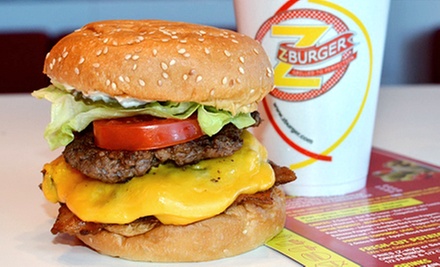
A fast-food chain in Washington is promising free hamburgers to federal workers who find themselves furloughed if the US government shuts down Tuesday, its founder and proprietor said Monday.

"If people don't go to work, they can come and get a burger" at four Z-Burger locations in the national capital region at noon hour and again in the early evening, Peter Tabibian told AFP.

Tabibian, whose family emigrated from Iran in the 1980s, acknowledged that he's going to lose money "if this thing goes on for 20 days," but he said he wanted to help out civil servants who are a big part of his clientele.

The offer is open to furloughed federal employees and contractors upon presentation of an ID card, as well as municipal workers in Washington, which as a federal district is overseen by Congress.

By one estimate, there are 320,000 federal employees in Washington and its adjacent suburbs, representing about 15 percent of the entire federal government payroll.

For the national capital, a federal shutdown could see the shutdown of tourist attractions such as the Smithsonian museums. It could also trigger a suspension of rubbish collection and parking enforcement.

Stephen Fuller, an economist at George Mason University outside Washington, estimates the region could lose $200 million a day if the federal government shuts down, the Washington Post reported.

Monday, September 30, 2013

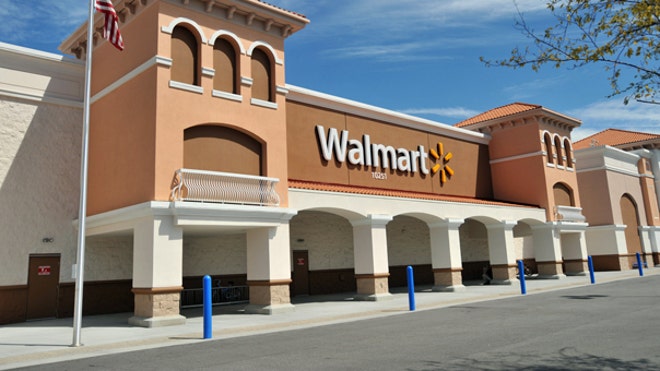
In DC, Wal-Mart jobseekers are desperate for work


They were there just after daybreak Monday, a line snaking down the sidewalk in Northeast Washington. And they kept coming, by the hundreds.

“Is this the line for Wal-Mart jobs?” asked Stephon Holly, 18, who arrived interview-ready. His wingtips were polished, his cardigan buttoned. He had a black portfolio packed with copies of his resume and talking points written on the legal pad to help him through a face-to-face.

But it never happened.

Wal-Mart reps were standing on the sidewalk, handing out fliers instructing the job seekers to apply online. They took names at the hiring centers they opened at 9 a.m. but offered nothing more.

Want to see the District’s economic problems laid bare? Spend a few minutes at one of two Wal-Mart hiring centers. A new surge of applicants arrived every 30 minutes.

“The D4 bus just stopped,” one of the folks there observed.

Sure enough, about a dozen hopefuls approached from that bus stop, headed to the future Wal-Mart store behind Union Station, shirts pressed, hair done, kids in strollers, thrilled by the prospect of a job.

Cars pulled up and three people climbed out to join the line. Many families came with two generations of applicants. All of them said they want to stay in the city of their birth. But few of them can afford it anymore.

By the end of the day, there were hundreds and maybe even a thousand applicants for about 350 low-wage jobs that the small-scale, 75,000-square-foot urban Wal-Mart will bring to Northeast. The same scene played out on Georgia Avenue NW, where another of the six Wal-Marts planned for the District is beginning to hire.

This is the point Wal-Mart was making, of course, when it threatened to pull out of the city this summer when the D.C. Council passed a living-wage bill. The legislation would have forced Wal-Mart and eventually other big-box stores to pay $12.50 an hour, higher than the District’s current minimum wage of $8.25.

Mayor Vincent C. Gray (D) vetoed the bill, saying the jobs and economic development were too important to risk.

“If they pay $8.25, $8.75, whatever. A job is a job and I need a job,” said Ronald Knight, 52, who has been unemployed since he left a job at a grocery deli counter to take care of his dying mother. “All I want is to work, and I’ll take anything.”

Debbie Thomas, 57. was more conflicted about the legislation.

“It really was a tough one,” she said. “It’s hard to live in this city on $7.45 or $8.25 an hour. I’ve lived here all my life, and I want to stay here. In the end, I’m just glad Wal-Mart’s here. I might get a job.”

She came to the hiring center with a folder full of her resumes, recommendation letters, work history. She worked in home health care for two decades until the group home she helped run lost its grant funding. That was two years ago. Two years of interviews, applications and resumes. Her unemployment checks would be almost identical to the current salary that Wal-Mart is offering.

“But you know, I don’t care. I would much rather work. Earn that money,” she said.

Next in line was Tracy Williams. She ran a kitchen in D.C. that made and shipped nearly 1,000 meals to halfway houses and elderly folks every day. She worked her way up from cook to manager. But Nutrition Inc. shut down two years ago, and all the resumes, interviews and phone calls have left Williams, 47, with zilch.

“I know I can work my way up again; I have no problem starting at the bottom here,” said Williams, who planned to apply online, in person, and then she’s going to call, call, call.

“There are no jobs out there. Nothing. I’ve been babysitting,” she said. “This is the first time it really feels like people are going to get work.”

She was the third woman I talked to Monday morning who had been laid off from a job she’d held for about two decades.

Wal-Mart is far from a perfect employer. The corporation was ridiculously stubborn in the fight over pay, and I hope the city’s wage debate shames managers into paying more than the minimum wage once the stores open.

But Wal-Mart also pledged to go into severely underserved parts of the District that have not benefited from the financial boom that has created condos with dog grooming salons on the roof and stores peddling $30 boxes of gourmet doughnuts.

In the District, Wal-Mart isn’t killing off mom-and-pop stores and sweet little groceries. It is going into places that have nothing and have had nothing for decades. And it is providing an anchor for other redevelopment to follow.

I wish all the folks who bashed Wal-Mart this summer had spent the day talking to the city’s forgotten, struggling, unemployed residents. They came looking for work, with resumes in hand and hope on their faces.

Monday, September 23, 2013

Let's stop naming mass shooters in media reporting

I got an email from an MSNBC producer Monday: “Topic: Another Mass Shooting. Theme: Why Does This Keep Happening?”

I’m sick of that question. Here’s mine: Why do we keep encouraging them?

There is no single cause for mass shootings, but we have an opening. The killers share four crucial traits: Nearly all are men. Nearly as many experienced a recent failure or loss. Most had easy access to guns. All were seeking attention.

We can’t eliminate men or failure. Gun reform is imperative, but Congress can’t find the courage. The stage, that’s our opportunity. Why do we keep ushering these goons onstage?

Stage access is governed entirely by the media. My profession has been as spineless as Congress — which at least admits the gun debate belongs to them. We keep pretending we have no role in this self-perpetuating succession of mass murder. We are helpless. We don’t create the stage, it just sort of … happens? That’s our story, and we are sticking to it.

The media didn’t start this. That is true. We didn’t cause Oklahoma City or Columbine. Those tragedies lit a terrible spark that has been smoldering and erupting for a decade and a half, and we have sure as hell been fanning the flames.

Now none of these killers are purely attention-seeking. Most are deeply, suicidally depressed; a fraction are mentally ill; and a smaller number are cold, calculating psychopaths. Notoriety is not the sole driver, but it is an essential one.

In his enlightening book Terror in the Mind of God, Mark Juergensmeyer distilled all mass murder into one pithy phrase: Performance violence. Murder as theater. Killing your boss or your girlfriend is revenge. But shooting up their entire building, or any symbolic building, is about raising your body count. You’re amping up the “wow” factor. It’s a performance. We know that.

Performances require an audience and demand a star. The media provides the audience and we cast the lead role.

Some have called for us to stop covering these mass shootings. That’s unrealistic, and no way to run a democracy. But what we can do, and remarkably easily, is withhold the spotlight.

The killing will get covered, but we can and should deprive the shooter of name recognition.

Tuesday, September 17, 2013

Walmart wins D.C.


In July, Washington D.C.’s city council approved a living-wage bill that would increase the minimum wage from $8.25 to $12.50 for employees of large retailers. Right after the vote, Walmart, the largest retailer of them all, said it would cancel plans to build three stores in D.C. and review three others already under construction. On September 12, Mayor Vincent Gray backed down and vetoed the bill.

“The bill is a job-killer,” he wrote to the council. “Nearly every large retailer now considering opening a store in the District has indicated that they will not come here or expand here if this bill becomes law.” Among the retailers, he said, were Target, Home Depot, Wegmans, Lowe’s, Walgreens, Harris Teeter, AutoZone and Macy’s. This is a familiar argument and one that seems to ignore the possibility that paying workers more could be good for companies: as consumers, they’d be able to spend more when they shop.

Walmart says it will move forward with its stores in D.C. now. “Mayor Gray has chosen jobs, economic development and common sense over special interests—and that’s good news for D.C. residents,” Steven Restivo, a company spokesperson, wrote in an email.

For those workers and activists hoping that D.C. would set an example for the nation, Gray’s decision was obviously disappointing. A statement from Respect D.C., a coalition of workers and community organizations, said: “Mayor Vincent Gray had the opportunity to stand up for the residents of this city, but instead he allowed large, out-of-town companies, like Walmart, to threaten him and ultimately dictate the policies of our city.” There are already calls for the city council to over-ride the mayor’s veto.

Tuesday, September 10, 2013

Make D.C. Smile


Make D.C. Smile, a self-appointed group in charge of making people in Washington happy through do-goodery, has launched a new Pay It Forward project that aims to put free coffee in your hands.

With the Blind Dog Cafe on Florida Avenue NW, Make D.C. Smile is helping to give away free coffee and tea purchased by someone else.
Individuals will be randomly selected throughout the day and surprised with a coffee or tea that has been pre-paid by another member in the community. Each coffee that is gifted will include a hand-made coffee sleeve with a positive message! In return, we encourage others to pay it forward and continue spreading positivity by any simple, small act of kindness of their choosing.
The group, which was formed a year ago, is asking people interested in "spreading positivity" to purchase a coffee or tea for someone else at Blind Dog, which is a pop-up coffee shop located in Darnell's Bar during the day.

Members of Make D.C. Smile recently stood on the Key Bridge with signs like "Today is Awesome" and "Chin Up Buttercup" in an attempt to make drivers smile, as WTOP reported. While the sign holding is their most practiced activity, the group was also behind a chalk mural last December that was covered in nice messages.

Update: Make D.C. Smile founder Massoud Adibpour explains how he got the idea for the coffee giveaway.
We got the idea for the project after hearing an NPR radio story about a similar campaign in the European Union, which began as a way to build community and show support for those struggling with hard times. Customers could choose to pay-it-forward by offering to purchase a 'suspended coffee' for another, which could be redeemed at anytime by anyone. We loved the idea, believing that sometimes it's the little things -- like a simple cup of coffee -- that can brighten one's day and propel a powerful movement of generosity and positivity, and we're excited to translate the concept here in D.C. area. We're thankful Blind Dog Cafe agreed to take part in the campaign as the first location, and we're hoping to get many other area coffee shops on board as well.
Source