Showing posts with label geography. Show all posts

Sunday, March 16, 2014

World's most expensive and inexpensive cities

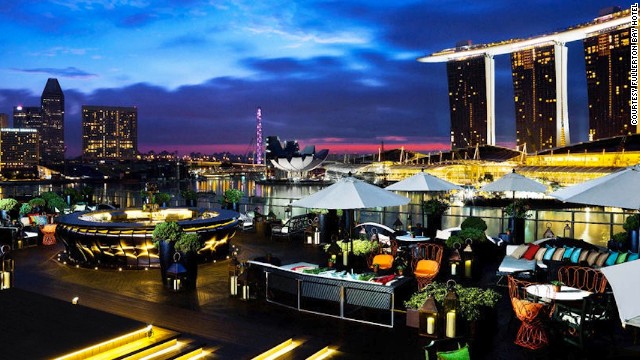
Move over Tokyo.

Singapore has dethroned the Japanese capital to become the world's most expensive city in 2014, according to the Economist Intelligence Unit's latest Worldwide Cost of Living survey.

The bi-annual report, which ranks 131 global cities, credits currency appreciation, solid price inflation and high costs of living for Singapore's dubious new distinction.

"Car costs have very high related certificate of entitlement fees attached to them, which makes Singapore significantly more expensive than any other location when it comes to running a car," says the report.

"As a result, transport costs in Singapore are almost three times higher than in New York. In addition, as a city-state with very few natural resources to speak of, Singapore is reliant on other countries for energy and water supplies, making it the third most expensive destination for utility costs."

Singapore is also the priciest place in the world to buy clothes.

Last year's title holder Tokyo, dropped from the top spot to sixth -- tied with Melbourne, Geneva and Caracas.

Tokyo's decline is due to the weaker yen, says the EIU.

World's 10 most expensive cities to live in 2014

1. Singapore

2. Paris

3. Oslo, Norway

4. Zurich, Switzerland

5. Sydney

6. Caracas, Venezuela

6. Geneva, Switzerland

6. Melbourne

6. Tokyo

7. Copenhagen, Denmark

Asia also has the world's cheapest city on the list.

Down at the other end of the 131-city survey, the EIU lists Mumbai as the world's least expensive city to live in. The Indian capital, New Delhi, is third cheapest.

"Although India has been tipped for future growth, much of this is driven by its large population and the untapped potential within the economy," says the EIU.

"Income inequality means that low wages proliferate, driving down household spending and creating many tiers of pricing that keep per capita spending low.

"This, combined with a cheap and plentiful supply of goods into cities, as well as government subsidies on some products, has kept prices down, especially by Western standards."

World's 10 least expensive cities to live in 2014

122. Riyadh, Saudi Arabia

123. Jeddah, Saudi Arabia

124. Panama City, Panama

124. Bucharest, Romania

126. Algiers, Algeria

127. Damascus, Syria

127. Kathmandu, Nepal

129. New Delhi

130. Karachi, Pakistan

131. Mumbai, India

The Worldwide Cost of Living survey is released twice a year by the EIU.

It compares more than 400 individual prices across 160 products and services in 131 cities, including food, drink, clothing, household supplies and personal care items, home rents, transport, utility bills, private schools, domestic help and recreational costs.

In total, more than 50,000 individual prices are collected in each survey.

"The cost-of-living index uses an identical set of weights that is internationally based and not geared toward the spending pattern of any specific nationality," says the EIU. "Items are individually weighted across a range of categories and a comparative index is produced using the relative difference by weighted item."

Saturday, December 28, 2013

The worst drivers in America


The study was conducted by CarInsuranceComparison.com and compiled five types of law-enforcement data:

• Fatality rate (per 100 million vehicle miles traveled)
• Failure to obey citations issued (traffic signals and seat belts)
• Drunk driving citations
• Number of tickets issued
• Careless driving citations

The data itself came from a range of sources, including the National Highway Traffic Administration and Mothers Against Drunk Driving. CarInsuranceComparison ranked each state in each category according to how well (or poorly) it performed, then added the rankings to create a total score. For example, a state that ranked 32nd in careless driving citations and 14th in drunk driving citations would have a combined score of 46 for those two areas. (For a peek at the actual tabulations, check this Google doc.)

When all the dust settled, Louisiana had earned the dubious distinction of having the worst drivers in America. It might interest you to know that despite Louisiana's liberal alcohol policies, DUIs aren't the cause of its low rank. In fact, Louisiana "only" scored 38th (out of 51, including the District of Columbia) in rates of drunk driving arrests, but really hit bottom in failure-to-obey citations, tickets issued, and incidents of careless driving.

Whatever's wrong with Louisiana, it's catching, because the Bayou State's neighbors didn't fare too well, either. In fact, seven of the ten worst-ranked states are situated in the South. (Assuming we want to associate Texas with the South, which is a matter of some debate.) And so, without further ado, the states with the worst drivers are:

1. Louisiana

2. South Carolina

3. Mississippi

4. Texas

5. Alabama

6. Florida

7. Missouri

8. North Carolina

9. Montana

10. North Dakota

At the other end of the list -- the good end -- we find states that are generally farther to the north. The best of the bunch is Vermont, which boasts a higher-than-average number of drunk-driving incidents, but on every other metric, it's in the top ten. The states with the best drivers are:

51. Vermont

50. Utah

49. New Hampshire

48. Minnesota

47. Oregon

46. Maine

45. Connecticut

44. District of Columbia

43. Iowa

42. Massachusetts

41. Alaska

Rationale & Caveats
Can we draw any broad conclusions about America based on this study? As much as we love to be equal-opportunity finger-pointers, it's hard to ignore the fact that the worst-driving states fall largely in one southern cluster, while the better-driving states lie mostly to the north.

But surely the disparity isn't related to weather -- otherwise, why would Montana and North Dakota make the top-ten worst-driver list? The overlap doesn't seem to be alcohol-related, either -- at least not among the most accident-prone segment of drivers -- nor does it seem linked to licensing laws for teens. Frankly, the problem of bad driving seems most closely aligned with poverty rates, though even that isn't a perfect match.

Then again, maybe the clusters are a coincidence, or perhaps the study is inaccurate -- something we've seen before and will likely see again. Methodology nerds could surely poke a few holes in the survey's backend, and our own experiences tell us that some states deserve slightly poorer rankings. Heck, Lindsay Lohan still roams the streets of California, and it's only ranked #19?

Sunday, December 22, 2013

Trivia about Washington D.C.

You know it’s our nation’s capital, but were you aware of these fun quirks?

1. The Capitol building was not designed by an American. William Thornton was a British doctor.

2. Similarly, the White House was designed by an Irish architect, James Hoban.

3. The Smithsonian is named for an Englishman, James Smithson.

4. He never set foot on American soil.

5. D.C. residents could not vote in presidential elections until the 23rd amendment was ratified in 1961.

6. Both Herbert Hoover and John Quincy Adams kept alligators at the White House.

7. The White House movie theater was originally a coatroom.

8. When Jimmy Carter was president, he watched 480 movies there—the most of any POTUS.

9. D.C. gets more rain than Seattle.

10. Perhaps that’s why D.C. residents drink more wine per capita than residents of any of the 50 states.

11. The National Cathedral has lots of wacky gargoyles and grotesques. One of them is Darth Vader.

12. In 1998, one of the unknowns interred at the Tomb of the Unknown Soldier in Arlington National Cemetery (actually just across the Potomac from DC) was identified.

13. D.C. is home to tons of national museums. But don’t forget the National Bonsai and Penjing Museum, which houses about 200 meticulously pruned mini trees!

14. There were more members of the media at the 1963 March on Washington than at Kennedy’s inauguration two years earlier.

15. The Washington Monument is (accidentally) two different colors.

16. Funding ran dry halfway through the project. When construction restarted, the builders used stones from a different source. Whoops.

17. When President Woodrow Wilson had to move out of the White House at the end of his term, Prohibition forbade him from moving his precious wine collection. He appealed to Congress and passed a special law that allowed one person to transport alcohol from 1600 Pennsylvania Avenue to Wilson’s home. Sneaky!

18. Wilson happens to be the only president buried in the District.

19. Both the Minnesota Twins and the Texas Rangers started out as the Washington Senators.

20. Whereas the Washington Redskins were originally based in Boston.

21. The D.C. Metro is the second busiest subway system in the United States.

22. D.C.’s streets are lettered—but there is no “J” street.

23. That’s because, during the 18th century, the letters “I” and “J” were basically interchangeable.

24. (Thomas Jefferson actually wrote his initials as “T. I.”)

25. An empty crypt lies beneath the Capitol building—George Washington was supposed to be buried there.

Source

Saturday, August 3, 2013

Travel destinations frozen in time

1. Inle Lake — 19th-century Myanmar

The Nyaung Shwe township of Myanmar surrounds Inle Lake, where a fascinating and specific culture has gone unchanged for years, including leg-rowing and floating gardens amongst the reeds. However, increased population and rapid growth in both agriculture and tourism have put the lake’s resources at risk.

2. The Funen Village — 18th and 19th-century Denmark
Located in the Fruens Bøge district of Odense, the Funen Village features 25 buildings from Funish villages, most of which date to the 18th and 19th century. In the summer, people in peasant costume give the village the impression you’re back in Hans Christian Andersen’s era.

3. The Old Town, Aarhus — 16th to 19th-century Denmark
In 1914, the Old Town in Aarhus opened as the world’s first open-air museum. It’s a historical hodgepodge of buildings built between 1550 and the late 1800’s from all over the country. It has operational shops with museum staff working in the roles of town figures adding to the illusion of a “living” town.

4. Kizhi Island — 15th to 17th-century Russia
Kizhi is an island in Russia’s Lake Onega. It’s had settlements since the 15th century, among them two churches and a bell tower known as the Kizhi Pogost, built in the 1700’s. The population declined in the 1950’s and historical buildings from around the region were transferred to the island for preservation, and the whole island is now an open-air museum.

5. Sankei-en — 15th to 19th-century Japan
The Sankei-in is a resilient piece of history. Badly damaged during the Second World War, it was restored to its pre-war condition by the Sankeien Hoshōkai Foundation. Its buildings come from all over Japan, most of which are declared historic cultural properties. Its oldest building is the Tōmyō-ji pagoda, originally built in Kyoto in 1457.

6. Xinye Village — 14th-century China
Xinye in the Zhejiang Province of China is noted for its well-preserved Ming and Qing era architecture and ancient residential buildings. This historic village also holds ancestor worship ceremonies for the annual Shangsi Festival, an ancient tradition practiced by only a few communities in China today.

7. Little Woodham Living History Village — 17th-century England

Also known as the Seventeenth Century Village, Little Woodham is a living museum that recreates rural English life in the mid-17th century. Found in an ancient wood of Hampshire, the village volunteers act as if it’s the summer of 1642, and talk about Charles I and the impending war between the King and Parliament.

8. Rothenburg ob der Tauber — 13th to 19th-century Germany

From the late Middle Ages to 1803, Rothenburg ob der Tauber was a Free Imperial City in Bavaria, Germany. Now it’s a tourist destination well known for its well-preserved medieval town and architecture. It’s so gorgeous, parts of Chitty Chitty Bang Bang and Harry Potter and the Deathly Hallows – Part 1 were filmed in Rothenburg.

9. Archeon — pre-modern Netherlands
Archeon is an archeological living museum in the Netherlands that brings to life the Dutch daily workings of historical eras such as the Stone Age, the Roman times, and the Medieval period. It opened in 1994 and has played host to several festivals such as theMidsummer Fair and the Elf Fantasy Fair.

10. Minsok Village — 18th-century Korea

Historical Korean life and culture are brought to life in Minsok Village, a tourist attraction in Yongin, South Korea. Replicas of traditional houses of different social classes from various regions are on full display and use, but it’s less so a museum and more educational tourist playground—it’s part of Everland, South Korea’s largest amusement park.

11. Blists Hill Victorian Town — 19th-century England
The sights, sounds, and smells of a Victorian Shropshire town in the late 19th and early 20th centuries are recreated in Blists Hill, one of ten museums operated by the Ironbridge Gorge Museum Trust in Shropshire, England. It’s also a functioning town run by museum volunteers and some films and shows such as Doctor Who have used the town as a set.

12. Etar Architectural-Ethnographic Complex — 18th-century Bulgaria
Commonly referred to as Etara, the Etar Architectural-Ethnographic Complex has locals presenting Bulgarian customs, culture and craftsmanship such as wood-carving, pottery, and needlework. It’s on the northern edge of the Bulgarka Nature Park, between the park and the city of Gabrovo, Bulgaria.

13. Zuiderzeemuseum — 17th-century Netherlands
The Zuiderzeemuseum is a museum in Enkhuizen, Netherlands that preserves Enkhuizen’s cultural heritage and the maritime history of the Zuiderzee Bay. Open year-round, it consists of an “inside” and an “outside” museum, but the outdoor museum is only open in the summer. The most notable attraction is the ships’ hall, which offers a close-up view of common historical boats from Enkhuizen’s fishing industry.

14. Shikoku Mura — 19th-century Japan
Shikoku Mura is an open-air architectural park in Takamatsu in the Kagawa Prefecture of Japan. Buildings from around the Shikoku are dating from the Edo period through to the Taishō period are on display in the park and have remained relatively unchanged since the early 20th-century.

Monday, July 29, 2013

America's most hospitable cities

Debbie's Note: I've never heard of this website before but it seems so cool for visiting new cities without the high cost of booking a hotel. Plus, you can book a last-minute trip without spending a fortune.

Every day, Airbnb hosts across the US are practicing the ultimate form of hospitality: opening their homes to travelers from all over the world. Whether it’s a tour of their city, a home-cooked meal, or even just a bottle of wine in the fridge, hospitality is at the core of the Airbnb experience they offer.

This got us wondering: where are Airbnb hosts doing this the best? What are the most hospitable cities in America?

More than 4 million guests have stayed on Airbnb, and with hundreds of thousands of reviews, we’re in a unique position to find out. We filtered through those reviews and looked for cities with the highest percentages of five-star listings, signifying places where Airbnb hosts really go above and beyond to welcome their guests.

That left us with something we’re calling the Airbnb Hospitality Index—a guide to where Airbnb hosts bring that extra-special touch. (Head to our Nerds Blog for more on the methodology calculating the Hospitality Index across the USA.) Using the Hospitality Index, we are able to calculate the most hospitable cities in the USA.

America’s most hospitable cities

Tampa, FL
Smack in the middle of Florida’s Gulf Coast, Tampa is where Southern US hospitality meets South Floridian diversity and flair.
Featured: Private room known as “The Green Room” in Tampa FL

Mendocino, CA
Mendocino hosts have a laid-back attitude that contrasts with the area’s dramatic Pacific scenery. Their gentle welcome makes their “village” one of the USA’s most hospitable.
Featured: Historic Home in Mendocino Village in Mendocino, CA

Eugene, OR
The youthful vibe of Oregon’s most relaxed college town leaves guests feeling calmed, inspired, and ready to hit the next farmers market.
Featured: Private Garden Cottage in Eugene, OR

Bend, OR

A world away from urban mania, Bend hosts encourage exploration of their beautiful town by leaving guests bicycles and providing wholesome breakfasts.
Featured: Fun, stylish Westside cottage in Bend, OR

Raleigh, NC
Raleigh hosts share North Carolinan charm by baking guests fresh desserts and welcoming them with Southern sweet tea. Ah, bliss.
Featured: Private room in Golf community in Raleigh, NC

Memphis, TN
The South is at its most gracious in Memphis, where guests are treated like family. Within minutes, they’re on a first-name basis with hosts’ families—and pets!
Featured: Double Room – Quiet Memphis Cove in Memphis, TN

Madison, WI
Hosts in Madison love acting as tour guides for their guests, unearthing the best local spots for eating, drinking, and relaxing.
Featured: Cozy Artist’s House in Madison, WI

Nashville, TN
No lockboxes or mailed keys here! Instead, Nashville hosts welcome their guests with hugs and warm smiles.
Featured: Historic East Nashville Home 1906 in Nashville, TN

Tucson, AZ
Tucson hosts reflect the creative, artistic flair of their spaces. They enjoy sharing the culture of their buzzing college town with guests.
Featured: Tucson Poet’s Studio inTuscon, AZ

Tahoe, CA
Airbnb guests in Tahoe are blown away with the beautiful spaces provided by their hosts, which reflect the stunning scenery that surrounds them.
Featured: Modern Tahoe Dollar Point Retreat in Tahoe, CA

Trends
Southern Comfort
Tampa, Raleigh, Memphis & Nashville

Leading the charts with four of the top 10 slots is the American South. While its reputation of being neighborly precedes it, Southern hospitality thrives in Florida, North Carolina, and Tennessee, where hosts welcome their guests as part of the family. Southern hosts take pride in their local communities, often spending evenings showing their guests around town, and 5-star hosts greet guests with personal touches like freshly baked treats and tea.

Great West Coast
Mendocino, Bend & Tahoe

With its proximity to urban hubs, the Great West Coast is an escape destination for city slickers. In California and Oregon, hospitality is about understanding guests’ desire to unwind from a long drive and busy city life. Hosts offer amenities like continental breakfast and leave bikes for local exploration. They provide guides to local hiking trails and favorite restaurants, but they know when to make themselves scarce to allow guests time to relax.

Almae Matres
Eugene, Madison, Tucson

Knowledge is power for hosts in these intellectual epicenters. Hosts near the Universities of Oregon, Michigan, and Arizona are deeply rooted in their academic communities and enjoy acting as local advisors for their guests. They typically rent private rooms or in-law apartments with shared central spaces like kitchens and living rooms where they often provide information, maps and tips about the surrounding city. Here, hospitality is defined by helping guests get assimilated as quickly as possible.

Source

Wednesday, July 24, 2013

Worst drivers by state

Everybody thinks their state’s drivers are the worst. If you live in Massachusetts, like I do, you think Boston drivers are more aggressive and disconnected than anywhere in the country. If you live in New York, or southern California, you think your population has a lock on the Worst Driver title. But then there are the statistics that measure all kinds of things from the total number of crashes, the age of the driver, and how well drivers understand the rules of the road, and they prove that what you think about your state is a pretty different from the truth.

Least Likely to Understand the Rules of the Road: District of Columbia

GMAC Insurance conducted a study in 2011 that polled respondents on basic questions you might find on any state’s written driving test. Overall, about 20 percent of those respondents – 41 million people – wouldn’t pass if they had to take a written test. But our nation’s capital appears to be the worst, ranking 51st out of all 50 states and one district. Just 71 percent of drivers polled there were capable of passing a written driving test.

Worst Teen Drivers: South Dakota
US News and World Report published a study that focused on teen driving, with 11 variables that took teen fatalities, number ofteen driver’s licenses issued and road quality statistics into consideration. With more than 46,500 teen drivers, South Dakota scored a pitiful 41.72 in US News and World Report’s methodology.

Worst Senior Drivers: Florida
“My parents didn’t want to move to Florida,” said Jerry Seinfeld, “but they turned sixty and that’s the law.” Florida estimates that by 2030, one quarter of all drivers carrying a license in that state will be over the age of 65. So it should be no surprise that according to TRIP, a national transportation research group, people over the age of 65 are more likely to get killed in a car accident there. California has more senior drivers, but experienced fewer fatalities. Per capita, Texas had the most senior traffic deaths.

Most Distracted Drivers: Tennessee
The National Highway Traffic Safety Administration and the National Safety Council are placing a strong emphasis on eliminating driver distractions like cell phones from the driver’s seat. Both New York and California scored high on the number of cell phone-related crashes that resulted in fatalities, but Tennessee was off the charts. The NSC found that 10.6 percent of all fatal crashes in that state involved the use of a cell phone. That’s ten times the average, and well beyond that of states like New Jersey and Massachusetts.

Most Likely to Die in a Car Crash: Montana
If you get in an accident in Montana – according to 2012 US Census data – you’re more likely to die in a car accident. Per hundred million miles traveled, Montanans suffer an average of two fatalities per year. That compares to 0.9 in New York, and 0.6 in Massachusetts. I can only assume this is because Montanans are more likely to drive 1967 Chevy pickups with no seatbelts, if I can trust what I see in the movies.

Source

Tuesday, July 23, 2013

Easy vacation destinations

Regional Getaways
At this point, most of us have planned our summer travel, but there’s no reason our journeys have to end when the air starts to chill.

We’ve rounded up the best upcoming chic destinations for you, depending on your part of the country—because travel expenses aren’t just about where you’re going, they’re also about where you’re coming from. A quick and inexpensive trip for some might require hours in the air and thousands of dollars for others (Hawaii and London come to mind as quick jaunts for the West and East Coast respectively; not so much for the reverse coasts).

We’ve divided our favorite chic and inexpensive getaways by region, so you can spend less time and money in the air, and more where you want to—on the ground.


If You’re Traveling From the NortheastIcelandA hot new destination, it’s close to the Northeastern United States and affordable compared to the rest of Western Europe. Iceland Air has agreat stopover option which allows travelers to explore Iceland en route to (or on their way back from) more than 20 destinations served by the airline, for the cost of a single flight. For example: Depart Boston on September 9, hang out in Reykjavik for a few days, and then head on to London on the 12th, all for $439 including taxes and fees. Despite the economic crisis that nearly turned Iceland into a barter economy just a few years ago, hotel prices still haven’t dropped to what we’d call “cheap” levels. But deals are certainly available. At the Hótel Frón, rooms in September start at $139 per night.

Portugal
Portugal is a great destination for lovers of food, culture, and history. With a ton of castles, museums, music venues, delicious eateries, and kind, English-speaking locals (all just a few hours from the U.S.), it’s the perfect long weekend. One way to score an inexpensive flight is to fly from the East Coast to a major hub like London or Madrid, which tends to be less expensive than flying to Portugal directly. From there, try out a low-cost European airline likeEasyJet for the short intra-European leg. In October, you can get from London to Lisbon for as little as 14 British pounds each way. (To play with the numbers, try out Skyscanner.)

In Lisbon, the Hotel Vip Executive Diplomático is located in a quiet neighborhood near the incredible Castelo Sao Jorge and Parque Eduardo VII. For about $120 per night in October, you get a sizable room with a plentiful breakfast. For just $10 more, upgrade to luxury at the Tiara Park Atlantic Hotel, just a few blocks away. A short drive north from Lisbon along the coast leads to Porto, a beautiful city in the Douro River Valley that is a UNESCO World Heritage Site. Here, prices dip even lower than in the capital. October rates at the centrally-located, four-star Mercure Porto Centro start at just $72.

If You’re Traveling From the SoutheastBermuda
From its friendly locals to its beautiful beaches, fascinating colonial history, glorious seafood, and wide range of lodging options, the tiny archipelago has a ton to offer (beyond those fabulous shorts).

The downside of Bermuda is its high GDP, which means that visiting the island can be a pricey undertaking—but not if you know where to go. Instead of staying at one of the big name resorts (Fairmont or Mandarin Oriental) where the cheapest rooms can run you upwards of $400 per night, check into a smaller guesthouse or B&B. These are tiny enclaves of British colonial hospitality where the proprietors treat guests like long-lost cousins. The cozy Greenbank Guesthouse & Cottages is a short ferry ride from the city of Hamilton. A garden view room with a kitchenette is $175 per night. An apartment with room for four is just $320 per night (that’s $80 per person).

Another option is the Oxford House, just across the water in Hamilton. This stately townhouse feels like a step back in time when people dressed up in morning coats and prim hats for luncheon. A double here is $246 per night, but like Greenbank, it pays to bring friends—a quad room is $346, or $86 per person. Both properties include breakfast in the room rate.


If You’re Traveling From the West Coast
Baja Peninsula (But Not Where You’re Thinking)That long strip of land stretching from southern California down alongside the Sea of Cortez has come to be defined by the spring break party town that is Cabo San Lucas. But if you’re looking for something more authentic (and less “daiquiri in a foot-long plastic glass”), stay in the quiet artsy town of Todos Santos, 75 miles north of Cabo. The later fall months are shoulder season (the time between high and low tourist season), which means cheaper flights (around $400 roundtrip from Los Angeles and $600 from Seattle) and fewer tourist throngs.

Rancho Pescadero is the hidden gem of Baja. This incredible 27-room hotel combines luxurious amenities and top-notch service with a casual, shoes-optional vibe, and is located right on the Pacific Ocean where sightings of surfers and whales are the norm. There are no TVs or phones (though free WiFi is available for addicts), and activities include yoga, kayaking, stargazing, laying around, and eating homegrown organic food. Rooms are large, with balconies, and start at $185.


If You’re Traveling From the MidwestToronto, CanadaFoodies and architecture buffs flock to Toronto for its diverse selection of cuisine (from Azerbaijani to Laotian) and eye-popping buildings (Frank Gehry’s Art Gallery of Ontario, Will Alsop’s Sharp Centre for Design, and Daniel Libeskind’s Michael Lee-Chin Crystal wing of the Royal Ontario Museum).

Canada’s new low-cost carrier Porter Airlines has direct daily flights from Chicago for around $400, including complimentary snacks, wine, and beer (you read that right—free booze on a flight!). The Novotel Toronto Centre is a grand property and a great value in downtown, with rates starting at around $150 per night. For something a bit trendier, check into theDrake Hotel in the artist-filled Queen West neighborhood. This 19-room property has performance art installations in the lobby and a crush of partiers waiting to get into its unspeakably cool bar on the weekends. Rooms here start at about $200 per night.

Even if you are one of the hip kids staying at the Drake, you must try a poutine in Toronto. Although it sounds harmless (charming, even), don’t be fooled. Poutine is a street snack made of french fries, gravy, and cheese curd. Heart valves beware!

Wednesday, November 7, 2012

Worst airports for delays


Find out at which airports your flight is most likely to get delayed—and which times of day are worst for takeoff.

No. 1 Newark Liberty International Airport (EWR)
Flights Delayed: 23.83%

Apparently, the New Jersey airport missed the memo that this was a year to improve on-time departures. Unlike most other U.S. airports, it fell by three percentage points in performance and skidded down to No. 1 worst airport (from its No. 7 tie last year). By 7 p.m., your chance of a delay here reaches the 40 percent mark. Your best chance is to fly out before 7 a.m.

Best Time Window: Before 7 a.m.
Worst Time Window: 1–11 p.m.

No. 2 San Francisco International Airport (SFO)
Flights Delayed: 21.78%

How much slack can you cut an airport just for fog? SFO has been in the bottom 10 since 2008, and keeps inching closer to the No. 1 worst spot. Perhaps due to that poor visibility, it has the earliest start time for the period in which delays rise above 20 percent: a depressing 10 a.m. Your best strategy here is to leave really early.

Best Time Window: Before 8 a.m.
Worst Time Window: 10 a.m.–10 p.m.

No. 3 Chicago Midway International Airport (MDW)
Flights Delayed: 20.1%

Midway used to be considered the saner alternative to O’Hare, but this Windy City airport has had a much worse on-time record the past three years—and is making a repeat appearance in the bottom three. The good news? Midway has improved its timeliness by nearly 10 points, and at the very least, managed to break out of its two-year record as the No. 1 worst airport.

Best Time Window: Before 8 a.m.
Worst Time Window: Anytime after 3 p.m.

No. 4 Miami International Airport (MIA)
Flights Delayed: 19.35%

Miami slid from its No. 8 spot and into the bottom five despite boosting its performance two points. If you want an excuse to spend another evening partying in the city, use this one: after 3 p.m., your odds of being delayed get stuck at about 25 percent. Stay up all night, on the other hand, and you can catch a likely on-time flight—as long as it’s before 8 a.m.

Best Time Window: Before 8 a.m.
Worst Time Window: 2–11 p.m. (especially 5–10 p.m.)

No. 5 George Bush Intercontinental Airport (IAH)
Flights Delayed: 19.29%

The Houston hub is not looking very presidential this year: its on-time performance worsened by three percentage points, and it zoomed from the top 10 best to the bottom five. Trouble here starts as early as 2 p.m. and gets worse during the happy hour zone—a good reason to fly out by lunchtime.

Best Time Window: Before 8 a.m.
Worst Time Window: 5–9 p.m.

No. 6 Chicago O’Hare International Airport (ORD)
Flights Delayed: 18.82%

O’Hare has long been considered the bad boy for lengthy waits—but has actually stayed out of the bottom five since 2009, when it ranked as the second worst in the land. That said, if you are trying to fly out late at night, it is still the worst. After 11 p.m., you have a 53 percent chance of needing to catch some shut-eye on the airport floor.

Best Time Window: Before 7 a.m.
Worst Time Window: 2–10 p.m.; after 11 p.m.

No. 7 Denver International Airport (DEN)
Flights Delayed: 18.24%

As proof that the bar is being raised for on-time performance, Denver actually improved two percentage points this year, but still fell two slots lower on the list. It also offers more challenges to travelers: the delay rate doesn’t vary much after noon, so it’s harder to pinpoint one rush-hour time frame to avoid.

Best Time Window: Before 9 a.m.
Worst Time Window: 3–11 p.m.

No. 8 Dulles International Airport (IAD)
Flights Delayed: 18.02%

Dulles (Washington, D.C.) wins the distinction of being one of the only airports to perform worse this year. It ranked No. 5 among the most on-time airports last year, and has now landed in the bottom 10 after falling by two percentage points. In particular, don’t consider a late-night departure: delays rack up to a depressing 50 percent by 11 p.m.

Best Time Window: Before 8 a.m.; between 9 a.m. and noon.
Worst Time Window: Anytime after 4 p.m. and especially at 11 p.m., when the odds of a delay reach 50 percent.

No. 9 BaltimoreWashington International Airport (BWI)
Flights Delayed: 17.64%

BWI gets credit for being one of the most improved this year: a nearly six-point uptick, gliding from the silver medal of tardiness to a less egregious No. 9. But don’t tempt fate: higher-than-20-percent delays start at 2 p.m., rise to 25 percent by 4 p.m., and don’t get much better until the next morning.

Best Time Window: Before 9 a.m.
Worst Time Window: 2–11 p.m.

No. 10 DallasFort Worth International Airport (DFW)
Flights Delayed: 16.67%

This mega-hub keeps travelers guessing: two years ago, it ranked as the third worst airport for flight delays, then last year, it was in the middling ranks among the 29 airports. This year, even though DFW improved its performance a smidge, Big D could still stand for Big Delays.

Best Time Window: Before 8 a.m.
Worst Time Window: 4–9 p.m.

Monday, October 29, 2012

Sweden wants our trash

Move over Abba, Sweden has found new fame. The small Nordic country is breaking records — in waste. Sweden's program of generating energy from garbage is wildly successful, but recently its success has also generated a surprising issue: There is simply not enough trash.

Only 4 percent of Swedish garbage ends up in a landfill, according to Swedish Waste Management. Due to its efficiency in converting waste to renewable energy, Sweden has recently begun importing around 800,000 tons of trash annually from other countries.

Norway is now paying Sweden to take its garbage. Swedish sights are also set on Bulgaria, Romania and Italy as future trash exporters, as Catarina Ostlund, a senior advisor for the country's environmental protection agency, told PRI. Those countries rely heavily on landfills – a highly inefficient and environmentally degrading system.

Sweden is leading the way in waste management, but it is one of few. We live in a world where nearly 70 percent of deep sea Arctic creatures are in contact with human trash like plastic bags and beer bottles. In the United States, where the EPA says 250 million tons of trash was generated in 2010 alone, only about 34 percent was recycled.

Sweden creates energy for around 250,000 homes and powers one-fifth of the district heating system, Swedish Waste Managements says. Its incineration plants offer a look into the future where countries could potentially make money off of their trash — and not just dump it in the ocean or bury it in mass landfills.

"I would say maybe in the future, this waste will be valued even more," Ostlund said. "So maybe you could sell your waste, because there will be a shortage of resources within the world."

Leave it to the Scandinavians to make even trash chic.

Source

Saturday, October 20, 2012

How DC got off the most dangerous cities list

While reporting this year’s list of America’s Most Dangerous Cities, I came across this interesting fact:Washington, D.C. wasn’t on it.

Long considered synonymous with violent crime, the nation’s capitol actually came in 16th this year with a violent crime rate of 1,130 per 100,000 population, a little more than half the rate in Detroit and significantly below smaller cities like New Haven, Conn. and Little Rock, Ark.

A decade ago, Washington would have ranked around seventh in the country. And in the early 1990s, the city was racking up 500 homicides a year, more than Detroit today. This year, Washington is on track to have 100. Its murder rate in 2011 was 17 oer 100,000, 24th in the country among cities with more than 200,000 population and less than half Detroit.

The reasons Washington has gotten less violent: Gentrification, tax breaks, and urban reforms, according to John Roman, a senior fellow at the Urban Institute who also teaches criminology at theUniversity of Pennsylvania.

“If you want to change crime at a place you have to change the nature of the place,” he said.

The relentless expansion of the federal government — and Gucci-clad supplicants at lobbying and consulting firms — helped drive up incomes in Washington, Roman said, while the city handed out generous tax breaks to move businesses within its borders.

The city also tore down high-rise public housing towers and replaced them with garden-style apartments. Gentrification, meanwhile, drove many of the city’s poorer residents out to suburbs like Prince George’s County, where the violent crime rates spiked a few years ago, but have since declined substantially.

Gentrification can be a brutal process for the residents who are priced out of their neighborhoods, but Roman said Washington’s redevelopment came mostly in unoccupied areas.

“Three to four square miles went from brownfields to upscale condos,” Roman said. That allowed the city to “salvage the core of downtown without really displacing people.”

Wouldn’t the influx of wealthy, Rolex-wearing yuppies draw violent criminals seeking to rip them off? No, said Roman. Most urban violence actually involves people who already know each other. A startling amount occurs among members of the same gangs, for example.

“Violence begets violence,” he said. “When those youth get pushed out by gentrification, they take the violence with them.”

To construct the list, we ranked U.S. cities with a population over 200,000 according to their violent crime rate as reported by the FBI’s Uniform Crime Reports database. These preliminary 2011 statistics come with more caveats than the black-box warning on a dangerous chemotherapy agent, and the FBI says they shouldn’t be used to compare one city with another. Differences in police reporting standards, urban borders and economics can make it tricky to compare densely populated Detroit, say, with sprawling Houston. We used cities instead of larger metropolitan statistical areas, which gave the disadvantage to older cities with tighter boundaries.

Source

Friday, October 5, 2012

10 unexpectedly romantic cities

Minneapolis
For natural beauty with a big-city vibe
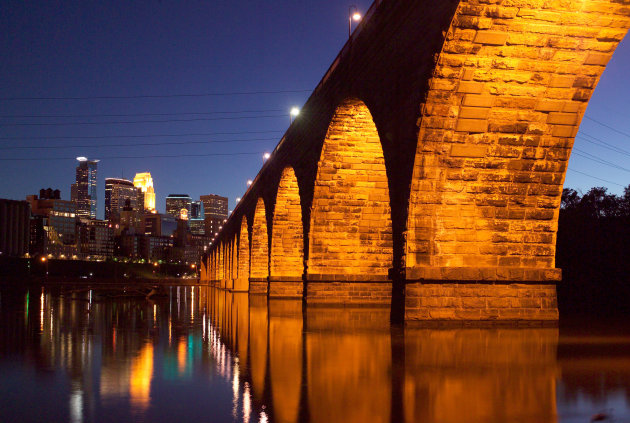
Minneapolis, with its booming big-city feel, combined with its 180 parks, 22 lakes, and 80 miles of bike paths and trails, is a perfect destination for couples who want a mix of sophistication and time alone with nature. Book a room at the 24-room Nicollet Island Inn, on an island in the Mississippi. Its romance package is lovely, and you can venture out to stroll through pretty neighborhoods lined with Victorian homes. The city’s Chain of Lakes offer abundant opportunities for romantic strolls complete with skyline views. Choose pretty Lake of the Isles, with lots of privacy-promoting nooks and crannies, for a late summer, early fall picnic. Go for drinks in the speakeasy-themed bar called Prohibition, at the hip Minneapolis W Foshay. Contact the Hitching Company for a horse-drawn carriage ride along the riverfront, along cobblestone streets and across the Stone Arch Bridge. In winter, cozy blankets are provided. On a less sophisticated note, you can take the light rail to the Mall of America, to get married in the “Chapel of Love,” or renew your wedding vows on the mall’s roller coaster.

Cleveland, Ohio
For rock 'n' roll nostalgia and more
What can be more romantic than reliving special musical moments together? And where better to do that than at Cleveland’s Rock and Roll Hall of Fame + Museum? The Beatles exhibit alone includes some 70 artifacts (stage outfits, hand-written musical arrangements). Also catch the Grateful Dead exhibit (through 2012), and many others, including Jimi Hendrix, U2, and the Doors. On a totally different musical note, catch the Cleveland Orchestra at the handsome Severance Hall. Finish a day of touring at Edgewater State Park, where you can picnic while you watch the sun slip down into Lake Erie. Perhaps enjoy a nightcap at the Velvet Tango Room, a modern-day “speakeasy” in the Tremont neighborhood. Shop for retro fashion, antiques, and bargains in Larchmere. Grab a tasty lunch, including some interesting Japanese fare, at Flying Cranes Café on nearby Shaker Square. Extend your trip a bit by a drive out to Put-in-Bay, on South Bass Island, north of Sandusky. Book rooms at the Vineyard Bed and Breakfast, a century-plus-old farmhouse set among lovely vines, and with its own private beach.

Lanai City, Lanai, Hawaii
For Old Hawaii away from the crowds
Sure Hawaii equals romance. And this tiny island of Lanai, recently purchased by Larry Ellison, takes you right to the romantic Hawaii of times past. This former Dole Pineapple company town (it isn’t remotely a city), is still home to a one-cell jail and to colorful wood-frame buildings that once housed field workers. It is a place where you can load up on superb Hawaiian coffee at the grocery store, and dine inexpensively at places like the Blue Ginger Café, which serves great Fried Saimin (okay it involves Spam, which isn’t that romantic.) Stay at the cozy 11-room Hotel Lanai, with its bright Hawaiian quilts, comfy wicker chairs, and gently whirring ceiling fans (rooms start at $99). Rent a Hummer or Jeep and drive the 12.8-mile Munro Trail, with its Norfolk pines, and views all the way to Maui and Molokai. Head to pretty Shipwreck Beach—you may be the only folks there—to look for the ancient petroglyphs and to watch turtles play. Explore the pretty Garden of the Gods, with its dramatic rock formations. (Note: If you start to crave high style, there are two Four Seasons hotels on Lanai, but that isn’t what the island is about.) Lanai is 45 minutes from Maui by boat.

Long Beach, Calif.
For Old-World Glamour and Contemporary Romance
Yes, Long Beach is the second busiest container port in the United States, but it also has a wildly romantic side. Think graceful, palm-lined streets perfect for strolling, chic shops and inventive restaurants, and arguably the best aquarium in the United States (and yes, looking at flirtatious fish in wild tropical colors can be romantic). If proposing is on your mind, book a gondola (ask for one that did time in Venice), from Gondola Getaway. You can even arrange a proposal “message in a bottle,” as you float through the city’s Naples Islands. For major romance, however, head to the Cunard classic, The Queen Mary. In its glory days, when first class was ultra-posh, it carried everyone from the Duke and Duchess of Windsor to Greta Garbo to Elizabeth Taylor and her poodles. Cunard’s pride and joy retired in Long Beach, and folks in search of romance should book dinner at Sir Winston’s. The lobster ravioli and rack of lamb are Cunard worthy, the wine list is inventive, and the city skyline views are lovely. Stroll the decks, admire the Art Deco wood paneling, and finish the evening in a comfy first-class stateroom.

Little Rock, Ark.
For small-city Fun with a presidential flair
The William J. Clinton Library and Museum should top your to-do list, to give you the opportunity to remember when, to get a sense of what life in the White House was like during that era, and to see what sort of gifts Presidents get: Bill received an Elvis at the Piano Cookie Jar and a music box that plays “How Great Thou Art,” among a host of other gifts. Take an old-fashioned trolley ride through downtown. Explore the River Market (the perfect place to pick up lunch), and wander through the Vogel Schwartz Sculpture Garden, on the banks of the Arkansas River. Take a walk along the Arkansas River Trail, with pretty downtown views. See what might be on at the Riverfront Amhpitheater. Arrive early at the posh, Victorian-style Empress of LIttle Rock Hotel, for a couple’s massage, some downtime in the garden, and maybe a carriage ride along tree-lined streets and past the Governor’s Mansion. Enjoy dinner at nearby Ciao Italian for traditional fare and good wines, or choose the hip, just-opened, Art Deco 1620 Savoy. If the night is young, head back to the Market District for jazz or a piano bar.

Pittsburgh
For one of America’s prettiest cities
Forget the smoky, long-gone steel mills, and focus on the graceful beauty of Pittsburgh, where the Allegheny and Monongahela meet to form the Ohio River at pretty Point State Park. For optimum romance, check into the Priory Hotel—a former Benedictine monastery on the city’s North Side, with just 42 cozy rooms, a fireplace in the lobby, and an on-call shuttle to downtown. Guests can stroll to nearby Max’s Allegheny Tavern, a classic with its beveled glass mirrors and hand-carved bar, to enjoy German specialties: The wienerschnitzel and sauerbraten get great kudos. Visit the nearby Pittsburgh-native’s Andy Warhol Museum, to see such Pop Art classics as his Campbell Soup Can, Portraits of Marilyn Monroe and his own self-portraits. Catch a Pirates game in summer. Take a cliff-hugging ride up the Duquesne Incline to the top of Mt. Washington—a popular place to propose—with fabulous views of the city below. Drive out to nearby Moon Township, for dinner at Hyeholde, a castle in the woods, surrounded by lush gardens. Choose the chef’s table option, if you’d like to dine in the kitchen.

Providence, R.I.
For small-city New England flavor
Think of pretty Providence, home to Brown University, as a small, easily walkable Boston, and you won’t be far wrong. Its lovely neighborhoods and compact downtown offer a delightful New England flavor, with just enough urban buzz to keep it interesting. WaterFire, the big summer attraction, presents about 100 bonfires lining the banks of Providence’s three rivers, accompanied by costumed performers and music from every corner of the world. Book a gondola to get close to the action. For a city this size, Providence has great restaurants. Consider the classic Hemenway’s Seafood Grill and Oyster Bar; New Rivers, in a 1793 warehouse, its bar crafted from reclaimed timber from the building; or the Cook & Brown Public House, a gastropub (try the salt cod fritters). Stroll the pretty streets around Brown University, and visit the Rhode Island School of Design’s Museum of Art (this is serious business, the collection starts with the Egyptians and travels all the way to Frank Lloyd Wright’s stained-glass windows, and is not to be missed).

Sacramento
For river views and earthly adventures
This pretty state capitol on the banks of the Sacramento River packs a gentler romantic wallop than San Francisco, but it has its own great charm. Couples can book the “River Romance Package” on the Delta King, a classic paddlewheel river boat, circa 1927, now docked in Old Sacramento. The Delta King’s Pilothouse restaurant has won a Wine Spectator Award of Excellence for each of the last three years, and you may want to schedule a visit to coincide with one of the King’s popular wine appreciation classes. Landlubbers may prefer the riverfront Le Rivage Hotel, with panoramic views of downtown. Be sure to explore Old Town, and to visit the Crocker Art Museum, home to pieces from the Gold Rush era all the way to paintings by Georgia O’Keeffe. Stroll through the McKinley Rose Garden, or the State Capitol Rose Garden, perfect places for proposals. Visit Sutter’s Fort State Historic Park, the oldest building in the California interior—you can also get married there, if you plan ahead. Venture out to Coloma, to see where the California Gold Rush began at Sutter’s Mill, and perhaps on to Lake Tahoe.

Salt Lake City
For magical mountain scenery and more
Salt Lake City, the heart of the Mormon Church, deserves a look, before heading out to its mountain-town suburbs, packed with hiking trails for summer that magically turn into ski slopes shortly after. Start your visit at Salt Lake’s Olympic Legacy Plaza Snowflake Fountain, where even adult children play in the spray, to cool off to the soaring sound of the Olympic theme. Stay at the Inn on the Hill, a handsome mansion in Salt Lake’s Marmalade District. Explore Temple Square (especially lovely at Christmas, when millions of lights sparkle), and check out the Gilgal Sculpture Garden. Then drive out to pretty Park City, to hike or mountain bike the ski trails in autumn, or to schuss down them in winter, which arrives early. Book rooms in the charming Stein Eriksen Lodge in Deer Valley or at the Hyatt Escala Lodge, with ultra-comfortable apartments. Stroll the shops and galleries along Historic Main Street, and don’t miss the excellent Park City Museum, which relates the city’s vivid silver-mining history. Explore the Kimball Art Center. Soar in a hot-air balloon, and do a whiskey tasting at the High West Distillery & Saloon.

Washington, D.C.
For moonlight on the Potomac
Except for a few highly publicized presidential peccadilloes, the words Washington, D.C. and romance seldom appear in the same sentence. It turns out, though, that even the most desk-bound D.C. bureaucrats have a taste for romance. Consider Martin’s Tavern in Georgetown, 78 years old this year, and the place where Jack Kennedy popped the question to Jacqueline Bouvier. It still draws the VIP set —including every president from Harry Truman to George W. Bush—as well as lots of locals on power dates. More athletic couples may paddle along the “Widewater” section of the C&O Canal in Potomac, to watch the moon rise and listen to the night sounds. “Full Moon Hikes” through the National Arboretum are made for romance (book early, they sell out). Another option: Get a lovely overview of D.C. on a “Monuments by Moonlight” tour aboard the Old Town Trolley. If you are visiting D.C., consider booking The Normandy, an intimate, discreet and friendly hotel in stylish Dupont Circle. When nightlife beckons head for Tattoo on K Street, for some loud and lively rock music.

Source
Sunday, July 8, 2012

D.C. ranked 14th best city to live in above all other U.S. cities

The Economist Intelligence Unit — the city rankings specialists — has a new list claiming the best cities to live. And they have an interesting new livability metrics to judge the world’s cities.

The rankings combined EIU’s popular “Liveability Index” with a new measure that focuses on spatial characteristics. The “Spatially Adjusted Livability Index” takes into account seven characteristics:

Sprawl: using the ”estimated relation between the metropolitan region’s surface and its total population, the overall coherence of the metropolitan form and an estimate of the extent of low density urban fabric.”

Green space: based on ”the distribution of green spaces within the metropolitan region, the number of local green spaces and the number of metropolitan scale green spaces.”

Natural assets: using “Google Earth satellite imagery and information from Open Street Map to assign points to cities based on the natural features” and the number of protected areas around a city center.

Cultural assets: counting the number of UNESCO World Heritage Sites in the vicinity of the cities.

Connectivity: calculating how many cities can be reached by plane from a city and the average number of flights from that city.

Isolation: based on the number of large cities near a city.

Pollution: using World Health Organisation (WHO)’s Air Pollution in Cities database to calculate air quality with a concentration of particulate matter of over 10 micrometres.

Using these criteria here are the 10 best cities to live in:
Hong Kong
Amsterdam
Osaka
Paris
Sydney
Stockholm
Berlin
Toronto
Munich
Tokyo

And the 10 worst:
Tehran
Nairobi
Lusaka
Phnom Penh
Karachi
Dakar
Abidjan
Dhaka
Lagos
Harare

The top ranked city in the U.S. was Washington, D.C. (14), followed by Chicago (15), New York (16), Los Angeles (17), and San Francisco (18).

Of course, no rankings or measurements are perfect, and this one is no exception. Only 70 of the cities on the original EIU “Liveability Index” had their spatial characterists analyzed, for example.

Nonetheless, spatial characteristics are important — if sometimes overlooked — aspects of livability. And it’s not just about how many parks cities have. Where cities are located and how they grow can have major impacts on the economy, health and wellness of cities and their inhabitants.

Source

Thursday, July 5, 2012

Cities are outpacing suburbs for the first time since the 1920's

Dreaming of a white picket fence? You may have to settle for a fifth-floor walk-up.

U.S. cities are growing faster than the suburbs for the first time since the 1920s. Twenty-seven of the nation’s 51 largest metropolitan areas exceeded their suburbs in population growth in the nine months between July 1, 2011, and April 1, 2012, according to census data.

“This is the culmination of a trend that’s been going on the last several years,” says William Frey, a demographer and Senior Fellow at the Brookings Institution. “Using other data sets, you can see that this trend was kind of starting already around 2007.”

But while the trends aren’t new, 2012 became the tipping point when cities finally overtook the suburbs. The data even showed growth in areas that historically had been declining in population. Midwest cities like Chicago, Milwaukee and Minneapolis all gained in population in the past year, despite in some cases a decadelong decline. Even Detroit and Cleveland showed smaller population losses than they had suffered in the 10 years prior.

But just because these cities are growing doesn’t mean that people want to be there. Experts say that even though the recent crash in property prices has made the suburbs more affordable, because of a lagging economic recovery, people can’t afford to move out of urban areas. Young families who would normally lead the exodus to the suburbs are “hunkering down” in cities, Frey says. Young professionals, especially, are living in low-rent apartments with roommates or moving in with parents rather than buying a house in the burbs.

Urban growth isn’t all bad. “The crash also gives younger people and other households a chance to give cities a second look,” Frey says. Denver, Washington, Austin, Seattle and Atlanta have become “youth magnets” — areas that have had an influx of young people looking for jobs.

Which metropolis topped the list of fastest-growing cities? New Orleans came in at No. 1, growing 4.9% to 360,740 people, reflecting an ongoing return to the area after Hurricane Katrina six years ago (the Big Easy’s suburbs grew as well). The city’s population is now at 79.2% of pre-Katrina population estimates.

Texas cities are also exploding, accounting for eight of the 15 fastest-growing urban centers. Overall, the population of U.S. cities grew 1% in 2010 and ’11, with large cities growing at an accelerated rate of about 1.3%.

Source
Tuesday, June 12, 2012

D.C. has three of the most "whitened" zip codes

Via Michael J. Petrilli at the Fordham Institute’s Flypaper education blog comes a list of the 25 U.S. Zip codes which saw the greatest gain in white population share from 2000 to 2010.

In the absence of 2010 economic data, which is yet to be released, Petrilli uses the relative change in white population to gauge the impact of gentrification.

Three of the top 25 are in D.C. — only Brooklyn, N.Y., with four Zips, is more represented on the list. The particular D.C. Zip codes identified will come as little surprise to city denizens:

No. 10: 20001 — Shaw/Bloomingale/LeDroit Park/Truxton Circle/Pleasant Plains — 5.6 percent non-Hispanic white in 2000 to 32.8 percent in 2010.

No. 14: 20010 — Mount Pleasant/Columbia Heights/Park View — 22 percent non-Hispanic white in 2000 to 46.7 percent in 2010.

No. 19: 20005 — Logan Circle/Downtown — 47.3 percent non-Hispanic white in 2000 to 68.4 percent in 2010.

Topping the list are a several unexpected locales — Columbia, S.C., Chattanooga, Tenn., and Roanoke, Va. Petrilli writes that gentrification “is not a phenomenon limited to a few of our great coastal cities. These gentrifying neighborhoods are literally all over the map.”

Source

Wednesday, June 6, 2012

America's Brainiest Cities

In a knowledge economy, we are often told the smartest cities and nations do the best. But economists typically measure smart cities by education level, calculating the cities or metros with the largest percentage of college grads or the largest shares of adults with advanced degrees. Others (like me) do it by charting the kinds of work people do and the occupations they hold, differentiating between knowledge or creative workers and others who do more routine manufacturing and service jobs.

But a new measure seeks to track the "brain performance" or cognitive capacity of metros in a different and potentially more direct way.

This metric, developed by Lumos Labs, is based on their cognitive training and tracking software, Lumosity. It covers some 20 million members (and 320 million individual game plays) who use the company's online games to assess and attempt to improve their cognitive performance. This, writes the Wall Street Journal:
"might not sound much different than other games you might play at the office. (Minesweeper, anyone?) The difference is tracking. The games offer a scorecard of your performance and let you follow changes in performance over time, so you can see if you're getting better or backsliding. You can also choose what skills you want to improve. If you're having trouble remembering things, for instance, you might ask for memory-boosting games. So, while it may seem like just another game, it can home in on skills you're trying to sharpen for work—and improve them."
To measure the smartest cities, Lumosity scientists tracked the cognitive performance of more than one million users in the United States on their games, mapping them across U.S. metros using IP geolocation software. Individual scores were recorded in five key cognitive areas: memory, processing speed, flexibility, attention, and problem solving.The data was normalized into a basic brain performance index controlling for age and gender. Only metros with more than 500 observations were included. The data cover 169 metros.

With the help of my colleague Charlotta Mellander, I correlated the Lumosity data on brain performance with conventional measures of educational attainment, knowledge workers and other factors. The Lumosity data were significantly associated with both the share of adults with a bachelor's degree or greater (.56) and the percent engaged in knowledge and creative work (.45). Higher cognitive performance scores not surprisingly were also associated with higher rates of innovation, greater concentrations of high-tech industry and higher per capita incomes.

Here are America's 25 brainiest metros, according to Lumosity's metrics:

Charlottesville, Virginia (woo!)
Lafayette, Indiana
Anchorage Alaska
Madison, Wisconsin
San Francisco-Oakland-San Jose
Cedar Rapids-Waterloo-Iowa City & Dubuque, Iowa
Honolulu
Johnstown-Altoona, Pennsylvania
Champaign & Springfield-Decatur, Illinois
Minneapolis-St. Paul
Boston-Manchester (Massachusetts/New Hampshire)
Austin
Rochester, New York
Gainesville, Florida
Fargo-Valley City North Dakota
Lansing, Michigan
Santa Barbara-Santa Maria-San Luis Obispo
Burlington-Plattsburgh (Vermont/New York)
Pittsburgh
Syracuse, New York
Baton Rouge, Louisiana
Columbia-Jefferson City, Missouri
La Crosse-Eau Claire, Wisconsin
Harrisburg-Lancaster-Lebanon-York Pennsylvania
Springfield-Holyoke, Massachusetts

There's a lot of college towns on the list. Charlottesville, Virginia, home to the University of Virginia, takes first place. Lafayette, Indiana, home to Purdue University, is second, while Madison, Wisconsin, home to the University of Madison-Wisconsin, is fourth. Iowa City (University of Iowa), Champaign, Illinois (University of Illinois), Austin (University of Texas), Gainesville (University of Florida), Lansing (Michigan State), Burlington (University of Vermont), and Syracuse (Syracuse University) all number among the top 25.

The result is not driven principally by college students, according to Daniel Sternberg, the Lumosity data scientist who developed the metro brain performance measure. "Since our analysis controlled for age, the reason they score well is not simply that they have a lot of young people," said Sternberg. "Instead, our analysis seems to show that users living in university communities tend to perform better than users of the same age in other locations."

The only large metros to make the list are San Francisco (in fifth place), the Twin Cities of Minneapolis-St. Paul (10th), Boston (11th), and Austin (12th). "Smaller metro areas likely have a more homogenous population than very large metro areas, like New York City, which encompasses large parts of New Jersey and Connecticut, or Boston, whose metro includes much of the rest of Massachusetts and New Hampshire," notes Sternberg. "If we could drill down and look at the individual cities within each metro, we would expect to find large differences between cities within a given metropolitan area. With that said, it's actually quite impressive that San Francisco and Boston do as well as they do."

Source

Friday, May 25, 2012

Worst cities for driving


The 10 Worst U.S. Traffic Cities, according to INRIX, are:

1. Honolulu: Drivers waste 58 hours in traffic; Worst hour is Tuesday from 5:15 – 5:30 p.m.
2. Los Angeles: Drivers waste 56 hours in traffic; Worst hour is Thursday from 5:45 – 6 p.m.
3. San Francisco: Drivers waste 48 hours in traffic; Worst hour is Thursday from 5:45 – 6 p.m.
4. New York: Drivers waste 57 hours in traffic; Worst hour is Friday from 5:30 – 5:45 p.m.
5. Bridgeport, Conn.: Drivers waste 42 hours in traffic; Worst hour is Friday from 5:30 – 5:45 p.m.
6. Washington, D.C.: Drivers waste 45 hours in traffic; Worst hour is Thursday from 5:45 – 6 p.m.
7. Seattle: Drivers waste 33 hours in traffic; Worst hour is Thursday from 5:30 – 5:45 p.m.
8. Austin: Drivers waste 30 hours in traffic; Worst hour is Thursday from 5:30 – 5:45 p.m.
9. Boston: Drivers waste 35 hours in traffic; Worst hour us Thursday from 5:30 – 5:45 p.m.
10. Chicago: Drivers waste 36 hours in traffic; Worst hour us Thursday from 5:30 – 5:45 p.m.

Overall, though, the worldwide study that included America’s 100 most populated cities found that rising fuel prices and a declining job market actually made for easier driving in 2011, after two straight years of modest traffic delay increases. That’s not necessarily good news, however. “The declines in traffic congestion across the U.S. and Europe are indicative of stalled economies worldwide,” Bryan Mistele, INRIX president and chief executive officer, said in a press release. “Americans are driving less and spending less fueled by gas prices and a largely jobless recovery.”

Source