Showing posts with label huffington post. Show all posts

Thursday, April 3, 2014

Classic childhood books that will grow with you

Remember the books your parents/teachers/babysitters read to you when you were a kid? When it came to my parents, they chose the books they had loved as children themselves. When my mother read these to me, she would often end up crying at the end. Just imagine my six-year-old confusion: Why were happy endings sad? I didn’t get it.

Looking back on those books now, and even on what I read in my tweens and early teens, I start to understand. Go reread the ending of The House at Pooh Corner—it’s a weepy one for sure. Reading old favorites as an adult is satisfying, heartbreaking, and often mindblowing.

Chances are you’ve read these classics, but prepare to discover the rollercoaster ride of feels when you reread them.

Dr. Seuss

Kid Read: Bedtime stories like The Sneetches, Yertle the Turtle and The Lorax were all fun. Everything rhymes, half the words are gibberish, and even though you sensed the moral buried in there somewhere, it was all part of the hilarious shenanigans.

Adult Read: Get ready to have your innocence ruined. Dr. Seuss is all politics. The Sneetches is about the futility of the Cold War’s unarmed struggle between the USSR and the USA. Yertle the Turtle—come on, it’s a huge turtle sitting on top of all the little turtles, can you say “monarchy”? As an adult, sure, but you definitely couldn’t as a kid. The Lorax? You guessed it. The saddest of Dr. Seuss’ books—it’s even pretty tough for some kids to get through—is about a conversation that’s especially vital today: preserving the environment, and the cost of not doing so.

Little Women


Kid Read: Louisa May Alcott’s Little Women starts on Christmas Eve, and that is exactly what reading the book feels like: comforting, like hot cocoa on a freezing winter afternoon. The novel’s four sisters, their loving mother, their doting father, and the boy next door have adventures, trials and tribulations, and (almost) all of them live happily ever after. It’s the kind of novel you read after being tucked in and kissed goodnight.

Adult Read: Though people say Alcott was forced to write this book by her publishers, she still took the opportunity to show off her belief in women, long before the word “feminism” was coined. You’ll notice that the sisters and their mother work in Mr. March’s absence during the Civil War, which presents them as equal to him and the other men in their lives.

Alcott handles religion, immigration, and death as well as grownups’ need to get over the castles in the air you built as a child. Not only is the novel rich with meaningful historical context—it will also break your heart to realize you’re old enough to read about children leaving home with a pinch in your heart, because you see yourself (and your own children) in them.

The Little Prince


Kid Read: Despite it being written by some French guy whose name you can’t pronounce, you recognize a cool adventure story when you read one. Besides, The Little Prince proves to you that being an adult sucks, because they ask you stupid questions and never get what you’re trying to draw.

Adult Read: Antoine de Saint-ExupĂ©ry, who wrote the book, was one smart cookie. Now that you have some idea of what the world is like, you see what he’s doing here. He’s urging you to never stop asking questions the way kids do. He’s telling you that love is difficult and that hoarding money is like trying to count the stars in the sky. As a philosophical discussion for basically everything, The Little Prince will make you nostalgic for your lost innocence.

Patricia Polacco


Kid Read: Were you scared of thunder? Thunder Cake made sure you thought of a delicious chocolate cake instead.The Keeping Quilt inspired you to consider the old objects in your house in a whole new way. Mrs. Katz and Tush had a cat and a sweet old lady and a shy little boy who you liked. You ran your hands all over the pictures because they looked soft.

Adult Read: Patricia Polacco’s books are all about family, cultural traditions, and the warm fuzzy kind of love all people share, no matter where they come from. She tackles big issues like race, differing cultures, and the idea of death in ways that your kids can understand. And you? You will bawl like a baby at the happiest ending now that you’re old enough to understand the painful beauty of life.

Harriet the Spy


Kid Read: A girl who spies on people! She has a really pretty attic room! She writes things down in a notebook! She has a BAMF nanny! She has an imagination like Anne of Green Gables but is way cooler because she gets into trouble and toughs it out!

Adult Read: Louise Fitzhugh’s Harriet the Spy was way ahead of its time. It deals with difference in class: Harriet is upper-middle-class, whereas her best friend has an absent mother and an absent-minded father, and knows how to pay bills and balance a budget at the age of 11. Fitzhugh has Harriet go to a therapist long before this was the thing to do with “problem children.” The issue of privacy—which is on everyone’s minds recently—comes to the forefront when Harriet’s secret notebook is passed around between all the kids in her class who then stop talking to her because she wrote mean things about everyone. It’s a book to pick apart (a new way to enjoy it) now that the years of wanting-to-be-Harriet have passed.

Source

Tuesday, February 11, 2014

Kids read to shelter cats, adorableness ensues

It's an adorable win-win situation: Kids can practice reading while shelter cats get the affection they need.

Organized by the Animal Rescue League -- an animal shelter in Berks County, Penn. --"Book Buddies" is a program that allows children to read to cats who are waiting to be adopted. The program, which aims to both improve reading skills among children and help the shelter animals, allows kids ages 6 to 13 at any reading level to participate, according to Metro.

Earlier this month, "Book Buddies" garnered national attention after a photo of a boy reading to a cat at the Animal Rescue League was posted to Reddit by user Dagorlad. The photo, below, quickly went viral.

According to the Reddit thread, this resulted in a spike in donations to the shelter, with one commenter even asking how to donate from Istanbul.

Despite website glitches due to the high influx of traffic, the Animal Rescue League expressed gratitude on its Facebook page for the outpouring of support following the viral Reddit post:

This isn't the first time we've come across an initiative like this. In Hamilton, Mont., kids read to shelter animals at the Bitter Root Humane Association through the Keystone to Discovery Enrichment program -- a nonprofit for at-risk youths.

"We’ve seen that the sound of their voices is soothing for the dogs and cats," Ria Overholt, Keystone program director, told Ravalli Republic. "It is relaxing to the dogs to hear those calm and steady voices."

Source

Wednesday, January 15, 2014

Mom of autistic pens open letter to stranger who sat next to them on a flight

Dear "Daddy,"

I don't know your name, but Kate called you "daddy" for the entire flight last week and you kindly never corrected her. In fact, you didn't even flinch as you could probably tell that she was not confusing you with her own "daddy," but instead making a judgment regarding your level of "safety" for her. If she calls you "daddy" then you better believe she thinks you are alright.

I sat Kate, my 3-year-old who has autism, in the middle seat knowing full well that there would be a stranger sitting next to her for the duration of this flight. I had to make a quick decision and based on her obsession with opening and closing the window shade, I figured she might be less of a distraction if she sat in the middle. I watched the entire Temple basketball team board the plane, and wondered if one of these giants might sit by Kate. They all moved toward the back. She would have liked that, she would have made some observations that I would have had to deal with, but she would have liked those players. I watched many Grandmotherly women board and hoped for one to take the seat but they walked on by. For a fleeting moment I thought we might have a free seat beside us, and then you walked up and sat down with your briefcase and your important documents and I had a vision of Kate pouring her water all over your multi-million dollar contracts, or house deeds, or whatever it was you held. The moment you sat down, Kate started to rub your arm. Your jacket was soft and she liked the feel of it. You smiled at her and she said: "Hi, Daddy, that's my mom." Then she had you.

You could have shifted uncomfortably in your seat. You could have ignored her. You could have given me that "smile" that I despise because it means; "manage your child please." You did none of that. You engaged Kate in conversation and you asked her questions about her turtles. She could never really answer your questions but she was so enamored with you that she kept eye contact and joint attention on the items you were asking her about. I watched and smiled. I made a few polite offers to distract her, but you would have none of it.

Kate: (Upon noticing you had an iPad) Is dis Daddy's puduter?

You: This is my iPad. Would you like to see it?

Kate: To me?????? (I know she thought you were offering it to her to keep)

Me: Look with your eyes, Kate. That is not yours.

Kate: Dat's nice!

You: (Upon noticing that Kate had an iPad) I like your computer, too. It has a nice purple case.

Kate: Daddy wanna be a bad guy? (She offered shredder to you and that, my friend, is high praise)

You: Cool.

The interaction went on and on and you never once seemed annoyed. She gave you some moments of peace while she played with her Anna and Elsa dolls. Kind of her to save you from playing Barbies, but I bet you wouldn't have minded a bit. I bet you have little girls, too.

Not long before we landed Kate had reached her limit. She screamed to have her seatbelt off, she screamed for me to open the plane door and she cried repeating, "Plane is cwosed (closed)" over and over. You tried to redirect her attention to her toys. She was already too far gone at this point, but the fact that you tried to help your new little friend made me emotional.

In case you are wondering, she was fine the moment we stepped off the plane. Thank you for letting us go ahead of you. She was feeling overwhelmed and escaping the plane and a big, long hug was all she needed.

So, thank you. Thank you for not making me repeat those awful apologetic sentences that I so often say in public. Thank you for entertaining Kate so much that she had her most successful plane ride, yet. And, thank you for putting your papers away and playing turtles with our girl.

Saturday, December 7, 2013

Is nagging worst for your marriage than cheating?


Is nagging really so bad? I've been married to a divorce lawyer for 26 years and he's never claimed that nagging is worse for a marriage than cheating. After all, most of us seem to think of nagging as annoying, but pretty benign and harmless. And some of us feel like we'll never get what we want unless we ask for it in 50 million ways. Yet almost a year ago, Wall Street Journal columnist Elizabeth Bernstein made the provocative claim that nagging is a "marriage killer… more common than adultery and potentially as toxic."

A little science supports her statement. Howard J. Markman, Professor of Psychology at the University of Denver and the Co-Director of the Center for Marital and Family Studies, spent 30 years studying conflict patterns and divorce. His team found that negative conflict patterns, consistent with nagging, attack love and jack up the risk of unhappiness and potential divorce. Markman knows something we all know: nagging is common. And therein lies its inherent danger. Your relationship is like a house in a falling rock zone: nagging frequently causes rocks to roll onto your house and chip away love, while cheating triggers an avalanche. You stay on the lookout for avalanches, but may be unaware of the long-term damage done by the frequent falling rocks.

So while nagging may actually not be worse for our marriages than cheating (falling rocks versus avalanche), maybe we need to recognize it as a genuine detriment to relationships. I can think of three important ways that persistent nagging can erode a relationship's foundation.

First up: Communication. Let's explore a scenario: the Nagger gets really nervous whenever Nagged One drives on long vacations. He's more aggressive behind the wheel and that triggers her anxiety. So she reminds him of the speed limit every five minutes, and uses hand and foot signals to encourage him to slow down. With each hour, Nagger's voice, hand, and foot signals become more emphatic, and Nagged One becomes less attentive or maybe explodes in irritation. Neither spouse feels understood, and most likely neither understands the other. Nagging hijacks empathic communication.

Second up: Connection
. When was the last time you wanted to cuddle up with your spouse after being nagged -- or after nagging? Usually the more one nags, the faster and farther the other runs... literally or figuratively. If you nag your wife about something on the way to a nice restaurant, an evening out may lose its sparkle before drinks are served. If the two of you are trapped in a nagging cycle, you may confuse your struggle (nagging) with your identities (two people who can't get along). Nagging can make you lose track of who you are: two people who love each other and struggle with an ineffective communication habit. Think about changing your habit before you dream about changing your partner.

Third up: Trust. If you are the nagger, you may feel uncared for if your spouse repeatedly rejects your persistent pleas. If you are nagged, you may correctly think that your spouse does not trust you to be responsible in a particular area or in many areas. When nagging becomes entrenched, you each may feel like the other does not have your back. Trust erodes — not because Nagger and Nagged One are inherently flawed — but because each is persistently trapped in an ineffective communication pattern. What if Nagger clearly states what he/she wants and explains why, and Nagged One honestly states his/her intention and when he/she will comply? Each may need to compromise a little, but trust will begin grow. (And they can throw away their nagging labels).

So maybe nagging can't bring home an avalanche like cheating can. But if it persists unabated in your relationship, it can become an off-the-radar marriage killer. Perhaps it's time to take another look at this common communication pattern in our relationships.

Monday, October 7, 2013

16 super foods from around the world

Trying different foods from around the world is a great way to find new and exciting flavors that you can incorporate into your diet. To make sure you're picking the healthiest options, we've explored some of the superfoods found in traditional dishes around the globe, from Brazil to Turkey to Malaysia. Check out our list of the world's best superfoods, and test out some new healthy flavors in your next meal.

1. Turmeric

Turmeric, the primary spice found in Indian curry, is pretty powerful. Just one tablespoon of ground turmeric packs in 16 percent of your daily intake of iron. It's also a great source of vitamins A and B6. Extracts from the spice have high amounts of the compound curcumin, which has antioxidant and anti-inflammatory properties. Turmeric may also prevent heart attacks after bypass surgery, improve the success of chemotherapy in breast cancer patients, and suppress the growth of head and neck cancers.

2. Olives

In Greece, olives are heart-healthy stars. Olives contain monounsaturated fats, which can lower cholesterol and regulate insulin. Kalamata olives contain the phenol hydroxytyrosol, which may prevent abnormal cell growth and DNA damage, according to The Dr. Oz Show. Olive oil is also a good bet, since it's rich in polyphenols, thought to protect against cancer and inflammation. The oil is also known for its vitamin E and beta-carotene. The monounsaturated fats in olive oil can help prevent clotting and heart disease. It may also help build strong bones and improve brain health.

3. Cilantro

You can find cilantro in Mexican guacamole and Portuguese soup, but Vietnamese cuisine actually relies heavily on this flavorful herb. The leafy green may help to control blood sugar and cholesterol, but also has bacteria-fighting properties. Cilantro has been known to ease the pain of menstrual cramps, digestive gas and arthritis and prevent urinary tract infections. As a good source of zinc, the leafy green could help fight off unpleasant symptoms of the common cold.

4. Soybeans

Soy comes in many forms in Japanese cuisine. One cup of soybeans contains 33 grams of protein, which may lower blood cholesterol, and high amounts of many essential amino acids. Soybeans also contain natural isoflavones that seem to have anti-cancer properties. One study found that the peptides in soybeans can stop the growth of colon cancer, liver cancer and lung cancer in scientific labs.

5. Shiitake Mushrooms

While the shiitake mushroom is also native to Japan and China, it also stars in Korean cuisine, and is one of the best sources of vitamin D around. Shiitake mushrooms have been shown to lower cholesterol and improve the immune system. But the real boon in this superfood is lentinan , a compound that seems to possess anti-tumor properties. It's been associated with higher survival rates and quality of life in cancer patients.

6. Tomatoes

What Italian meal would be complete without that amazing tomato flavor?Tomatoes are full of vitamins A and C, potassium and fiber. As if that wasn't enough, tomatoes contain lycopene, an antioxidant that gives the fruit its red hue thought to promote normal cell growth and prevent the growth of breast, colon and prostate cancer cells. Studies show that tomatoes also contain anti-inflammatory powers and have the potential to lower the risk of strokes and prevent blood clotting.

7. Clams

Found in the famous paella, clams add a host of health benefits to Spanish cuisine. There are compounds that lower cholesterol, and the high level of polyunsaturated fats can lower the risk of heart disease. This shellfish also has enough iron in 100 grams to meet 78 percent of your daily intake. A serving is also a great source of vitamin B12.

8. Black Beans

Found in burritos, salads, soups and more, black beans have a lot to offer classic Mexican cuisine. Like most beans, these are a great source of fiber. However, black beans in particular jam in 15 grams of protein in one cup and have more antioxidant properties than other beans.

9. Ginger

Whether it's consumed as a tea, sliced or juiced, ginger has long been used as a home remedy for a number of ailments. The root, a star in Thai cuisine, has been used to ease nausea and digestive problems. Some research shows the potential for its use as a painkiller to treat arthritis, joint pain or muscle soreness. Recent research has also shown that it could benefit those suffering from asthma. The National Institutes of Health also associates ginger with treatments for migraines, toothaches and coughs.

10. Cumin

While used in many Mediterranean dishes, cumin can be found on many traditional Turkish plates. The spice is a great source of iron and calcium and has been shown to lower blood glucose levels , important for people with diabetes. It also contains antibacterial properties, which have been shown to effectively kill the bacteria associated with stomach ulcers. Cumin has been consumed for digestive problems, bloating and even as an aphrodisiac.

11. Chili Pepper

As the main ingredient in the traditional Sambal -- the spicy condiment popular in Malaysia -- chili pepper packs on the heat and health qualities. The spice fights inflammation and provides natural pain relief. Researchers are currently studying its effects on arthritis and blood pressure. Chili pepper has also been found to clear congestion and aid in weight loss.

12. Chickpeas

One of the main ingredients in the popular Egyptian dish fūl medames, chickpeas actually surface in a number of Egyptian, Israeli and other Middle Eastern dishes. Chickpeas are also the star ingredient in hummus. No matter who wins the debate over the origins of the popular dip, there's no disputing the facts: Chickpeas are full of fiber and protein. They are a higher source of folic acid than other beans, and a good source of other minerals, including zinc and magnesium. These beans also provide a significant amount of the essential amino acids and vitamins including riboflavin, niacin, thiamin and folate.

13. Lentils

Used in curry and several varieties of dal dishes, lentils are a staple of the Pakistani diet. With 16 grams of fiber per cup, lentils can lower cholesterol and manage blood sugar. They pack in vitamins, essential minerals and 18 grams of protein in just one cup. They have been used as a weight-loss aid , since all that slow-burning fiber and complex carbohydrate can fill you up and keep you satisfied longer.

14. Papaya

Brazilian papaya is not only tropical and sweet, but packed with nutrients. Just one small fruit contains 95.6 milligrams of vitamin C! This, along with vitamins A and E make the papaya a juicy form of protection against the common cold. Chock full of antioxidants, papaya has been shown to protect against heart disease and colon cancer. These antioxidants also help improve skin and the immune system. The fruit also contains the superpowers of lycopene, although not at quite the same level as the tomato.

15. Bok Choy

A popular ingredient in Chinese cuisine, bok choy was originally cultivated during the Ming dynasty. As part of the cruciferous -- or cabbage -- family, bok choy is known for its powerful antioxidants. With a high concentration of the antioxidant kaempferol, bok choy also seems to have anti-cancer properties. One cup of this veggie is loaded with vitamin C and contains more than 100 percent of the recommended daily amount of vitamin A when cooked.

16. Red Wine

As the largest wine producer in the world, the French know about the health benefits they harvest. Red wine has long been praised for its powerful antioxidant, resveratrol. This key ingredient prevents damage to the blood vessels and reduces "bad" cholesterol, or LDL. It has also been linked to a reduction in the risk of breast cancer. Studies have shown that any alcohol, including white wine, raises HDL, or "good" cholesterol, and may reduce blood clots. Wine may also improve women'soverall health -- when consumed in moderation, of course.

Source

Friday, September 27, 2013

Eight tips for being more happy


The covers of most men's and women's magazines have similar headlines: "Get Great Abs" and "Have Amazing Sex."

From the looks of it, these two issues have been recycled over and over (with some other stereotypically gender-relevant articles thrown in) on every Men's Health, Maxim,Cosmopolitan and Glamour cover since the dawn of time. In fact, I'd bet that if we could get a better translation of cave drawings, they would read something like "Grok get flat belly. Make girl Grok moan with joy."

And we keep buying them. We keep buying this lie that these things will make us happy. I've had washboard abs (past tense) and I've had some pretty phenomenal sex. Neither one made me a better person. Neither one completed me or made my life more fulfilling.

We chase this idea of "I will be happy when... "

I will be happy when I have a new car. I will be happy when I get married. I will be happy when I get a better job. I will be happy when I lose five pounds. What if instead we choose to be happy -- right now?

If you can read this, your life is pretty awesome.

Setting aside our first-world problems and pettiness, if you are online reading this, you have both electricity and WiFi or access to them. Odds are you are in a shelter of some sort, or on a smart phone (and then kudos to you for reading this on the go). Life might bump and bruise us, it may not always go the way we plan and I know I get frustrated with mine, but here's the thing: You are alive.

Because you are alive, everything is possible. So about those eight tips...

1. Stop believing your bullshit.
All that stuff you tell yourself about how you are a commitment phobe or a coward or lazy or not creative or unlucky? Stop it. It's bullshit, and deep down you know it. We are all insecure 14 year olds at heart. We're all scared. We all have dreams inside of us that we've tucked away because somewhere along the line we tacked on those ideas about who we are that buried that essential brilliant, childlike sense of wonder. The more we stick to these scripts about who we are, the longer we live a fraction of the life we could be living. Let it go. Be who you are beneath the bullshit.

2. Be happy now.
Not because The Secret says so. Not because of some shiny happy Oprah crap. But because we can choose to appreciate what is in our lives instead of being angry or regretful about what we lack. It's a small, significant shift in perspective. It's easier to look at what's wrong or missing in our lives and believe that is the big picture -- but it isn't. We can choose to let the beautiful parts set the tone.

3. Look at the stars.
It won't fix the economy. It won't stop wars. It won't give you flat abs, or better sex or even help you figure out your relationship and what you want to do with your life. But it's important. It helps you remember that you and your problems are both infinitesimally small and conversely, that you are a piece of an amazing and vast universe. I do it daily -- it helps.

4. Let people in.
Truly. Tell people that you trust when you need help, or you're depressed -- or you're happy and you want to share it with them. Acknowledge that you care about them and let yourself feel it. Instead of doing that other thing we sometimes do, which is to play it cool and pretend we only care as much as the other person has admitted to caring, and only open up half way. Go all in -- it's worth it.

5. Stop with the crazy making.
I got to a friend's doorstep the other day, slightly breathless and nearly in tears after getting a little lost, physically and existentially. She asked what was wrong and I started to explain and then stopped myself and admitted, "I'm being stupid and have decided to invent lots of problems in my head." Life is full of obstacles; we don't need to create extra ones. A great corollary to this one is from The Four Agreements, by Don Miguel Ruiz: Don't take things personally. Most of the time, other people's choices and attitudes have absolutely nothing to do with you. Unless you've been behaving like a jerk, in which case...

6. Learn to apologize.
Not the ridiculous, self-deprecating apologizing for who you are and for existing that some people seem to do (what's up with that, anyway?). The ability to sincerely apologize -- without ever interjecting the word "but" -- is an essential skill for living around other human beings. If you are going to be around other people, eventually you will need to apologize. It's an important practice.

7. Practice gratitude.
Practice it out loud to the people around you. Practice it silently when you bless your food. Practice it often. Gratitude is not a first world only virtue. I saw a photo recently, of a girl in abject poverty, surrounded by filth and destruction. Her face was completely lit up with joy and gratitude as she played with a hula hoop she'd been given. Gratitude is what makes what we have enough. Gratitude is the most basic way to connect with that sense of being an integral part of the vastness of the universe; as I mentioned with looking up at the stars, it's that sense of wonder and humility, contrasted with celebrating our connection to all of life.

8. Be kind.
Kurt Vonnegut said it best (though admittedly, and somewhat ashamedly -- I am not a Vonnegut fan): "There's only one rule that I know of, babies -- 'God damn it, you've got to be kind.'"

Kindness costs us nothing and pays exponential dividends. I can't save the whole world. I can't bring peace to Syria. I can't fix the environment or the health care system, and from the looks of it, I may end up burning my dinner.

But I can be kind.

If the biggest thing we do in life is to extend love and kindness to even one other human being, we have changed the world for the better.

That's a hell of a lot more important than flat abs in my book.

Source

Foods that you would think are vegetarian but are not


Thursday, September 19, 2013

Will and Kate fight Down syndrome stigma is a beautiful way


He’s only a little over a month old, but Prince George may have already learned his greatest lesson from his benevolent parents.

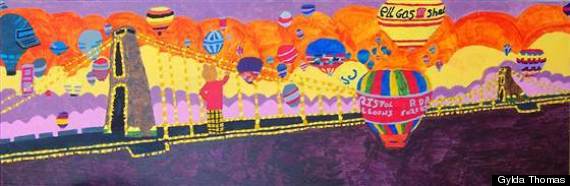
Prince William and Kate Middleton usually shirk gifts for special occasions, but they recently made an exception for an artist with Down syndrome, TODAY reported.Tazia Fawley, 43, spent six months crafting a bright painting of children’s classic Rupert the Bear flying over a bridge in the Bristol Balloon Festival in England in hopes that the royal couple would accept it and hang it in their home.


After the artist completed her piece, Suzie Moffat, director of Heart & Sold, an organization that promotes artists with Down syndrome, took a photo of it and sent it on to the palace to see if the new parents would be interested in it. Soon after, she received an enthusiastic note from the couple saying they would gladly welcome the work of art.

It was a move that Fawley’s mother says will encourage other people with Down syndrome to pursue their dreams, and will also help to chip away at the stigma that still surrounds Down syndrome in the UK, according to Moffat.

“In England, there always has been a stigma attached to (Down syndrome), and now that is washed away by the fact that the Duke and Duchess have accepted that painting,’’ Moffat told TODAY. “For this to happen, it’s kind of turned that negativity around.”

The fact that Will and Kate made an exception at all is pretty astounding in and of itself.

When the two got married in 2011, they asked well wishers to, instead of buying gifts, donate money to charity in their honor. Altogether, Will and Kate donated $1.6 million to 26 charities that have “particular resonance" with the pair and "reflect issues in which the couple have been particularly interested in their lives to date," the palace said in a statement in 2011, according to the Associated Press.

The news of Will and Kate’s latest inspiring act comes on the day the prince announced his retirement from the military, a transition that will allow him to spend more time with his growing family and to focus on his charitable work.

We can’t wait to see what he has next in store.

Source

Thursday, September 5, 2013

This drug could save thousands of lives, so why aren't we using it?


The national drug overdose epidemic has been steadily on the rise for nearly 20 years. From 1999 to 2010, deaths surged a colossal 102 percent. And while overdoses kill more people each year than either cars or guns, the debate over what can be done to address the disturbing trend often gets overshadowed by noisier killers.

On Saturday, the 13th annual International Overdose Awareness Day, drug policy reform advocates and those affected by overdoses will gather around the world, putting solutions front and center.

One such solution is naloxone, a prescription-only opiate reversal drug that has already been used to save thousands of lives. Supporters say it could easily save thousands more if it was more widely distributed. Opiate-based prescription drugs and heroin account for the vast majority of overdose deaths, making the debate around naloxone particularly critical.

On its own, naloxone isn't controversial. It was approved for use by the Food and Drug Administration in 1971. It's non-addictive, non-toxic, fairly cheap and easy to administer through nasal or intravenous application. Studies have been found that naloxone is capable of reducing overdose deaths by as much as 50 percent when paired with proper training and distribution.

The New York Times explained how naloxone works to counter an overdose in a recent story about a New York state effort to more widely distribute the generic drug:
Opioids function in the body by attaching to specific proteins, called opioid receptors. When opioids attach, the body relaxes and breathing slows. But too much of an opioid can cause respiration to slow to a lethal level. 
Naloxone acts by competing with opioids for the receptor sites, essentially pushing the opioids out of the way and reversing the effects of the drugs.
Despite the effectiveness of naloxone, many states have yet to adopt measures that would remove obstacles to distributing the drug to addicts, family members and first responders. The Fix, a website that covers addiction and recovery, explained opposition to naloxone as a "moral discomfort among drug warriors who apparently feel that the wages of drug use should be death." Many of the drug's critics claim that increasing access to naloxone will only encourage increasingly dangerous drug use, though studies have not been able to confirm this hypothesis. Proponents are quick to point out that any risks associated with naloxone would be minimal compared with the alternative -- death.

At least 15 states -- Virginia, California, Colorado, Connecticut, Illinois, Kentucky, Massachusetts, Maryland, New Jersey, New Mexico, New York, Oregon, Rhode Island, North Carolina and Washington state, as well as the District of Columbia -- have passed laws addressing the drug. These measures range from giving legal protection to those who administer naloxone to an overdose victim, to providing training and doses of the drug to first responders or family members who may not have a prescription for it themselves.

Wednesday, September 4, 2013

Where 11 beloved novels got their name

Some classic titles explain themselves, as they reference characters ("The Great Gatsby") or lines from notable passages ("The Catcher in the Rye"). Others are riffs on even older classics ("1Q84"), and still others remain a pleasant mystery ("2666").

Unsurprisingly, the titles of many books come from, well, other books. Also unsurprisingly, a TON were plucked from Shakespeare, be it Isaac Asimov's sci-fi works or Agatha Christie's chilling mysteries.

Here are the origins of 11 famous works of literature:

"The Sun Also Rises" by Ernest Hemingway
When it was published in the UK in 1927, the book was titles "Fiesta," which seems alittle reductive. The title we now know this classic by comes from a quotation by Ecclesiastes, which is also the epigraph:

"What profit hath a man of all his labour which he taketh under the sun? One generation passeth away, and another generation cometh: but the earth abideth for ever. The sun also ariseth, and the sun goeth down, and hasteth to his place where he arose."

Light in August by William Faulkner
The title is never directly referenced within the book, aside from a scene in which Hightower observes the setting sun. Some scholars believe it's a reference to southern slang for pregnancy - "to be light in August" - which makes sense, considering Lena Grove's centrality to the plot and other characters.

"Things Fall Apart" by Chinua Achebe
Achebe masterfully borrows a few words from Yeats's poem, "The Second Coming," to name his story about colonialism, pride, and loss:

"Turning and turning in the widening gyre
The falcon cannot hear the falconer;
Things fall apart; the centre cannot hold;
Mere anarchy is loosed upon the world..."

"Everything That Rises Must Converge" by Flannery O'Connor
This short story collection takes its name from a book called "Omega Point" by French philosopher Pierre Teilhard de Chardin:

"Remain true to yourself, but move ever upward toward greater consciousness and greater love! At the summit you will find yourselves united with all those who, from every direction, have made the same ascent. For everything that rises must converge."

Who knew she could be so uplifting!

"Brave New World" by Aldous Huxley
Huxley's title has become somewhat of a boilerplate exclamation to put in during conversations about technology and the Internet. Actually, it's derived from Shakespeare's "The Tempest," and is uttered by a wide-eyed, totally naive Miranda, when she meets men her age for the first time. Her father sagely and sardonically replies, "'Tis new to thee."

"The Fault in Our Stars" by John Green
You may have guessed this one - It's from Shakespeare's "Julius Caesar," when a scheming Cassius says, "The fault, dear Brutus, is not in our stars/But in ourselves, that we are underlings." This helps to convince Brutus to choose his loyalty to the republic over his love of Caesar.

"Pale Fire" by Vladmir Nabokov
Yet another Shakespeare reference - apparently, the guy was pretty influential! This one is from "Timon of Athens":

"The sun ’s a thief, and with his great attraction
Robs the vast sea; the moon ’s an arrant thief,
And her pale fire she snatches from the sun..."

"A Handful of Dust" by Evelyn Waugh
Waugh's work references T.S. Eliot's "The Wasteland." Originally, he wanted to name the book "A Handful of Ashes," but publishes said it wasn't quite as catchy:

"I will show you something different from either
Your shadow at morning striding behind you
Or your shadow at evening rising to meet you;
I will show you fear in a handful of dust."

"The Grapes of Wrath" by John Steinbeck
Steinbeck struggled to come up for a title for his Pulitzer-winning book, so his wife lent him a hand. She gleaned the famous title from "The Battle Hymn of the Republic," by Julia Ward Howe:

"Mine eyes have seen the glory of the coming of the Lord:
He is trampling out the vintage where the grapes of wrath are stored;
He hath loosed the fateful lightning of His terrible swift sword:
His truth is marching on."

"A Scanner Darkly" by Philip K. Dick
If there's any source more frequently references in book titles than the Bard, it has to be The Bible. Dick's book-turned-film about drug culture is actually named after a passage from Corinthians (13:12), "For now we see through a glass, darkly."

"The Golden Bowl" by Henry James
Another biblical reference, James' domestic character study is named after Ecclesiastes 12:6:

"…or the golden bowl be broken, …then shall the dust return to the earth as it was."

Monday, September 2, 2013

25 things I want myself to know at 25

I agree/can relate to a lot of the things in this article. Very well done piece that I wanted to share!


I turned 25 this year and I had a bit of a quarter life crisis. I felt like I didn't know what I was doing and I was looking for advice on how to navigate this crazy adventure that is my '20s. So for my birthday I asked my family to write a letter to themselves at 25, imparting some kind of wisdom or advice to their former self that they wish they had known at my age. My family is pretty cool and they are all people who I look up to, so I was excited to see what they would have to say.

I have loved reading the responses I have received (I actually might have used one or two of them). Reading their letters inspired me to write down things I want myself to know now, at 25. So I did. Without further ado, here is my list of 25:

Most of the time, you don't know anything about anything. That was true when you were 15 and that will be true when you are 65. You do, however, know how to be a good person and you know how to follow your heart. Keep doing that and you'll be just fine.

Don't go on Facebook so much. Seriously, it's a waste of time.
You're 25. You're not in college anymore. You know how to cook a healthy meal. STOP EATING TOP RAMEN, your body doesn't like it.

Also, it's time to start drinking a little more responsibly. You started too young and you've been in this game for over a decade. However, unlike when you were 15 no one is going to think you are any cooler for taking that extra tequila shot. Slow down on the booze.

Remember to always love your big strong legs, your bubble butt, the plumpness of your head, the way your eyes squint when you smile, and the petiteness of your lips. They are precious family heirlooms that have been handed down to you from generations of brilliantly beautiful people.

Be grateful for that moment when you decided to stop being such a sarcastic asshole and let your guard down long enough to fall in love and let someone fall in love with you. Even if it ends in heartbreak, it is still one of the greatest adventures you have been on.

Speaking of adventure, keep doing it. Travel the world as often as money and time will allow because you know how invaluable those experiences are but don't forget about the smaller adventures. Those weekend getaways with your best friends, the three days spent caravanning around the state to help your brother and sister-in-law move into a new house, or the afternoons spent in a retirement community with your parents. Those experiences are just as invaluable and they fill your soul.

Always make time for your parents. They might live for another 67 years... but they probably won't. Enjoy the time you spend with them. Don't try to rush off the phone when they are telling you about their week. Enjoy getting to know them as their adult child and realize that they still have a lot to teach you.

In fact, make time for everyone in your life. You have a lot of people in your life who you love and who love you, be grateful. Don't ever become one of those people who just gets too "busy." Make time for the walk in the park, the cup of coffee, the glass of wine, the phone conversation. Make time.

Posture. Work on that. That curve in your back is going to be a lot more painful when you're 70.

You're kind of turning into a grouch. Stop that. Immediately. Yes, life has thrown you some pretty awful curve balls over the years. That will continue to happen until you die, it's part of life. Let it make you grateful for all that you have. Let it make you stronger for having made it through. Let it make you compassionate for the 7 billion other people in the world who are dealing with their own struggles. Don't let it make you bitter, don't let it make you cynical, and DO NOT, whatever you do, let it take away your sunshine.

Stop comparing yourself to your peers. You do you. You're good at that.

Stop worrying so much about what your job is going to be. It's boring. Yes, you need to make money. But more importantly, you need to make a life for yourself. You need to make community. You need to make yourself and others happy. You need to make the world a better place. There are a lot of other things you need to make, don't get so caught up in finding a job that you forget to make them.

Keep writing. Know that some of the things you write will be really bad. Write anyway. Write because it makes you happy. Write because it's important to have hobbies. Write because sometimes, on very rare occasions, the things you write will be more powerful than you would have ever thought possible.

Keep going after the life that you want live. I am going to be really pissed if 65-year-old Mary is sitting alone in a house in the suburbs with 10 cats. Unless of course somewhere along the way that is what I decided I want, in which case it's totally fine.

It is good to have a plan but remember that it is OK to wander off the path a little and get lost. You have an amazing support system that will be there with you through it all.

Please don't sell out. You're better than that.

Be thankful that you are the youngest in your family and you have been able to learn from the mistakes of your siblings. But also be thankful that you are able to learn from their success and the wonderful people they have become.
Debbie's Note: I am the oldest in my family and I think a good piece of advice is to remember that your siblings really do look up to you. Be a great example for them.

Be fearless and be brave. You are no longer the two year old little girl who was scared to go in the sand and walk down stairs. You are the young woman who has traveled the world, worked for causes you believed in and taken on a multinational financial institution. You are brave and you are fearless. Don't forget it.

Even though you really want a dog, wait. You can barely take care of a fish.

Same goes for kids. Just wait. I'm sure you'll make a great mom one day but that day doesn't have to be anytime soon.

Read more books. Blogs are great. Online media is great. But don't forget to close your computer every once and awhile and pick up a real book or a newspaper.

Believe in something bigger than you. Something that you will never understand. Whether it's God or the Universe just believe in something because when everything else fails, which is bound to happen, all you'll have left is your faith that things will get better.

Always spend time in nature. Work in the garden and get dirt in your nails. Look up at the redwoods and know that you will never see the top. Stand at the edge of the ocean and wonder what's beyond the horizon. Take it all in.

Lastly, I think you're wonderful.
You forget this sometimes so I just wanted to remind you.

Workplace sexual harrassment poll: many suffer but don't report


The first time Heather Huhman experienced unwanted advances from a co-worker, she was just 15. Unsure of what to do, Huhman reported the man, who she says had been harassing her at work and following her home, to authorities at her company.

Though Huhman said her co-worker was ultimately fired, she endured the conduct for several weeks after she reported it while she waited for her complaint to go up the chain of command.

“I lived in fear every single day,” Huhman, now 30, said of that period.

Huhman’s story illustrates the unfortunate conundrum many workers face. Though a significant share of Americans are victims of sexual harassment in the workplace, many don’t report it out of fear of retaliation, worries their co-workers will make them feel ashamed by the experience and other concerns, experts say.

Thirteen percent of respondents to a recent HuffPost/YouGov poll reported having been sexually harassed by a boss or another superior, and 19 percent have been harassed by a co-worker other than a boss or superior. Of those who said they’d experienced sexual harassment, a full 70 percent said they never reported it.

“Most people don’t talk about it, they suffer in silence,” Huhman, who now owns a digital marketing firm, said. “There is a lot of shame that goes into when people treat you like that.”

Indeed, while the Equal Employment Opportunity Commission received about 7,500 charges of workplace sexual harassment in 2012 -- a number that has been fairly stagnant over the past few years -- the actual number of people who have experienced sexual harassment at work is likely much higher, according to Fatima Goss Graves, the vice president for education and employment at the National Women’s Law Center.

“It’s really difficult to measure because there’s a whole host of reasons why someone would never complain in the first place,” Graves said. “It’s a tough situation. You don’t necessarily want to take on the hassle, expense and personal costs that are involved.”

Victims often don’t report the harassment, Graves said, out of concern that they’ll be made to feel they’re somehow to blame for any unwelcome advances and because the various routes to complain -- which can range from reporting the conduct to your company’s HR professionals to filing a lawsuit -- are hard to navigate.

In addition, fear of retaliation is a “legitimate” concern, Graves said. A recent ruling from the Supreme Court may also make that path more difficult, by making it harder for workers to sue businesses for sexual harassment, discrimination and retaliation.

Huhman said the second time she was a victim of sexual harassment (later in her career, at a different job), she reported the conduct to human-resources officials, who doubted her claims. After that, she stopped getting new assignments and projects, while the person who victimized her continued in his career.

“It’s unbelievable to me that this kind of behavior would even remotely be considered acceptable,” she said.

The HuffPost poll found that one in five women said they'd been harassed by a boss, and one in four said they had been harassed by another coworker. And although women were more likely than men to say that they had been victims of one or both types of sexual harassment, men also reported being sexually harassed -- 6 percent said they were harassed by a boss and 14 percent by a coworker.

In addition, 21 percent of respondents to the poll said that they had witnessed someone else being sexually harassed at work. Among those who had, only 33 percent said that they had reported it.

Though many companies have education programs aimed at preventing sexual harassment and policies in place to deal with it after the fact, there’s still a long way to go before the behavior is truly viewed as unacceptable by all workers on the ground.

“The bottom line when you’re talking about harassment is that it’s truly one of the most significant barriers against someone’s ability to do their job,” Graves said.

Saturday, August 24, 2013

How to get free college textbooks

This article comes to us courtesy of U.S. News & World Report, where it was originally published.

College can be a shock to the senses for many students. It can also be a shock to the wallet. Students can easily drop $200 on a single textbook – and that's just one book, for one class.

Arizona State University estimates full-time students will spend $1,000 on books this school year. Ohio State University suggests students budget nearly $1,250 for books and supplies, and the University of Southern California bumps that figure up to $1,500 for full-time undergrads.

Buying used instead of new can help students cut their book bill. Renting in lieu of buying can help students save, too. Budget-savvy students can go a step further by scoring free textbooks.

Finding no-cost options for all of the books on your list may not be possible, but even one or two free books can save students hundreds of dollars. Below are a few resources to start your search for free textbooks.

University library: Sometimes the best place to start is the most obvious. University libraries house thousands of books. What they don't have in-stock can often be requested via interlibrary loan agreements, says Jon Lal, founder of the savings website BeFrugal.com.


Check your school library's online catalog for the books on your syllabi, or go directly to your librarian for help. The sooner, the better, Lal says.

"Go to your college's library ASAP when school starts with a list of the textbooks you need. Have the author names and publication dates with you," he says. "If the library has it, see if you can check it out or if it's to be used only in the library."

Professors often put the textbooks for their courses on reserve at the school's library. These are typically available for short-term loan, sometimes as little as an hour or two, which gives students a chance to complete the assigned reading. Availability of these books is often limited, too, so plan ahead.

Book swap: Textbooks collect dust as soon as the semester ends. While you may tell yourself you will use that intermediate Spanish book again, you probably won't. So why not let someone else use it?

Student organizations at schools such as Georgia College and the University of Florida set up online book exchanges. These sites allow undergrads to list books they have and books they need in hopes of finding a match.

If your campus doesn't have a book exchange, start one. Book swaps only work if students participate, so enlist a student organization to put up flyers and make some noise during orientation.

Project Gutenberg: The oldest digital library in the world offers more than 43,000 e-books, completely gratis. Comparative literature students taking Only Jane Austen at Binghamton University, for example, can find every book on their syllabus via Project Gutenberg.

Titles available on the site span categories such as archaeology, horticulture, microbiology and World War I. Copyrights are expired on all of the titles available for download via Project Gutenberg, so students studying history or classic literature may have more luck than those taking courses such as Hunger Games: Could it Happen to Us?

E-readers: Undergrads enrolled in that course about "The Hunger Games" can still get their book for free. Amazon's Kindle Lending Library allows members to check out e-books for free. While students won't find their Introduction to Chemistry book, they will find both popular and classic titles.

There is a catch, though. To use the Kindle library, students need to own the namesake e-reader. They also need to subscribe to Amazon Prime, which is $39 per year for college students.

Students may find PDFs of textbooks posted online, too, but downloading those copies can get them into murky copyright waters. And even so, searches may bear little fruit.

Despite the outlets available, many students won't find all of the texts they need, financial aid expert Kantrowitz told U.S. News via email.

"Generally, you won't be able to find many free textbooks except for classic literature."

Source

Saturday, August 10, 2013

Six myths about introverts

If common stereotypes have anything to say on the matter, it's that introverts are socially awkward loners who abhor large crowds and don't like people very much. An introvert may not be a particularly friendly or happy person, but hey, at least they're smarter and more creative than the average extrovert.

Despite comprising an estimated one-third of the general population, introversion may be one of the most frequently misunderstood personality traits. But the silent revolution of introverts -- catapulted into the spotlight largely by the work of Susan Cain, author of Quiet: The Power of Introverts in a World That Can't Stop Talking -- is shedding light on the experience of introverts living in a culture that tends to value extroverted qualities like assertiveness and outspokenness over solitude and quiet contemplation.

Much of the problem stems from the lack of a simple distinction between introversion and extroversion -- the difference is far more complex than being shy versus outgoing, according to Sophia Dembling, author of The Introvert's Way: Living a Quiet Life in a Noisy World. The introversion/extroversion distinction has its roots in Jungian psychology, which views extroverts as being more naturally oriented towards the outside world, and introverts more focused on their own inner world.

“The description that introverts seem to relate most strongly to is the idea that Jung presented, that introverts are drained of energy by interaction, and gain energy in solitude and quiet, whereas extroverts gain energy in social situations with interaction," Dembling tells The Huffington Post. "It seems to be most strongly an energy thing –- where you get your energy and what takes it out of you.”

If you're an introvert, you might be used to feeling misunderstood (many introvert children are criticized for not speaking up at school, and grow up being told to "come out of their shells") and having your actions (or inaction) misinterpreted. And if you're an extrovert, there's a good chance that you have a least a few misconceptions about those mysterious quiet types in your life. Scroll through the list below for six of the most common false assumptions about introverts -- and why they're wrong.

1. All introverts are shy -- and all shy people are introverts.
Shyness is so often confused with introversion that the two words are frequently used interchangeably -- but in fact, they're remarkably different traits. As Susan Cain pointed out in a Psychology Today blog, Bill Gates is introverted but not shy: He's quiet and bookish, but isn't bothered by what other people think of him.

Whereas introversion, as Dembling explains, is commonly defined as recharging and gaining energy through alone time, shyness has more to do with discomfort and anxiety in situations involving social interaction. Many introverts aren't shy; they may feel confident and at ease around people, but simply require more alone time to balance out the energy they expend in social situations. Similarly, an extrovert may seek the company of others but feel insecure or uncomfortable in groups.

“The number-one misconception about introversion is that it’s about shyness,” says Dembling. “The best distinction I’ve heard comes from a neuroscientist who studies shyness. He said, 'Shyness is a behavior -– it’s being fearful in a social situation. Whereas introversion is a motivation. It’s how much you want and need to be in those interactions.’"

2. Introverts don't like to be around people.
Although introverts do generally need -- and enjoy -- more solitude than their extroverted counterparts, the idea that introverts are antisocial or don't want the company of others is completely false. They just tend to enjoy social interaction in a different way than extroverts do.

“There are a lot of negative labels placed on introverts -- socially anxious, don’t like people, judgmental (because we sit quietly)," says Dembling. "Introverts may prefer one-on-one interaction ... we might enjoy large parties but want to sit and watch the action from the sidelines. Extroverts may interpret this as not wanting to have fun, but this observation is fun for an introvert."

Introversion shouldn't be confused with misanthropy -- introverts do like people, but they typically favor quality over quantity in their relationships, choosing to focus on creating a smaller circle of close friends rather than a large network of acquaintances.

“I like to say that we may like people more than extroverts because we take the time to get to know them ... It’s just a completely different style,” says Dembling.

Sunday, August 4, 2013

Apple news

Sept. 6 iPhone 5S Release Date
The iPhone 5S may be just over a month away. Cult of Mac relayed a report from the German blog iFun that says the next iPhone will be "coming to market" on Sept. 6. iFun cites a very credible source "to be taken seriously," according to a HuffPost translation.

If true, the release would come a bit earlier in the year than previous versions of the iPhone to hit the market. The iPhone 5 was unveiled on Sept. 12 of last year and went on sale in the U.S. nine days later. The iPhone 4S was announced on Oct. 4, 2011, and went on sale in the U.S. 10 days later.

The site also said to expect "two new device types, and this doesn't mean two different color or memory variations." Hmmm ... could it be two different screen sizes?

Bigger iPhone and iPad Displays
On Monday, The Wall Street Journal rekindled earlier reports that Apple is testing bigger screens for its iPhone and iPad. While the size of the rumored iPhone screen is unclear, the WSJ said Apple asked its suppliers "for screen designs for a new tablet measuring slightly less than 13 inches." The iPad has a 9.7-inch display and the iPhone 5 has a 4-inch display.

Apple finally took Donald Trump's advice, said Donald Trump.

Plastic iPhone Case (On Video!)
There have been rumors for months that Apple is working on a cheaper version of its iPhone that would have a rear casing made of plastic. Michael Kukielka, a.k.a. DetroitBORG, says he got his hands on the casing (thanks to Sonny Dickson), and made a video.


DetroitBORG calls it "a merger" of the iPhone 3GS and the iPod touch. It's thicker than the iPod touch and bit wider than the iPhone 5, and has the 4-inch display of the iPhone 5.

Apple's Dashboard of the Future
Tim Cook's comments in Apple's earnings call on Tuesday that "having something in the automobile is very, very important" brought renewed attention to what exactly Apple has planned for cars.

Last month, the company announced iOS in the Car, a way to integrate messages, Maps, and the iPhone more closely with new cars from a dozen manufacturers.

But iOS in the Car may be only the beginning. A few weeks ago Apple received a patent for a "revolutionary form of dashboard or instrument panel," with sensors, cameras, heads-up displays and customizable knobs and switches.

"It's something that people want, and I think that Apple can do this in a unique way and better than anyone else," Cook said Tuesday. "So it's a key focus for us."

Monday, July 22, 2013

How to handle stress through "mind hacks"


"Stress is our perception of what's happening outside of us and the power we give it," saysLauren E. Miller, author and stress expert.

If you can adopt Miller's definition of the phenomenon as your own, you may find it possible to reframe your perception of stressful situations and, inevitably, experience less stress overall.

The author of "5 Minutes to Stress Relief," has compassion for hardship (as a cancer survivor she's been through a lot of it herself), but believes it's counterproductive to see yourself as a victim. Rather than letting stress overcome you, Miller insists you must transform it.

Yes -- stress is, at times, imminent. It's "recession-proof ... It's one of those things we, as human beings, wage a war against in the jungle of our mind," the author told The Huffington Post in an interview. The key to dealing with stress, according to Miller, is knowing that you are in charge. "If you make the conscious choice and stay awake at the gate of your thoughts, then you can adjust your perception of any situation," she says.

Being in charge may not come naturally, but there are some strategies you can use to show stress who's boss. Below, find six stress management techniques, all of which can be performed in five minutes or less, that can "literally transform the way you do life."

Be mindful of how you label things."Life happens. You have a thought about it. It's completely objective until you label it," Miller explains. The way in which you decide to label a certain event -- whether joyful, good, painful or ugly -- will determine how your body reacts to it. "Your cells are listening," she says, meaning it's your brain that tells your body how to respond to an event. Decide to take a moment before you judge and categorize a situation: It's your choice to label an experience as something beneficial (because you'll end up learning from it in the long run), or something strictly painful, that'll only make you hurt.

Erase and replace.With the tap of a key, you can delete a typo from your screen. The same goes for a stressful thought. Miller suggests using the word "delete" consciously. Practice saying "delete" aloud. "You can actually shift your attachment, you can sever the power you're giving to your negative thought that's defining your reality."

Use your imagination.If you feel you simply cannot pull yourself out of a negative situation or mood, turn to your imagination. Picture a time where you felt happy and not stressed, or make up an instance in which you would feel this way (even if it never really happened). Although it sounds too elementary to work, Miller assures us that the technique is gold. "Imagination can shift our attitude and perceptions on the spot," she explains. "Our conscious mind doesn't know the difference in terms of real and imagination." So if you can just conjure something calm in the midst of chaos, you'll begin to experience calm.

Look at your life as a movie.You're the director -- you get to decide which events become catastrophe, and which don't make the cut. This is a practice that involves stepping away. "Be the watcher rather than the reactor," Miller instructs. Look at a stressful moment as if it's on screen -- imagine the scene that initially caused you to feel stressed, and imagine your reaction to it. There's a lot you can do with this power. You can add props (have the people who are making you feel threatened wear clown costumes, for example). You can make the aggressive characters in your life physically smaller, and decide that your voice is louder than all of the supporting actors of your life's movie. Looking at a problem from this angle will remind you that you're in control.

Revisit what's valuable.Write down seven things you value most in life. It'll help put things into perspective, Miller explains. She says to put this list on a "big, fat sticky note, or even make it your screensaver." This list will remind you time and again that people are more valuable than things. This is your "big picture" doctrine.

Stop by a graveyard.Admittedly, this sounds more than a bit morbid, but visiting a graveyard -- whether literally or figuratively -- can help you reframe a stressful situation. Ask yourself, "Would I want to be worrying about this from my deathbed?" and consider the choice you would have wished you made at the end of your life. Taking an "aerial view from your death bed," as Miller puts it, might help you dig up some wisdom. Miller says when you're overwhelmed with life, you can experience tunnel vision -- "you're giving too much power to something that's non-essential."

Monday, August 20, 2012

Obama responds to Akin's rape comment

In a surprise news conference Monday, President Barack Obama addressed the controversy surrounding a remark by Rep. Todd Akin (R-Mo.) that women who suffer "legitimate rape" rarely get pregnant.

"The views expressed were offensive," said Obama. "Rape is rape. And the idea that we should be parsing and qualifying and slicing what types of rape we are talking about doesn't make sense to the American people and certainly doesn't make sense to me. So what I think these comments do underscore is why we shouldn't have a bunch of politicians, a majority of whom are men, making health care decisions on behalf of women."

The comments are the most high profile in a series of rebukes from both Democrats and Republicans. Earlier in the day, presumptive Republican presidential nominee Mitt Romney also condemned Akin, who is running to unseat Sen. Claire McCaskill (D-Mo.).

Obama did not call on Akin to leave the race, as some Republicans have done. "He was nominated by the Republicans in Missouri," he said, "I will let them sort that out." He did, however, use the opportunity to contrast his approach toward women's health care with that of the GOP.

"Although these particular comments have led Governor Romney and other Republicans to distance themselves, I think the underlying notion that we should be making decisions on behalf of women for their health care decisions, or qualifying forcible rape versus non-forcible rape, I think those are broader issues," Obama said. "And that is a significant difference in approach between me and the other party."

Source

Friday, July 27, 2012

How the drought will affect food prices

The drought gripping more than half the country is a major reason why consumers can expect to pay 3 percent to 4 percent more for groceries next year, the U.S. Department of Agriculture said Wednesday.

Milk, eggs, beef, poultry and pork prices will all be affected because the drought has pushed up prices for feed, and that will eventually translate into higher prices for steaks, hamburger, pork chops and chicken. The good news for cost-conscious consumers is that prices for fruits and vegetables, as well as processed foods, aren't affected as much by the drought.

Exactly how much more people might pay for a pound of hamburger, for example, isn't known because those prices are affected by lots of factors, including how much of the increase a given supermarket might pass along to the consumer. But beef prices as a whole are expected to see the biggest jump at 4 percent to 5 percent, according to the USDA.

Dairy product prices are forecast to climb 3.5 percent to 4.5 percent; poultry and egg prices are projected to rise 3 percent to 4 percent; and pork prices are expected to rise 2.5 percent to 3.5 percent in 2013, the agency said.

"In 2013 as a result of this drought we are looking at above-normal food price inflation. ... Consumers are certainly going to feel it," USDA economist Richard Volpe said.

Normal grocery price inflation is about 2.8 percent a year, Volpe said, so even a 3 percent increase is slightly higher than usual. The USDA kept its projected food price increase for 2012 steady at 2.5 percent to 3.5 percent, saying average retail food prices were flat for the first half of 2012 thanks to unusually low fruit and vegetable prices as well as lower prices for milk and pork.

The new forecasts are the agency's first food price projections to factor in the drought, though experts have been warning for a few weeks that prices will rise. As fields dry out and crops wither across much of the country's midsection, prices for corn, soybeans and other commodities have soared in anticipation of tight supplies. That means farmers and ranchers will have to pay more to feed their livestock, and those costs eventually get passed on to consumers. Food prices typically climb about 1 percent for every 50 percent increase in average corn prices, according to agricultural economists.

Processed foods aren't affected as much because feed costs don't account for as much of their price tag. And fruits and vegetables aren't expected to be any more costly because they are irrigated even in normal weather. The USDA is projecting an overall 2 percent to 3 percent increase for all fruits and vegetables next year, the same as it expects this year.

USDA economists were aware of the drought a month ago when they did their last projections but didn't know how bad it would get, Volpe said.

"This drought was a surprise for everybody," Volpe said. "The USDA was forecasting a record year for the corn crop until this drought materialized. Now we're not going to get that."

The drought now covers around 60 percent of the continental United States, the largest area since the epic droughts of the 1930s and 1950s.

"It's a disaster," said Rick Tolman, CEO of the National Corn Growers Association, who noted farmers started out the season anticipating a record 14 billion bushel corn crop. The drought is expected to cut production by roughly 3 billion bushels. "We would have had adequate supplies, prices would have gone down. Instead we have the drought," he said.

Poultry prices will be the first to rise because chickens and turkeys need only a few months to grow to market size, Volpe said. Beef and pork take longer, and the agency actually revised its beef price projection for 2012 downward because producers are sending more cattle to the market as they reduce their herds in response to the drought, he said.

Meat and poultry prices will be more affected than processed food prices because feed prices represent the biggest part of their cost of production. Processed food prices are less affected because corn and other ingredients typically make up just a fraction of their production costs compared with expenses such as transportation and marketing.

Food companies are already reacting, even turning abroad in some cases to blunt the impact of higher corn prices and tight supplies. Smithfield Foods Inc., the world's largest pork producer, has bought corn from Brazil, spokeswoman Keira Lombardo confirmed.

The drought is creating multiple problems for dairy farmers that consumers will eventually feel, said Ed Jesse, an emeritus professor of agricultural economics at the University of Wisconsin-Madison.

Farmers have begun culling their herds, which will mean less milk down the line. Also, cows give less milk in that heat, and the milk they do produce is lower in proteins and butterfat, Jesse said. That means cheese and butter prices are going up because it takes more milk to produce the same amount.

Jesse predicted that milk prices for consumers will rise by 10 percent or more, and he expects those prices to stay high into next year until herds start to recover.

"I don't think farmers are in a very happy state right now," he said.

Source