Showing posts with label technology. Show all posts

Monday, January 26, 2015

How to outsource your life

These days, there's an app for EVERYTHING. If money were no object, you wouldn't actually have to leave your house. You can have someone come over to give you a manicure, ship a package, even bring you pot! It's gotten a little nuts. Here's a round-up of services you can get...

Shyp for sending packages. (No more post office lines!)

Instacart for groceries (Whole Foods, Costco, etc.)

Seamless for restaurant delivery.

Minibar for alcohol.

Good Eggs for farmer's market goods.

UrbanStems or BloomThat for flower delivery.

Kitchensurfing for personal chefs.

Homepolish for interior decorating.

Washio for laundry and dry cleaning.

Priv for manicures and beauty treatments at home.

Glamsquad for blow outs at home.

Zeel or Soothe for at-home massages.

Lyft for rides; Hailo for cabs; Bandwagon for airport rides.

Spike for motorcycle sharing.

Handy for handymen and home cleaning.

TaskRabbit for random tasks.

Postmates for delivery of pretty much anything.

UrbanSitter for babysitters.

GotIT! for tutoring.

Monday, January 5, 2015

Google's self-driving car not ready for the market

There’s no arguing that Google’s self-driving car is a thrilling development worthy of enthusiastic discussion, but there are a number of reasons to rain on this parade – rain itself, for one thing. That’s because the autonomous automobile has yet to prove that it can drive through heavy rain, not to mention snow, parking garages and many other everyday driving scenarios.

Despite the more than 700,000 miles Google’s self-driving cars have traversed so far, they still have many hurdles to overcome. While the cars can slow down or stop when traffic or obstacles are detected, they aren’t able to know if a new stoplight pops up overnight, according to the MIT Technology Review. The cars can detect and stop at unmapped stop signs, but a four-way stop may cause them to be overly slow and cautious.

Google’s self-driving cars have yet to prove they can handle other common driving scenarios (at least in some parts of the country): snow, heavy rain, open parking lots, multilevel parking garages and construction zones. Also, the cars’ sensors are blinded when the sun is directly behind a traffic light.

These issues and others remain unsolved because engineers haven’t gotten around to addressing them yet, according to Chris Urmson, director of the Google Self-Driving Car Project. Nevertheless, he expects solutions are “going to happen more quickly than many people think.”

Other automakers, including Nissan and Mercedes-Benz, haven’t been shy about their plans to manufacture autonomous cars. However, technological and financial limitations are putting heavy onus on the artificial intelligence behind the wheel, so to speak. We may still be a decade or so away from seeing self-driving cars in our blind spots.

New iPhone tricks

Tuesday, May 13, 2014

New York plans to create a citywide wi-fi network


In 2013, Mayor Bloomberg asked designers to reimagine the city's decrepit pay phones as internet-flinging, ad-spitting future machines. The winners were simply design concepts, never truly destined for reality. Now, the city is moving forward with the plan to retrofit its pay phones, after all.

Now, the city's Department of Information Technology and Telecommunications has put out a brand-new request for proposals. This time, it's not for pie-in-the-sky designs—it's for real budgets and designs to create a "citywide Wi-Fi network and state-of-the-art information hubs."

There are roughly 11,000 pay phones scattered across the city, and this plan would retrofit up to 10,000 of them with new hardware that would broadcast free Wi-Fi, financed by ad revenue, within 85 feet of the station. Here's how de Blasio describes the project in a statement:
For years, the question was, 'What to do with payphones?' and now we have an answer. By using a historic part of New York's street fabric, we can significantly enhance public availability of increasingly-vital broadband access, invite new and innovative digital services, and increase revenue to the city—all at absolutely no cost to taxpayers.
The idea, says one city spokesperson to the New York Times, is to "level the playing field" for New Yorkers who can't afford broadband. It's doubtless also to figure out a way to make street-level advertising more lucrative, guaranteeing at least $17.5 million in annual ad revenue for the city.

But there's also a more vital purpose, as the DoITT explains. "While public payphone usage has decreased in recent years, the phones served a critical role during power outages following Hurricane Sandy, as public payphones receive electricity via the phone line and not external power sources," the office explains. These new stations would provide the city with Wi-Fi and access to 911, even if another superstorm takes out our electricity.

This RFP invites anyone to submit a proposal for the project—they're due on June 30, so you'd better get cracking if you've got a plan.

Friday, May 9, 2014

You can now 3D print any color makeup from your home computer


A recent Harvard Business School grad has come up with a brilliant way to disrupt the $55 million makeup industry. Rather than run to Sephora to pay premium prices on a unique—but let’s face it, really impractical—eyeshadow color, women can now quite literally print it from their home computer.

Welcome to the wonderful world of 3D printing, in which people can create anything fromfood to human skulls to your favorite, discontinued lipstick color.

“The makeup industry makes a whole lot of money on a whole lot of bulls—,” Grace Choi told an eager crowd at TechCrunch Disrupt. “They do this by charging a huge premium on one thing that technology provides for free, and that one thing is color.”

And so Choi created Mink, a mini 3D printer for your home that will allow users to print out any color of makeup using FDA-approved ink. (That should soothe moms who are a little worried about their kids standing too close to the microwave, let alone putting something that came out of a printer on their eyelids). Choi explained, “The inkjet handles the pigment, and the same raw material substrates can create any type of makeup, from powders to cream to lipstick.”

While Walmart and drug stores have limited their color selections to those that will lead to mass sales, Mink has turned computers and smartphones into endless beauty aisles with an unlimited color palate selection. Users can pull the hex code of any color found on a website — including Pinterest boards and YouTube makeup tutorials — or smartphone photos. “We’re going to live in a world where you can take a picture of your friend’s lipstick and print it out,” Choi said.

Once users have the color code, they only have to plug it into Photoshop or Paint and press the print button. Choi showed how simple the process was in a live demo. It took less than 40 seconds to print a pink eyeshadow.

Mink’s target demographic is 13 to 21 year old girls, who might find the price tag a little hard to manage. But even if printer ink might be comparable in price to Mac, the product is still pretty incredible.

Tuesday, April 8, 2014

This device can charge a cell phone in 30 seconds


If you have a smartphone, you probably know the horrible feeling of packing up to leave the house, only to realize it is about to die.

Such a situation leaves you in a pickle. Do you risk being late for a couple minutes of precious, precious charge? Or do you resign yourself to an afternoon without email, Instagram and Candy Crush?

Enter StoreDot, an Israeli tech startup that hopes to make this exact conundrum a thing of the past. The company claims to have created a new battery pack that can fully charge your phone in a mere 30 seconds. Yes, even if you're at 0 percent.

The pack, which premiered Monday at a Microsoft Think Next event in Tel Aviv, relies on microscopic magnets called "nanodots" to enable its game-changing charger. As you can see in the above video, the prototype attaches to a phone that is then juiced up in half a minute.

Sadly, you shouldn't expect your own 30-second charger anytime soon. The battery pack is still in the prototype stage, and a company spokesperson says mass production won't commence until 2016, according to TechCrunch.

In the meantime, StoreDot will face two major challenges: Figuring how to shrink the technology so that it can fit in existing smartphone designs, and how to get the cost down. As of now, it will come out to twice the price of the average phone charger,according to The Wall Street Journal.

But having raised $6.25 million to date, StoreDot is confident that "nanodots" represent a big opportunity for the future -- and not just in terms of charging phones. According to the company's website, Bioorganic Nanodots could potentiallyrevolutionize TV displays, digital storage, batteries and bio-medical technology.

Source

Tuesday, March 18, 2014

FDA approves marketing for a device that prevents migraines

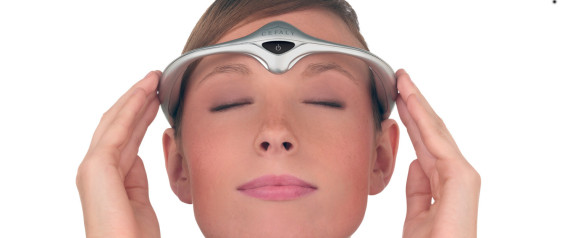
cefaly
The first device that prevents migraines was permitted to be marketed Tuesday, March 11, by the Food and Drug Administration.

The transcutaneous electrical nerve stimulation device, called Cefaly, is battery-powered and available by prescription. It looks similar to a headband, and involves a self-adhesive electrode being positioned in the center of the forehead.

The device works by targeting the trigeminal nerve, which the FDA notes is linked with migraine headaches. An electrical current is sent through the electrode to stimulate branches of this nerve, which leads to a tingling sensation.

Cefaly is only meant to be used once a day for 20 minutes, and should only be used by people 18 and older.

It "provides an alternative to medication for migraine prevention," FDA Office of Device Evaluation director Christy Foreman said in a statement. "This may help patients who cannot tolerate current migraine medications for preventing migraines or treating attacks."

The FDA decision was made based on safety and effectiveness data from 67 people, as well as patient satisfaction data from 2,313 people. Researchers learned that while the device did not make migraines less intense or completely prevent them, it did seem to decrease days with migraine each month, as well as use of migraine medication.

Typically, frequent migraine sufferers are prescribed medication to prevent migraines, such as beta-blockers, calcium channel blockers or antidepressants. However, many of these drugs come with side effects, and some people with certain conditions cannot take them, according to the American Headache Society.

Late last year, the FDA approved marketing of the first device to relieve migraine pain preceded by aura, called the Cerena Transcranial Magnetic Stimulator.

Sunday, March 16, 2014

A good reason to put down your smartphone


In this age of the ever-present smartphone and our 'always on' lifestyle, requesting that people leave their phone alone for even a brief span of time is a hard thing to ask, but in this case, instead of harping on the lack of manners that some gadget addicts display, you can point out the potential benefit to others that doing so can have.

As part of the UNICEF Tap Project, people are being challenged to give up something they take for granted, their cellphones, in order to help supply something that's not taken lightly in many parts of the world, which is access to clean drinking water.

If you can put down your phone for just 10 minutes and leave it untouched the whole time (I know, it's rough), Giorgio Armani, the current sponsor of the Tap Project, will donate enough money to pay for a day's worth of safe water for a child in need.
"UNICEF Tap Project is working to help the 768 million people around the world without access to clean water. This year you can help by taking a challenge to give up access to something far less vital than water–your cell phone. 
For every 10 minutes you don’t touch your phone, our sponsor can provide one day of clean water for a child in need."
Ready to begin? All you have to do is use your phone to navigate to the UNICEF Tap Project, follow the prompts, and then set your phone down and do something else constructive for just 10 minutes. The site accesses the accelerometer in your phone to determine if you're actually leaving it alone for the whole time, and if you move the phone, it asks you to put it down to continue.

While you're waiting to get back onto Instagram or Facebook, a timer is displayed on the mobile site, along with a series of water messages and comparisons that put things in perspective for those of us who've got no problem with getting clean drinking water every day of the week.

So go ahead. Put down your phone and help fund clean safe drinking water for a child in need.

Source

Wednesday, March 12, 2014

Bacon-scented alarm clock

If your alarm clock just isn’t doing the trick to wake you up anymore, perhaps you’ll need to tap into another of your five senses: smell. And what’s the absolute, indisputable best smell in the world? Bacon, obviously.

Oscar Mayer, the American meat company famous for its wieners, created a device that turns your smartphone into a kitchen with a bacon-scented alarm clock. A small device is simply plugged into the headphone jack of an iPhone and connected to an app that allows users to emit the sounds and smells of fresh-cooked bacon.

The Kraft-owned company said “Wake Up & Smell The Bacon” will be available on the site from March 3 until April 4, 2014. However, it’s not for sale; those who desire a bacon-scented alarm clock must fill out an application and will only receive the device if they are chosen. Anyone could download the iPhone alarm app, though, which emits the sound of cooking bacon.

"With nearly two million mentions of #bacon on Instagram, it seems people never get tired of bacon. That’s why our team decided to develop a device to give folks what they long for most," Tom Bick, senior director of integrated marketing and advertising at Oscar Mayer, said in a statement. “As the category leader, Oscar Mayer is thrilled to bring the first-ever, bacon-scented mobile device to market, giving bacon aficionados a new reason to welcome their morning alarm clocks."

Oscar Mayer also released an epic video advertisement to promote the bacon alarm clock, with a nymph-like woman roaming a forest with the “finest” aroma discharging from bacon flowers. The latest invention comes from the Oscar Mayer Institute for the Advancement of Bacon, which dubs itself the "consortium of the world's greatest bacon minds dedicated to unlocking the bacon's deepest mysteries for the benefit of bacon lovers everywhere."

Source

Tuesday, March 11, 2014

Apple releases new operating software

The long-awaited iOS 7.1 update is now available. While this is a point release, Apple has made several tweaks to the iOS user interface, alongside the usual bug fixes and some feature additions. The main visual changes can be found in the phone dialer and power off features. iOS 7.1 switches to rounded UI elements in both of these areas, and the incoming call interface now includes separate decline and accept buttons below floating circular icons for the Remind Me and Message options.

Other UI tweaks are fairly minor, including a slight music app refresh with prominent repeat and shuffle icons, and the option to disable wallpaper motion when selecting an image. iOS 7.1 also includes improvements to the keyboard interface, making the shift and delete keys easier to see. Perhaps the best visual tweak in iOS 7.1 is a change to the Notification Center, which appears to allow you to clear notifications more accurately.

IOS 7.1 FINALLY FIXES THE RANDOM REBOOTS
Aside from the visual tweaks, iOS 7.1 finally includes a fix for something you hopefully won't see anymore: random reboots that iPhone 5S, iPad mini with Retina display, and iPad Air users have been experiencing. Apple promised a fix in January, and the issues have existed since the launch of iOS 7, causing some devices running the latest OS to randomly reset for no apparent reason. Some iPhone 5S users have also complained of Touch ID issues, and Apple has tweaked the recognition to make it faster and more accurate in the latest update. If you're stuck on an iPhone 4 and you've not yet upgraded, Apple has also optimized iOS 7.1 to run faster on iPhone 4 hardware. The same goes for older iPads, like the iPad 2, and third-generation iPad.

CARPLAY IS THE BIG NEW FEATURE FOR IOS 7.1
iOS 7.1 also includes support for Apple’s new CarPlay feature. Known previously as iOS in the Car, CarPlay is built primarily around the use of Siri voice commands and prompts, providing an "eyes-free" experience where you can respond to incoming calls, dictate text messages, or access your music library from a vehicle. Ferrari, Mercedes-Benz, and Volvo will support CarPlay in some of their new cars at launch, and a broader range of carmakers, including Ford and BMW, are promising to integrate CarPlay with their future in-car entertainment systems.

iTunes Radio has also been tweaked in iOS 7.1, allowing you to search within featured stations and more quickly create new stations based on searches for songs and artists. And for the first time, Apple now lets people subscribe to iTunes Match right from their device, instead of in the desktop version of iTunes. This removes the ads in iTunes Radio, and provides a year of Apple's scan and match music service.

Another change in iOS 7.1 is an adjustment to how Siri is triggered. Siri still activates using the home button, but in iOS 7.1 you can hold the home button down to ensure Siri listens for longer and doesn't cut off any pauses in your query. Overall, the changes are minor, but welcome, additions to an operating system that powers millions of devices. Since releasing iOS 7 back in September, Apple has fixed lock-screen security issues, iMessage problems, FaceTime call drops, and a major security flaw. The latest iOS 7.1 update is available immediately.

Monday, March 10, 2014

Why is American internet so slow?

According to a recent study by Ookla Speedtest, the U.S. ranks a shocking 31st in the world in terms of average download speeds. The leaders in the world are Hong Kong at 72.49 Mbps and Singapore on 58.84 Mbps. And America? Averaging speeds of 20.77 Mbps, it falls behind countries like Estonia, Hungary, Slovakia, and Uruguay.
Getty Images

Its upload speeds are even worse. Globally, the U.S. ranks 42nd with an average upload speed of 6.31 Mbps, behind Lesotho, Belarus, Slovenia, and other countries you only hear mentioned onJeopardy.

So how did America fall behind? How did the country that literally invented the internet — and the home to world-leading tech companies such as Apple, Microsoft, Netflix, Facebook, Google, and Cisco — fall behind so many others in download speeds?

Susan Crawford argues that "huge telecommunication companies" such as Comcast, Time Warner, Verizon, and AT&T have "divided up markets and put themselves in a position where they're subject to no competition."

How? The 1996 Telecommunications Act — which was meant to foster competition — allowed cable companies and telecoms companies to simply divide markets and merge their way to monopoly, allowing them to charge customers higher and higher prices without the kind of investment in internet infrastructure, especially in next-generation fiber optic connections, that is ongoing in other countries. Fiber optic connections offer a particularly compelling example. While expensive to build, they offer faster and smoother connections than traditional copper wire connections. But Verizon stopped building out fiber optic infrastructure in 2010 — citing high costs — just as other countries were getting to work.

Crawford told the BBC:
We deregulated high-speed internet access 10 years ago and since then we've seen enormous consolidation and monopolies… Left to their own devices, companies that supply internet access will charge high prices, because they face neither competition nor oversight. [BBC]
If a market becomes a monopoly, there's often nothing whatever to force monopolists to invest in infrastructure or improve their service. Of course, in the few places where a new competitor like Google Fiber has appeared, telecoms companies have been spooked and forced to cut prices and improve service in response to the new competition. But that isn't happening everywhere. It's very expensive for a new competitor to come into a market, like telecommunications, that has very high barriers to entry. Laying copper wire or fiber optic cable is expensive, and if the incumbent companies won't grant new competitors access to their infrastructure, then the free market forces of competition don't work and infrastructure stagnates, even as consumer anger and desire for competition rises due to poor service.

Other countries have done more to ensure that the market is open to competition. A 2006 studycomparing the American and South Korean broadband markets concluded:
[T]he South Korean market was able to grow rapidly due to fierce competition in the market, mostly facilitated by the Korean government's open access rule and policy choices more favorable to new entrants rather than to the incumbents. Furthermore, near monopoly control of the residential communications infrastructure by cable operators and telephone companies manifests itself as relatively high pricing and lower quality in the U.S. [Professor Richard Taylor and Eun-A Park viaAcademic.edu]
And the gap between the U.S. and Korea has only grown wider since then.

The idea of a regulated market being more conducive to competition may be alien to free market ideologues, but telecoms and internet is a real world example of deregulation leading to monopolization instead of competition in lots of markets.

The Obama administration is trying to undercut the whole mess by building new publicly-funded wireless networks to offer fast 4G internet across the U.S. Whether this public investment will really prove effective at bringing internet competition to monopolized markets — and nudging the highly profitable private companies like Time Warner and Comcast into improving their services — remains to be seen.

So, many — including Crawford and others — are now calling for stronger regulation of the existing market. At The New Yorker, John Cassidy argued last month:
What we need is a new competition policy that puts the interests of consumers first, seeks to replicate what other countries have done, and treats with extreme skepticism the arguments of monopoly incumbents such as Comcast and Time Warner Cable. [The New Yorker]
But he's skeptical we'll get it, noting that: "The new head of the Federal Communications Commission, Tom Wheeler, is a former lobbyist for two sets of vested interests: the cell-phone operators and, you guessed it, the cable companies."

Friday, March 7, 2014

Apps you never knew you needed

1. When you feel lost and directionless (and could really use a slice of pizza)…

Pizza Compass is everything you want in life. It literally tells you the closest pizza place. Run! Get that slice!

2. When you want to know the weather (and a little something more)…


Well the weather outside is frightful… but at least we have a cute puppy telling us the weather! Also available in cute kitty form.

3. When you want to know the weather (and WHAT TO WEAR)…

Do I need a sweater? Light jacket? An umbrella? Swackett suggests what you should wear based on the weather. Perfecto.

4. When you really are at a loss for words (because you don’t understand the language)…

iTranslate can translate over 70 different languages for you. A MUST if you are traveling!

5. When you feel you should work out (your brain)…

Your brain muscle needs a good workout every day too! Fulfill your brain potential with Lumosity Mobile. The app creates a personalized training program just for you!

6. When you really just don’t want to hold the phone…


Who likes waiting on the phone? FastCustomer will DO IT FOR YOU. Seriously. Try it out.

7. When you feel like it’s impossible to get out of bed…

Instead of pressing your annoying alarm in the morning, play a GAME instead. TrySmile Alarm and make your mornings a little more delightful.

8. When you gotta go (during a movie)…

When you gotta go, you gotta go! Even if it’s during a movie. Find the best time for a quick run to the loo with this app.

9. When you just wanna pay your bill (with a large group of people)…

Figuring out tax and tip for a large party is a huge pain. Make it simple with Billr. No more upset penny pinchers!

10. When you wanna go to bed (and play games on your phone)…

C’mon! I just wanna play a game in bed, but the screen HURTS MY EYES. Enter Screen Filter. It puts a filter on your phone so it won’t blind you in the dark. Now keep on connecting those dots.

Saturday, March 1, 2014

Talking dog device coming soon

What if your dog could greet you with more than a growl, or announce the reason he's scratching at the door?

It sounds absurd and much like the storyline from the Pixar film, “Up,” but Scandinavian scientists are working to develop a headset that could soon allow your furry best friend to speak his mind.

The Nordic Society for Invention and Discovery is the brains behind “No More Woof” -- technology that aims to distinguish canine thought patterns and then issue them as short sentences via a microphone.

“The brainwaves differ quite a lot from different races as well as individual dogs,” NSID writes on their website. “However it is possible to detect some common patterns and we have no doubt that in the future this technology will open up a vast new era of communication between dogs and humans, or animals in general and humans.”

The research team, who previously brought the world such inventions as the pet flying carpet, weren’t immediately available for comment on Wednesday, but explained the most recent project on theirwebsite.

“No More Woof is the result of combining the latest technologies in three different tech-areas - EEG (electroencephalography) sensoring, micro computing and special [brain-computer interface] software,” the researchers wrote.

The operating system relies on sensors in the headset which detect electric signals in the dog's brainwaves. Technology from an in-built processing device then analyses the signal patterns and deciphers them into distinct feelings like anger, curiosity or tiredness.

Sample sentences such as “I’m hungry – but I don’t like this!” or "I'm curious who that is?" will be programmed into the device and emitted through a loudspeaker.

English translations will be available, but Putonghua, French and Spanish language headsets will come later, the researchers say.

How exactly scientists will attach the sensors into a dog's brain has yet to be ironed out. Issues like this, as well as the ethical and social concerns, are the reason why there’s a whole lot more research to be done before the technology becomes available.

The headsets are, however, available for pre-purchase on indiegogo as part of the research funding campaign, with three different versions that range in functionality and price, from $65 for the micro to $300 for the standard version or $1,200 for the Superior customizable mini-speaker, replete with engraved dog tag.

You might have to wait a while for the first prototype to arrive in the mail, but the implications are enormous, the researchers say.

And as friendship is a two-way street, it’s only fitting that the scientists are also aiming to develop a reverse headset for humans to bark their way into the hearts of their canine buddies.

Other applications and accessories the researchers have in their far-sighted future include a “Pavlovian training kit,” with original instructions by the physiologist Ivan Pavlov, to further the owner-pet bond through the use of play and classical conditioning.

“Right now we are only scraping the surface of possibilities,” the researchers write. “The first version will be quite rudimentary. But hey, the first computer was pretty crappy too.”

Sunday, February 16, 2014

This Google chrome extension lets people see when you read their email


Bye bye, everyone. It's time to quit the Internet.

There's a Google Chrome extension called Streak that, when installed, lets you see when someone has read an email you sent. You know what this means? It meansother people can use Streak and see that you have opened their email without responding.

We're all doomed.

An email recipient doesn't have to have the plugin installed in order for the sender to be notified that it was opened. The recipient won't get any notification that you're tracking your emails, either. It's all very secretive.

The plugin is free and easy to install. Once you download it and give it access to your Gmail account, it will start automatically start tracking your outgoing messages.

If you send an email to multiple people, Streak will tell you how many people have viewed it, but won't necessarily reveal their identities.

Streak does a lot of other useful stuff, too. It's built as a tool for customer relationship management, and it can do things like schedule emails in advance. Streak has been around since 2012, but the read receipt feature was added in November.

Do read receipts sound familiar? They should, since they are a big part of BlackBerry's messaging service, BBM, and have been making people crazy for years. You can alsoenable read receipts in iMessage, though Apple makes the feature optional.

Another plugin, Boomerang, also offers users read receipts, but if you want to track an email, the recipient will be notified that it's being tracked with a line inserted at the end of the email.

Saturday, February 8, 2014

FDA approves pill camera

A kinder, gentler approach to one of the most dreaded exams in medicine is on the way: U.S. regulators have cleared a bite-size camera to help screen patients who have trouble with colonoscopies.

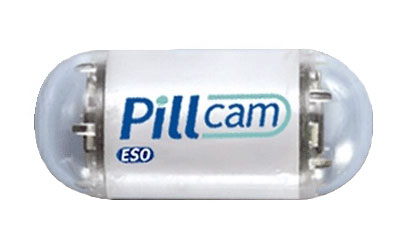
The ingestible pill camera from Given Imaging is designed to help doctors spot polyps and other early signs of colon cancer. The Food and Drug Administration cleared the device for patients who have had trouble with the cringe-inducing colonoscopy procedure, which involves probing the large intestine with a tiny camera embedded in a four-foot long, flexible tube.

The Israeli company's technology, developed from missile defense systems, uses a battery-powered camera to take high-speed photos as it slowly winds its way through the intestinal tract over eight hours. The images are transmitted to a recording device worn around the patient's waist and later reviewed by a doctor.

While Given's wireless, image-beaming system may sound like science fiction, it's actually more than a decade old. In 2001, the company received FDA approval for a similar device used to get a close-up view of the small intestine.

At that time, analysts expected Given's approach to grow into a direct competitor to traditional colonoscopy. But company studies found that images taken by the mini-camera were not quite as clear as those from the in-office procedure. As a result, the company has pursued a more limited market for its device: patients who have trouble undergoing standard colonoscopies.

The FDA on Monday cleared the company's PillCam Colon for patients who have experienced an incomplete colonoscopy. Given estimates 750,000 U.S. patients are not able to complete the procedure each year, due to anatomy issues, previous surgery or various colon diseases.

Even with this limited indication, analysts estimate the new pillcam could grow to sales of over $60 million in North America by 2019, with room for expansion as the technology improves. MorningStar analyst Debbie Wang said the company has shrewdly positioned the device as another tool in the gastrointestinal specialist's kit, rather than a direct competitor.

"Given's management understands that the traditional colonoscopy is the gastroenterologist's bread and butter right now," Wang said. "So they didn't want to do anything that would position this as a substitute."

Wang notes that Given's PillCam costs $500, significantly less than the roughly $4,000 rate for colonoscopy. Eventually, she thinks doctors may use the device to attract adults who avoid regular screenings due to fears of pain, embarrassment and general discomfort. The Centers for Disease Control and Prevention's guidelines currently recommend regular colonoscopies beginning at age 50 and continuing through age 75, though most U.S. adults don't follow the recommendations.

In December, Irish medical device firm Covidien said it would buy Given for about $860 million. Given Imaging, headquartered in Yoqneam, Israel, markets seven lines of medical devices and surgical supplies, including pillcams to screen the esophagus and small intestine.

Pillcam Colon was previously approved in 80 other countries, including in Japan, Europe and Latin America.