Showing posts with label wedding. Show all posts
Showing posts with label wedding. Show all posts
Tuesday, March 10, 2015

Tuesday, April 15, 2014
Sunday, March 23, 2014
Why surprise weddings are the worst new trend
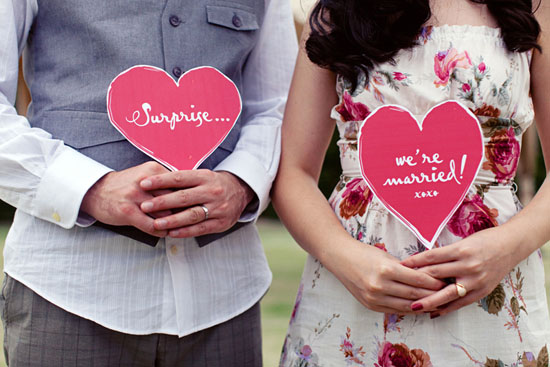 The morning of their engagement party, Adam Verheyen handed his fiancée, Carly Butler, a hand-written letter. Carly had recently returned from a six-month solo trip learning about her family history and writing a book, and she and Adam had gotten engaged while she was away. Now she read the sweet, romantic letter out loud with him. The letter announced, “Today is not our engagement party. It is our wedding.”
Adam had planned a “surprise wedding.” According to Jezebel, it’s now a trend to plan your entire wedding in secret and spring it on your fiancé(e) like a surprise birthday party. Last year, one such wedding even happened live on Good Morning America.
It’s incredibly ironic that an event meant to celebrate the joining of two people in marriage would be so one-sided, and that consent would be deemed so irrelevant. Relationships aren’t—or shouldn’t be—about one person deciding and creating things for another. They should be about two people building a life together.
In case my reference to “consent” doesn’t make sense, consider this: expressing a desire to have sex with someone doesn’t mean they get to decide unilaterally when and where and how the sex will happen. Agreeing to marry someone doesn’t mean they get to decide unilaterally when and where and how you’ll get married and who the guests will be and what music you’ll have and what types of hors d’oeuvres will be served. Unless, of course, you tell your partner that you don’t really care about these details and they’re free to do whatever they want with the wedding planning.
Weddings, like the marriages they are meant to celebrate, should be collaborative. That collaboration can mean “We make all the decisions together,” or it can mean “I don’t care, it’s all up to you!”, or it can mean anything in between. Personally, if someone sprung a wedding on me like that, I’d have to have a serious conversation with them about why they don’t think my own wedding preferences matter enough to be taken into account.
From the sound of it, the surprised fiancées were happy with the weddings they got. That’s great. I’m not here to tell them not to be happy.
However, a news article with the headline “Local bride disappointed at groom’s surprise wedding, wishes her desires had actually been taken into account” isn’t going to get published anywhere anytime soon. Why? Because it doesn’t fit our narrative of what weddings are and what they mean—and because many women in this situation would probably keep their discomfort to themselves. From childhood, we’re taught that when a guy does something so special for us, especially when it involves spending lots of money, we should be grateful and appreciative.
Why are surprise weddings even a thing? I think there are several contributing factors. One is that this fits into the general trend of ever-bigger, more expensive, more ostentatious, more memorable weddings. In a culture that focuses much more on the celebration of a marriage than on that marriage itself, it makes sense that people want their weddings to be something they (and the guests) will talk about for years, maybe decades. If you get some media attention in the process, that doesn’t hurt. Furthermore, celebrity weddings and the relentless dissection of them both in print media and online gives people something to aspire to.
Another factor is gender. Although I’m sure there have been cases of men surprising male partners with weddings, or women surprising partners of any gender with weddings, all the examples I’ve seen so far have been of men surprising fiancées. Men are socialized to be in control and to provide for their girlfriends and wives. Although wedding planning has traditionally been the role of the woman, it’s not surprising that men, feeling pressure to give their partners everything, decide to plan a big surprise wedding their partners never asked for.
Moreover, the idea of men making decisions for their female partners is much more commonplace and accepted than the reverse. Think of men ordering for dates at restaurants, expecting wives to stay home with the children, choosing where to live based on their own jobs and preferences, not those of their wives. I’ve been blissfully sheltered from these things, but I still remember my irritation when a guy I was seeing insisted on taking me on a “surprise date” and refusing to tell me what restaurant it was, what kind of food it served, how much it would cost (not that paying for my own meal would’ve been an option), or when I could expect to get home afterward.
Much more commonplace are weddings that are a surprise to the guests, but not to either half of the couple getting married. That’s a much less creepy way to include an element of surprise in the celebration. However, it’s worth considering the fact that weddings aren’t just about the two people getting married, or else everyone would just do it by themselves at City Hall. They’re about celebrating a marriage together with your friends and family. Those friends and family might appreciate knowing what type of party it is they’re invited to, whether it’s to make sure they don’t wear jeans or so that they don’t accidentally skip your wedding to watch the new season of House of Cards.
Thursday, March 20, 2014
New company allows bridesmaids to rent their dress

“Many of my best friends aren’t engaged yet, so I have many more to come,” she says. “It’s an honor, but it’s an expensive honor.”
So the 28-year-old recent UCLA business school grad decided to do something about it.
Her new company, Vow to be Chic, rents designer dresses for bridesmaids from a website. Instead of paying hundreds of dollars for a new dress, customers pay $95 to $125 and, after the bride and groom head off into the sunset, the dresses go back.
Exclusive deals
The site has struck exclusive deals to carry several of the most popular styles each from five of the eight top designers of bridesmaid dresses, including Swoon and Lula Kate. Every dress is available in multiple colors and a full range of sizes.
Traditionally, a bride selects the dress for her bridesmaids, who then each must head to one particular boutique for a fitting. It’s often stressful as well as expensive – think of Katherine Heigl’s character in the movie “27 dresses.”
The average designer dress costs about $300, generating $2 billion annually amidst the overall $50 billion spent on weddings in the United States.
Vow to be Chic starts by helping a bride select a dress for her bridesmaids online. Then the renting bridesmaids send in their measurements and, way before the wedding, get the dress in two sizes to try on. Once the fit is confirmed, the sizing dresses go back to Vow to Be Chic, which sends final models out just before the nuptials.
The notion of renting fancy womens' wear has already been proven, thanks to the success of sites such as Rent the Runway, where Doorey worked before business school. During college, she also interned with a wedding planner in New York City and saw firsthand just how much stress arose from the bridesmaid dress-fitting process.
"Not okay with men outsmarting women"
“It dawned on me one day that men had been renting tuxedoes for decades,” she says. “I’m not okay with men outsmarting women in the fashion arena.”
The business plan comes amidst a boom for the so-called sharing economy, whether it's cheaper car rides from Uber, cheaper vacation rentals from AirBnb or cheaper vacuums from SnapGoods. It’s all fitting with the current post-boom, shallow recovery economic climate.
But it still wasn’t easy for Doorey to get all the designers on board. While many retailers sell bridesmaid dresses online, no one was renting high-end, designer styles. “I’m not sure about this Internet thing,” Doorey recalls one designer telling her.
Doorey was planning to head back East after graduating from UCLA’s Anderson School of Management last year. Then she and friend Anna Baxter won the school’s annual new-venture competition and a $15,000 prize to turn the idea of Vow to be Chic into a reality. Several of the judges, professional venture capitalists, offered to invest more on the spot.
One of those backers, Matt McCall of the Pritzker Group, says he generally doesn’t fund e-commerce startups like Vow to be chic. “I dislike that space – I hated that going into the contest,” he says. “But I ended up so impressed with Kelsey.”
Along with her prior experience and exhaustive market research, Doorey's calm, CEO-like demeanor under pressure helped convince the investors to come aboard. The site has been available to a limited, private audience since last year and opens to the public in a few weeks. She also has plans to expand into related areas as the business grows. Brides come to the site more than eight months before their wedding to sign up, creating a potentially lucrative market for other wedding vendors.
That’s all a ways down the road, however. For now, Vow to be Chic will stick to bridesmaids rentals and, hopefully, prevent anyone from having to become another 27-dress hoarder.
Monday, March 17, 2014
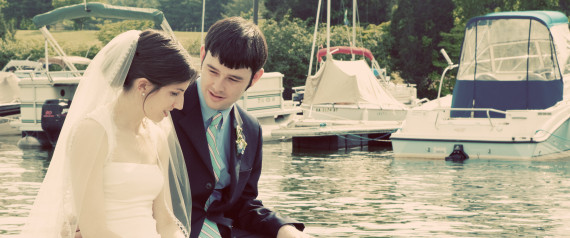
How a bride and groom threw a 100-person wedding for $4,000
 |
| Abigail Dalton |
The engagement wasn't a surprise -- being mature, rational adults, my then-fiancé and I had discussed marriage, finances, child-rearing and any number of important topics we thought we should cover before agreeing to be legally bound for life -- and I had already been poking around the internet, looking at wedding-themed websites and blogs.
I'd therefore had plenty of time to feel my heart drop into my stomach as I looked at people's budgets. From lovely outdoor weddings where tent rentals ran up to $20,000, to charming hotel affairs that cost $175 per person, I knew that a conventional (and expensive!) wedding wasn't for us. We're in our mid-twenties and have savings, but we certainly didn't want to spend them on a one-day event.
While I would have been happy to run off to City Hall and cover dinner for a few close family members, my husband had other ideas. He has a big family that expected a wedding ... so we gave them one, on our budget.
The Surprising Thing We Booked Sight-Unseen ...
After examining our finances, and considering our spending priorities, we thought about what kind of wedding we could agree on--and came up with relaxed and simple. That is, lacking tiny, expensive details that would stress me, and by extension, him, out.
The venue needed to be somewhere we could hold both the ceremony and the reception. Once we realized that a full meal was out of our budget (given that we would likely host about 100 guests!) we decided on a dessert reception. We also considered flowers and photography, as well as necessities like an officiant and invitations, and decided on a budget of $4,000.
A lot of crafty wedding blogs feature weddings where everyone involved seems to have some kind of incredible talent--
"My graphic designer brother designed all of our invitations!"
"My best friend is a professional florist and put together all of the flowers!"
I know my limitations. I am not even a little bit crafty. I can repair buttons and socks, poorly, and that's about it, and I felt uncomfortable outsourcing details to my friends and acquaintances.
But we found our perfect (and fantastically inexpensive) venue in Southern Virgina, where my husband is from. My mother-in-law had suggested looking at local parks for venues, and one option had a beautiful lakeside gazebo for a ceremony, and an indoor facility with a wraparound porch that would be a great location for the reception. We booked it sight-unseen (minus a largely ineffective Google search for "Claytor Lake State Park") for $1,000.
Flowers, Food and More
After receiving another excellent recommendation, we met with a local florist who very kindly took the few magazine photos I'd torn out and put together 12 beautiful mason-jar centerpieces with hydrangea and delphinium, and a bouquet and boutonnière for $400. She also very politely listened to me say "No" to just about everything -- "No, we wouldn't be having a bridal party"; "No, we don't need flowers for the gazebo"; etc.
I found our photographer during a late-night Craigslist search. Her photos looked lovely, and she was just starting her business in the area, so when I asked her if she could photograph our wedding day for $600, she agreed. After seeing constant reminders that wedding photography can start at $2,000, I was incredibly happy to have found someone willing to work with our budget (and the photographs turned out beautifully).
Especially since our reception was dessert-only, our most important expense was the cake and pie we'd be serving, as well as the drinks (an open bar was a non-negotiable). We found a local baker who makes wedding cakes as a hobby; she created a delicious three-tier confection for $200. We picked up a dozen pies the night before the wedding, and we bought beer and wine from a wholesale liquor store, bringing our total food and drink cost to $650.
A wonderful friend made pennant flag bunting for the reception venue as her wedding gift to us, and it was the perfect (and only) decorative detail, in addition to the flowers. My mother bought my wedding dress, which came in at $750, because she knew I would buy something cheap rather than something I loved, and wanted me to be happy with what I was wearing.
My mother-in-law anticipated we'd need extra hands on our wedding day, and found a few local students who served drinks and cake (and kept it all replenished) for $100 each. We rented the cheapest chairs available for $316 (even though they were a less-than-attractive brown) because I reasoned that people wouldn't be paying much attention to what they were sitting on. They didn't.
When we started planning, I kept things simple because I didn't want to add stressful detail after stressful detail to my plate. In the end, the simplicity made our wedding lovely, and kept us under budget.
The End Result
I did my own hair, a friend did my makeup and I felt perfect.
Once we threw in the incidentals -- the official's fee of $150, the invitations I found at an online press for $275, the $40 guestbook, the $30 marriage license, and the quirky $70 cake-toppers that sit on our mantle now -- we came in a few hundred dollars under budget.
Most importantly, the things we'd said "no" to didn't matter. Guests commented on how much they'd enjoyed the wedding, and no one seemed to notice that we didn't have a DJ (we used an iPod and speaker system), or that a professional hadn't done my hair, or that my husband wore a navy blue suit he'd owned for years.
We even ended up in the DC/Maryland/Virginia edition of The Knot, and our photographer threw in a CD of our photographs to thank us (for which some photographers charge extra).
The wedding industry constantly attempts to up-sell brides and grooms on so many items, and it was reassuring to realize that none of those (expensive) superfluities mattered.
At the end of the day, we have photographs we love, memories of delicious cake and happy friends, and the relief that we could throw a party without drowning ourselves in debt or liquidating our savings.
Saturday, February 15, 2014
Can Facebook tell when you should get married?

Given that envy and loneliness are Valentine’s Day’s two chief exports, TIME presents an app that analyzes your Facebook feed to see exactly when your friends are tying the knot—and when it might be time for you to take the plunge.
Methodology
This application measures the median age of your married friends, meaning the person for whom half your married friends are younger and half are older. Because you are probably friends with a lot of people close to your age, this figure will theoretically identify whether you have passed the point where many of your contemporaries start tying the knot. It will work better for some than others.
For the purposes of this tool, “married” refers to anyone who lists his or her relationship status as “married,” “engaged,” “in a domestic partnership,” or “in a civil union.” We’re aware that some people use this status facetiously. Since the distribution of your friends’ ages tends to form a bell curve centered on your own age, a few jokesters shouldn’t throw off the figure drastically.
This app only counts friends who list their date of birth, including the year. In testing, TIME found that this amounted to about 25 percent of all profiles, but that will vary from user to user.
Many people who are not in a serious relationship simply do not list a relationship status. It is not possible to distinguish these people from those who are married but choose not to report that fact to Facebook. As a result, the percentage of married friends that this app reports is probably lower than the actual figure, though not by a huge margin.
Thursday, January 30, 2014
Saturday, January 25, 2014
Why red states have higher divorce rates than blue states
 It may seem counterintuitive, but divorce rates are higher in religiously conservative "red" states than "blue" states, despite a Bible-based culture that discourages divorce.
In a new study titled "Red States, Blue States, and Divorce: Understanding the Impact of Conservative Protestantism on Regional Variation in Divorce Rates," which will be published later this month in the American Journal of Sociology, demographer and University of Austin professor Jennifer Glass set out to discover why divorce rates would be higher in religious states like Arkansas and Alabama -- which boast the second and third highest divorce rates, respectively -- but lower in more liberal states like New Jersey and Massachusetts.
It was previously thought that socio-economic hardships in the South were largely to blame for high divorce rates, however Glass and her fellow researchers concluded that the conservative religious culture is in fact a major contributing factor thanks to "the social institutions they create" that "decrease marital stability."
Specifically, putting pressure on young people to marry sooner, frowning upon cohabitation before marriage, teaching abstinence only sex education and making access to resources like emergency contraception more difficult all result in earlier child bearing ages and less-solid marriages from the get go, Glass writes in the paper.
“It’s surprising,” W. Bradford Wilcox, director of the National Marriage Project, told The Los Angeles Times. “In some contexts in America today, religion is a buffer against divorce. But in the conservative Protestant context, this paper is showing us that it’s not.”
Glass and her colleagues also concluded that the religious culture of the area permeated into the divorce rates of even the non-religious people who lived there. In other words, simply by living in counties which were dominated by conservative Protestantism, people were at a higher risk for getting divorced.
As Glass told The Los Angeles Times, “If you live in a marriage market where everybody marries young, you postpone marriage at your own risk. The best catches… are going to go first.”
Saturday, December 21, 2013
Saturday, December 14, 2013
Wednesday, December 4, 2013
Friday, November 8, 2013
Five brides reveal their wedding day regrets
 With all the stress of planning a wedding, it should come as no surprise that most couples actually skip wedding night sex — but not for the reasons you'd think. Turns out they're not turning down sex because they're exhausted from the big day; a new study reveals that 24 percent of couples admit that they skip the lovemaking because the groom is too drunk; 13 percent skip it because their bride is too wasted. Take that, marriage vows!
At least 17 percent of couples wait three days later to consummate their marriage. But if you ask a bride what her biggest wedding day (and night) regrets are — it doesn't come down to sex. For all the women we spoke to (all of which were married within the last two years), it turns out that sex was, for most of them, one of the last things on their minds the night of — and the morning after. So, what were their biggest regrets?
Spending Too Much Time Walking The Room
"One of the things that I wish I didn't do at my wedding," says Sarah, 28, "was waste the whole night walking around and talking to our guests. You read on all the wedding websites that once your guests sit down to eat, it's a good time to walk the room and thank people for coming — but when you actually start doing it, it's awful. I didn't even get to dance or drink champagne. It took forever to walk the room and thank people for coming."
Letting The Stress Take Over
"Hindsight is 20/20, I know," says Christie, 33, "but I look back on all the time I wasted stressed out and I want to smack myself! It's just a wedding. Yes, it's an important day in your life — but it's going to be perfect no matter how much planning you put into it. So one thing I'd definitely change was how much anxiety I felt before my big day. My husband wasn't stressed — so why was I?"
Too Much Booze
"Am I the only person to admit they were too drunk at their wedding?," laughs Jess, 25. "Before we said our 'I Dos', I took a few shots with my bridesmaids to calm my nerves. After the ceremony, we took a few more shots while we were taking photos to celebrate our 'I Dos' and then finally, at the reception, I made it a point to enjoy the fact that we had an open bar. When I look back on the night it's super fuzzy. So, while getting wasted at your own wedding sounds really awesome, I wish I'd dialed it back a little bit so I could actually remember what happened that day."
Not Speaking Up
"I hate the way my wedding photos turned out," says Kelleigh, 29. "Even that day, I didn't like what our photographer was asking us to do or the poses he was instructing us into — but I didn't say anything because I didn't want to cause a scene or act like a bridezilla. Now, though, I wish like hell that I'd said something because I can’t believe how bad the photos turned out."
Not Eating
"Do you know much it costs to eat at a wedding?," Cait, 27, asks. "Before the wedding, I kept telling myself 'Don't worry, I'm going to eat, I'll have a plate.' But then you're three-quarters of the way through the reception and you haven't even touched your appetizers yet because you're too busy smiling and pretending you're not, actually, starving to death. Whenever any of my friends comment on how good the food was, I can't even pretend like I know what they’re talking about — I never had a chance to eat anything!"
Friday, October 18, 2013
Wednesday, September 25, 2013
Couple feeds 200 homeless people after calling off wedding
When an engaged couple calls off the wedding, it is usually a time of sadness and anger. But one family in Atlanta found a way to turn a terrible situation into a beautiful one. Carol and Willie Fowler's daughter Tamara was set to get married at the Villa Christina catering hall, when the wedding was called off just 40 days before the event. Initially the Fowlers were upset to hear that the lavish gathering they had planned and paid for was not going to happen. Then they had a genius and generous idea: They invited 200 of the city's homeless to feast on the four-course meal that would have been part of Tamara's wedding reception.
The Fowler family called Elizabeth Omilami from the Hosea Feed the Hungry organization for her help in getting the group together. At first Omilami thought she was being pranked! Carol Fowler said that even daughter Tamara attended the event, adding, "She was also very delighted to see and know that others had an opportunity to enjoy something, rather than just allow it to go to waste." Children make up about 70 percent of Atlanta's homeless, so to make the dinner more fun for them, a clown was hired for their entertainment. The event was titled "The First Annual Fowler Family Celebration of Love," and the family says it plans on hosting another charity dinner next year. It's a great example of how you can turn any bad situation into a positive one.
Sunday, September 15, 2013
Friday, September 13, 2013
Couple spends $1.56 on their wedding (yes, you read that right)
 A couple from Scotland spent less on their wedding day than most people dole out for their morning coffee.
Artist Georgina Porteous, 36, and 39-year-old singer-songwriter Sid Innes budgeted just $1.56 for their big day. Yep, you read that right. The pair are dedicated to recycling and self-sufficiency, according to the U.K.'s Metro News, so they vowed to keep the day they exchanged vows super simple.
So how did the couple throw a great fête for 70 guests for such a paltry price? Porteous and Innes said their "I do's" in a barn on their property behind their cottage. Porteous spent $1.56 on a vintage ivory wedding gown that she found on freecycle.org, a network of exchanges and gifting, while Innes wore an old tweed suit. The couple’s rings were handmade by Porteous using antlers she found in her garden. Her mother officiated the ceremony and a neighborhood reverend donated his services for free in order to make it all official.
For the reception, the venue was decorated with locally grown flowers, hay bales, and lanterns that community farmers contributed. The newlyweds asked their guests to bring food and drinks for a potluck picnic and Porteous's aunt baked the cake. The wedding photographer who captured the festivities bartered his services in exchange for some film editing by Porteous. And the affair’s music came courtesy of the bride's father, who played jazz on the saxophone.
“We thought we’d do [our wedding] differently and we started to become quite obsessed with it and ways to save money. It was exciting, fun and a challenge," Innes said in a YouTube video. One fee the couple couldn’t get out of paying? The $109.23 charge for a marriage license. Hopefully, it was totally worth it.
While cost-cutting measures that Innes and Porteous took for their nuptials are certainly extreme, there are plenty of ways to have a budget-friendly wedding. Here are some tips and tricks for thrifty ways to tie the knot.
The dress — If you don't have a a friend or family member who can lend you a dress (that she probably wore only once), there are a lot of great websites that sell once-worn wedding dresses. “When my clients come to me and are looking to keep costs down, I recommend that they resell their dresses,” Tracy Taylor Ward, owner and principal designer/planner ofTracy Taylor Ward Design, told Yahoo Shine. Sites like NearlyNewlywed.com and Tradesymake the process easy. And if you’re lucky, you might even make a profit if you sell yours. Sample sales, consignment shops, eBay and e-commerce site Etsy, which focuses on handmade and vintage items, are great options as well.
The rings — Not everyone is as deft at ring-making as Porteous is, but Etsy has plenty of artisans with similar skills who sell affordable alternatives to typical gold and silver wedding bands. Titanium and gold-plated metals look like the real thing at just a fraction of the price.
Flowers — In the United States, $1,997 was the average amount spent on flowers and decor per wedding in 2012. Ward suggested working with larger flowers. “Hydrangeas are a good-value flower because they’re always in season and you don't need as much to fill out an arrangement. You need more roses to fill out the same amount of space,” she said.
Venue — Being able to throw a wedding at your own place or at the home of a friend or family member is the cheapest route, but for those outsourcing to other locations, there are tricks for trimming expenses. Most venues' rates vary by season, so if you can get a place during the off-season, its prices will be either lower than at peak times or negotiable because it's not going to have as much business during that period. Avoid holidays because prices tend to inflate. Additionally, tying the knot on a Friday or a Sunday is slightly less expensive than on a Saturday.
Food — Pass on the raw bar and filet mignon and skip food stations, added Ward: instead opt for passed hors d'oeuvres and a sit-down dinner.
The wedding cake — Wedding cakes cost, on average, $560, but you certainly don't have to spend that much. “Cakes are typically priced per slice, so try to find a bakery in your budget,” suggested Ward. An alternative cost-cutting measure is to ask the bakery for a smaller display cake and have extra sheet cakes in the kitchen for when it runs out.
Wednesday, August 14, 2013
Ways to save on your wedding
 Tying the knot isn’t known for being low cost. According to current estimates, the average American wedding costs approximately $27,000, which is beyond most budgets. If you don’t want to or can’t spend a lot of scratch on a ceremony and reception, you don’t have to! It’s your wedding—you can do what you want, and this includes being a bit more frugal when it comes time to say “I do.” Thankfully, there are a lot of genius ways to save on your wedding while still having a snazzy soiree.
Save your pennies on primping.
1. Go mild on the makeup.
You certainly want to stand out on your special day, but you don’t want to be the center of attention because of your cosmetics. When it comes to make-up on your big day, it can be fab and frugal if:
A bold new look on your big day may seem like a bright idea, but this may not be the time to take risks. Expensive extensions, coloring, perms, and other treatments might look amazing, but they may also not turn out the way you want, leaving you looking less than your best and out quite a few bucks. A classic updo or a cascade of curls could be a better option.
MOM TIP: Not only are modern or extreme looks like extra long extensions or crazy colors expensive budget-busting styles, but they could ruin your photos too. These looks could make the pictures from this timeless celebration of your love look dated.
3. Spend less at the spa.
Facials and body treatments before the big day can help your skin to be more beautiful before your wedding, but they can really cost a lot. Spa services aren’t cheap, and they won’t necessarily help you to look better. Your face could break out from a facial, or the products used could cause an allergic reaction, making those services a really bad investment. If you want to go to the spa anyway, you should be savvy and:
4. Don’t buy your bridal party’s beauty treatments.
If you are keeping it simple and sticking to a budget, there is no harm in not paying to have the bridal party professionally styled, asking them to do their own hair and cosmetics.
BEST FRIEND TIP: If you want bridesmaids to beautify themselves, don’t even thinkof making demands like insisting on seeing an updo or some other style that may be hard to do, especially to your own hair. Let these ladies do what they do to make them look and feel their best.
1. Go mild on the makeup.
You certainly want to stand out on your special day, but you don’t want to be the center of attention because of your cosmetics. When it comes to make-up on your big day, it can be fab and frugal if:
- you do it yourself. You may want to get training from a pro at the cosmetics counter first, but by doing your makeup yourself the way you normally apply it, you will look like yourself—the person your future spouse fell in love with!
- you have it done at the cosmetics counter. When you make a purchase from a department store cosmetics counter or shop like Sephora, they will do your makeup for you…for free!
- don’t try anything new. Weddings may seem like a wonderful occasion to splurge, but if you normally don’t use high-end cosmetics or crazy colors, now isn’t the time to try. They may not look as good and as flattering as what you normally do, and you could end up with irritated skin or an allergic reaction from unfamiliar products.
A bold new look on your big day may seem like a bright idea, but this may not be the time to take risks. Expensive extensions, coloring, perms, and other treatments might look amazing, but they may also not turn out the way you want, leaving you looking less than your best and out quite a few bucks. A classic updo or a cascade of curls could be a better option.
MOM TIP: Not only are modern or extreme looks like extra long extensions or crazy colors expensive budget-busting styles, but they could ruin your photos too. These looks could make the pictures from this timeless celebration of your love look dated.
3. Spend less at the spa.
Facials and body treatments before the big day can help your skin to be more beautiful before your wedding, but they can really cost a lot. Spa services aren’t cheap, and they won’t necessarily help you to look better. Your face could break out from a facial, or the products used could cause an allergic reaction, making those services a really bad investment. If you want to go to the spa anyway, you should be savvy and:
- start any treatments months before you tie the knot. If you end up with a rash or with plenty of pimples, you have time to clear up before your ceremony.
- shop around. Find spas with bargains when bundling multiple treatments or consider spending less at a beauty school with estheticians in training.
4. Don’t buy your bridal party’s beauty treatments.
If you are keeping it simple and sticking to a budget, there is no harm in not paying to have the bridal party professionally styled, asking them to do their own hair and cosmetics.
BEST FRIEND TIP: If you want bridesmaids to beautify themselves, don’t even thinkof making demands like insisting on seeing an updo or some other style that may be hard to do, especially to your own hair. Let these ladies do what they do to make them look and feel their best.
Saturday, June 23, 2012
Saturday, June 16, 2012
Jurassic Park proposal
From the youtube page:
"My girlfriend and I are paleontologists, and we really love Jurassic Park.
On June 02, 2012, I surprised her with a secret trip to the fictional “Snakewater, Montana,” which was the original filming location for the excavation scene at the beginning of Jurassic Park.
On a very windy day, I coaxed her into reenacting the “annoying kid” scene on camera, which was really the beginning of my proposal…she had no idea."
Tuesday, May 29, 2012
Subscribe to:
Posts (Atom)