Showing posts with label game. Show all posts
Wednesday, April 1, 2015
Google maps easter egg sets pac man loose on the streets
Google has created a new Easter Egg for Google Maps (pretty much just in time for actual Easter) which lets you play Pac-Man in real-world locales on the company’s Maps apps for desktop and mobie devices. It’s easy to play, by either navigating to the Google Maps website or opening the app on your Android or iOS device, and then just searching for a location where Pac-Man might show up.
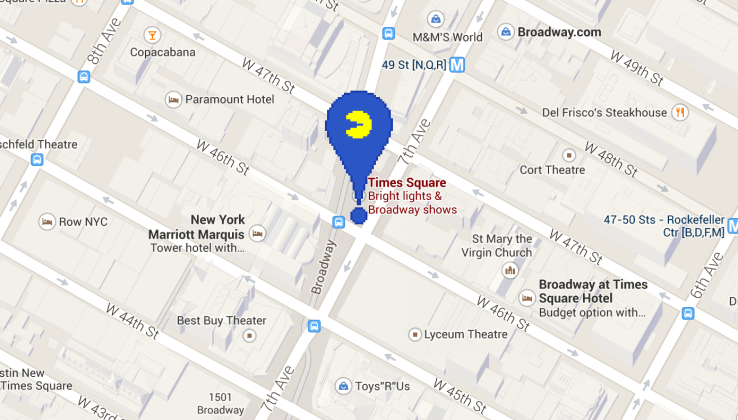
Google is offering hints to help you find the iconic 1980s video game protagonist, but if you’re in a hurry just search for “times square” and you should see a pixelated map flag icon like the one pictured here. Click on that and you’ll launch into a game with simple controls, letting you control Pac-Man as he evades his ghostly enemies with either the arrow keys on a computer or by swiping up, down, left and right to change direction on mobile.
Rack up a decent high score with your five lives and then share it with others to see how well you can Pac in the streets.
Source
Thursday, May 15, 2014
Friday, May 9, 2014
Friday, May 2, 2014
Wheel of Fortune had its first-ever special needs contestant
Unfortunately, he didn't win it all. But it's clear he had the best time!
Wednesday, February 5, 2014
Arthur Chu: One of Jeopardy's most hated contestants
Reigning Jeopardy! champion Arthur Chu, whose four-game winning streak will be interrupted by a “Battle of the Decades” match before he returns on February 24, has won more than $100,000. He did his homework before appearing on the show, Googling for strategy tips and drilling himself on topics about which he was less informed. He “lurked” on fan boards and read up on the victories and foibles of past contestants, both real and fictional. And yet, apparently, some of you don’t like him very much.
Jeopardy! strategy is not like Survivor strategy, but it’s equally unnerving when a contestant on either show strays from what might be called good sportsmanship. Chu compared himself to Survivor’s first winner, Richard Hatch, who seemed to corrupt the game with his ruthlessness even though there was no road map in existence to revolt against. He invented the alliance, now a mainstay of Survivorgameplay, but he was calculating in a way that was morally off-putting even before we knew he didn’t like to pay taxes and had fathered 200 children. Unlike Hatch, Chu didn’t really invent anything: In an interview with Mental Floss, he cites 1985 contestant Chuck Forrest’s category-hopping (the “Forrest Bounce,” also a good name for your woodland theme park) as inspiration, noting that it was also used by IBM’s computer Watson. ”Watson knew that the bottom two rows of the Jeopardy! board are more likely to contain Daily Doubles and it knew that whoever gets the most Daily Doubles is the most likely to win the game — that’s just statistical analysis. So it was programmed to hunt those Daily Doubles, and I figured I had no reason not to do that.” Yes! Why not do that? Besides the fact that it’s more of a brain strain to hop around the board willy-nilly, Chu mentions “sportsmanship” and “tradition” as being two possible reasons people pass up the opportunity. Those reasons are also why Chu has ruffled some feathers, though probably far less than headlines would lead us to believe. His strategy, he admits, is “less pleasant to watch” than the traditional format.
What is Chu’s game theory, exactly? While most players opt to stick with a single category and work through it from lowest to highest prize amounts, crossword-puzzle style, Chu begins with the most difficult clues in an effort to solve the Daily Doubles and doesn’t hesitate to lay down the big bucks when he finds them in a topic he’s familiar with. If the question belongs to one of his less-practiced knowledge categories, like sports, he’ll only wager $5 and throw it away, knowing that it’s off the board for his competitors. He also spat in the face of the $1-over wager tradition in Final Jeopardy, in which the extra dollar prevents a tie; instead, Chu intentionally bet to tie twice, though only once did he and his competitor (Carolyn Collins) both answer correctly and move on. This is not a humanitarian move, by the way, but it is a clever one (Keith Williams, former Jeopardy! winner and obvious math person, breaks it down for you in detail here): Playing to tie increases your chances of advancing both because of game theory and mind-fucking your opponent (“if your opponent knows you’re going to wager for the tie, he might disregard a rational wager and go for broke in an attempt to tie you”). Chu is also quick to buzz in, which is perhaps the most useful Jeopardy! skill of all.
Chu is an aspiring actor and comedian who relied on his “scripted play” to quell his nerves. He was in the zone, focusing on the economics of his rehearsed moves and even playing the depersonalization game to stay chill. He told Mental Floss ”I was adopting this persona that I’d built up in my head. Like, a Jeopardy!champion wouldn’t freak out, a Jeopardy! champion wouldn’t hesitate. A Jeopardy! champion would grit their teeth and lean in, be super-focused and engaged, and so that’s the version of me that people are seeing on TV.” Backstage on Twitter, his refusal to apologize for actually playing to win has been interpreted as smugness, which is even more bizarre than that he’s accrued any animosity to begin with.
In March, we will have been acquainted with Jeopardy! for 50 years (fun fact: Saturday Night Live’s Don Pardo was its first announcer). One of the rare benefits of growing old is that you have more knowledge available when you pursue your ambition$, more resources from which to pull information, and more mistakes from which to learn. Chu’s gameplay didn’t stomp on anything other than an orderly looking board and convention. He worked for his earnings, and worked hard. Unlike past champion Ken Jennings, who Chu supposes was just “naturally gifted,” Chu studied and obsessed and toiled over making himself a better player. That’s not a hack, it’s effort — brainy, focused, and effective. It turns out there’s more to Jeopardy! than translating chess pieces into German, and that’s a game-changer.
Monday, January 13, 2014
Friday, January 10, 2014
Tuesday, December 3, 2013
What makes 'The Price Is Right' one of TV's most successful shows?
Everything in the world has changed since, but 7,901 episodes later, "The Price Is Right" is still on the air for one full hour every single weekday, still beckoning audience members to "come on down," still handing out new cars to ecstatic contestants, and still as popular and beloved as it was during the Nixon era.
"The Price Is Right" may well be one of the most successful shows in television history.
What is the lure of "The Price Is Right"? And what keeps fans coming back? Why do its bells and whistles continue to mesmerize while other shows and genres come and go? We paid a visit to the set on the occasion of its special Halloween episode to see if we could find out.
The crowds arrive early, and from the first, they are excited. Very excited. Knowing that it will be a Halloween-themed episode, many are in costume, even though it is early September. Sitting on long rows of metal benches spanning the outside of the Television City studios in Los Angeles, Calif., they can barely contain themselves as they crane their necks staring up at videos of great "Price" moments. Producer Mike Richards explains that the team makes sure the entire experience — from arrival at the studio gates to "Showcase Showdown," "feels like a ride."
But it's a ride with a lot on the line. Each audience member is, of course, a potential contestant on the show. While they wait to enter the studio, each is interviewed and photographed. According to Stan Blits, the co-producer who leads the all-important task of "casting" the show each day, the questions are asked not so much to learn the audience members' answers "but to see how they act, how much excitement they show. Who freezes up." Their files are then taken upstairs, reviewed, and discussed, and the magic names are chosen, their papers spread on a conference table like mug shots, while downstairs the people have no idea what destiny awaits them.
It is the genius of the "Price Is Right" format, Mike Richards explains, that at the very top of the show, before the host has even appeared onstage, you have four winners. On other game shows, contestants are screened and informed of their taping schedule months in advance, giving them time to pick out outfits and compose themselves into sober, restrained television fixtures. On "Price," we are there with them at the moment when they hear the magic words "Come on down!" Just becoming a contestant is a prize, and the contestants' giddiness at having been selected doesn't even begin to deflate the entire game.
Upstairs, the final touches are being put on the Halloween set, complete with gravestones and spider webs. Host Drew Carey — in the role today of Count Drewcula, though not yet in his spooky makeup — practices his entrance descending from the rafters in cargo shorts. He descends with the cape wrapped over his face, and they lower him a few times, searching for the exact right spot for him to open his arms and reveal the Drewcula beneath. Carey and Richards debate where the reveal should hit and how much flapping he should do. "You look like you were flying angry," Richards says of one take. He asks the crew on the ropes if they can "turn his body a little so we can read his name tag."
Across the stage, announcer George Gray runs through his lines. Clad in a green body suit, he shines a flashlight at his face, preparing to appear like a floating disembodied head during the show. Members of the crew take pictures of the remade set for keepsakes. A car that is to be driven onstage by a remote-controlled skeleton is pushed into position; the models who display the prizes, themselves in spooky makeup, pose alongside.
One of the first things one notices on the "Price Is Right" set is how much fun everyone seems to be having. Ninety-five percent of TV production involves waiting around — while lights are adjusted, sound levels are checked, and myriad other details area taken care of. Life on a set is typically downright tedious, and the mood is generally one of quiet professionalism at best, annoyed testiness more often. To say that the crew whistles while they work on "The Price Is Right" maybe takes it too far, but throughout the day, everyone from the host and executive producer to the guys who hold the cue cards seem engaged and excited to be here. They may not be bouncing up and down in their seats with excitement like the audience members, but their smiles don't stop. When the cameras are rolling, everyone stops what they are doing to watch the show on the monitors — something that definitely is not typical on most sets. The details of the Halloween makeover seem to tickle everyone. That they are maintaining this energy 7,901 shows into "Price's" run is miraculous.
Host Carey explains later, "Being in this energy all day is amazing. You live here surrounded by all these extra endorphins. Being around this kind of happiness all day, it's amazing what it does for you emotionally and psychologically. You just feel better. Automatically you're just in a better mood just being in the building. Even the crew's happy."
Bristling with energy, the moment of truth approaching, the audience is hustled in to take their seats, escorted by zombie ushers. Perhaps unique among game shows, "The Price Is Right" has no obnoxious warm-up comic, but it relies on the host and the announcer themselves to chat with the crowd and keep them entertained. Having an accomplished comedian as the host certainly helps. Bob Barker in his day functioned as the chief cheerleader — a figure from the Ed Sullivan era to intone "How about that?" in appreciation of every act big and small.
Friday, November 29, 2013
Five tips for getting on "Let's Make A Deal"
But suddenly game shows are not the dinosaurs they once were. On "Let's Make a Deal" for example, thanks to the influence of Twitter, DVR's and interractive technology, the game show has the ability to turn each episode on its head every day. For its producer and host, the challenge is how to keep up with the changes rolling over it. And for contestants seeking their fortune on a game show today, the key is understanding it's a very different show you're stepping into.
Here's a peek behind the scenes of the show as well as some tips to help you make your own deal:
Tip #1: Wear a costume. If you forget one, don't worry; there are costumes available at the show. But who needs another pirate when you could show the world your homemade reverse mermaid costume?
The show didn't originally feature contestants wearing costumes — that evolved during the years Monty Hall hosted. Today, the decked out contestants are "Deal's" signature. So how did they take a contemporary comic like Wayne Brady — the polar opposite of the legendary Monty Hall — and stuff him into a 50-year-old game show crammed to the rafters with so much history? The answer is: they didn't. They took the show, costumes and all, and made it fit Wayne Brady. "That's the promise I made him," says Mike Richards, executive producer of "Deal," on how he convinced the comedian to sign up. "This would be how you would do a show, not you hosting a game show."
Richards remembers bringing his wife to one of Brady's live improv shows (he tours with Jonathan Mangum and musician Cat Gray) and halfway through, "she's sweating and cramping in her stomach and she says, 'Seriously, I can't laugh anymore — does he take a break?' And the whole place was like that."
Under Brady's mike, it's basically a live improv show combined with one of those episodes of "Oprah" where she gives stuff away combined with the movie "Indecent Proposal" and a nonstop dance party. The question isn't how to make a good game show, says Richards, it's "how do we make this the funniest show in daytime?"
Tip #2: Be ready to shake it. During the commercial breaks, get up and dance while the crew sets up the next segment. You won't be alone and you might even win some money doing it, so be sure to bring your twerking shoes.
The energy of the audience is unique and there are not a lot of people who could handle the pressure of hosting a show while a crowd full of bananas and skyscrapers and bags of jellybeans scream and dance — maybe not even Brady himself. "If I would have done this 10 years ago, I wouldn't be able to do it," he says. But since the age of 16, he's performed "in front of comedy club audiences, audiences at Carnegie Hall, and at the White House, to strip mall clubs, to big arenas, to college campuses and everything in between." Which, it turns out, is exactly the experience you need to know how to deal with an office manager dressed as a SWAT cop.
Tip #3: Stick around. It can take upwards of five hours to film a single half-hour sitcom episode; with "Deal," they aim to shoot the hourlong show in an hour and 15 minutes. Short enough that it's worth staying for the second taping.
You definitely won't see the same show twice — it's unpredictable by design. Aside from the prize descriptions and a vague outline of the games ("There really are no games — it's all 'this' or 'that,'" Richards reveals), there's really no script, which means it's up to Brady to keep things running smoothly. He has to corral excited contestants while keeping an eye on gameplay and deciding how much money to offer, all while still being engaging for the audience. "It takes a huge amount of energy so at the end of the day, I'm pretty much wiped," Brady admits.
Tip #4: Pretend you're in a movie. Have you ever wondered what it would be like to have a movie score playing through your daily life? Unlike with most shows, which add music in postproduction, Cat Gray actually scores the show in real time. Just be careful not to get too carried away there, Mission Impossible.
Brady isn't the only one who has to stay on his toes; Gray is with him every step of the way, playing the show's soundtrack with such a quick response time that it feels a little like a live-action cartoon. "I don't really view it as music," he says, because it's not like playing on tour or in a studio, "It's kind of all a big puzzle." His set-up allows him to jump through patches and programs at top speed so he can go from "bagpipe to heavy metal to whatever in one second."
And he loves it. After years of touring with artists like Prince and Stevie Nicks, scoring video games, TV shows, and even the trailer for "Django Unchained" last year, "Let's Make a Deal" is his favorite gig. "It's gotta be this one. Because it's the weirdest one!"
Tip #5: Follow @LetsMakeDealCBS. The day before a taping, they'll tweet Quickie Deals — maybe it's a neon shoelace or a black pen or a paintbrush. If you've got it on you at the show, you could walk away with a Ben Franklin or three.
"The show is, at its core, not a game show. It's an audience participation show," says Richards, which is why@LetsMakeDealCBS has more Twitter followers than any other game show on television. So a special Twitter episode sounds like a no-brainer. "Deal" producers asked questions and took answers live as the show was taped so nobody knew for sure what would happen. Fans were asked how much money a prize should be worth and which box to put it in, and gave hints to the contestants.
Producers even took answers from a @YahooTV tweet to pick Gray's first word spoken on the show — he's usually too busy doing the music to talk. After the show, he said the producers were hoping for "bologna" or "some kind of meat product because I'm a vegetarian." And what was he hoping for? "Bleeeeeep!"
Monday, November 25, 2013
How to win on The Price Is Right
The article is extremely interesting, especially if you’re a number junkie, outlining strategies and possibilities on almost every game the show has to offer. Blatt details how one doesn’t even need to know the prices to win if they can apply simple economic principles and game theory to the show.
Many contestants fail to win anything on ‘The Price is Right,’ of course. But as I watched the venerable game show that morning, it quickly became clear to me that most contestants haven’t thought through the structure of the game they’re so excited to be playing. It didn’t bother me that Margie didn’t know how much a stainless steel oven range costs; that’s a relatively obscure fact. It bothered me, as a budding mathematician, that she failed to use basic game theory to help her advance. If she’d applied a few principles of game theory—the science of decision-making used by economists and generals—she could have planted a big kiss on Bob Barker’s cheek, and maybe have gone home with … a new car! Instead, she went home empty-handed.I believe that sound you hear is millions of underpaid, debt ridden college graduates planning to game a game show and walk away with thousands in prizes. Or make a fool of themselves on national television.
But I have to ask, isn’t part of the fun of being on a game show like ‘The Price Is Right‘ just the sheer fact of being there? Certainly it is great if you can win, but isn’t the experience of being there worth anything? And it is well documented that playing to win has it’s dark side, like in the case of Michael Larson and ‘Press Your Luck‘ or any of the souls who have won the lottery and fell into disaster.
Now I’m obviously pulling out the worst cases here, but it’s a thought that runs through my head when I read the article. And game theory or not, you’re never going to be able to top this guy on the stage.
Source
Tuesday, October 22, 2013
Tuesday, July 30, 2013
A new change to the game of Monopoly
Just as Monopoly fans come out of their mourning period for the dearly departed iron game token, Hasbro's tinkering with the formula again. And purists are likely to be outraged.
A new version of the game, Monopoly Empire, is tailored for the short attention span of today's youth. Among the changes? Plenty of real world brands to own -- and no pesky jail to slow things down.
The drastic -- and rather jaw-dropping -- changes are meant to make the game more appealing to younger children who don't have the patience for longer games, says Hasbro. Monopoly Empire is designed to be completed in as little as 30 minutes, a far cry from the marathon sessions that can take place with the original.
You're no longer collecting properties in the new game, either. It's all about buying and trading the world's top brands, which opens the door for blatant marketing plays by Xbox, Coca-Cola, McDonald's and Samsung, among others. (Yes, one of the tokens is a miniature Xbox 360 controller, and yes, we're geeky enough to think that's kind of cool.)
But no jail? That takes away an element that seems essential to the heart of the Monopoly experience. The risk of going to jail adds nearly as much stress in traditional Monopoly as landing on an opponent's hotel-adorned property and having to mortgage your own holdings, though it can also act as a reprieve for players when cash is low and people are approaching your "neighborhood."
Time, however, is something kids no longer have. That's why Hasbro is making quickie versions of several other games as well, including Boggle and Scrabble.
"Parents and children tell us they want a quick in-and-out, frictionless gaming experience," Jonathan Berkowitz, vice president of marketing at Hasbro, tells The Wall Street Journal. "That's the snackable component."
Between 2004 and 2009, the media consumption of youngsters soared from 1.5 hours a day to 7.5 hours a day, according to a Kaiser Family Foundation study. And while a survey by Mattel found that 60 percent of parents would like their children to spend more time with traditional toys, kids gravitate toward social media, electronic games and television. They're focused on winning and moving on to the next thing, but those priorities come at the expense of socialization and face to face bonding time with friends and family.
Hasbro hopes that games like jail-less Monopoly will bridge the gap, though the company is doing just fine appealing to kids who prefer to play games on a screen. Revenues from their video game division are up nearly 20 percent this past quarter.
Source
A new version of the game, Monopoly Empire, is tailored for the short attention span of today's youth. Among the changes? Plenty of real world brands to own -- and no pesky jail to slow things down.
The drastic -- and rather jaw-dropping -- changes are meant to make the game more appealing to younger children who don't have the patience for longer games, says Hasbro. Monopoly Empire is designed to be completed in as little as 30 minutes, a far cry from the marathon sessions that can take place with the original.
You're no longer collecting properties in the new game, either. It's all about buying and trading the world's top brands, which opens the door for blatant marketing plays by Xbox, Coca-Cola, McDonald's and Samsung, among others. (Yes, one of the tokens is a miniature Xbox 360 controller, and yes, we're geeky enough to think that's kind of cool.)
But no jail? That takes away an element that seems essential to the heart of the Monopoly experience. The risk of going to jail adds nearly as much stress in traditional Monopoly as landing on an opponent's hotel-adorned property and having to mortgage your own holdings, though it can also act as a reprieve for players when cash is low and people are approaching your "neighborhood."
Time, however, is something kids no longer have. That's why Hasbro is making quickie versions of several other games as well, including Boggle and Scrabble.
"Parents and children tell us they want a quick in-and-out, frictionless gaming experience," Jonathan Berkowitz, vice president of marketing at Hasbro, tells The Wall Street Journal. "That's the snackable component."
Between 2004 and 2009, the media consumption of youngsters soared from 1.5 hours a day to 7.5 hours a day, according to a Kaiser Family Foundation study. And while a survey by Mattel found that 60 percent of parents would like their children to spend more time with traditional toys, kids gravitate toward social media, electronic games and television. They're focused on winning and moving on to the next thing, but those priorities come at the expense of socialization and face to face bonding time with friends and family.
Hasbro hopes that games like jail-less Monopoly will bridge the gap, though the company is doing just fine appealing to kids who prefer to play games on a screen. Revenues from their video game division are up nearly 20 percent this past quarter.
Source
Monday, March 4, 2013
Sunday, September 9, 2012
Yes, arcade claw games are rigged
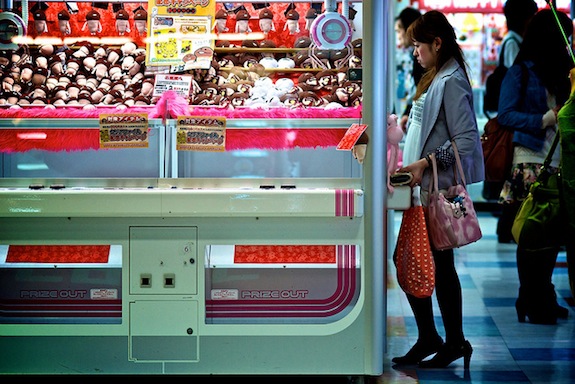
You’ve probably always suspected that those crane games at arcades were rigged. Of course, that hasn’t stopped you from pumping quarters in and being disappointed when a plush My Little Pony fails to come out. But, sadly, your suspicions are correct. Crane games are designed not to reward skill, but luck.
Zack Baker, a video game programmer, answered the question on Quora:
Another video game expert answered a similar question on a Reddit IAmA thread. Redditors asked: Are the claws rigged? An arcade owner answered:
So, try as you might, you’re probably not going to win that stuffed toy. Unless you’re willing to play about 18 times.
Source
Zack Baker, a video game programmer, answered the question on Quora:
Basically, most crane games are designed so the claw is randomly (and only once in many games) strong enough to let players win. Some even weaken in strength after a short time so players get close to victory only to see it slip from their grasp! Since the manuals for many skill games are available online, this is not hard to verify.He points to the owner’s manual for the Captain Claw crane game. In the manual, it explains that the default setting is to randomly assign a strong enough claw to one in every 18 people who play. Another manual, for Panda Vending’s Treasure Centers, explains that there are multiple settings that can control the strength of the claw and the length of time it holds that strength.
Another video game expert answered a similar question on a Reddit IAmA thread. Redditors asked: Are the claws rigged? An arcade owner answered:
Yes Indeed they are!Under California law my claws are set to 1/12 which means 1/12 players will have a chance to win. The example I used before is a ‘toy’ requires 10 PSI to lift. My claw during 11/12 tries will apply 4-6 PSI, or just enough to shuffle it or barely pick it up. During the 1/12 tries the claw will apply 9-11 PSI, sometimes picking it up and dropping, some successful
Most machines have a CMS (Command Module Settings) which allow the owner to change a couple factors:
* Chance of winning. Win/Loose, typically 1/12 In Cali or 1/15 In Nevada!
* PSI of claw. Most claws are 5-8 PSI requiring 10-13 to grab an item. Note, the setting module for the PSI is usually manual, there are springs on the claw that have little red marks. The module will tell you which mark to tighten the spring for the desired effect
* Cost/Accepted Money. Either DBA(Dollar Bill Acceptor) or Coin
So, try as you might, you’re probably not going to win that stuffed toy. Unless you’re willing to play about 18 times.
Source
Tuesday, July 24, 2012
Tuesday, May 22, 2012
Three more board game movies in the works
Whether Battleship is a super success or super failure, a thundering battalion of movies based on board games is marching toward a theater near you. At the very least, I thought you should be prepared.
1. Candy Land
Once upon a time, a toy company desperately wanted to make a movie about a journey through a land of candy based on a board game featuring a journey through a land of candy.
Absolutely no one got excited about this. So they hired screenwriters Jonathan Aibel and Glenn Berger, the duo behind Alvin and the Chipmunks: The Squeakquel. This writing team envisioned an epic tale in a vast and foreboding world of butterscotch waterfalls and licorice trees. As Berger told Entertainment Weekly, they saw Candy Land as “Lord of The Rings, but set in a world of candy.” And while the “WTF?” quotient of that statement could break even the most sturdily made “WTF?”-ometer, I was looking forward to Gollum hunting after his “precious” Ring Pop.
Still, America was not on board. After years in development hell, Universal, which held the rights, actually paid $5 million to get rid of Candy Land.
Then came the sweet, sugar-coated magic. Sony picked up the reins and suddenly Adam Sandler was attached to star. Sandler brought along buddy Robert Smigel (creator of the Ambiguously Gay Duo and Triumph the Insult Comic Dog) to write the screenplay. Expect gay-panic jokes, an endless supply of farting gum drops, a running gag with someone getting repeated hit in the groin with a giant lollypop, and family fun for all!
2. Ouija Board: The Movie
Remember how I said Universal had to pay to not make Candy Land? Well, back in 2008, just a year after the success of Hasbro’s Transformers movie, Universal struck a deal with Hasbro to make five movies based on Hasbro board games and toys: Ouija, Stretch Armstrong, Clue, Candy Land and Battleship. Four years later, Universal only made one movie and wanted to dump the rest (the fact this happened so close to Battleship’s release is more than a tad foreboding). To get out of the deal, Universal had to pay Hasbro a reported $5 million for each movie not made. That’s pretty desperate. And yet, some projects have survived.
Ouija Board started as a $100 million supernatural, hunted house affair with director McG (Charlie’s Angels) at the helm. Michael Bay came on board as a producer to, well, Bay-ify it, presumably. The production hired writer David Berenbaum, who wrote the Eddie Murphy vehicle The Haunted Mansion, to draft a screenplay.
With Universal abandoning them like an unwanted puppy, the fate of Ouija Board looked grim even for a movie about dead people.
But like a temperamental lover with wild mood swings, Universal suddenly changed its mind and wanted Ouija back (even after paying millions to make it go away). The romance rekindled, Universal made but one request of Ouija: cut the $100 million budget.
To $5 million.
To put that in perspective, that’s about the same budget as a Lifetime Movie of the Week. $5 mil would barely cover Michael Bay’s Axe Body Spray budget.
On that budget, expect Ouija Board: The Movie to be two hours of people playing with a Ouija Board in real time, getting in fights about someone moving the piece on purpose, taking frequent bathroom breaks, and spending the last hour watching Jersey Shore reruns because it’s scientifically impossible to wrench any more than fifteen minutes of fun out of playing with a Ouija Board.
3. Monopoly
Of the upcoming board game movies, Monopoly takes the case for the most ambitious. The man who wants to bring Monopoly to life is none other than Oscar-nominated super director Ridley Scott. Yes, the man behind Alien and Blade Runner wants to bring you the game with the thimble…but with gravitas.
Originally, screenwriters and producers saw Monopoly as the story of a man transported to a candy-colored world filled with rainbow-colored money. Then Scott stepped in and said, “Nope, this is going to be about the financial crisis.” Yes, a family fun board game movie about the sub-prime mortgage meltdown.
How deep would the film delve into the housing crisis? “Completely,” Scott said. “It’s a blood bath. It was really bad behavior. It’s [going to be] a comedy.”
A very funny blood bath. So far, so good.
To be fair, the themes perfectly intertwine. Monopoly is all about buying up as many toy properties as you can with pretend money. The economic housing market implosion was all about people buying up as many real properties they could, like they were buying toys, using pretend money they didn’t have. And though Universal has passed on Monopoly, Scott is committed.
“I wanted to just make a movie about the idea of greed,” he told ComingSoon.net. “I told them you know your game can turn your sweetest, dearest aunt into a demon – a nightmare of greed. So that’s what we’re going to do.”
So the director of two of the darkest sci-fi movies of all time wants to transform a silly board game into a dark, “bloody” satire on the greed and avarice behind the housing debacle? Actually, I totally want to see this.
* * *
There’s also a new Clue movie in the works. (Nooooooo. The original is perfection and one of my favorite movies.)
Source
1. Candy Land
Once upon a time, a toy company desperately wanted to make a movie about a journey through a land of candy based on a board game featuring a journey through a land of candy.
Absolutely no one got excited about this. So they hired screenwriters Jonathan Aibel and Glenn Berger, the duo behind Alvin and the Chipmunks: The Squeakquel. This writing team envisioned an epic tale in a vast and foreboding world of butterscotch waterfalls and licorice trees. As Berger told Entertainment Weekly, they saw Candy Land as “Lord of The Rings, but set in a world of candy.” And while the “WTF?” quotient of that statement could break even the most sturdily made “WTF?”-ometer, I was looking forward to Gollum hunting after his “precious” Ring Pop.
Still, America was not on board. After years in development hell, Universal, which held the rights, actually paid $5 million to get rid of Candy Land.
Then came the sweet, sugar-coated magic. Sony picked up the reins and suddenly Adam Sandler was attached to star. Sandler brought along buddy Robert Smigel (creator of the Ambiguously Gay Duo and Triumph the Insult Comic Dog) to write the screenplay. Expect gay-panic jokes, an endless supply of farting gum drops, a running gag with someone getting repeated hit in the groin with a giant lollypop, and family fun for all!
2. Ouija Board: The Movie
Remember how I said Universal had to pay to not make Candy Land? Well, back in 2008, just a year after the success of Hasbro’s Transformers movie, Universal struck a deal with Hasbro to make five movies based on Hasbro board games and toys: Ouija, Stretch Armstrong, Clue, Candy Land and Battleship. Four years later, Universal only made one movie and wanted to dump the rest (the fact this happened so close to Battleship’s release is more than a tad foreboding). To get out of the deal, Universal had to pay Hasbro a reported $5 million for each movie not made. That’s pretty desperate. And yet, some projects have survived.
Ouija Board started as a $100 million supernatural, hunted house affair with director McG (Charlie’s Angels) at the helm. Michael Bay came on board as a producer to, well, Bay-ify it, presumably. The production hired writer David Berenbaum, who wrote the Eddie Murphy vehicle The Haunted Mansion, to draft a screenplay.
With Universal abandoning them like an unwanted puppy, the fate of Ouija Board looked grim even for a movie about dead people.
But like a temperamental lover with wild mood swings, Universal suddenly changed its mind and wanted Ouija back (even after paying millions to make it go away). The romance rekindled, Universal made but one request of Ouija: cut the $100 million budget.
To $5 million.
To put that in perspective, that’s about the same budget as a Lifetime Movie of the Week. $5 mil would barely cover Michael Bay’s Axe Body Spray budget.
On that budget, expect Ouija Board: The Movie to be two hours of people playing with a Ouija Board in real time, getting in fights about someone moving the piece on purpose, taking frequent bathroom breaks, and spending the last hour watching Jersey Shore reruns because it’s scientifically impossible to wrench any more than fifteen minutes of fun out of playing with a Ouija Board.
3. Monopoly
Of the upcoming board game movies, Monopoly takes the case for the most ambitious. The man who wants to bring Monopoly to life is none other than Oscar-nominated super director Ridley Scott. Yes, the man behind Alien and Blade Runner wants to bring you the game with the thimble…but with gravitas.
Originally, screenwriters and producers saw Monopoly as the story of a man transported to a candy-colored world filled with rainbow-colored money. Then Scott stepped in and said, “Nope, this is going to be about the financial crisis.” Yes, a family fun board game movie about the sub-prime mortgage meltdown.
How deep would the film delve into the housing crisis? “Completely,” Scott said. “It’s a blood bath. It was really bad behavior. It’s [going to be] a comedy.”
A very funny blood bath. So far, so good.
To be fair, the themes perfectly intertwine. Monopoly is all about buying up as many toy properties as you can with pretend money. The economic housing market implosion was all about people buying up as many real properties they could, like they were buying toys, using pretend money they didn’t have. And though Universal has passed on Monopoly, Scott is committed.
“I wanted to just make a movie about the idea of greed,” he told ComingSoon.net. “I told them you know your game can turn your sweetest, dearest aunt into a demon – a nightmare of greed. So that’s what we’re going to do.”
So the director of two of the darkest sci-fi movies of all time wants to transform a silly board game into a dark, “bloody” satire on the greed and avarice behind the housing debacle? Actually, I totally want to see this.
* * *
There’s also a new Clue movie in the works. (Nooooooo. The original is perfection and one of my favorite movies.)
Source
Tuesday, April 24, 2012
Secrets behind your favorite toys
1. How the Slinky got stuck between a cult and a mid-life crisis
In 1943, naval engineer Richard James invented the Slinky. When a spring fell off of his workbench and began to “walk” across the floor, he figured he could make a toy out of it. His wife Betty agreed, and she came up with the name Slinky. Introduced in 1945, Slinky sales soared (say that three times fast), but that wasn’t enough to satisfy Richard James.
By 1960, despite his success, Richard James was suffering from a serious mid-life crisis. But instead of falling for fast cars, dyed hair and liposuction, Richard James went a different route, and became involved with a Bolivian religious cult. He gave generously to the religious order and left his wife, six children and the company to move to Bolivia.
Stuck with the debts left by her husband and a company that desperately needed her leadership, Betty James took over as the head of James Industries. A marketing savant, Betty James was responsible for additions to the Slinky line including Slinky Jr., Plastic Slinky, Slinky Dog, Slinky Pets, Crazy Slinky Eyes and Neon Slinky. It was great for boys and girls around the world that Betty James didn’t suffer a midlife crisis. In 2001, she was inducted into the Toy Industry Hall of Fame, and perhaps even more laudably, her Slinky dog was forever immortalized in Disney’s Toy Story movies.
2. Why Lincoln Logs are the most deceptively named toys in the business
Standing beside his father (Frank Lloyd Wright) and watching the construction of the Imperial Hotel in Tokyo, John Lloyd Wright was inspired. Interlocking beams in the hotel’s basement were designed to handle the little “earthquake problem” that the hotel could encounter. John Lloyd thought, “What if children had a toy version of those beams, shaped like notched tree trunks to build little log homes?”
The architect’s son followed through on his inspiration and the John Lloyd Wright Company manufactured and sold Lincoln Logs from the Merchandise Mart in Chicago. The sets even came with instructions on how to build Uncle Tom’s Cabin as well as Abe Lincoln’s log cabin. The Lincoln Log construction and figure sets came in two sizes available for $2 or $3 dollars.
But here’s the strangest part: the naming of the toy might not have been a tribute to Honest Abe. Here’s the scoop: Frank Lloyd Wright was born Frank Lincoln Wright, but he legally changed his name when his parents split. So, Lloyd Jones was his mother’s maiden name and Frank’s name change was to honor her. In any case, whichever Lincoln the toy was honoring, we’re pretty sure Honest Abe would have gotten a kick out of the little logs.
3. Captain Kangaroo saved Play-Doh
Back before it was Play-Doh, everyone’s favorite squishy clay was actually a wallpaper cleaner used to clean soot off of walls. But when people switched from using coal burning furnaces to oil fueled ones in the ‘40s and ‘50s, demand for the product evaporated. Kutol, a manufacturing company in Cincinnati, was watching their sales dwindle when the son of the company’s founder, Joe McVicker, started looking for ways to turn the business round.
His sister-in-law Kay Zufall suggested using the wallpaper cleaner as a child’s craft item, and McVicker was willing to try anything. He formed a new division, Rainbow Crafts, and began selling the re-branded product as Play-Doh. Sales were okay, but then McVicker came up with a way to sell a whole lot more. He contacted Captain Kangaroo (A.K.A. Bob Keeshan) and offered him 2% of sales if the good Captain would feature Play-Doh on his show. He did. Ding Dong School and Romper Room soon followed suit, hawking the crafty compound to kiddies everywhere and Kutol made plenty of Doh (er, Dough) in the process.
While the company has changed hands a few times since (Rainbow Crafts was purchased by Kenner Toys and Kenner was purchased by Hasbro), that’s hardly impeded sales. More than two billion cans of Play-Doh have been sold since 1955.
4. Etch-a-Sketch used to be played like an Atari
Believe it or not, the original Etch-A-Sketch was operated with a joystick. The invention was the brainchild of Andre Cassagnes, a French electrician tinkering in his garage. Conceived in 1950, the drawing toy made use of a joystick, glass and aluminum powder. Dubbed the Telecran, the toy was renamed L’Ecran Magique, and made its debut at a European Toy Fair in 1959. Fascinated by the invention, American Henry Winzeler, founder and president of the Ohio Art Toy Company, licensed L’Ecran Magique and introduced it to America in 1960.
Amongst Winzeler’s innovations were replacing the joystick with two white knobs in the left and right corners of the screen. The idea was to make the toy look like the hot new adult toy…television.
As for how the knobs work, the two Etch-A-Sketch handles control a stylus that’s attached to strings. The stylus is designed to move up and down and left and right “etching” an image in the Aluminum powder that clings to the glass with static electricity. Amazingly, clever Etch-A-Sketch artists can maneuver the stylus to make what looks like curves and angles creating some spectacular pictures. In fact, the Ohio Art Etch-A-Sketch Gallery actually contains a “Hall of Fame.”
5. Why Trivial Pursuit almost never happened
In 1979, Canadians Chris Haney and Scott Abbott (along with business partners Ed Werner and John Haney) decided to create a game that combined their love of all things trivia and their basic competitive nature. Their company, Horn-Abbott, funded the initial production run of 1,000 pieces and sold them to retailers for $15.00 in 1981. At the time, $15.00 was by far the most expensive wholesale price for a board game. But that was a downright bargain when you consider the first pieces cost $75.00 each to manufacture. To the retailer’s surprise the game was a hit even at the heady price of $30.00 at retail.
Realizing that they lacked the funding to bring the game to its full potential, Horn-Abbott licensed Trivial Pursuit to Canadian game manufacturer Chieftain Products. Chieftain had a major hit in Canada in 1981 and contacted their American partner, Selchow and Righter. Amazingly, Selchow and Righter analyzed the game and found that it was: a) too expensive to manufacture, b) it took over an hour to play, c) the best players had to have impressive knowledge of trivial subjects and d) they assumed adults didn’t play board games. Selchow and Righter passed, but Chieftain was persistent and in 1982 the game was introduced to America at the New York Toy Fair.
Initial sales were worrisome. However, through a solid PR campaign and great word of mouth, sales skyrocketed. Sales peaked in 1984 at 20,000,000 games in North America alone. It was the best of times and the worst of times for Selchow and Righter because in 1986, facing huge debt brought on by an abundance of inventory, Selchow and Righter was sold to Coleco. In 1989, Coleco filed for bankruptcy and the rights to Trivial Pursuit were acquired by Parker Brothers. Today Chris Haney and Scott Abbott’s little game has been made into over 30 “Editions.” It’s available in 26 countries, been translated into 17 different languages and has sold approximately 100,000,000 copies since its inception. Not bad for a game that almost wasn’t.
Source
In 1943, naval engineer Richard James invented the Slinky. When a spring fell off of his workbench and began to “walk” across the floor, he figured he could make a toy out of it. His wife Betty agreed, and she came up with the name Slinky. Introduced in 1945, Slinky sales soared (say that three times fast), but that wasn’t enough to satisfy Richard James.
By 1960, despite his success, Richard James was suffering from a serious mid-life crisis. But instead of falling for fast cars, dyed hair and liposuction, Richard James went a different route, and became involved with a Bolivian religious cult. He gave generously to the religious order and left his wife, six children and the company to move to Bolivia.
Stuck with the debts left by her husband and a company that desperately needed her leadership, Betty James took over as the head of James Industries. A marketing savant, Betty James was responsible for additions to the Slinky line including Slinky Jr., Plastic Slinky, Slinky Dog, Slinky Pets, Crazy Slinky Eyes and Neon Slinky. It was great for boys and girls around the world that Betty James didn’t suffer a midlife crisis. In 2001, she was inducted into the Toy Industry Hall of Fame, and perhaps even more laudably, her Slinky dog was forever immortalized in Disney’s Toy Story movies.
2. Why Lincoln Logs are the most deceptively named toys in the business
Standing beside his father (Frank Lloyd Wright) and watching the construction of the Imperial Hotel in Tokyo, John Lloyd Wright was inspired. Interlocking beams in the hotel’s basement were designed to handle the little “earthquake problem” that the hotel could encounter. John Lloyd thought, “What if children had a toy version of those beams, shaped like notched tree trunks to build little log homes?”
The architect’s son followed through on his inspiration and the John Lloyd Wright Company manufactured and sold Lincoln Logs from the Merchandise Mart in Chicago. The sets even came with instructions on how to build Uncle Tom’s Cabin as well as Abe Lincoln’s log cabin. The Lincoln Log construction and figure sets came in two sizes available for $2 or $3 dollars.
But here’s the strangest part: the naming of the toy might not have been a tribute to Honest Abe. Here’s the scoop: Frank Lloyd Wright was born Frank Lincoln Wright, but he legally changed his name when his parents split. So, Lloyd Jones was his mother’s maiden name and Frank’s name change was to honor her. In any case, whichever Lincoln the toy was honoring, we’re pretty sure Honest Abe would have gotten a kick out of the little logs.
3. Captain Kangaroo saved Play-Doh
Back before it was Play-Doh, everyone’s favorite squishy clay was actually a wallpaper cleaner used to clean soot off of walls. But when people switched from using coal burning furnaces to oil fueled ones in the ‘40s and ‘50s, demand for the product evaporated. Kutol, a manufacturing company in Cincinnati, was watching their sales dwindle when the son of the company’s founder, Joe McVicker, started looking for ways to turn the business round.
His sister-in-law Kay Zufall suggested using the wallpaper cleaner as a child’s craft item, and McVicker was willing to try anything. He formed a new division, Rainbow Crafts, and began selling the re-branded product as Play-Doh. Sales were okay, but then McVicker came up with a way to sell a whole lot more. He contacted Captain Kangaroo (A.K.A. Bob Keeshan) and offered him 2% of sales if the good Captain would feature Play-Doh on his show. He did. Ding Dong School and Romper Room soon followed suit, hawking the crafty compound to kiddies everywhere and Kutol made plenty of Doh (er, Dough) in the process.
While the company has changed hands a few times since (Rainbow Crafts was purchased by Kenner Toys and Kenner was purchased by Hasbro), that’s hardly impeded sales. More than two billion cans of Play-Doh have been sold since 1955.
4. Etch-a-Sketch used to be played like an Atari
Believe it or not, the original Etch-A-Sketch was operated with a joystick. The invention was the brainchild of Andre Cassagnes, a French electrician tinkering in his garage. Conceived in 1950, the drawing toy made use of a joystick, glass and aluminum powder. Dubbed the Telecran, the toy was renamed L’Ecran Magique, and made its debut at a European Toy Fair in 1959. Fascinated by the invention, American Henry Winzeler, founder and president of the Ohio Art Toy Company, licensed L’Ecran Magique and introduced it to America in 1960.
Amongst Winzeler’s innovations were replacing the joystick with two white knobs in the left and right corners of the screen. The idea was to make the toy look like the hot new adult toy…television.
As for how the knobs work, the two Etch-A-Sketch handles control a stylus that’s attached to strings. The stylus is designed to move up and down and left and right “etching” an image in the Aluminum powder that clings to the glass with static electricity. Amazingly, clever Etch-A-Sketch artists can maneuver the stylus to make what looks like curves and angles creating some spectacular pictures. In fact, the Ohio Art Etch-A-Sketch Gallery actually contains a “Hall of Fame.”
5. Why Trivial Pursuit almost never happened
In 1979, Canadians Chris Haney and Scott Abbott (along with business partners Ed Werner and John Haney) decided to create a game that combined their love of all things trivia and their basic competitive nature. Their company, Horn-Abbott, funded the initial production run of 1,000 pieces and sold them to retailers for $15.00 in 1981. At the time, $15.00 was by far the most expensive wholesale price for a board game. But that was a downright bargain when you consider the first pieces cost $75.00 each to manufacture. To the retailer’s surprise the game was a hit even at the heady price of $30.00 at retail.
Realizing that they lacked the funding to bring the game to its full potential, Horn-Abbott licensed Trivial Pursuit to Canadian game manufacturer Chieftain Products. Chieftain had a major hit in Canada in 1981 and contacted their American partner, Selchow and Righter. Amazingly, Selchow and Righter analyzed the game and found that it was: a) too expensive to manufacture, b) it took over an hour to play, c) the best players had to have impressive knowledge of trivial subjects and d) they assumed adults didn’t play board games. Selchow and Righter passed, but Chieftain was persistent and in 1982 the game was introduced to America at the New York Toy Fair.
Initial sales were worrisome. However, through a solid PR campaign and great word of mouth, sales skyrocketed. Sales peaked in 1984 at 20,000,000 games in North America alone. It was the best of times and the worst of times for Selchow and Righter because in 1986, facing huge debt brought on by an abundance of inventory, Selchow and Righter was sold to Coleco. In 1989, Coleco filed for bankruptcy and the rights to Trivial Pursuit were acquired by Parker Brothers. Today Chris Haney and Scott Abbott’s little game has been made into over 30 “Editions.” It’s available in 26 countries, been translated into 17 different languages and has sold approximately 100,000,000 copies since its inception. Not bad for a game that almost wasn’t.
Source
Monday, April 16, 2012
The five type of draw something players
I can't get enough of draw something so I love this article.
1. The Perfectionist Neat Freak
When you took your first whack at Draw Something, your stomach did a cartwheel and you broke a small sweat when you realized, “Crap. There’s no way my finger is as precise as my ball-point.” So, you do everything you damn well can to make sure your final drawing is as close-to-perfect as your deft fingers can manage. You may or may not have attempted to use a sharp object just to see if it worked better. You erase a lot. It doesn’t matter that they other person has to wait, the POINT, goddammit, is that the final product is reflective of your true artistic ability. You use all of the pen shapes and all of the primary colors provided. They’re there for a reason.
2. The IDGAF Artist
One shot, one drawing, and you’re done. Two minutes, tops. Why? Because YDGAF about this game. You downloaded it because everyone was like, “omigoddrawsomethingsooofun!” So you downloaded it, just for the hell of it. Just to humor your friends. And now you’ve got a few games going with your enthusiastic cohorts. As for your drawing tools, the smallest pen shape and the color black are your go-to — no self-respecting human has time to change colors or pens. Or erase. When you happen to mess up, you just cross it out. They’ll get it. You like a challenge, so sometimes you do three-coiners, but most of the time the one-coiners are the way to go. Quick. Easy. No nonsense. No arrows, clothed stick figures, trees or flowers. Details are for pussies. Just get’er done, and press the button so we can move along, people.
3. The Self-Conscious Quitter
Maybe it’s because you get bored easily. Maybe it’s because you have mild ADHD and stopped paying attention about 13 minutes ago. Or maybe it’s because somewhere, deep inside your soul, you are so incredibly and unbelievably embarrassed about your severely subpar 3-year-old, first-time-with-a-red-crayon sketches that you just can’t bear the thought of someone watching every creative finger swipe you make. Are you kidding me? People actually ENJOY this? To compensate for your self-consciousness, you a. never respond, shrugging it off completely and telling others that this Draw Something business is dumb or b. try it once, attempt to draw an owl, fail miserably, and write OWL in thick black letters over your pathetic scribble. Then, you attempt to joke about it. Laugh it off. And then never ever play again.
4. The Joker
As soon as you discovered that your opponent will see every move you make, you giggled mischievously inside, Pinky and the Brian style. So many funnies to be had, you thought. So many. It’s hilarious to mess with people and throw them off in clever ways, then draw a picture that’s decent so that they get it in the end. Draw, erase. Draw, erase. A penis here, a penis there. Maybe some wonky boobs. More penises. Then erase again. Maybe you’ll write a random word like “cactus” or “battleship” across the screen when what you’re actually supposed to be drawing is “paulyd.” Or maybe you’ll use all the colors to create an extravagant and detailed background before drawing a mailbox. Really, the possibilities are endless, and Draw Something is a playground for your brilliant and immature imagination to run wild.
5. The Highly Efficient Communicator
You really want the other person to guess your drawing correctly. And you also want to play by rules. It’s important. That’s how games work. All of them. The game of life works that way. So no words or letters or any form of linguistic gusto are used in your neck of the Draw Something woods. To ensure maximum guessability, you like to communicate as best you can by using things like arrows and symbols. You fancy yourself a digital Pictionary storyteller. And since you’re so goddamn good at telling your stories, three-coiners are always the way to go. Those challenges ain’t got nothing on you. For Taylor, you drew a girl with a guitar, then an arrow to the next scene, where you drew a girl with a guitar with an angry dude standing next to her with little exclamation marks coming out of him — a prime example of your storytelling capabilities. Imma let you finish, but… I need to go kick some more ass at Draw Something. No, but really.
Source
1. The Perfectionist Neat Freak
When you took your first whack at Draw Something, your stomach did a cartwheel and you broke a small sweat when you realized, “Crap. There’s no way my finger is as precise as my ball-point.” So, you do everything you damn well can to make sure your final drawing is as close-to-perfect as your deft fingers can manage. You may or may not have attempted to use a sharp object just to see if it worked better. You erase a lot. It doesn’t matter that they other person has to wait, the POINT, goddammit, is that the final product is reflective of your true artistic ability. You use all of the pen shapes and all of the primary colors provided. They’re there for a reason.
2. The IDGAF Artist
One shot, one drawing, and you’re done. Two minutes, tops. Why? Because YDGAF about this game. You downloaded it because everyone was like, “omigoddrawsomethingsooofun!” So you downloaded it, just for the hell of it. Just to humor your friends. And now you’ve got a few games going with your enthusiastic cohorts. As for your drawing tools, the smallest pen shape and the color black are your go-to — no self-respecting human has time to change colors or pens. Or erase. When you happen to mess up, you just cross it out. They’ll get it. You like a challenge, so sometimes you do three-coiners, but most of the time the one-coiners are the way to go. Quick. Easy. No nonsense. No arrows, clothed stick figures, trees or flowers. Details are for pussies. Just get’er done, and press the button so we can move along, people.
3. The Self-Conscious Quitter
Maybe it’s because you get bored easily. Maybe it’s because you have mild ADHD and stopped paying attention about 13 minutes ago. Or maybe it’s because somewhere, deep inside your soul, you are so incredibly and unbelievably embarrassed about your severely subpar 3-year-old, first-time-with-a-red-crayon sketches that you just can’t bear the thought of someone watching every creative finger swipe you make. Are you kidding me? People actually ENJOY this? To compensate for your self-consciousness, you a. never respond, shrugging it off completely and telling others that this Draw Something business is dumb or b. try it once, attempt to draw an owl, fail miserably, and write OWL in thick black letters over your pathetic scribble. Then, you attempt to joke about it. Laugh it off. And then never ever play again.
4. The Joker
As soon as you discovered that your opponent will see every move you make, you giggled mischievously inside, Pinky and the Brian style. So many funnies to be had, you thought. So many. It’s hilarious to mess with people and throw them off in clever ways, then draw a picture that’s decent so that they get it in the end. Draw, erase. Draw, erase. A penis here, a penis there. Maybe some wonky boobs. More penises. Then erase again. Maybe you’ll write a random word like “cactus” or “battleship” across the screen when what you’re actually supposed to be drawing is “paulyd.” Or maybe you’ll use all the colors to create an extravagant and detailed background before drawing a mailbox. Really, the possibilities are endless, and Draw Something is a playground for your brilliant and immature imagination to run wild.
5. The Highly Efficient Communicator
You really want the other person to guess your drawing correctly. And you also want to play by rules. It’s important. That’s how games work. All of them. The game of life works that way. So no words or letters or any form of linguistic gusto are used in your neck of the Draw Something woods. To ensure maximum guessability, you like to communicate as best you can by using things like arrows and symbols. You fancy yourself a digital Pictionary storyteller. And since you’re so goddamn good at telling your stories, three-coiners are always the way to go. Those challenges ain’t got nothing on you. For Taylor, you drew a girl with a guitar, then an arrow to the next scene, where you drew a girl with a guitar with an angry dude standing next to her with little exclamation marks coming out of him — a prime example of your storytelling capabilities. Imma let you finish, but… I need to go kick some more ass at Draw Something. No, but really.
Source
Wednesday, January 11, 2012
10 great Jeopardy moments
I watch Jeopardy everyday so this list is extra interesting to me. Enjoy!
Road to ho
Alex's racist moment
Kid thinks he's real clever
No, sorry, this isn't Family Guy
Kid rocks out
Hahahahaha. No.
Road to ho
Alex's racist moment
Kid thinks he's real clever
No, sorry, this isn't Family Guy
Kid rocks out
Hahahahaha. No.
Sunday, December 25, 2011
Christmas Lights
Merry Christmas everyone!!!! I hope everyone has a relaxing and joyous holiday with their families and friends.
Angry Birds
Dubstep - The song is Skrillex "First of the Year (Equinox)"
Katy Perry - Firework
Angry Birds
Dubstep - The song is Skrillex "First of the Year (Equinox)"
Katy Perry - Firework
Subscribe to:
Posts (Atom)