Showing posts with label book. Show all posts

Tuesday, March 17, 2015

New browser extension may get you to visit the DC library more

Kurt Goetsch
The D.C. Public Library does a lot of great work in the community — from expanding outreach for homeless patrons to creating cool special programming built around authors like George Orwell. But when compared with the ease of shopping on Amazon or exploring new releases on the social media site Goodreads, the DCPL online catalog be downright cumbersome.

That's where "Books for D.C." — a new extension for the Google Chrome browser — comes in. It automatically searches the DCPL catalog when you view a book's page on Amazon, Barnes & Noble or Goodreads, and tells you whether you can find a copy at the local library.

Yes, Amazon Kindle owners, this includes eBooks as well.

You can see a GIF of it in action here.

Emanuel Feld, the programmer behind the extension, says the idea occurred to him because it always seems to be Amazon — and not the library — that shows up at the top of a Google search for a book. He wanted to level the playing field.

"It seemed like the sort of issue that was ripe for tackling. I spend a lot of time at the library, and they're doing all sorts of really great things — they're very forward-thinking," Feld says. "I thought this would be a good project to show what the library has to offer."

Feld doesn't have any official relationship with the D.C. Public Library, but says he did consult them for information about how their catalog works and received lots of positive feedback.

The extension is actually Feld's second effort to make it easier for the public to get information about what's available at the local library. He also recently launched a @booksfordc Twitter account that uses a script to scan the library's catalog every hour to look for recent additions and tweet them out to the public — functionality that their existing catalog technology just doesn't have.

He says he's also thinking about ways to use his coding skills to address a problem recently covered in the Washington Post: the unequal distribution of resources at D.C.'s school libraries.

"I wanted to build a bunch of tools that were mutually self-supporting, so this is part of that," he says.

The extension is still a work in progress, and Feld is soliciting feedback on his website. Other civically-minded techies who want to get involved are encouraged to shoot him an email or seek him out at Code for D.C. meetups.

Thursday, April 3, 2014

Classic childhood books that will grow with you

Remember the books your parents/teachers/babysitters read to you when you were a kid? When it came to my parents, they chose the books they had loved as children themselves. When my mother read these to me, she would often end up crying at the end. Just imagine my six-year-old confusion: Why were happy endings sad? I didn’t get it.

Looking back on those books now, and even on what I read in my tweens and early teens, I start to understand. Go reread the ending of The House at Pooh Corner—it’s a weepy one for sure. Reading old favorites as an adult is satisfying, heartbreaking, and often mindblowing.

Chances are you’ve read these classics, but prepare to discover the rollercoaster ride of feels when you reread them.

Dr. Seuss

Kid Read: Bedtime stories like The Sneetches, Yertle the Turtle and The Lorax were all fun. Everything rhymes, half the words are gibberish, and even though you sensed the moral buried in there somewhere, it was all part of the hilarious shenanigans.

Adult Read: Get ready to have your innocence ruined. Dr. Seuss is all politics. The Sneetches is about the futility of the Cold War’s unarmed struggle between the USSR and the USA. Yertle the Turtle—come on, it’s a huge turtle sitting on top of all the little turtles, can you say “monarchy”? As an adult, sure, but you definitely couldn’t as a kid. The Lorax? You guessed it. The saddest of Dr. Seuss’ books—it’s even pretty tough for some kids to get through—is about a conversation that’s especially vital today: preserving the environment, and the cost of not doing so.

Little Women


Kid Read: Louisa May Alcott’s Little Women starts on Christmas Eve, and that is exactly what reading the book feels like: comforting, like hot cocoa on a freezing winter afternoon. The novel’s four sisters, their loving mother, their doting father, and the boy next door have adventures, trials and tribulations, and (almost) all of them live happily ever after. It’s the kind of novel you read after being tucked in and kissed goodnight.

Adult Read: Though people say Alcott was forced to write this book by her publishers, she still took the opportunity to show off her belief in women, long before the word “feminism” was coined. You’ll notice that the sisters and their mother work in Mr. March’s absence during the Civil War, which presents them as equal to him and the other men in their lives.

Alcott handles religion, immigration, and death as well as grownups’ need to get over the castles in the air you built as a child. Not only is the novel rich with meaningful historical context—it will also break your heart to realize you’re old enough to read about children leaving home with a pinch in your heart, because you see yourself (and your own children) in them.

The Little Prince


Kid Read: Despite it being written by some French guy whose name you can’t pronounce, you recognize a cool adventure story when you read one. Besides, The Little Prince proves to you that being an adult sucks, because they ask you stupid questions and never get what you’re trying to draw.

Adult Read: Antoine de Saint-ExupĂ©ry, who wrote the book, was one smart cookie. Now that you have some idea of what the world is like, you see what he’s doing here. He’s urging you to never stop asking questions the way kids do. He’s telling you that love is difficult and that hoarding money is like trying to count the stars in the sky. As a philosophical discussion for basically everything, The Little Prince will make you nostalgic for your lost innocence.

Patricia Polacco


Kid Read: Were you scared of thunder? Thunder Cake made sure you thought of a delicious chocolate cake instead.The Keeping Quilt inspired you to consider the old objects in your house in a whole new way. Mrs. Katz and Tush had a cat and a sweet old lady and a shy little boy who you liked. You ran your hands all over the pictures because they looked soft.

Adult Read: Patricia Polacco’s books are all about family, cultural traditions, and the warm fuzzy kind of love all people share, no matter where they come from. She tackles big issues like race, differing cultures, and the idea of death in ways that your kids can understand. And you? You will bawl like a baby at the happiest ending now that you’re old enough to understand the painful beauty of life.

Harriet the Spy


Kid Read: A girl who spies on people! She has a really pretty attic room! She writes things down in a notebook! She has a BAMF nanny! She has an imagination like Anne of Green Gables but is way cooler because she gets into trouble and toughs it out!

Adult Read: Louise Fitzhugh’s Harriet the Spy was way ahead of its time. It deals with difference in class: Harriet is upper-middle-class, whereas her best friend has an absent mother and an absent-minded father, and knows how to pay bills and balance a budget at the age of 11. Fitzhugh has Harriet go to a therapist long before this was the thing to do with “problem children.” The issue of privacy—which is on everyone’s minds recently—comes to the forefront when Harriet’s secret notebook is passed around between all the kids in her class who then stop talking to her because she wrote mean things about everyone. It’s a book to pick apart (a new way to enjoy it) now that the years of wanting-to-be-Harriet have passed.

Source

Saturday, January 11, 2014

16 books that you should read before they hit theaters this year

Paramount Pictures
1. Labor Day by Joyce Maynard

What it’s about: Over the course of a Labor Day weekend in the late ’80s, 13-year-old Henry and his depressed mother Adele’s lives change when they harbor fugitive Frank Chambers at home. Frank fills a fatherless void for Henry and brings out life in Adele, all while the police are on the hunt for the escaped murderer. It’s a deeply moving read with unpredictable twists, and Kate Winslet is bound to shine as Adele in the film.

Amazon review: 4.2/5 stars

Release date: Jan. 31, 2014 (Click here to watch the trailer)

Starring: Kate Winslet, Josh Brolin
Columbia Pictures

2. The Monuments Men by Robert M. Edsel and Bret Witter


What it’s about: Based on a true WWII story, museum curators, art historians, and others, collectively called the Monuments Men, risked their lives to save pieces of art that the Nazis planned to destroy. This book is a fascinating story about a rare WWII topic and shows how important it is to cherish artwork. As for the movie, the film features a kick-ass cast and it will be exciting to see everything unfold on the big screen.

Amazon review: 4.3/5 stars

Release date: Feb. 7, 2014 (Click here to watch the trailer)

Starring: George Clooney, Matt Damon, John Goodman, Bill Murray

David C. Lee/Warner Bros
3. Winter’s Tale by Mark Helprin
What it’s about: Orphan and mechanic Peter Lake attempts to rob a Manhattan mansion only to find Beverly Penn, the daughter who resides in the home Peter believed to be empty. Thus begins the love affair between a middle-aged Irishman and a fatally ill young woman in a magical New York City. If you’re looking for a novel laced with fantasy and romance, this is a good place to start. Hopefully Colin Farrell and Jessica Brown Findlay do the characters justice!

Amazon review: 3.9/5 stars

Release date: Feb. 14, 2014 (Click here to watch the trailer)

Starring: Colin Farrell, Jessica Brown Findlay, Russell Crowe

4. Vampire Academy by Richelle Mead
The Weinstein Company
What it’s about: St. Vladimir’s Academy is a school for dhampirs, vampire-human hybrids who serve as guardians, and Moroi, “good” vampires with an ability to use magic from one of the four elements (water, fire, air, and earth). Vampire princess Lissa Dragomir and dhampir Rose Hathaway are best friends, connected through a special bond that they can’t quite explain. After escaping school for two years, the girls are brought back to the academy and are faced with Lissa’s mystery element (or lack thereof?) and the danger it brings. The series is six books long, but definitely worth it, and the movie was created by the directors of Mean Girls.

Amazon review: 4.5/5 stars

Release date: Feb. 14, 2014 (Click here to watch the trailer)

Starring: Zoey Deutch, Lucy Fry, Sarah Hyland

5. A Long Way Down by Nick Hornby


What it’s about: Four people come together on New Year’s Eve on the roof of Topper’s House, a London destination known as the last stop for those who are ready to end their lives. The story is told from four distinct points of view, filled with second chances and regrets. Despite its somber topic, the book balances the provocative and the hilarious, and mixes in intense and moving moments. This just screams indie flick.

Amazon review: 3.7/5 stars

Release date: March 7, 2014 (U.K.)

Starring: Aaron Paul, Rosamund Pike, Imogen Poots, Pierce Brosnan

Friday, January 10, 2014

How losing can help you win

In the book Art and Fear, the artists Ted Orland and David Waylon share a story about a ceramics teacher who tried an experiment with his class.

The teacher divided the students into two groups. Those sitting on the left side of the studio were to be graded solely on the quantity of their work, while those on the right, solely on the quality. The instructor informed the students in the quantity group that a simple rule would be applied to evaluate their grades: those who produced fifty pounds of pots would get an A, those who produced forty pounds a B, and so on.

For the quality group, the instructor told the students that he would assign a course grade based on the single best piece produced over the duration of the course. So if a student created a first-rate pot on day one of the course and did nothing else for the term, he would still get an A.

When the end of the quarter arrived and it came to grading time, the instructor made an interesting discovery: the students who created the best work, as judged by technical and artistic sophistication, were the quantity group. While they were busy producing pot after pot, they were experimenting, becoming more adept at working with the clay, and learning from the mistakes on each progressive piece.

In contrast, the students in the quality group carefully planned out each pot and tried to produce refined, flawless work, and so they only worked on a few pieces over the length of the course. Because of their limited practice, they showed little improvement.

We like this story because it points out an important principle: successful people take action as quickly as possible, even though they may perform badly.

Instead of trying to avoid making mistakes and failing, they actively seek opportunities where they can face the limits of their skills and knowledge so that they can learn quickly. They understand that feeling afraid or underprepared is a sign of being in the space for optimal growth and is all the more reason to press ahead. In contrast, when unsuccessful people feel unprepared or afraid, they interpret it as a sign that it is time to stop, readdress their plans, question their motives, or spend more time preparing and planning.
“Successful people take action as quickly as possible, even though they may perform badly.”

Let us ask you some questions: When was the last time you accomplished something that you are really proud of? How did you feel in the time before you reached this accomplishment? Was it comfortable? Easy? Did you have to do things that pushed you beyond your abilities? Did you make mistakes and mess up? If you are like most people, you will probably find that the times in your life when you grew and accomplished the most are also the times when you made the most mistakes and blunders and had to overcome the greatest obstacles.

Do It Badly, as Fast as You Can
When you encounter accomplishments of successful people—whether an enthralling stage performance, a beautiful work of art, an innovative business, or an ingenious invention—it can be easy to think that these accomplishments are the result of unusual brilliance and came into being perfectly formed.

But the truth is that most significant accomplishments arise out of hundreds of mistakes and failures. For example, a seasoned comedian, such as Jerry Seinfeld or Chris Rock, tries thousands of hastily conceived joke ideas, most of which flop, in small clubs and venues. Only a few performance ideas, after many revisions and improvements, make their way into the polished shows presented to national audiences.

Howard Schultz’s creation of Starbucks provides a good example of how success arises from many mistakes.

When Schultz first formed Starbucks, he had the idea of modeling the stores after Italian coffee shops, which would provide a new experience for customers in the United States. Although Schultz’s idea was a good starting point, the Starbucks coffee shops today have little resemblance to his initial concept. In fact, many things were wrong with his idea. In the original stores, the baristas wore bow ties, the menus were primarily in Italian (and annoyed the customers for being so), nonstop opera music played in the background, there were no chairs, and nonfat milk was not served. The coffee shops of today evolved through thousands of experiments, adjustments, and revisions along the way.
‘Fail Fast, Fail Often: How Losing Can Help You Win’ by Ryan Babineaux (Author), John Krumboltz (Author). 208 p. Tarcher. $11.84 ()

Failing quickly in order to learn fast—or what Silicon Valley entrepreneurs commonly call failing forward—is at the heart of many innovative businesses.

The idea is to push ahead with a product as soon as possible to gather feedback and learn about opportunities and constraints so that you can take the next step. This mind-set is at the heart of the brilliant work of Pixar Animation Studios. When Ed Catmull, the cofounder and president of Pixar, describes Pixar’s creative work, he says it involves a process of going from “suck” to “non-suck.” The moviemaking process begins with rough story boards where a few good ideas are buried amid tons of half-baked concepts and outright stinkers. The animation team then works its way through thousands of corrections and revisions before they arrive at a final cut. By giving themselves permission to fail again and again, animators weed out the bad ideas as quickly as possible and get to the place where real work can occur.

As Andrew Stanton, the director of Finding Nemo and WALL-E , describes, “My strategy has always been: Be wrong as fast as we can. Which basically means, we’re gonna screw up, let’s just admit that. Let’s not be afraid of that. But let’s do it as fast as we can so we can get to the answer. You can’t get to adulthood before you go through puberty. I won’t get it right the first time, but I will get it wrong really soon, really quickly.”

Giving yourself permission to make a mess of things is particularly important if you do any sort of creative work. (We should note that all people are creative—which is to say that they live in the real world, form ideas, come up with solutions to problems, have dreams, and forge their own path; your own life is your ultimate creation.)

In her book Bird by Bird, Anne Lamott discusses the challenges faced in writing. She says that an essential aspect of getting work done is allowing yourself to write a “really shitty first draft.” You write a terrible first draft so that you can have a somewhat better second draft, and an even better third draft. As she says, “Very few writers really know what they are doing until they’ve done it.”

It is only sitting down and stringing together some words—despite not knowing what you want to write or where your narrative will go—that puts you into the place where the story can begin to unfold. This expresses an idea that is central to the Fail Fast approach: You can’t know what something is like, how you will feel about it, or what will result from it until you actually are doing it.

[Excerpted from Fail Fast, Fail Often: How Losing Can Help You Win by Ryan Babineaux, PhD., and John Krumboltz, PhD., with the permission of Tarcher/Penguin. Copyright 2013 Ryan Babineaux, PhD., and John Krumboltz, PhD.]

Source

Wednesday, December 18, 2013

New author to continue "The Girl With The Dragon Tattoo" series

The Swedish publisher of the bestselling "The Girl With the Dragon Tattoo" trilogy says it has hired an author to write a sequel to the series by Stieg Larsson, who died in 2004.

Norstedts said Tuesday it has signed a contract with "I am Zlatan" author David Lagercrantz for a new book about journalist Mikael Blomqvist and hacker Lisbeth Salander that is scheduled to be published in August 2015.

The head of publishing at Norstedts, Eva Gedin, told The Associated Press the book will be an original work that includes nothing from the fourth book in the series that Larsson began writing but hadn't finished when he died.

Larsson's trilogy has been a huge international success, with more than 75 million books sold in 50 countries.

Source

Monday, December 16, 2013

Cul-de-sacs are killing America

A big house with a yard is a shining emblem of the American Dream. And cul-de-sacs, the culmination of winding roads that slice suburbia into space-maximizing lots, are just one mechanism suburban planners use to entice homeowners into buying property. They create space, make us feel safe, and allow for conveniences like large driveways.

But all that spiraled street geometry has its price. Cul-de-sacs — and the behaviors they encourage — are slowly killing us, bit by bit.

In an excerpt from his new book, Happy City: Transforming Our Lives Through Urban Design, Charles Montgomery walks us through a few of the design pitfalls being implemented by local governments across the country.

The crux of his argument isn't new: Cul-de-sacs discourage mobility and increase our dependence on cars to get around. Not surprisingly, the health of Americans who have chosen to live outside of city centers is slowly eroding. These maze-like neighborhoods "engineer their travel behavior," which studies have shown can have tangible effects in several areas of their lives — waistlines, for example:
Consider Atlanta. The average working adult in Atlanta's suburbs now drives 44 miles a day. (That's 72 minutes a day behind the wheel, just getting to work and back.) Ninety-four percent of Atlantans commute by car. They spend more on gas than anyone else in the country. In a study of more than 8,000 households, investigators from the Georgia Institute of Technology led by Lawrence Frank discovered that people's environments were shaping their travel behavior and their bodies. They could actually predict how fat people were by where they lived in the city. 
Frank found that a white male living in Midtown, a lively district near Atlanta's downtown, was likely to weigh 10 pounds less than his identical twin living out in a place like, say, Mableton, in the cul-de-sac archipelago that surrounds Atlanta, simply because the Midtowner would be twice as likely to get enough exercise every day. [Slate]
In an apparent effort to cram as many big houses into cushy neighborhoods as possible, suburban group-think has largely deviated from the practical grid layout featured in older, bigger cities like New York City.

Organizing neighborhoods in a lattice shape isn't just less confusing; it also encourages different kinds of mobility. Grids encourage walking. Perpendicular intersections make life easier for bike commuters. Streets that don't twist and turn make public transportation like buses and rail more viable commuting options, thus diminishing our over-reliance on cars. Emily Badger sums it up rather nicely in this essay from 2011:
Most of the oldest cities in America — not to mention the oldest capitals in Europe, or in the Roman Empire, for that matter — were laid out in neat, densely interconnected grids that enabled people to get around before cars came along... 
These communities had what Scott Bernstein, president of the Center for Neighborhood Technology, calls "location efficiency," a rough analogue to the idea of energy efficiency that captures the extent to which your job, your grocery store, and your favorite pub are all convenient to you. Around the turn of the century, U.S. cities of all sizes built thousands of miles of railway for streetcars that made the urban grid even more efficient. 
"It happened everywhere, it happened brilliantly," Bernstein says, "and we threw it away." [The Atlantic Cities]
Ask yourself: Would you walk to the grocery store if one were a few blocks away? Or take public transportation to the office if the bus stop were a three-minute jaunt from your doorstep?

Indeed, deviating from the tightly woven grid pattern creates all kinds of impractical weirdness. The planners behind the labyrinthine suburbs sprouting up in Las Vegas are quickly running out of names for their streets, as Willy Staley pointed out at The Awl. Incidentally, the street names therein have already reached their comically absurd end, like Big Bird Court or Tupac Lane.

It isn't exactly a secret, either, that urban flight has all sorts of psychological and sociological drawbacks, engendering seclusion, a lack of diversity and shared ideas, and a "disassociation from the reality of contact with other people," as The New York Times put it in 1999.

Poor suburban design means we're driving more and walking less. Communities are increasingly insular and our kids spend the bulk of their time staring into screens. "The way we organize most cities actually encourages individuals to make choices that make everyone's life harder," Frank told Montgomery. "The system fails because it promises rewards for irrational behavior."

Sunday, December 1, 2013

Nine disturbing true crime books

Lately, I have had a horrible time getting to sleep. Last night, the anxiety was so bad that I had to put on an Audrey Hepburn movie on Netflix to calm my terrifying thoughts.

Why is this going on? Stress at work? Trouble with my family? Nope, it's because I'm currently reading Truman Capote's classic, In Cold Blood, and it is scaring the hell out of me.

I openly admit that I'm probably not the ideal reader of True Crime books; I definitely think about getting murdered more than the average person does, and my overactive imagination and extreme anxiety don't make matters any better.

What is it about the True Crime genre that keeps me coming back for more, even though these stories petrify me?

The truth is, I can't help it; the suspense reels me in. Who are these people who can take a life without thinking twice about it? Why are they the way they are?

Whether or not you're as anxious and jumpy as me, I can guarantee that these books will leave you keeping the hall light on all night and/or locking every single lock on your door at night:


In Cold Blood by Truman Capote: Capote's classic is about the murders of four members of the Clutter family. In 1959, two men broke into the Clutter house, tied them up and shot them, one by one. Not only was the method of the murders brutal, but the criminals remained pretty much remorseless the whole time. The murders also ended up being motiveless. Though the break-in began as a robbery, there was very little money to be found (under 50 dollars), but they killed everyone any way. There have been some discrepancies between fact and Capote's outline of what happened, but the facts of the murders remain true. The two men were executed for their crimes.


Helter Skelter by Vincent Bugliosi
Helter Skelter was written by Charles Manson's prosecutor, about both the case and the trial. That Manson managed to convince a group of people to perform a series of murders for him is chilling in and of itself. These murders were also extremely brutal - this book is not for the faint of heart. Sharon Tate (one of the murder victims) was stabbed 16 times and was two weeks away from giving birth to her child. Manson received the death penalty, but it was eventually outlawed in California. He is currently serving life imprisonment.


Fatal Vision by Joe McGinniss
In 1970, Jeffrey MacDonald was discovered slightly injured, and his pregnant wife and two young daughters were found murdered. MacDonald claimed that assailants had broken in, wounded him, and knocked him unconscious while they murdered his family. However, since there was no evidence of a break-in or any that anyone else had been inside the home, MacDonald ended up being tried for the murders. Though MacDonald maintains his innocence, the thought that a father could potentially murder his pregnant wife and two small children is absolutely terrifying. (This is another book with discrepancies. MacDonald had thought the book would prove his innocence, but instead it makes it appear that he is definitely guilty. Both Janet Malcolm and Errol Morris have written response books to McGinniss's bestseller. It still makes a horrifying read, though).


Gomorrah by Roberto Saviano
Campania, a region of Naples, Italy, has one of the highest murder rates in Europe. This is due to the Camorra, a Neapolitan mafia-like organization. The book traces the decline of Naples under the corruption of the organization, and also goes into the brutal details of how Comorra is run, and the lengths it will go to. Since 1979, 3600 people have been murdered at the hands of the Comorra, and the details of the deaths are gruesome.


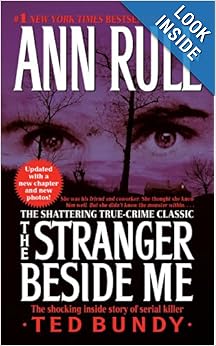
The Stranger Beside Me by Ann Rule
When Ann Rule was assigned to write a book about the as-of-yet unsolved murders of multiple women, she had no idea that the culprit would end up being someone she knew. When Ted Bundy was arrested and tried for the murders, Rule was so shocked that she hurried "to the ladies room and [threw] up." It turns out that she knew Bundy when they worked together at a suicide hotline; they were friends. It doesn't get much more unnerving than that.


For the Thrill of It by Simon Baatz 
In 1924, Nathan Leopold and Richard Loeb, two graduate students from wealthy families, kidnapped and murdered a 14-year-old boy. Psychiatrists testified that the two would actually have been harmless on their own, but combined, they were a toxic pair. One of the psychologists on the case noted, "There seems to have been so little normal motivation, the matter was so long planned, so unfeelingly carried out, that it represents nothing that I have ever seen or heard of before."


Columbine by Dave Cullen 
Cullen's nonfiction work about the Columbine mass shooting covers two topics: the killers' lives preceding the attack, and the survivors' struggles with the aftermath of the tragedy. There are also graphic depictions of the shooting. The book addresses many myths associated with Columbine. According to the author, the massacre had nothing to do with bullying, goth culture or Marilyn Manson. It is even more chilling when Cullen discusses that the attack was not initially intended as a shooting, but rather as a bombing. The shooters had wanted to create the worst terrorist attack in American history.


A Mind for Murder by Alston Chase
Chase's book describes the life of Ted Kaczynski, the Unabomber, who, from 1978 to 1995, sent 16 bombs to targets including universities and airlines, killing three people and injuring 23. Chase argues that Kaczynski wasn't the wild mountain man that the media assumed him to be and that, though Kaczynski was a cold-blooded killer, his ideas were actually pretty close to those of mainstream America.


The Last Victim by Jason Moss
 This book deals with not one, but five serial killers. Moss explores his fascination with the psychology of serial killers and begins to correspond with several of America's most infamous ones as part of his honors thesis in college: John Wayne Gacy, Richard Ramirez, Henry Lee Lucas, Jeffrey Dahmer, and Charles Manson. He formed the strongest relationship with Gacy (who sexually assaulted and killed at least 33 teen boys and young men between 1972 and 1978). Gacy maintained his innocence to Moss. The book gets its title in what is ultimately the most chilling aspect of the book: when Moss goes to visit Gacy, Gacy tries to murder him.

Source

Sunday, November 3, 2013

What you should read based on what you watch

If you watch this:

Via christianpost.com

Then you should read this:

Via mikelawsonbooks.com

Both dramas take you behind the scenes of Capital Hill, one with House Majority Whip, Frank Underwood, the other with House Fixer, Joe DeMarco. While House of Cards is far darker than Lawson’s political thriller, both will keep you up all night watching/reading.

If you watch this:

Via ipoll.com

Then you should read this:

Via segreen.net

If you love watching Dexter attempt to mimic human emotion, navigate his relationships, and hide his true nature, then you’ll love this debut novel from S.E. Green. KILLER INSTINCT features Lane, a 16-year-old girl who has an obsession with studying serial killers. Why? Because she might be one herself.

If you watch this:

Via phresh.cc

Then you should read this:

Via halackerman.net

While Harry Stein’s personality is more Jeff Lebowski than Nancy Botwin, this “soft boiled” mystery has a similar mix of crime, humor, and Mary Jane.

Thursday, October 31, 2013

Novels that will scare the hell out of you

"The Haunting of Hill House" by Shirley Jackson
The greatest haunted house novel ever written. Remember all those crap movies where a bunch of attractive people get together in a house that's purportedly haunted to study the frequencies, or whatever, and then they get slashed one by one (after having rampant sex with each other)? Thank Shirley Jackson. "The Haunting of Hill House" inaugurated that premise, and its first iteration is about fifty-five million times more terrifying and subtle and well-written than anything you've read or seen. Which is probably why it has been stolen and shittily adapted so many times (with a few notable exceptions-including #9). Jackson understands there's a fine line between fear and hilarity-you'll love her characters for cracking jokes to stave off their anxiety, but their glibness will also frighten you.

Still have doubts? Consider the opening: "No live organism can continue for long to exist sanely under conditions of absolute reality; even larks and katydids are supposed, by some, to dream. Hill House, not sane, stood by itself against its hills, holding darkness within; it had stood for eighty years and might stand for eighty more."

"Rustication" by Charles Palliser
When opium-addled Richard Shenstone, the 17-year old narrator of Charles Palliser's Gothic melodrama, grabs your hand and leads you into his twisted world of sexual obsession, murder, and sadistic letters (which may or may not be Richard's doing), you won't want to let go. The newly destitute Shenstones are forced to inhabit a dilapidated old mansion where Richard's unsteady mind makes much out of rooms with beds made for people he's never met and things that go bump in the night. Though the house isn't the source of evil, it deserves lots of credit for the book's spooky atmosphere.

"The Shining" by Stephen King
The Overlook isn't a house, but it's more thoroughly haunted than any place in the fictional universe. Nobody who's read "The Shining" can forget the images from its pages--the twin girls at the end of the hallway, the magically stocked bar, the topiary animals, the party hat in the elevator, the blood-smeared walls, the naked woman from the bathtub transforming into a rotting corpse. Stephen King, puppet-master behind the world's worst nightmares.


"The Little Stranger" by Sarah Water
The once-aristocratic Ayres family is clinging to Hundreds Hall, their crumbling 18th century estate that's a relic of its former glory. After a visiting child is mauled by a typically docile family dog, strange things begin happening at Hundreds. Childish writing appears in places where various family members have reported hearing tapping; even the maids are convinced that there's something (and something possibly contagious) wrong with the house. The novel only gets creepier as the ever rational narrator Dr. Faraday tries to explain away each frightening incident with a dismissive blend of science and logic. The discord between his unsatisfying explanations and the burned walls, source-less noises and eventual violence will leave you with unsettling memories of creepy things you've dismissed--and maybe shouldn't have.

"O My Darling" by Amity Gaige
You won't find Amity Gaige's ("Shroder") first novel classified as horror on Amazon or at your local indie (well, maybe at your indie). But this story of a marriage that almost implodes after Charlotte and Clark Adair move into their "dream" home has all of the elements of a true haunted house novel: ghosts/shadows fluttering around corners, discontented characters losing their ability to communicate, intruders with nefarious intent, disembodied voices.

"We Have Always Lived in the Castle" by Shirley Jackson
Shirley Jackson again! I like to think of this slim, stylistically astonishing novel as a kind of haunted house origin story. (See also: Miss Havisham, "Great Expectations.") Merricat and Constance Blackwood live with their batty Uncle Julian in a lavish house on the outskirts of town. They are the only survivors of a poisoning incident that killed off the rest of their family. The townspeople are convinced that Constance is a murderer, but is she really the one responsible for the mass killing? When the townspeople turn on the remaining Blackwoods they're forced into total isolation, entombing themselves in the home that's both their sanctuary and their curse.

"The Shining Girls" by Lauren Beukes
Harper Curtis is far more deadly than your garden variety serial killer. Harper isn't constricted by time--he can move freely between the past, present, and future, planting memories in his victim's childhoods before chasing them through the years to the moments of their gruesome deaths (which of course feel horrifyingly inevitable). The mechanism for his time travel is a House. The House is described as a being with godly power over Harper--it urges him on, inspiring the bloodlust that drives him to kill.


"Great Expectations" by Charles Dickens
When I first read "Great Expectations" as a high school freshman I completely glossed over the terrifying reality of Miss Havisham, who wears an old wedding dress and has left her mouldering wedding cake on the table for decades. Every clock in Satis House, her decaying mansion, is stopped at twenty minutes to nine-the exact moment she found out she was being left at the altar. She wears a single shoe, and eventually dies of burns (after the wedding dress catches fire). Is anything more upsetting than this? The story of Miss Havisham is the story of HOW a house becomes haunted. She's Satis House's ghostly lore. Or would be, if Satis House existed.

"Hell House" by Richard Matheson

It's clear to any Shirley Jackson fan (cough, cough) that Richard Matheson's "Hell House" owes a significant debt to "The Haunting of Hill House." But this novel, in keeping (perhaps) with its later pub date, is less psychologically unnerving than it is Hollywood in-your-face scary. It favors the holy trinity of horror tropes: Blood, Sex and Suspense. "Hell House," unlike so many Jackson knockoffs, is a fitting tribute to its inspiration--and it embellishes Jackson's storyline with scares that are all its own.

"The House of Leaves" by Mark Danielewski
Haunted house novels work best when the house is the scariest character. After returning from a trip, the Navidson family notices that there's something wrong with their home. Doors appear where there weren't any before, secret passageways seem to have been formed by someone/something with sinister intent, staircases lead nowhere. Characters report hearing a low growl, as if the house, itself, is a monster. Danielewski's novel looks more like a puzzle box than a book, with typographical hijinks on almost every page--lines of text running vertically or backwards, copious footnotes, unpredictable blasts of white space. This visual chaos exponentially increases the goose-bump factor.

Source

Thursday, October 24, 2013

How The Walking Dead has surprised its most loyal fans

With Breaking Bad over for good and Mad Men’s next season many months away, AMC’s focus has shifted entirely to its highest-rated original series: The Walking Dead, a post-apocalyptic zombie drama that has continued to attract staggeringly high ratings every year. The series, which is based on Robert Kirkman’s popular comic-book series of the same name, has thrived in part by following the blueprint set by the source material.

But it’s also worked by straying from it. Over the course of its past three seasons, The Walking Dead has gone out of its way to create characters and stories unique to the TV series. Fan-favorite characters Merle and Daryl Dixon were written expressly for the TV show, and the story has taken detours to places, like the Centers for Disease Control and Prevention, that were never a part of the comic's story. Glen Mazzara, who served as The Walking Dead’s showrunner last year, told Collider he considers the TV series to be an "alternate universe" to the comic.

Still, the TV show has always circled back to its roots; when David Morrissey was cast as The Governor, readers of the comic had a months-long head start over those who were solely watching the TV show. Last Sunday, 16.1 million viewers tuned in to see what had happened to series protagonist Rick Grimes and company since last year’s season three finale, which concluded with the villainous Governor still at large. For fans of the comic, the third season finale doubled as an abridged version of one of the comic's most memorable storylines, when The Governor led an assault against the prison that Rick and the other Atlanta survivors had turned into a makeshift colony.

If you’re familiar with the comic, you might have assumed that the premiere would begin by revealing that the prison had been destroyed, and that Rick was in a near-catatonic state out into the wilderness. It’s a story that fans first read all the way back in 2008, two years before the TV series premiered. But if you were expecting Rick to spend the better part of the season mourning his wife while traveling the countryside, getting mysterious phone calls along the way — well, that was so last season.

The greatest trick the original showrunner Frank Darabont taught the production crew behind The Walking Dead was to liberally adapt from the best of the 120+ issues still being pumped out by Image Comics. The recent news that the show’s creative team has cast Eugene and Abraham — two characters from the comic who appeared much later down in the road in the original storyline — is more proof that The Walking Dead can rely less on rehashing the comic's figurative moments than on crafting its own.

This season will even see the introduction of an original character Kirkman created as a stand-alone novel series that began with 2012's The Rise of the Governor. Will that mean a flashback episode? A totally different spin on the character? Could The Walking Dead’s fourth season tell the origin story of The Governor entirely through cold opens?

Why not? The success of The Walking Dead has shown that the plot works best when it doesn’treplicate the story beat-for-beat. It’s a pattern that The Walking Dead established from the beginning. Rather than stick to Kirkman’s original script, which killed off Rick’s best friend Shane within the first arc of the story, The Walking Dead kept Shane around for two whole years, offerings its own take on a once-familiar story.

The Walking Dead universe has shown that it can sustain all kinds of stories; a TV spin-off isalready in the works, and an acclaimed video game adaptation has been ported to nearly every console and electronic device imaginable.

The ideal version of The Walking Dead is a show that would even use the knowledge of comic book fans against them. The show has already played with the audience's expectations of certain characters: T-Dog was long assumed by fans of the comic to be the TV show’s version of the popular character Tyreese — until Tyreese was suddenly introduced as a separate character in the third season.

These original characters and stories serve everyone involved with the series. Kirkman gets the chance to try out stories he never got to tell in the comic; the show’s creative team gets to put their unique stamp on the material; and fans who are already familiar with the story get to be as surprised as the audience watching it for the first time — if not more scared for having their expectations subverted.

Anyone who has read the comic probably knows that there are dark times ahead for Rick and company — but let’s hope the exact nature of those dark times turns out to be a mystery for all of us.

Source

Tuesday, October 22, 2013

Five banned books that you should read (that you probably hadn't already)

Our Family Tree: An Evolution Story by Lisa Westberg Peters
Okay, so this book is less for you and more for any small children you know and love. This beautifully illustrated, beautifully written book by Peters helps break down the concepts of evolution – not easy concepts in the slightest – and renders them in terms that small children can pick up and understand. According to the American Library Association, this book has been challenged in schools and libraries across the country – most likely because it succeeds in explaining those concepts, and there are a still a lot of people in this country who don’t want those concepts taught to children.


Killer Quote: ”When we began, we didn’t look like people. We didn’t have two eyes to blink or ten toes to wiggle. We were just tiny round cells in the deep, dark sea. On the outside, we were so small, we were almost invisible. But on the inside, we had the same kind of spiraling genetic code for life we have today."

The Curious Incident of the Dog In The Night-time by Mark Haddon
This novel is barely 10 years old and it’s already been challenged in several school and public libraries. The book itself is a masterpiece – it’s written in the first person from the perspective of Christopher, a teenager with autism, and his struggles to understand the people around him. The title refers both to a line from a Sherlock Holmes novel as well as Christopher’s own efforts to emulate Holmes, who he sees as a hero, by solving the “case” of who killed a dog in his neighborhood. It’s both fascinating and gut-wrenching, and I highly recommend it.

Killer Quote: ”And because there is something they can’t see people think it has to be special, because people always think there is something special about what they can’t see, like the dark side of the moon, or the other side of a black hole, or in the dark when they wake up at night and they’re scared.”

Dialogue Concerning the Two Chief World Systems by Galileo Galilei
This book hasn’t been banned for awhile, but it was banned at the time it was written. That’s because this is Galileo’s famous text in which he defends the Copernican model of the solar system, where the Earth moves around the Sun, against the current theory, Ptolemy’s, which said the Sun moved around the Earth. The book was banned by the Catholic Church and Galileo was sentenced to house arrest for it. To be sure, some of the science in this text is definitely out of date, but it’s still worth a read for several reasons. For one, it goes beyond just a discussion of two different astronomical theories and into the philosophy that should underlay proper scientific inquiry – a lot of which is still relevant today. Second, it’s worth reading because its immensely readable and is, in some spots, just wickedly funny. This is not a fair or balanced dialogue, and Galileo gleefully twists the knife at times. It’s worth reading.

Killer Quote: ”If what we are discussing were a point of law or of the humanities, in which neither true nor false exists, one might trust in subtlety of mind and readiness of tongue and in the greater experience of the writers, and expect him who excelled in those things to make his reasoning most plausible, and one might judge it to be the best. But in the natural sciences, whose conclusions are true and necessary and have nothing to do with human will, one must take care not to place oneself in the defense of error; for here a thousand Demostheneses and a thousand Aristotles would be left in the lurch by every mediocre wit who happened to hit upon the truth for himself.”

Zhuangzi
This book, named for its author, is one of the primary philosophic texts of Taoism. It’s been banned at different times in China, as different religions like Buddhism waxed and waned in fortune, and been banned in other countries besides for its content. But while many people are familiar with the Tao Te Ching, it’s been my experience that far fewer have read Zhuangzi. That’s a shame, because it’s a magnificent, poetic book that will absolutely challenge the way you think – and the way you don’t think. For those interested in Chinese philosophy and religions, I highly recommend reading this, one of its greatest works.

Killer Quote: ”A trap is for fish: when you’ve got the fish, you can forget the trap. A snare is for rabbits: when you’ve got the rabbit, you can forget the snare. Words are for meaning: when you’ve got the meaning, you can forget the words. Where can I find someone who’s forgotten words so I can have a word with him?”

The Epic of Gilgamesh
Believe it or not, the earliest work of Western literature has been challenged and banned in schools in the United States, by parents objecting to some of its depictions of sexuality. (The Babylonians had different standards than Americans.) But for those of you who have only read portions of this epic poem (or only know the story from Picard reciting a brief version on an episode of Star Trek), do yourself a favor and read the whole thing. The themes of Gilgamesh - friendship, good governance, the quest for immortality – are as relevant today as they were nearly 5,000 years ago when they were first sung in Mesopotamia. It’s gorgeous and challenging, and because of its age, it gives a fascinating insight into how both alike and different we are from our distant ancestors.

Killer Quote: ”The skies roared with thunder and the earth heaved, then came darkness and a stillness like death. Lightning smashed the ground and fires blazed out; death flooded from the skies. When the heat died and the fires went out, the plains had turned to ash.”

Source

Thursday, September 26, 2013

Surprising banned books in America

To critics and lovers of literature, Ralph Ellison's Invisible Man is a masterpiece that captures the grim realities of racial discrimination in 20th-century America. But thanks to a ban passed by the local board of education, school kids in Randolph County, N.C, won't be able find that novel in their library.

Invisible Man, which won the National Book Award in 1953, was brought before the board by an angry parent who filed a 12-page complaint. She disliked the fact the book was written in the first person — which, she said, put too much emphasis on the author's "individual experiences and his feelings" — and grumbled about its sexual content and lack of innocence. The school board agreed, voting 5-2 to ban the book, with one board member, Gary Mason, stating, "I didn't find any literary value."

Ellison's masterwork now joins a long and illustrious list of books that have been banned from American school and libraries. The American Library Association recorded 464 challenges to books in 2012, and says more than 17,700 challenges have been filed since 1990. Not every contested book gets banned, and not all banned books remain on the list for long. Here, a look at 13 of the more surprising banned or challenged reads.

1. 1961: Tarzan series, Edgar Rice Burroughs


Edgar Rice Burroughs' classic series about a man living in the jungle was pulled from the shelves of a public library in the appropriately named town of Tarzana, Calif. Authorities thought the adventure stories unsuitable for youngsters, since there was no evidence that Tarzan and Jane had married before they started cohabiting in the treetops. Ralph Rothmund, who ran Burroughs' estate, protested that the couple had taken marital vows in the jungle with Jane's father serving as minister. "The father may not have been an ordained minister," said Rothmund, "but after all things were primitive in those days in the jungle."

2. 1969: The Dictionary


You might assume the dictionary is the least likely place a teen would search for illicit content, but school administrators in Alaska believed otherwise. Both American Heritage and Merriam Webster have been banned in various libraries and schools. In 1987, for example, the Anchorage School Board banned the American Heritage Dictionary for its "objectionable" entries — particularly slang words, including "bed," "knocker," and "balls."

3. 1977: Sylvester and the Magic Pebble, William Steig


William Steig's Sylvester and the Magic Pebble, about an unassuming donkey transformed into a rock after finding a magic pebble, portrays a sweet-natured character wishing for the impossible. But the anthropomorphic animals in the award-winning children's book did not sit well with all audiences. In 1977, police associations in 12 states urged the libraries to remove the book, because it portrays police as pigs.

4. 1983: The Diary of a Young Girl, Anne Frank


Diary of a Young Girl, by Anne Frank, chronicles the tragic experience of a Jewish family in the Nazi-occupied Netherlands, where the 13-year-old and her family hid until they were caught and sent to concentration camps in August 1944. The book has been challenged numerous times for sexually explicit passages, and, in 1983, the Alabama State Textbook Committee called for rejecting the book because it was "a real downer."

5. 1989: The Lorax, Dr. Seuss


Beloved children's author Dr. Seuss took a stand for the environment in 1971 with The Lorax, which describes the destruction of an imagined forest of woolly Truffula trees. The narrator chops down the trees to use their foliage to knit clothing. While some readers may have been offended by the book's use of the word "stupid," it was the logging industry that was insulted by the anti-deforesting plot line.

6. 1990: Little Red Riding Hood, Trina Schart Hyman


When kids read Little Red Riding Hood, they take away the message that they shouldn't talk to strangers — especially those with big, shiny teeth. But when school officials in Culver City, Calif., looked at an illustrated version of the tale by Trina Schart Hyman, they saw a different message:Alcohol is yummy. They were outraged that young Ms. Hood is pictured with a bottle of wine in her basket, which granny later glugs down. "Showing the grandmother who has consumed half a bottle of wine with a red nose is not a lesson we want to teach," said an official.

7. 1992: Hansel and Gretel, The Brothers Grimm


The Brothers Grimm infamously pushed children's fairy tales to the limits — sometimes landing the 19th-century authors on the banned list. Hansel and Gretel, the tale of two siblings who get into trouble for eating sweets reserved for a witch, has been rejected before, but, in 1992, it was challenged again, this time by two self-proclaimed witches who said the tale gives witches a bad name.

8. Mid-1990s: Where's Waldo?, Martin Hanford


Where's Waldo? rose to popularity in the mid-1990s, challenging young readers to find the lanky, bespectacled Waldo in various crowded scenes. The problem wasn't the perpetually lost protagonist; it was a sunbathing woman suffering a wardrobe malfunction the size of a pinhead in a corner of one of Martin Hanford's drawings. The exposed breast got the book banned in Michigan and New York.

9. 1996: Twelfth Night, William Shakespeare


School authorities in Merrimack, N.H. found nothing amusing about Shakespeare's Twelfth Night, in which a girl washes ashore after a shipwreck, disguises herself as a page, and falls in love with her male master. That jolly cross-dressing and fake-same-sex romance was deemed in violation of the district's "prohibition of alternative lifestyle instruction," and copies of the play were pulled from schools.

10. 2006: Charlotte's Web, E.B. White


Even arachnophobes love Charlotte's Web, a heart-warming tale about the friendship between a pig named Wilbur and a wordy barn spider called Charlotte. But a parents group in Kansas decided that any book featuring two talking animals must be the work of the devil, and so had E.B. White's 1952 work barred from classrooms. The group's central complaint was that humans are the highest level of God's creation, as shown by, they said, the fact we're "the only creatures that can communicate vocally. Showing lower life forms with human abilities is sacrilegious and disrespectful to God."

11. 2007: Harry Potter series, J.K. Rowling


While pretty much every child was devouring the final book in the Harry Potter series in 2007, one school was pulling all seven Potter books from its library shelves. The pastor of St. Joseph School in Wakefield, Mass., deemed their sorcery-heavy storylines inappropriate for a Catholic school. Parents said the pastor thought most children were "strong enough to resist the temptation," but his job was to "protect the weak and the strong."


12. 2010: Brown Bear, Brown Bear, What Do You See?, Bill Martin


The children's picture book Brown Bear, Brown Bear, What Do You See? made a surprise appearance on the banned books list in January 2010 thanks to the Texas Board of Education. Author Bill Martin Jr. happens to have the same name as an obscure Marxist theorist, and no one "bothered" to see if they were the same person.


13. 2010: What's Happening To My Body?, Lynda Madaras


What's Happening To My Body?, a classic guide to those awkward puberty years, was deemed inappropriate and banned by 21 school libraries in Texas. The father who brought the complaint in December 2010 was shocked that the book would be available to his 8-year-old. The ALA says the book has been one of the top banned and challenged titles by parents in the last decade.