Showing posts with label medicine. Show all posts
Showing posts with label medicine. Show all posts
Thursday, March 12, 2015

Wednesday, March 11, 2015
Study finds that homeopathy is not effective for treating any health conditions
 |
| Getty Images |
Homeopaths believe that illness-causing substances can, in minute doses, treat people who are unwell.
By diluting these substances in water or alcohol, homeopaths claim the resulting mixture retains a “memory” of the original substance that triggers a healing response in the body.
These claims have been widely disproven by multiple studies, but the National Health and Medical Research Council (NHMRC) has for the first time thoroughly reviewed 225 research papers on homeopathy to come up with its position statement, released on Wednesday.
“Based on the assessment of the evidence of effectiveness of homeopathy, NHMRC concludes that there are no health conditions for which there is reliable evidence that homeopathy is effective,” the report concluded.
“People who choose homeopathy may put their health at risk if they reject or delay treatments for which there is good evidence for safety and effectiveness.”
An independent company also reviewed the studies and appraised the evidence to prevent bias.
Chair of the NHMRC Homeopathy Working Committee, Professor Paul Glasziou, said he hoped the findings would lead private health insurers to stop offering rebates on homeopathic treatments, and force pharmacists to reconsider stocking them.
“There will be a tail of people who won’t respond to this report, and who will say it’s all a conspiracy of the establishment,” Glasziou said.
“But we hope there will be a lot of reasonable people out there who will reconsider selling, using or subsiding these substances.”
While some studies reported homeopathy was effective, the quality of those studies was poor and suffered serious flaws in their design, and did not have enough participants to support the idea that homeopathy worked any better than a sugar pill, the report found.
In making its findings the NHMRC also analysed 57 systematic reviews, a high-quality type of study that assesses all existing, quality research on a particular topic and synthesises it to make a number of strong, overall findings.
Glasziou said homeopathy use declined in the UK following a House of Commons report released in 2010 which found the treatments were ineffective, and that he hoped the NHMRC report would have a similar effect in Australia.
Dr Ken Harvey, a medicinal drug policy expert and health consumer advocate, said private colleges were charging thousands of dollars for courses in homeopathy, and he hoped students would reconsider taking them.
The government’s Tertiary Education Quality Standards Agency (TEQSA) should stop accrediting homeopathic courses, he said, while the private health insurance rebate should be not be offered on any policies covering homeopathy and other unproven treatments.
“I have no problems with private colleges wanting to run courses on crystal-ball gazing, iridology and homeopathy, and if people are crazy enough to pay for it, it’s their decision,” Harvey said.
“But if those courses are approved by a commonwealth body, that’s a different story and a real problem.”
Approved courses are reviewed by TESQA every seven years, with its own guidelines stating the content of a course should be “drawn from a substantial, coherent and current body of knowledge and scholarship in one or more academic disciplines and includes the study of relevant theoretical frameworks and research findings”.
A TESQA spokesperson said independent experts were used to assess whether or not a course complied with its standards. He said homeopathy courses already accredited would not be re-evaluated in light of the NHMRC’s findings, and would only be reviewed when their accreditation was next due for renewal.
In a statement responding to the NHMRC report, the Australian Homeopathic Association (AHA) claimed around a million Australians used homeopathy.
However, the NHMRC states there are no reliable estimates of Australians’ current use of homeopathic medicines, though a 2009 World Health Organisation review found Australians spent an estimated $9.59m on the industry annually.
“The Australian Homeopathic Association recommend to the NHMRC that it take a more comprehensive approach to the analysis of homeopathy’s efficacy, and consider a large-scale economic evaluation of the benefits of a more integrated system and one which respects and advocates patient choice in healthcare provision,” the AHA said.
By diluting these substances in water or alcohol, homeopaths claim the resulting mixture retains a “memory” of the original substance that triggers a healing response in the body.
These claims have been widely disproven by multiple studies, but the National Health and Medical Research Council (NHMRC) has for the first time thoroughly reviewed 225 research papers on homeopathy to come up with its position statement, released on Wednesday.
“Based on the assessment of the evidence of effectiveness of homeopathy, NHMRC concludes that there are no health conditions for which there is reliable evidence that homeopathy is effective,” the report concluded.
“People who choose homeopathy may put their health at risk if they reject or delay treatments for which there is good evidence for safety and effectiveness.”
An independent company also reviewed the studies and appraised the evidence to prevent bias.
Chair of the NHMRC Homeopathy Working Committee, Professor Paul Glasziou, said he hoped the findings would lead private health insurers to stop offering rebates on homeopathic treatments, and force pharmacists to reconsider stocking them.
“There will be a tail of people who won’t respond to this report, and who will say it’s all a conspiracy of the establishment,” Glasziou said.
“But we hope there will be a lot of reasonable people out there who will reconsider selling, using or subsiding these substances.”
While some studies reported homeopathy was effective, the quality of those studies was poor and suffered serious flaws in their design, and did not have enough participants to support the idea that homeopathy worked any better than a sugar pill, the report found.
In making its findings the NHMRC also analysed 57 systematic reviews, a high-quality type of study that assesses all existing, quality research on a particular topic and synthesises it to make a number of strong, overall findings.
Glasziou said homeopathy use declined in the UK following a House of Commons report released in 2010 which found the treatments were ineffective, and that he hoped the NHMRC report would have a similar effect in Australia.
Dr Ken Harvey, a medicinal drug policy expert and health consumer advocate, said private colleges were charging thousands of dollars for courses in homeopathy, and he hoped students would reconsider taking them.
The government’s Tertiary Education Quality Standards Agency (TEQSA) should stop accrediting homeopathic courses, he said, while the private health insurance rebate should be not be offered on any policies covering homeopathy and other unproven treatments.
“I have no problems with private colleges wanting to run courses on crystal-ball gazing, iridology and homeopathy, and if people are crazy enough to pay for it, it’s their decision,” Harvey said.
“But if those courses are approved by a commonwealth body, that’s a different story and a real problem.”
Approved courses are reviewed by TESQA every seven years, with its own guidelines stating the content of a course should be “drawn from a substantial, coherent and current body of knowledge and scholarship in one or more academic disciplines and includes the study of relevant theoretical frameworks and research findings”.
A TESQA spokesperson said independent experts were used to assess whether or not a course complied with its standards. He said homeopathy courses already accredited would not be re-evaluated in light of the NHMRC’s findings, and would only be reviewed when their accreditation was next due for renewal.
In a statement responding to the NHMRC report, the Australian Homeopathic Association (AHA) claimed around a million Australians used homeopathy.
However, the NHMRC states there are no reliable estimates of Australians’ current use of homeopathic medicines, though a 2009 World Health Organisation review found Australians spent an estimated $9.59m on the industry annually.
“The Australian Homeopathic Association recommend to the NHMRC that it take a more comprehensive approach to the analysis of homeopathy’s efficacy, and consider a large-scale economic evaluation of the benefits of a more integrated system and one which respects and advocates patient choice in healthcare provision,” the AHA said.
Tuesday, February 17, 2015
Melinda Gates takes on the anti-vaccination movement
 American women raising the banner for the anti-vaccination movement have met their latest powerful adversary: Melinda Gates. And she is not having any of their privileged nonsense.
Yeah, that's right: the reason, according to Gates, well-to-do types don't believe there's a need for vaccines, or that they're too dangerous? The fact that they've grown up in a world where they haven't seen first hand how fast, and deadly these viruses are — and how life-saving their vaccinations in comparison.
"We take vaccines so for granted in the United States," Gates explained during a news segment on the matter for HuffPost Live on Thursday. "Women in the developing world know the power of [vaccines]. They will walk 10 kilometers in the heat with their child and line up to get a vaccine because they have seen death."
And trust: Gates would know first hand. Through her philanthropic work with The Bill & Melinda Gates Foundation, Gates has worked for years advancing the healthcare plights of developing nations — much of that having to do with helping people in developing countries obtain basic healthcare treatments and vaccinations. And for a bunch of diseases, too: HIV, malaria, pneumonia, tuberculosis, and a whole host of seemingly innocuous diseases here that cause massive deaths in developing nations. Things like gastrointestinal disease — something that does little more than inconvenience the rest of us kills over 550,000 children each year. And yes: without vaccines things like diarrhea actually kill people in large numbers.
Diseases that, to our first-world eyes, are barely cause for concern. So, Gates claims, it's no wonder Americans have "forgotten what measles death looks like"; they don't see it and experience the realities of this like she does.
Heck, they're so passionate about vaccines they've even created The Art of Saving a Life, a collection that tells the stories not just of the people who have survived and thrived thanks to vaccines, but the countless, passionate, innovative scientists and other professionals trying to make the world a healthier place. (Perspective is everything, isn't it?)
And not having to experience the realities that others perilously face? That's what Gates — and we — call privilege.
"I'd say to the people of the United States: We're incredibly lucky to have that technology and we ought to take advantage of it."
Saturday, May 17, 2014
Are viruses the next cure for cancer?

Both patients had failed all other available therapies; with the new “oncolytic virus” treatment, each responded and one remains in remission nine months later.
In this study, the patients—neither with existing antibody to measles virus—received enormous doses of live measles virus infused directly into their vein—not given as a shot like a vaccine. Both became feverish and ill with the infusion, as expected, and both recovered. The measles virus was derived from the strain used in routine measles vaccine but had been carefully altered by scientists to enhance its tumor killing effects. It was still, however, a measles virus, capable of giving a person a measles-like illness. The choice of measles for the cancer was quite deliberate—this virus is known to seek out and attack a type of white blood cell that myeloma arises from. The investigators simply harnessed measles virus’ natural born killer tendency.
As the investigators noted, the patients’ lack of immunity was critical to the success of this study. Most people—at least 95 percent of adults—have pre-existing antibody to measles. This is a good thing to assure they will not develop measles but would be extremely problematic for measles oncolytic therapy—the patient’s own antibody would kill off the killer measles before it could reach the cancer cell. Thus a major problem with all oncolytic virus treatment—the patient’s immune system, which has its own seek and destroy mission—was circumvented in the Mayo trial.
For these patients, it is unclear how long the treatment benefit will last. With a disease like myeloma, cure is unusual. A very long remission and stability is considered a substantial success. But using the muscle power of viruses and other infections is an exciting new frontier, albeit one based on rather old observations.
Scientists have been fascinated by the approach for years. One of the first possible demonstrations of effect was with the use, more than 100 years ago, of something called Coley’s toxin, a mish-mosh of killed bacteria and other proteins that wasinjected near and directly into solid tumors.
The news that measles virus might have benefit and that a patient is doing well, for now, is credible and exciting—but we are still miles and miles away from this sort of approach becoming routine for cancer.
Although the approach engendered substantial excitement, Coley’s toxins were never proven to be beneficial. Many small trials were performed—some showed effectiveness, others did not. In 1963, more than 70 years after it was introduced, the FDA determined that the product could only be given in the context of clinical trials. The strategy, though, captured the imagination of scientists worldwide and gave birth to the field of immunotherapy, which is extremely hot today.
The next well-publicized study using infection to kill cancer took place in the 1950s. West Nile virus, then considered a harmless infection, was given to more than 100 patients at what is now Memorial Sloan Kettering Cancer Center. A scientist, Dr. Chester Southam, had noticed that West Nile, discovered in the late 1930s, had tumor-shrinking properties in various experiments and so offered the treatment to patients without other cancer-treatment options as part of a clinical trial.
A few patients responded, particularly those with lymphoma and one newspaper ran an excited headline, Deep Cancers Temporarily Shrunk by Rare Nerve Virus From Africa, trumpeting the breakthrough.
The problem though was a spate of unexpected side effects—about 10 percent of the patients got drowsy and confused—presumably developing the disease we now recognize as West Nile encephalitis. This unexpected finding, as well as the mediocre antitumor effect, led to the end of the trial.
But once again, the science of the approach was compelling. A generation later, a better understanding of viruses and their ability to enter and destroy certain cellsmade “oncolytic virus” treatment again of interest to scientists. Herpes virus, adenovirus and many others have been studied against a wide variety of cancers; many trials are ongoing. The enthusiasm is such that even the oldest of all vaccines—vaccinia, the ur-shot used to prevent small pox—has been called into action with interesting preliminary results.
Though an area of very active investigation, no one is certain why this approach works. Some think that the virus has the ability to goose up a person’s immune system in a non-specific way, and that with a heightened and more sharply tuned immune repertoire, cancer cells are attacked and killed more or less accidentally.
Others point to the unique properties of viruses to enter cells and kill them; they posit that the task is only to find the right virus for each tumor, as was done with the current measles versus myeloma study. They envision a group of stealth killers each with a seek-and-destroy mission killing cancer “naturally.” And bonus—with some viruses, such as herpes, once the task is done, the virus itself can be killed off using routinely available anti-herpes antivirals.
The news that measles virus might have benefit and that a patient is doing well, for now, is credible and exciting—but we are still miles and miles away from this sort of approach becoming routine for cancer. Once again we should walk the fine line between soaring hope and miserly caution and give scientists the time (and funding) to complete thoughtful, well-designed studies.
Source
Tuesday, April 15, 2014
How being a doctor became the most miserable profession
By the end of this year, it’s estimated that 300 physicians will commit suicide. While depression amongst physicians is not new—a few years back, it was named the second-most suicidal occupation—the level of sheer unhappiness amongst physicians is on the rise.
Simply put, being a doctor has become amiserable and humiliating undertaking. Indeed, many doctors feel that America has declared war on physicians—and both physicians and patients are the losers.
Not surprisingly, many doctors want out. Medical students opt for high-paying specialties so they can retire as quickly as possible. Physician MBA programs—that promise doctors a way into management—are flourishing. The website known as the Drop-Out-Club—which hooks doctors up with jobs at hedge funds and venture capital firms—has a solid following. In fact, physicians are so bummed out that 9 out of 10doctors would discourage anyone from entering the profession.
It’s hard for anyone outside the profession to understand just how rotten the job has become—and what bad news that is for America’s health care system. Perhaps that’s why author Malcolm Gladwell recently implied that to fix the healthcare crisis, the public needs to understand what it’s like to be a physician. Imagine, for things to get better for patients, they need to empathize with physicians—that’s a tall order in our noxious and decidedly un-empathetic times.
After all, the public sees ophthalmologists and radiologists making out like bandits and wonder why they should feel anything but scorn for such doctors—especially when Americans haven’t gotten a raise in decades. But being a primary care physician is not like being, say, a plastic surgeon—a profession that garners both respect and retirement savings. Given that primary care doctors do the work that no one else is willing to do, being a primary care physician is more like being a janitor—but without the social status or union protections.
Unfortunately, things are only getting worse for most doctors, especially those who still accept health insurance. Just processing the insurance forms costs $58 for every patient encounter, according to Dr. Stephen Schimpff, an internist and former CEO of University of Maryland Medical Center who is writing a book about the crisis in primary care. To make ends meet, physicians have had to increase the number of patients they see. The end result is that the average face-to-face clinic visit lasts about 12 minutes.
Neither patients nor doctors are happy about that. What worries many doctors, however, is that the Affordable Care Act has codified this broken system into law. While forcing everyone to buy health insurance, ACA might have mandated a uniform or streamlined claims procedure that would have gone a long way to improving access to care. As Malcolm Gladwell noted, “You don’t train someone for all of those years in [medicine]… and then have them run a claims processing operation for insurance companies.”
In fact, difficulty dealing with insurers has caused many physicians to close their practices and become employees. But for patients, seeing an employed doctor doesn’t give them more time with the doctor—since employed physicians also have high patient loads. “A panel size of 2,000 to 2,500 patients is too many,” says Dr. Schimpff. That’s the number of patients primary care doctors typically are forced to carry—and that means seeing 24 or more patients a day, and often these patients have 10 or more medical problems. As any seasoned physician knows, this is do-able, but it’s certainly not optimal.
Most patients have experienced the rushed clinic visit—and that’s where the breakdown in good medical care starts. “Doctors who are in a rush, don’t have the time to listen,” says Dr. Schimpff. “Often, patients get referred to specialists when the problem can be solved in the office visit.” It’s true that specialist referrals areon the rise, but the time crunch also causes doctors to rely on guidelines instead of personally tailoring medical care. Unfortunately, mindlessly following guidelines can result in bad outcomes.
Yet physicians have to go along, constantly trying to improve their “productivity” and patient satisfaction scores—or risk losing their jobs. Industry leaders are fixated on patient satisfaction, despite the fact that high scores are correlated with worse outcomes and higher costs. Indeed, trying to please whatever patient comes along destroys the integrity of our work. It’s a fact that doctors acquiesce to patient demands—for narcotics, X-rays, doctor’s notes—despite what survey advocates claim. And now that Medicare payments will be tied to patient satisfaction—this problem will get worse. Doctors need to have the ability to say no. If not, when patients go to see the doctor, they won’t actually have a physician—they’ll have a hostage.
But the primary care doctor doesn’t have the political power to say no to anything—so the “to-do” list continues to lengthen. A stunning and unmanageable number of forms—often illegible—show up daily on a physician’s desk needing to be signed. Reams of lab results, refill requests, emails, and callbacks pop up continually on the computer screen. Calls to plead with insurance companies are peppered throughout the day. Every decision carries with it an implied threat of malpractice litigation. Failing to attend to these things brings prompt disciplining or patient complaint. And mercilessly, all of these tasks have to be done on the exhausted doctor’s personal time.
Almost comically, the response of medical leadership—their solution— is to call for more physician testing. In fact, the American Board of Internal Medicine(ABIM)—in its own act of hostage-taking—has decided that in addition to being tested every ten years, doctors must comply with new, costly, "two year milestones." For many physicians, if they don't comply be the end of this month, the ABIM will advertise the doctor's "lack of compliance" on their website.
In an era when nurse practitioners and physician assistants have shown that they can provide excellent primary care, it’s nonsensical to raise the barriers for physicians to participate. In an era when you can call up guidelines on your smartphone, demanding more physician testing is a ludicrous and self-serving response.
It is tone deaf. It is punitive. It is wrong. And practicing doctors can’t do a damn thing about it. No wonder doctors are suicidal. No wonder young doctors want nothing to do with primary care.
But what is a bit of a wonder is how things got this bad.
Certainly, the relentlessly negative press coverage of physicians sets the tone. “There’s a media narrative that blames physicians for things the doctor has no control over,” says Kevin Pho, MD, an internist with a popular blog where physicians often vent their frustrations. Indeed, in the popular press recently doctors have been held responsible for everything from the wheelchair-unfriendly furniture to lab fees for pap smears.
The meme is that doctors are getting away with something and need constant training, watching and regulating. With this in mind, it’s almost a reflex for policy makers to pile on the regulations. Regulating the physician is an easy sell because it is a fantasy—a Freudian fever dream—the wish to diminish, punish and control a disappointing parent, give him a report card, and tell him to wash his hands.
To be sure many people with good intentions are working toward solving the healthcare crisis. But the answers they’ve come up with are driving up costs and driving out doctors. Maybe it’s too much to ask for empathy, and maybe physician lives don’t matter to most people.
But for America’s health to be safeguarded, the wellbeing of America’s caretakers is going to have to start mattering to someone.
Simply put, being a doctor has become amiserable and humiliating undertaking. Indeed, many doctors feel that America has declared war on physicians—and both physicians and patients are the losers.
 |
| David Ramos/Getty |
It’s hard for anyone outside the profession to understand just how rotten the job has become—and what bad news that is for America’s health care system. Perhaps that’s why author Malcolm Gladwell recently implied that to fix the healthcare crisis, the public needs to understand what it’s like to be a physician. Imagine, for things to get better for patients, they need to empathize with physicians—that’s a tall order in our noxious and decidedly un-empathetic times.
After all, the public sees ophthalmologists and radiologists making out like bandits and wonder why they should feel anything but scorn for such doctors—especially when Americans haven’t gotten a raise in decades. But being a primary care physician is not like being, say, a plastic surgeon—a profession that garners both respect and retirement savings. Given that primary care doctors do the work that no one else is willing to do, being a primary care physician is more like being a janitor—but without the social status or union protections.
Unfortunately, things are only getting worse for most doctors, especially those who still accept health insurance. Just processing the insurance forms costs $58 for every patient encounter, according to Dr. Stephen Schimpff, an internist and former CEO of University of Maryland Medical Center who is writing a book about the crisis in primary care. To make ends meet, physicians have had to increase the number of patients they see. The end result is that the average face-to-face clinic visit lasts about 12 minutes.
Neither patients nor doctors are happy about that. What worries many doctors, however, is that the Affordable Care Act has codified this broken system into law. While forcing everyone to buy health insurance, ACA might have mandated a uniform or streamlined claims procedure that would have gone a long way to improving access to care. As Malcolm Gladwell noted, “You don’t train someone for all of those years in [medicine]… and then have them run a claims processing operation for insurance companies.”
In fact, difficulty dealing with insurers has caused many physicians to close their practices and become employees. But for patients, seeing an employed doctor doesn’t give them more time with the doctor—since employed physicians also have high patient loads. “A panel size of 2,000 to 2,500 patients is too many,” says Dr. Schimpff. That’s the number of patients primary care doctors typically are forced to carry—and that means seeing 24 or more patients a day, and often these patients have 10 or more medical problems. As any seasoned physician knows, this is do-able, but it’s certainly not optimal.
Most patients have experienced the rushed clinic visit—and that’s where the breakdown in good medical care starts. “Doctors who are in a rush, don’t have the time to listen,” says Dr. Schimpff. “Often, patients get referred to specialists when the problem can be solved in the office visit.” It’s true that specialist referrals areon the rise, but the time crunch also causes doctors to rely on guidelines instead of personally tailoring medical care. Unfortunately, mindlessly following guidelines can result in bad outcomes.
Yet physicians have to go along, constantly trying to improve their “productivity” and patient satisfaction scores—or risk losing their jobs. Industry leaders are fixated on patient satisfaction, despite the fact that high scores are correlated with worse outcomes and higher costs. Indeed, trying to please whatever patient comes along destroys the integrity of our work. It’s a fact that doctors acquiesce to patient demands—for narcotics, X-rays, doctor’s notes—despite what survey advocates claim. And now that Medicare payments will be tied to patient satisfaction—this problem will get worse. Doctors need to have the ability to say no. If not, when patients go to see the doctor, they won’t actually have a physician—they’ll have a hostage.
But the primary care doctor doesn’t have the political power to say no to anything—so the “to-do” list continues to lengthen. A stunning and unmanageable number of forms—often illegible—show up daily on a physician’s desk needing to be signed. Reams of lab results, refill requests, emails, and callbacks pop up continually on the computer screen. Calls to plead with insurance companies are peppered throughout the day. Every decision carries with it an implied threat of malpractice litigation. Failing to attend to these things brings prompt disciplining or patient complaint. And mercilessly, all of these tasks have to be done on the exhausted doctor’s personal time.
Almost comically, the response of medical leadership—their solution— is to call for more physician testing. In fact, the American Board of Internal Medicine(ABIM)—in its own act of hostage-taking—has decided that in addition to being tested every ten years, doctors must comply with new, costly, "two year milestones." For many physicians, if they don't comply be the end of this month, the ABIM will advertise the doctor's "lack of compliance" on their website.
In an era when nurse practitioners and physician assistants have shown that they can provide excellent primary care, it’s nonsensical to raise the barriers for physicians to participate. In an era when you can call up guidelines on your smartphone, demanding more physician testing is a ludicrous and self-serving response.
It is tone deaf. It is punitive. It is wrong. And practicing doctors can’t do a damn thing about it. No wonder doctors are suicidal. No wonder young doctors want nothing to do with primary care.
But what is a bit of a wonder is how things got this bad.
Certainly, the relentlessly negative press coverage of physicians sets the tone. “There’s a media narrative that blames physicians for things the doctor has no control over,” says Kevin Pho, MD, an internist with a popular blog where physicians often vent their frustrations. Indeed, in the popular press recently doctors have been held responsible for everything from the wheelchair-unfriendly furniture to lab fees for pap smears.
The meme is that doctors are getting away with something and need constant training, watching and regulating. With this in mind, it’s almost a reflex for policy makers to pile on the regulations. Regulating the physician is an easy sell because it is a fantasy—a Freudian fever dream—the wish to diminish, punish and control a disappointing parent, give him a report card, and tell him to wash his hands.
To be sure many people with good intentions are working toward solving the healthcare crisis. But the answers they’ve come up with are driving up costs and driving out doctors. Maybe it’s too much to ask for empathy, and maybe physician lives don’t matter to most people.
But for America’s health to be safeguarded, the wellbeing of America’s caretakers is going to have to start mattering to someone.
Wednesday, April 2, 2014
Study finds that doctors can't say "no" to patients
 |
| Zeljko Santrac/Getty |
The study serves as a reminder, though, of a venerable truth: the relationship between the doctors who diagnose and the drugs they prescribe is every bit as complex as the well travelled crisscross between Gwyneth and Chris —maybe even more so. Long ago, it was all so simple: the doctor was part shaman, part priest, part pal with nothing to offer but a smile and a shrug.
Then came remedies: the powder, the salve, the wondrous elixir. The real charlatans (as opposed to flummoxed, inept, surely avaricious practitioners) all leaned in, hoping to find the next sucker born that minute. After all, no group is more ripe for the picking than the infirm, either those chronically afflicted or the once healthy who meet a sudden calamity. So much desperation means so many opportunities—how simple then, to squeeze out a fortune or two on the promise of a miraculous cure.
But with so much money changing hands, rules were created. That veteran killjoy, the FDA, stuck its sanctimonious nose into the entire orgy and separated the action into two basic teams: the doctors and the pharmacists. Each would get a healthy slice of the healthcare pie and live mostly peacefully and plumply, with the self-satisfied sense that they didn’t quite get all they deserved.
Rather than live happily ever after, however, this Eden too was invaded—by the customer. That’s you, the potential patient (and we are all potential patients, a market 7 billion strong and growing daily). First, as mentioned, was movement that came to regard patients as human beings, not animals or children that disinterested (though informed) outsiders made decisions about. In the first major self-reflective moment of modern medicine, doctors and patients alike suddenly remembered that illness, just like car repair, involved discussionsbetween adults, not dictation and stenography.
Growing the exact opposite direction, though, towards the heart of wealth management, was the 1997 FDA “guidance” that trampled the barrier which previously had restrained direct to consumer (DTC) advertising. Prior to that, there was a gentleman’s agreement to behave, mostly; the TV and mag ads that ran were cautious and proper since the pharmaceutical guys knew the FDA might swoop in at any moment and make them play by the rules.
All of that ended with the 1997 “guidance” though. (Ah, the unzipped Clinton years.) With the action, the US joined New Zealand as the only industrialized nations to allow DTC advertisingand the gold rush was on. Two of America’s most muscular and relentless groups—pharma and the advertising world—joined up to make certain that no man, woman, or child was left unaware of the remedy for heartburn. The premise was simple: sell a brand to the patient and trust that the patient will beg the doctor for the same brand. Ask your doctor about [your drug here].
It is incredible that the full-bore multi-billion dollar DTC movement is younger than Justin Bieber, but it’s true. Yes kids, not that long ago, people who might have herpes were not riding horses on the beach; out-of-work middle-aged actors were not given long white coats and horn-rimmed glasses and taught to nod medically; and the have-to-watch-the-car-crash sensation of witnessing yet another ad describing the latest erectile dysfunction drug (will they kiss? smile longingly? how old is she? is he a young guy dying his hair gray just to get the part?) was unknown. No, drugs had to work and claims had to be honest.
But with winking acquiescence, the FDA, though nominally still watching over shoulders, more or less disappeared. According to a 2007 review of the DTC initiative after 10 years published in the prestigious New England Journal of Medicine, the number of formal letters of inquiry regarding possible violations of advertising regulations from FDA to Pharma dwindled from 142 in 1997 to 21 in 2006. There surely is no evidence that the FDA has tightened any screws since—DTC ads now seem just a millimeter short of the swaggering promises of a drunk guy trying to pick up a girl in a bar. Even the World Heath Organization, which has plenty to worry about in impoverished nations, knows there is big trouble afoot.
But DTC isn’t the worst of the problem. A more recent wrinkle is the doctor who prescribes from his own office, cutting out the middleman (read: pharmacist). On the premise that 20% of people don’t take their scripts to the drugstore, and 30%never get a refill, those Dudley Do-Rights of American society, the doctors, are happy to give you the pills on the prescription they just wrote you, collect the max from your insurance company, and split the profit with an invisible (and all-new) middle man. Many states forbid this three-card Monte, but the lobbying might of doctors and drug companies may be too much for any state to fend off.
Yet even the convoy rumbling through this latest loophole isn’t the worst of it. The worst is that both the DTC crowd and the doc as drug store movements have coopted important patient-centered goals for their own bottom line ends. The DTC people are riding the momentum of the “empowered” patient, the informed patient, the patient as equal; similarly, “Doctor Drugstore” claims to only want to improve patient convenience, another noble patient-centered goal.
This hijacking of humble democratic strivings is surely nothing new—one only need watch an Exxon/Mobile “green” ad about their concern for the environment to know this is everyday fare. But healthcare is different. We are talking about human health, something that never should be just another pawn in the game.
However, as the new article showing just how effective DTC advertising can be in giving the drug companies what they want (sales sales and sales), healthcare has yet another flank to protect. Otherwise it will be a quick checkmate.
Wednesday, March 26, 2014
Mumps are back thanks to anti-vaxxers
 During my studies for the pediatric board exams, I learned a lot about diseases I never expected to encounter. Some were incredibly rare. Others were isolated to corners of the globe where I never intended to practice. And some had been so well-controlled by vaccines that it no longer seemed like I would ever actually see a case during my career.
Perhaps it is naive, but I still hope that expectation holds true. I hope I never actually see a case of tetanus. I hope epiglottitis remains something I know how to recognize but never come across. And I certainly hope the geopolitical catastrophe of a single case of smallpox is something nobody ever lives to witness.
Until recently, measles would have been on my list of “theoretical but not actual” clinical considerations. Given the success of the MMR vaccine in eliminating the disease from the United States, I assumed I could file “Koplik spots” in the back of my brain alongside the signs of scurvy.
And then came the measles outbreaks. Last year there were eleven outbreaks, and 2014 isn’t shaping up any better. Given that—thanks to low vaccine rates—measles is now endemic in the United Kingdom, another outbreak is only a plane ride away when the destination is a vulnerable community.
One of the more infuriating complaints vaccine-refusers make about immunizations is that they’re not 100% effective, so why administer them to your children? Leaving aside the grossly unrealistic belief that any medical intervention is 100% effective for all recipients, this question indicates a deep misunderstanding of “herd immunity.” (It’s ironic that vaccine-deniers understand herd immunity so poorly, as it’s what they rely on to keep their own children free of disease.) Since no vaccine creates perfect immunity in everyone who receives it (which any competent medical provider will readily admit), it’s necessary for a certain percentage of the population to be vaccinated to protect the population as a whole. If enough people are protected, when a contagion enters the community it won’t spread even if not everyone who received the vaccine responded appropriately.
“Why a person would choose to avoid a safe vaccine against a disease that kills infants without warning remains an open question.”
With measles already back, what else could we expect if vaccination rates fall below levels necessary to prevent outbreaks?
Mumps
Like measles, mumps is another vaccine-preventable illness that’s already back in the news. In fact, there’s an outbreak at The Ohio State University right now.
Mumps is a viral infection. The hallmark of the disease is painful swelling of the parotid glands (which are the salivary glands on either side of the cheeks), often accompanied by fever and malaise. Swelling can involve one or both glands. Other symptoms can include painful inflammation of the testicles, breasts, and ovaries. Rarely, severe infections can lead to inflammation of the brain or meningitis.
As with almost all vaccine-preventable illnesses, mumps used to be very common, but had a precipitous drop in infections with licensure of the first vaccine. It is currently administered as one of the components of the MMR vaccine (along with measles and rubella). Like some pertussis outbreaks, the clusters of new mumps cases that occur every few years (usually on college campuses) can’t be pinned entirely on vaccine-refusers. Reports from the Ohio outbreak indicate that most of those affected had received at least one mumps vaccine (though complete protection requires two shots), which shows that vaccines aren’t always 100% effective.
However, if we don’t want to go from “occasional, contained outbreak” to “common childhood illness” all over again, it’s important that all children be fully vaccinated to confer as much protection to public health as possible.
Pertussis
We may as well begin with another preventable illness that’s already coming back. Pertussis, or “whooping cough,” is caused by the bacterium Bordetella pertussis.It starts with symptoms that look a lot like a common cold, which then turn into weeks of uncontrollable coughing. The cough can be so bad it cracks ribs.
Awful as those symptoms may be, other outcomes of infection can be even worse. In infants under 12 months, the only symptom of the disease can be apnea—babies infected with pertussis can simply stop breathing as the first and only sign they’ve been infected.
With the advent of the first pertussis vaccine, rates of the disease dropped dramatically. However, unlike measles, it has never been considered eradicated within the United States. Over the past few years, the usual cyclic trend of new cases has been spiking higher and higher.
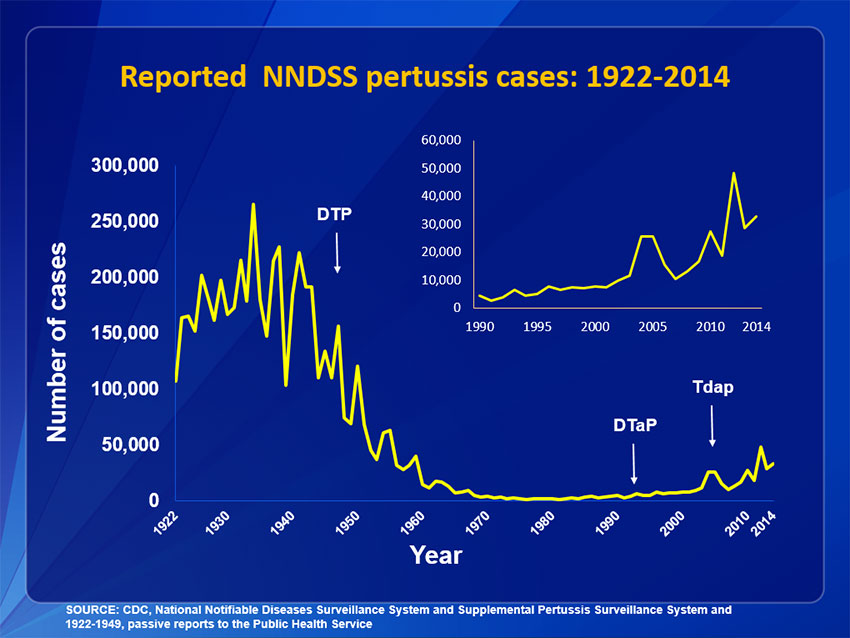
In the case of pertussis, the blame for increasing incidence of new infections may not be entirely the fault of vaccine-deniers. During the 1990s, the vaccine against whooping cough was changed to lower the risk of side effects like fever, and the newer vaccine may not confer immunity that is as broad or lasting. With that said, there is clear evidence that communities with a high rate of vaccine refusal are more likely to experience an outbreak.
Of course, why a person would choose to avoid a safe vaccine against a disease that kills infants without warning remains an open question.
Tuesday, March 18, 2014
FDA approves marketing for a device that prevents migraines
 |
| cefaly |
The transcutaneous electrical nerve stimulation device, called Cefaly, is battery-powered and available by prescription. It looks similar to a headband, and involves a self-adhesive electrode being positioned in the center of the forehead.
The device works by targeting the trigeminal nerve, which the FDA notes is linked with migraine headaches. An electrical current is sent through the electrode to stimulate branches of this nerve, which leads to a tingling sensation.
Cefaly is only meant to be used once a day for 20 minutes, and should only be used by people 18 and older.
It "provides an alternative to medication for migraine prevention," FDA Office of Device Evaluation director Christy Foreman said in a statement. "This may help patients who cannot tolerate current migraine medications for preventing migraines or treating attacks."
The FDA decision was made based on safety and effectiveness data from 67 people, as well as patient satisfaction data from 2,313 people. Researchers learned that while the device did not make migraines less intense or completely prevent them, it did seem to decrease days with migraine each month, as well as use of migraine medication.
Typically, frequent migraine sufferers are prescribed medication to prevent migraines, such as beta-blockers, calcium channel blockers or antidepressants. However, many of these drugs come with side effects, and some people with certain conditions cannot take them, according to the American Headache Society.
Late last year, the FDA approved marketing of the first device to relieve migraine pain preceded by aura, called the Cerena Transcranial Magnetic Stimulator.
Friday, February 7, 2014
Thank the pill for the drop in abortion rate
 |
| Paul J. Richards/Getty |
Of course, the best example is contraception. Conservatives have been apoplectic about a requirement under Obamacare that private insurance companies must provide affordable access to contraception. It would be one thing if the contraception outrage were merely manufactured as an excuse to undermine Obamacare as a whole—the “War on Women” simply as pretext for the “War on Obamacare.” But the puritanical conservative fervor against contraception seems far more genuine, for instance when Former Republican governor and presidential candidate Mike Huckabee recently suggested that women need contraception because “they cannot control their libido.” Another Republican presidential candidate, Sen. Rick Santorum, thinks contraception is “not okay” and that the Supreme Court decision guaranteeing contraception access to married couples should be overturned. And House Republicans have pushed measure after measure to restrict contraception access, including such threats as a component of the Republican shutdown of government last fall.
It probably goes without saying, but just in case ... contraception reduces unintended pregnancies, which in turn reduces the need for abortions. That probably doesn’t need further explanation, but just in case … Fox News reportedon a study that found: “Free birth control led to dramatically lower rates of abortions and teen births.”
So why aren’t supposedly anti-abortion conservatives championing affordable access to contraception, rather than condemning it? Prior to Obamacare, the high cost of contraception was prohibitive for many women. Many reported trying to save money by irregularly taking the pill or changing to a less effective method of contraception. Now, thanks to Obamacare, at least 27 million women have affordable access to effective birth control. Which means fewer abortions. Shouldn’t conservatives be cheering that development, not trying to attack it?
Then there’s sex education. According to the National Survey of Family Growth, teens who received comprehensive sex education were 50 percent less likely to experience pregnancy than those who received abstinence-only education. And yet conservatives have been pushing abstinence-only education for a generation, prioritized—and funded—by the federal government under President George W. Bush. Why? Out of some puritanical idealism that if you tell teens not to have sex, they won’t—instead of basing policy on the reality that teens will have sex either way, and so better to equip them with information to be safe and healthy. Oh, and if we don’t want teen pregnancies, better to teach teens how not to get pregnant. Doy. But conservatives continue to press for abstinence-only education nationwide.
Then there are things that would make it easier for women who get pregnant to have and raise children that conservatives also oppose. For instance, raising the minimum wage. Women are disproportionately paid the minimum wage—currently just $7.25 an hour federally, which hasn’t been raised since 2007. Meanwhile, women with family incomes below the federal poverty level account for more than 40 percent of all abortions and have a higher abortion rate compared with women in other income groups. It’s not surprising that women who can barely make ends meet as is would not feel they can have a child, let alone afford the medical costs and lost wages of carrying a pregnancy to term. Conservatives oppose public spending to ease the hardship of poor women, cutting funds for food stamps and housing assistance.
Conservatives also oppose access to contraception and abortion for poor women as well. Andconservatives don’t even want Medicaid to pay for poor women’s maternity care. So what’s left? Oh, right—abstinence. The same policy that isn’t working with teenagers, only even more patronizing when applied to grown women.
Four in 10 unintended pregnancies in America lead to abortion. In Texas, newly enacted restrictions on abortion access have apparently not led to a drop in abortions but rather a surge inself-abortion disasters suggesting that women who feel they need abortions will take desperate measures if safe and legal options are not available. So if we truly want to reduce the number of abortions in America, we need to lower the rates of unintended pregnancies—with access to contraception and comprehensive sex education—and/or make it more possible for women to have and raise children if they choose, by increasing wage and income supports, especially for low-income women. That is a simple formula. Why are conservatives doing everything they can to oppose these policies—and to drive up the abortion rate in America?
Friday, January 24, 2014
How to fall back asleep when you're wide awake
 |
| Justin Horrocks/Getty Images |
So what do you do? The second step to racking more zzz's is to perfect your sleep hygiene. That means developing a regular sleep schedule, using your bed only for sleep and intimacy, and ditching electronics and caffeine well before bedtime. Here's asleep hygiene guide to get you started. But that second step is for the daylight hours. The first step is to get to sleep now –- pronto –- so you can grab at least a couple hours before the birds start chirping.
The tips below might help you sleep easier. Here's the advice of Eric Olson, co-director of the Center for Sleep Medicine at the Mayo Clinic in Rochester Minn., and Harneet Walia, a doctor in the Cleveland Clinic's Sleep Disorders Center:
Get out of bed. When you lie awake in bed, you send yourself the wrong message. "You're basically training your body not to sleep in bed, but to lie there and not sleep," Walia says. "And your mind can get conditioned to that." Olson puts it another way: "The longer we lie there and get frustrated in that environment, the more we come to anticipate it next time we're there," he says. "We come to associate the bedroom with not sleeping well."
So if you're unable to sleep for about a 15- or 20-minute stretch, slip into your bunny slippers and out of the room. Try something relaxing and non-stimulating. Listen to music. Read a book. Even consider cleaning the house or doing the dishes, Olson suggests. A bath might do the trick, according to the National Heart, Lung, and Blood Institute, because sleepiness can brew from the post-bath drop in body temperature. Whatever activity you choose, do it away from bed, and return when you're feeling drowsy.
Try relaxation techniques. Call to arms whatever relaxation tips you know to combat this inappropriately timed alertness. Try your favorite calming yoga pose (Savasana, anyone?). Meditate. In this travel meditation article, neuroscience researcher Catherine Kerr explains a simple way of unwinding through breathing. You simply note the rising and falling of your breath, and focus on the parts of your body where you feel these slow inhales and exhales, whether it's in the lungs, abdomen, tip of your nose or elsewhere.
Walia suggests progressive muscle relaxation: Working from your toes to your forehead, tightly tense each muscle group for five seconds, and then relax. Visualization is another classic relaxing technique, in which you picture yourself someplace pleasant and calm. And what about the mother of all sleep remedies – counting sheep? Olson views this as a "mental distraction technique," like visualization. With sleep, he says, "the harder you try to get it, often the more elusive it is." So whether you're counting farm animals or picturing yourself in a hammock in Cabo, the idea is the same, Olson says. "You're getting your mind off of 'I can't sleep; I can't sleep; I can't sleep,' and onto something else."
Ease anxiety. Sometimes the sleeplessness stems from worry. Your brain is on overdrive, thinking about your bank account and the big meeting tomorrow and your kid's detention. For people who consistently have trouble "quieting the mind" at night, Olson suggests trying "to train your mind to think about those things at more appropriate times of the day." Schedule a time each day –- say, between work and dinner -– to simply write a sentence or two about what's worrying you and where you stand with that. "Maybe it's as simple as, 'I thought about this today, but I don't have any real solutions right now,'" Olson says. By systematically documenting these worries during the day, ideally, you'll be less likely to fixate on them at night.
Of course logging your troubles is all well and good, but it's a habit you build in the light of day, during the hours when you're supposed to be studious and bright. It's not particularly helpful when you're wide awake at 4 a.m. At that point, Walia suggests, "jotting down all your worries on a piece of paper so it's out of your head." And try the breathing, muscle relaxation and visualization techniques above.
Another common anxiety that lurks in the wee-hours of a sleepless night is the mounting awareness that you're not asleep when you should be. Stress and frustration –- not typically emotions that welcome relaxation -– escalate as you fret about how you need to be up for work in four (or three or two) hours. The experts' suggestion? Get rid of time cues. "No clock watching," Walia says, "That's a big no-no. Turn the clock around."
Medicate with caution. Whether prescription or over-the-counter, Walia and Olson do not recommend drugs as a first choice for relieving sleeplessness. Ideally, the tips above and improved sleep hygiene should do the trick. But, should you choose a sleep aid, Olson reminds people that, of course, they make you sleepy. This grogginess is great at 11 p.m., but not at 7 a.m. –- when you have to drive a car.
"Avoid taking a sleep medicine the closer you get to morning," he says. "You don't want to be hungover because you took that Tylenol PM at 5:30 a.m. just to eke out another hour."
Olson also advises that those who turn to over-the-counter sleep aids do so intermittently, to help avoid building a habit, and to check with
their doctors that the medicine doesn't interfere with any of their conditions or medications. If you wind up on a Food and Drug Administration-approved prescription sleep aid, Walia points out that it should be for the short term.
See a doctor. If your sleeplessness is frequent and impairing your daytime behavior, bring it up with your physician. "When people start to feel like they're worried about their sleep during the day, that's probably the time when they need some guidance," Olson says.
Monday, December 23, 2013
Four tech tools that are disrupting the doctor's office
In 2013, technology permeated health care like never before. Diagnostics came to our smartphones, robots came to our surgery rooms, and Dr. Phil invested in a startup that wants to facilitate online doctors' visits.

Here are four groundbreaking medical tools that either hit shelves or revved up development this year:
AliveCor
A smartphone case that can charge your phone is handy, but a smartphone case that can record and transmit an ECG takes the cake. This spring, the FDA approved AliveCor, a black case with silver censors, for over-the-counter sales. The tool helps users monitor their heart palpitations by simply placing her fingers over the censors, then transmitting the recording to a doctor.
This has several benefits. First, any patient experiencing the kind of random heart arrhythmia they can't self-induce in a doctor's office can simply buy one, record when the irregularity occurs, and send the data to a doctor. After a doctor diagnoses the problem and writes a prescription, the device can also serve to gather information about how a prescription is working.
A third benefit: AliveCor can help reassure a patient with a harmless or even phantom murmur that nothing is wrong — making life a little easier for hypochondriacs and their doctors.
 CellScope Oto
This one is especially beneficial for physicians who work with children, and therefore parents.
The tool is essentially a camera-fitted Otoscope (that flashlight thing doctors stick in your ear during a physical) that attaches to a smartphone. The doctor can view the inside of a patient's ear, take photos of an ear drum, and store those photos for later use. Then, when a patient has an ear ache, the doctor can compare the photos taken during a healthy physical with the new photos to both make a diagnosis, and help parents understand what's going on inside their children's ears.
If the CellScope Oto becomes available to parents, they could perform ear exams on their children and send the photos to a doctor. This could help them avoid unnecessary doctor's visits, where the kids risk picking up a bug in a waiting room.
The anesthesiologist robot
 Anesthesiologists, some of the highest paid doctors, are responsible for administering sedation and keeping a patient ticking during surgeries. This year, Johnson & Johnson released what some are calling a robot anesthesiologist — a system named Sedasys that "automates the sedation of many patients undergoing colon-cancer screenings called colonoscopies," says The Wall Street Journal.
Anesthesiologists see big problems with the bots, warning they may not be able to respond accurately to complications. But tests so far show the machines are not only safe, but may even reduce the risk of over-sedation. And hospitals see a clear benefit: Cost. J&J will lease the machines to doctor's offices for about $150 per procedure, compared to the $600 to $2,000 that anesthesiologists typically charge.
 Scanadu Scout
This year, a Silicon Valley startup drew funding to develop a device fit for Spock: A small tricorder shaped like a hockey puck that can monitor all kinds of vital signs. By holding it up to the temple, a patient can monitor her heart rate, temperature, and respiratory rate as well as measure oxygen levels in blood, and run an electrocardiogram.
This could be a kind of holy grail of telemedicine — something that allows patients to communicate a lot of health data quickly and remotely to their doctors.
Again, this could help nervous types avoid unnecessary emergency visits, and allow doctors to urge those in trouble to go to the emergency room stat. Scanadu hopes to have it set and ready to ship by early 2015.
Source

Here are four groundbreaking medical tools that either hit shelves or revved up development this year:
AliveCor
A smartphone case that can charge your phone is handy, but a smartphone case that can record and transmit an ECG takes the cake. This spring, the FDA approved AliveCor, a black case with silver censors, for over-the-counter sales. The tool helps users monitor their heart palpitations by simply placing her fingers over the censors, then transmitting the recording to a doctor.
This has several benefits. First, any patient experiencing the kind of random heart arrhythmia they can't self-induce in a doctor's office can simply buy one, record when the irregularity occurs, and send the data to a doctor. After a doctor diagnoses the problem and writes a prescription, the device can also serve to gather information about how a prescription is working.
A third benefit: AliveCor can help reassure a patient with a harmless or even phantom murmur that nothing is wrong — making life a little easier for hypochondriacs and their doctors.
 CellScope Oto
This one is especially beneficial for physicians who work with children, and therefore parents.
The tool is essentially a camera-fitted Otoscope (that flashlight thing doctors stick in your ear during a physical) that attaches to a smartphone. The doctor can view the inside of a patient's ear, take photos of an ear drum, and store those photos for later use. Then, when a patient has an ear ache, the doctor can compare the photos taken during a healthy physical with the new photos to both make a diagnosis, and help parents understand what's going on inside their children's ears.
If the CellScope Oto becomes available to parents, they could perform ear exams on their children and send the photos to a doctor. This could help them avoid unnecessary doctor's visits, where the kids risk picking up a bug in a waiting room.
The anesthesiologist robot
 Anesthesiologists, some of the highest paid doctors, are responsible for administering sedation and keeping a patient ticking during surgeries. This year, Johnson & Johnson released what some are calling a robot anesthesiologist — a system named Sedasys that "automates the sedation of many patients undergoing colon-cancer screenings called colonoscopies," says The Wall Street Journal.
Anesthesiologists see big problems with the bots, warning they may not be able to respond accurately to complications. But tests so far show the machines are not only safe, but may even reduce the risk of over-sedation. And hospitals see a clear benefit: Cost. J&J will lease the machines to doctor's offices for about $150 per procedure, compared to the $600 to $2,000 that anesthesiologists typically charge.
 Scanadu Scout
This year, a Silicon Valley startup drew funding to develop a device fit for Spock: A small tricorder shaped like a hockey puck that can monitor all kinds of vital signs. By holding it up to the temple, a patient can monitor her heart rate, temperature, and respiratory rate as well as measure oxygen levels in blood, and run an electrocardiogram.
This could be a kind of holy grail of telemedicine — something that allows patients to communicate a lot of health data quickly and remotely to their doctors.
Again, this could help nervous types avoid unnecessary emergency visits, and allow doctors to urge those in trouble to go to the emergency room stat. Scanadu hopes to have it set and ready to ship by early 2015.
Source
Sunday, December 22, 2013
Thursday, November 14, 2013
10 surprising dangers of vitamins and supplements

1. Supplements are not risk-free
More than 6,300 reports of serious adverse events associated with dietary supplements, including vitamins and herbs, streamed into the FDA from supplement companies, consumers, health-care providers, and others between 2007 and mid-April of 2012. The reports by themselves don’t prove the supplements caused the problems, but the raw numbers are cause for some concern. Symptoms included signs of heart, kidney, or liver problems, aches, allergic reactions, fatigue, nausea, pains, and vomiting.
The reports described more than 10,300 serious outcomes (some included more than one), including 115 deaths and more than 2,100 hospitalizations, 1,000 serious injuries or illnesses, 900 emergency-room visits, and some 4,000 other important medical events.
The FDA gets far more reports about serious problems with prescription medication than about supplements. But there’s a big difference between the two, notes Pieter Cohen, M.D., an internist at Cambridge Health Alliance in Massachusetts with a special interest in supplements. “These powerful medications with powerful side effects are actually saving lives when used appropriately,” he says of prescription drugs. “But when healthy consumers use supplements, there’s rarely, if ever, a powerful lifesaving effect.”
The FDA suspects most supplement problems never come to its attention, says Daniel Fabricant, Ph.D., director of the agency’s Division of Dietary Supplement Programs. But those that do are still useful because they can raise red flags about a developing problem. For instance, last year the agency noted seven reports of serious health problems regarding consumers who took Soladek vitamin solution, marketed by Indo Pharma of the Dominican Republic. When the FDA learned that tested samples contained vitamins A and D at concentrations many times the recommended daily allowances, it issued a consumer warning.
Why not simply order a problem product off the market? Current laws make that so difficult for the FDA that to date it has banned only one ingredient, ephedrine alkaloids. That effort dragged on for a decade, during which ephedra weight-loss products were implicated in thousands of adverse events, including deaths.
Type the name of the supplement you’re interested in into the search box at www.fda.gov to see whether it has been subject to warnings, alerts, or voluntary recalls. If you suspect you’re having a bad reaction to a supplement, tell your doctor. You can also report your problem to the FDA at 800-332-1088 or www.fda.gov/medwatch.
2. Some supplements are really prescription drugs
Fabricant has said that dietary supplements spiked with prescription drugs are “the largest threat” to consumer safety. Since 2008 there have been recalls of more than 400 such products, mostly those marketed for bodybuilding, sexual enhancement, and weight loss, according to the FDA.
We’ve seen many recalled products that have contained the same or similar active ingredients as prescription drugs, such as sildenafil (Viagra), tadalafil (Cialis), and sibutramine (Meridia, a weight-loss drug that was withdrawn from the market in 2010 because of evidence that it increased the risk of heart attacks and strokes). Others contained synthetic steroids.
Those adulterated products can cause some of the same side effects and interactions that consumers may have been trying to avoid by choosing supplements over drugs. The FDA has received reports of strokes, acute liver injury, kidney failure, pulmonary embolism (blood clots in the lung), and death associated with drug-tainted supplements.
“A number of the spiked sexual enhancement products claim to work within 20 to 45 minutes,” Fabricant said on the FDA’s website. “When we see a product that makes claims above and beyond what a dietary supplement might do—above supporting health—and within a time frame of a few minutes, it tips us off that we might have a spiked product.”
Slim down with diet and exercise. Build muscles by weight training. And consult a doctor if you need help in the bedroom, since it could indicate an underlying health problem. If you suspect you’ve purchased a product that is tainted with undeclared prescription drugs or steroids, send an e-mail about it to the FDA, at taintedproducts@fda.hhs.gov.
3. You can overdose on vitamins and minerals
Unless your health-care provider tells you that you need more than 100 percent of the recommended daily intake of a particular nutrient, you probably don’t.
“It doesn’t make sense to me to take huge doses of vitamins and minerals unless there’s a diagnosed problem, because there is so little evidence that they do good and sometimes a possibility that they might do harm,” says Marion Nestle, M.P.H., Ph.D., a professor of nutrition, food studies, and public health at New York University.
Megadoses of the fat-soluble vitamins A, D, E, and K can cause problems, and even some standard doses may interfere with certain prescription medicine. Some people may experience adverse effects from too much calcium or iron.
The table below shows the maximum daily intake of key nutrients that the Institute of Medicine has determined is unlikely to pose a risk of adverse health effects. (The numbers apply to the general population, not to those who may need supplementation because of a medical condition.)
It’s surprisingly easy to overdo it. For instance, a 50-something woman who’s worried about her bones might eat a breakfast of Whole Grain Total cereal, which contains around 1,000 milligrams of calcium per serving, with a half-cup of skim milk (150 milligrams of calcium), and take a calcium supplement (500 milligrams) on top of her One-A-Day Menopause Formula multivitamin, which includes 300 milligrams of calcium. She’d already be coming close to the upper tolerable daily calcium limit of 2,000 milligrams.
Using information from the labels on the supplements and food you routinely consume, add up your total daily exposure to everything, and then check the related table to see whether you’re overdoing it. If your doctor says you need more of a specific nutrient than you can get from food (or sun exposure, in the case of vitamin D), a single-ingredient pill may be sufficient.
Unless your health-care provider tells you that you need more than 100 percent of the recommended daily intake of a particular nutrient, you probably don’t.
“It doesn’t make sense to me to take huge doses of vitamins and minerals unless there’s a diagnosed problem, because there is so little evidence that they do good and sometimes a possibility that they might do harm,” says Marion Nestle, M.P.H., Ph.D., a professor of nutrition, food studies, and public health at New York University.
Megadoses of the fat-soluble vitamins A, D, E, and K can cause problems, and even some standard doses may interfere with certain prescription medicine. Some people may experience adverse effects from too much calcium or iron.
The table below shows the maximum daily intake of key nutrients that the Institute of Medicine has determined is unlikely to pose a risk of adverse health effects. (The numbers apply to the general population, not to those who may need supplementation because of a medical condition.)
It’s surprisingly easy to overdo it. For instance, a 50-something woman who’s worried about her bones might eat a breakfast of Whole Grain Total cereal, which contains around 1,000 milligrams of calcium per serving, with a half-cup of skim milk (150 milligrams of calcium), and take a calcium supplement (500 milligrams) on top of her One-A-Day Menopause Formula multivitamin, which includes 300 milligrams of calcium. She’d already be coming close to the upper tolerable daily calcium limit of 2,000 milligrams.
Using information from the labels on the supplements and food you routinely consume, add up your total daily exposure to everything, and then check the related table to see whether you’re overdoing it. If your doctor says you need more of a specific nutrient than you can get from food (or sun exposure, in the case of vitamin D), a single-ingredient pill may be sufficient.
Thursday, November 7, 2013
Sunday, October 27, 2013
Tests suggest baby born with HIV may be cured
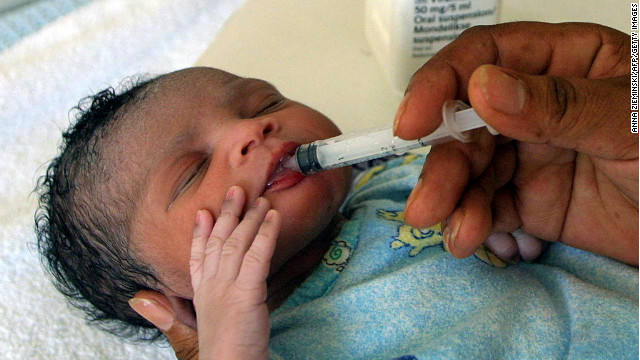
The case was reported earlier this year but some doctors were skeptical that the baby was really infected rather than testing positive because of exposure to virus in the mom's blood.
The new report, published online Wednesday by the New England Journal of Medicine, makes clear that the girl, now 3, was infected in the womb. She was treated unusually aggressively and shows no active infection despite stopping AIDS medicines 18 months ago.
Doctors won't call it a cure because they don't know what proof or how much time is needed to declare someone free of HIV infection, long feared to be permanent.
"We want to be very cautious here. We're calling it remission because we'd like to observe the child for a longer time and be absolutely sure there's no rebound," said Dr. Katherine Luzuriaga, a University of Massachusetts AIDS expert involved in the baby's care.
The government's top AIDS scientist, Dr. Anthony Fauci, director of the National Institute of Allergy and Infectious Diseases, agreed.
"At minimum, the baby is in a clear remission. It is possible that the baby has actually been cured. We don't have a definition for cure as we do for certain cancers, where after five years or so you can be relatively certain the person is not going to go and relapse," he said. A scientist at his institute did sophisticated tests that showed no active virus in the child.
A government-sponsored international study starting in January aims to test early treatment in babies born with HIV to see if the results in this case can be reproduced.
Most HIV-infected moms in the U.S. get AIDS medicines during pregnancy, which greatly cuts the chances they will pass the virus to their babies. But the Mississippi mom got no prenatal care and her HIV was discovered during labor. Doctors considered the baby to be at such high risk that they started the child on three powerful medicines 30 hours after birth, rather than waiting for a test to confirm infection as is usually done.
Within a month, the baby's virus fell to undetectable levels. She remained on treatment until she was 18 months old when doctors lost contact with her. Ten months later when she returned, they could find no sign of infection even though the mom had stopped giving the child AIDS medicines.
Only one other person is thought to have been cured of HIV infection — a San Francisco man who had a bone marrow transplant in 2007 from a donor with natural resistance to HIV, and showed no sign of infection five years later.
In the Mississippi baby, "there's no immune mechanism we can identify that would keep the virus in check" like that bone marrow donor, said another study author, Dr. Deborah Persaud of the Johns Hopkins Children's Center, who helped investigate the case because she has researched treatment in children.
Dr. Peter Havens, pediatric HIV chief at Children's Hospital of Wisconsin and a government adviser on HIV treatment guidelines, said the child may have an undiscovered genetic trait that helped her manage the virus.
"I'm just not convinced that her dramatic response would be replicable in a large population," he said. It's too soon to recommend treating other high-risk babies so aggressively without more study, he said.
In the upcoming study, doctors plan to give AIDS medicines for at least two years and watch for signs of remission before suspending treatment and seeing whether a remission results.
The Mississippi case "did open people's eyes further" about a possible cure, Luzuriaga said. "We might be able to intervene early and spare children a lifetime of therapy. That is the potential impact of this case."
Sunday, October 6, 2013
Thursday, September 5, 2013
This drug could save thousands of lives, so why aren't we using it?

On Saturday, the 13th annual International Overdose Awareness Day, drug policy reform advocates and those affected by overdoses will gather around the world, putting solutions front and center.
One such solution is naloxone, a prescription-only opiate reversal drug that has already been used to save thousands of lives. Supporters say it could easily save thousands more if it was more widely distributed. Opiate-based prescription drugs and heroin account for the vast majority of overdose deaths, making the debate around naloxone particularly critical.
On its own, naloxone isn't controversial. It was approved for use by the Food and Drug Administration in 1971. It's non-addictive, non-toxic, fairly cheap and easy to administer through nasal or intravenous application. Studies have been found that naloxone is capable of reducing overdose deaths by as much as 50 percent when paired with proper training and distribution.
The New York Times explained how naloxone works to counter an overdose in a recent story about a New York state effort to more widely distribute the generic drug:
Opioids function in the body by attaching to specific proteins, called opioid receptors. When opioids attach, the body relaxes and breathing slows. But too much of an opioid can cause respiration to slow to a lethal level.
Naloxone acts by competing with opioids for the receptor sites, essentially pushing the opioids out of the way and reversing the effects of the drugs.Despite the effectiveness of naloxone, many states have yet to adopt measures that would remove obstacles to distributing the drug to addicts, family members and first responders. The Fix, a website that covers addiction and recovery, explained opposition to naloxone as a "moral discomfort among drug warriors who apparently feel that the wages of drug use should be death." Many of the drug's critics claim that increasing access to naloxone will only encourage increasingly dangerous drug use, though studies have not been able to confirm this hypothesis. Proponents are quick to point out that any risks associated with naloxone would be minimal compared with the alternative -- death.
At least 15 states -- Virginia, California, Colorado, Connecticut, Illinois, Kentucky, Massachusetts, Maryland, New Jersey, New Mexico, New York, Oregon, Rhode Island, North Carolina and Washington state, as well as the District of Columbia -- have passed laws addressing the drug. These measures range from giving legal protection to those who administer naloxone to an overdose victim, to providing training and doses of the drug to first responders or family members who may not have a prescription for it themselves.
Wednesday, August 7, 2013
Migraines linked with abnormal blood vessel structure in the brain

"These differences seem to be associated with changes in blood flow in the brain, and it's possible that these changes may trigger migraine, which may explain why some people, for instance, notice that dehydration triggers their headaches," study researcher Dr. Brett Cucchiara, M.D., associate professor of neurology at the University of Pennsylvania Perelman School of Medicine, explained in a statement.
The new study, published in the journal PLOS ONE, included 170 people who fit into one of three categories: those who didn't get any migraines, those who got them with aura, and those who got them without aura. Researchers looked at the structure of blood vessels in the study participants' brains, as well as changes in cerebral blood flow. They specifically looked at the "circle of Willis," which is the term used for a system of arteries responsible for delivering blood to the brain.
The researchers found that people with migraines were more likely to have an "incomplete" circle of Willis than those who didn't get migraine headaches. Specifically, 73 percent of those who get migraines with aura had an incomplete circle of Willis, and 67 percent of those who get migraines without aura had an incomplete circle of Willis. Meanwhile, 51 percent of those who didn't get migraines had an incomplete circle of Willis.
"Abnormalities in both the circle of Willis and blood flow were most prominent in the back of the brain, where the visual cortex is located. This may help explain why the most common migraine auras consist of visual symptoms such as seeing distortions, spots, or wavy lines," senior author of the study, Dr. John Detre, M.D., a professor of neurology and radiology at the university, said in a statement.
Several recent studies have shed more light on how our physical makeup, as well as our genetics, could play a role in migraines. A study published in the journal Nature Genetics identified new genetic regions linked with the onset of migraines and susceptibility to migraines. And another study, published in the journal Lancet Neurology, showed that migraine pain may be caused by brain cells having overactive pain signal-firing, MyHealthNewsDaily reported.
Thursday, August 1, 2013
Cat allergy breakthrough?

Scientists at the University of Cambridge in the United Kingdom have discovered the receptor protein in human cells that triggers cat allergies. They anticipate that new drugs will be developed to bind the protein and prevent people from having an inflammatory response.
"It has long been known that cat allergies are caused by people reacting to cat proteins secreted by the salivary or scent glands being transferred to the fur," Dr. Clare Bryant, lead researcher, told Yahoo! Shine. "Other allergen—for example house dust mite allergy protein—trigger a receptor protein in host [human] cells and we wondered if cat allergen would have similar effects. We did not expect this to happen because the cat allergy protein is very different to the house dust mite protein, so we were very surprised to find that it triggered inflammation through the same receptor."
About 10 percent of people have pet allergies, and reactions to cats are twice as common as reactions to dogs. Cat allergies are especially pernicious because the proteins are small, light, and sticky. They float through the air and when they land on a surface—a piece of clothing for instance—they can be transferred to places that are cat-free. Symptoms include sneezing, watery eyes, stuffy nose, sore throat, hives, wheezing, and in severe cases, asthma.
Currently the only way to treat cat allergies is to reduce the symptoms with antihistamines or decongestants or endure weekly shots to boost the immune system—which can take as long as a year to kick in and may not even be effective.
Bryant can't predict exactly how long it will take for new drugs to reach on the market—that's up to the pharmaceutical companies—but says that "drugs that inhibit the receptor have already been tested in clinical trials for conditions such as sepsis." She added, "I would anticipate that an allergic person could, say, inhale a blocking drug before going to a house with cats and not get a reaction."
And allergic dog lovers have cause for hope, too. Bryant believes the findings could lead to improved treatment for canine allergies. The research will be published in an upcoming issue of the Journal of Immunology.
Thursday, May 16, 2013
Subscribe to:
Posts (Atom)