Showing posts with label trivia. Show all posts

Sunday, December 22, 2013

Trivia about Washington D.C.

You know it’s our nation’s capital, but were you aware of these fun quirks?

1. The Capitol building was not designed by an American. William Thornton was a British doctor.

2. Similarly, the White House was designed by an Irish architect, James Hoban.

3. The Smithsonian is named for an Englishman, James Smithson.

4. He never set foot on American soil.

5. D.C. residents could not vote in presidential elections until the 23rd amendment was ratified in 1961.

6. Both Herbert Hoover and John Quincy Adams kept alligators at the White House.

7. The White House movie theater was originally a coatroom.

8. When Jimmy Carter was president, he watched 480 movies there—the most of any POTUS.

9. D.C. gets more rain than Seattle.

10. Perhaps that’s why D.C. residents drink more wine per capita than residents of any of the 50 states.

11. The National Cathedral has lots of wacky gargoyles and grotesques. One of them is Darth Vader.

12. In 1998, one of the unknowns interred at the Tomb of the Unknown Soldier in Arlington National Cemetery (actually just across the Potomac from DC) was identified.

13. D.C. is home to tons of national museums. But don’t forget the National Bonsai and Penjing Museum, which houses about 200 meticulously pruned mini trees!

14. There were more members of the media at the 1963 March on Washington than at Kennedy’s inauguration two years earlier.

15. The Washington Monument is (accidentally) two different colors.

16. Funding ran dry halfway through the project. When construction restarted, the builders used stones from a different source. Whoops.

17. When President Woodrow Wilson had to move out of the White House at the end of his term, Prohibition forbade him from moving his precious wine collection. He appealed to Congress and passed a special law that allowed one person to transport alcohol from 1600 Pennsylvania Avenue to Wilson’s home. Sneaky!

18. Wilson happens to be the only president buried in the District.

19. Both the Minnesota Twins and the Texas Rangers started out as the Washington Senators.

20. Whereas the Washington Redskins were originally based in Boston.

21. The D.C. Metro is the second busiest subway system in the United States.

22. D.C.’s streets are lettered—but there is no “J” street.

23. That’s because, during the 18th century, the letters “I” and “J” were basically interchangeable.

24. (Thomas Jefferson actually wrote his initials as “T. I.”)

25. An empty crypt lies beneath the Capitol building—George Washington was supposed to be buried there.

Source

Tuesday, August 13, 2013

Sitcoms you might not know are based on real people

There are plenty of TV dramas based on real people or real events, but comedy is largely more imaginative and therefore, more often fiction. Even so, you’d be surprised how many of your favorite characters and plots in sitcoms are actually based on real life people and events. Here are five such examples.


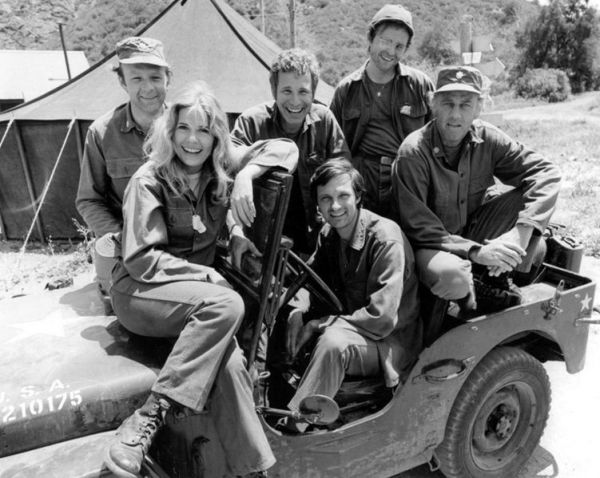
M*A*S*H
Obviously the setting of M*A*S*H is the very real Korean war, but the TV sitcom was based on a film that was, in turn based on a book by Dr. H. Richard Hornberger, a military surgeon who served in Korea. Corporal “Radar” O’Reilly was based on company clerk Don Shafer, who served beside the doctor in the war and also had the nickname “Radar.” Major Margaret "Hot Lips" Houlihan was based on two different nurses that served in Korea, Hotlips Hammerly and Janie Hall. Hammerly had a similar disposition and look as the fictional version, but Hall played a direct role in the character’s development, regularly contributing to the show with her real-life stories.

Not only were a few of the characters inspired by real people, but many of the plots used in the early seasons are based on stories the production team got from interviews with real MASH surgeons.

Community
Greendale may seem pretty over-the-top, but it is based on Dan Harmon’s real experiences at Glendale Community College, where he got involved in a study group and began a friendship with a group of people he otherwise had nothing in common with. Harmon based Jeff on himself, acknowledging that he was self-centered and excessively independent before the group made him recognize the value of connecting with other people.

As for the delightfully bizarre Abed, he wasn’t based on a member of Harmon’s study group, but afriend of his who is simply obsessed with pop culture. Of course, Abed Gheith, the real life version of the character is quick to point out that he’s not quite as odd as the highly exaggerated Abed, “I think I’m a bit more aware socially. I can tell when people are uncomfortable… It seems like the one on the show has no idea that he’s around other people. Like he's watching them on TV. So he's kind of a kid-like version of me.”

Ali G

Booyakasha! Ali G, one of Sacha Baron Cohen’s many, many crazy characters is actually based on a real-life DJ. While Cohen uses the character to mock the many suburban kids who try to act like they are black, urban gangsters, the biggest source of material for the character came from Tim Westwood. Mr. Westwood is a white, middle-class son of an Anglican bishop who emulates black British culture, even speaking with a Caribbean-inspired accent. When criticized about appropriating the mannerisms of a culture he was never really a part of, Westwood replied, "Honestly, baby, I get love out there, pure and simple."

Fawlty Towers

One of the more famous examples on this list, John Cleese’s famous Fawlty Towers was based completely on a hotel the Monty Python stayed in while filming in Torquay in 1971. While staying at the Gleneagles hotel, Cleese became fascinated with the behavior of the owner, Donald Sinclair.

At one point, Sinclair threw a bus schedule at guests when they asked when the next bus would arrive. During dinner, he mocked Terry Gilliam’s table manners because the American-born visitor switched hands while eating, which he believed to be un-British.

When Eric Idle left his briefcase off to the side while waiting for a car to arrive, the hotel owner grabbed the briefcase and threw it behind a wall in the garden, believing it held a bomb. When they asked him about it, he explained that he had “staff problems.”

Later, John Cleese described Sinclair as “the rudest man I've ever come across in my life." Of course, that didn’t stop him from staying at the hotel after filming wrapped so he could study the man in order to turn him into Basil Fawlty. Cleese later used the name “Donald Sinclair” for his character in Rat Race.

Seinfeld
You probably already know that Seinfeld plays himself in the show, though it is a fictionalization of his real life, and that George Costanza is pretty much Larry David. If you’re a fan, you probably also know that Cosmo Kramer is based on a real-life neighbor of Larry David, comedian Kenny Kramer. You might not know that the real Kramer actually provided bus tours showing sites made famous bySeinfeld, which was then later parodied when Cosmo started offering tours touting himself as the “real J. Peterman.” Some of Kramer’s demands for the use of his name in the show are also parodied in “The Pilot” when Cosmo learns Jerry and George want to base a character on him.

Of course, these aren’t the only plots in the show that were based on the creator’s real experiences. Larry David once quit his job at SNL, regretted the decision and then returned to work, pretending nothing happened, just like George Costanza did in “The Revenge” (the difference being that it worked for David).

Even Festivus was created outside the scope of the show. Writer Dan O’Keefe conceived of the holiday as a way to handle family tension that could take place any time between December and May. His family first celebrated in February of 1966. Later, O’Keefe’s son, also named Dan, worked the holiday into “The Strike” as a December 23 alternative to Christmas.

Source

Friday, May 3, 2013

Seven things you should know about the Kentucky Derby

1. WHAT ARE THE ORIGINS OF THE DERBY?
Kentucky has been a hotbed of the sport of kings since at least the 18th century, but the Derby didn't begin until 1875. Colonel M. Lewis Clark, a grandson of the Lewis-and-Clark-expedition William Clark, needed a slate of races for his newly formed Louisville Jockey Club, so he decided to run three stakes races at the track's first meet. The races—the Kentucky Derby, Kentucky Oaks, and Clark Handicap—were named after England's three marquee races, the Epsom Derby, the Epsom Oaks, and the St. Leger Stakes. The first Derby was held May 17, 1875; Aristides beat the field. (Interestingly, both Aristides' trainer and jockey were both African Americans.)

By 1883, the track would become known as Churchill Downs in recognition of John and Henry Churchill, Clark's uncles who secured the land for the course. The first runnings of the Derby were also 1.5 miles long; the standard distance of 1.25 miles wasn't adopted until 1896.


2. WHY IS THE DERBY CALLED "THE RUN FOR THE ROSES?"
Because the winner gets a blanket of 554 red roses after the race. Whether a horse would rather receive a more practical gift, like some oats or a lump of delicious sugar, is up for debate, but the garland has become a beloved tradition. The practice springs from Derby parties Louisville's socialites threw in the early days of the race. Each lady would receive a red rose at the parties, and when Churchill Downs' president Colonel Lewis Clark saw their popularity, he made the rose the race's official flower.

According to the Derby's organizers, 1896 Derby winner Ben Brush received the first garland of roses, and in 1925 journalist Bill Corum coined the term "Run for the Roses." The first blanket of roses like the one used today was awarded to the victorious Burgoo King in 1932. The modern garland is topped with a "crown," a single upturned rose that signifies the struggle a winner must endure. Since 1996, each winner's garland has been immediately freeze-dried for posterity.

3. WHAT'S THAT SONG THEY PLAY TO THE HORSES?
The University of Louisville Marching Band's playing of "My Old Kentucky Home" as the horses trot onto the track for the post parade is another beloved Derby tradition. The tune, which was penned by Stephen Foster in 1853, is the official state song of Kentucky, and it's been played at every Derby since 1921. Well, almost. The song received a few changes when the Kentucky General Assembly adopted it as state song in 1928, they had to clean up the lyrics a bit, including changing the offensive "darkies" to "people" in the first verse.

4. WHAT THE HECK IS A FURLONG?
The Kentucky Derby runs for 1.25 miles, but you may hear some mention of furlongs, too. A furlong is a unit of distance equal to one eighth of a mile. Originally, a furlong referred to the length of the furrow running across an open ploughed field, but now it's mostly used to measure distances for horse racing.


5. WHAT'S A MINT JULEP?
A mint julep is delicious, that's what it is. More specifically, it's the official cocktail of the Kentucky Derby. A julep consists of bourbon (another Kentucky specialty), mint, sugar, and crushed or shaved ice. The sweetness of the bourbon complements the bruised mint and sugar, and the ice makes it a frosty warm-weather drink. Since the ice is broken up, though, juleps should be thrown down the hatch quickly; otherwise the ice will melt and dilute the drink.

6. WHY IS THE MINT JULEP SO POPULAR?
Well, we already mentioned that it's delicious. It's also stood the test of time. John Milton mentioned a "cordial Julep" as far back as 1634, and the first known mention of the mint julep in print popped up in an 1803 travelogue. Red Bull and vodka hardly has that sort of historical backing.

Don't have bourbon? Then you can't really make a julep. Don't even try to make a julep with rye instead of bourbon; the spicy flavors of the rye just don't measure up. As the humorist Irvin S. Cobb once teased his friend H.L. Mencken's mixing abilities with the quip, "Any guy who'd put rye in a mint julep and crush the leaves would put scorpions in a baby's bed."

Ironically, though, the Kentucky Derby is one place that you won't get a "real" julep. The official julep of the Derby is made with Early Times, which is a Kentucky whiskey, but not a bourbon. This quibble doesn't make the drink any less popular, though. Each year over 120,000 juleps are served at the Derby. (Here's the recipe.)

7. DO I WANT TO INGEST SOMETHING CALLED "BURGOO"?
That depends on whether or not a thick stew of meats and vegetables sounds tasty to you. Burgoo is a classic Kentucky dish that could add a touch of authenticity to your Derby party. According to common wisdom, it's best made in a gigantic pot and stirred with a clean 2x4. There's no standardized recipe for burgoo, but it's usually got pork, mutton, or another meat mixed with vegetables, potatoes, beans, and spices. It's a dish that varies quite a bit from cook to cook, but it's usually tasty and makes a great Derby-day snack.Source

Sunday, April 14, 2013

8 things you didn't know about nutella

Wikipedia Commons
Around the world, the incidence of Nutella-related crimes is on the rise. The chocolate-hazelnut spread made headlines recently in Germany, where thieves pulled off a $20,000 heist, stealing 5.5 metric tons of the sweet stuff from a parked truck. Several weeks earlier, Columbia University found itself at the center of “Nutella-gate,” an expose smearing the school for spending $6000 per week on the spread for one of its dining facilities, where students were allegedly snarfing 100 pounds of it per day. Here are eight things you may not know about this super addictive snack.


1. THERE'S A WORLD NUTELLA DAY.
Two bloggers in Italy decided to take their love of Nutella to the next level in 2007, and created a worldwide day of celebration dedicated to the addictive substance. Thus, every year February 5th is a day for eating Nutella, sharing Nutella recipes and memories, and looking at photos of Nutella food-porn. It just goes to show that if you have a dream and a spoon, all things are possible.

2. IT ACTUALLY IS THE BREAKFAST OF CHAMPIONS.
According to the Guinness World Records, Nutella's 40th Anniversary breakfast celebration in Germany in 2005 currently holds the title of “Largest Continental Breakfast.” A total of 27,854 people gathered in Gelsenkirchen to enjoy a meal that consisted of little more than Nutella itself.

3. IT SELLS LIKE HOTCAKES.
One jar of Nutella is sold every 2.5 seconds throughout the world. According to the United States Census Bureau, one person is born every eight seconds. You do the math.

4. IT SPREADS FAR AND WIDE.
Not only is it available for purchase and feverish consumption in 75 countries, all of the Nutella sold in a year could be spread over more than 1000 soccer fields.
5. IT IS WELL-“LIKED.”

In 2009, Nutella reportedly had the 3rd most “liked” Facebook fan page with a whopping two million fans, falling in just behind the fan pages of Barack Obama and Coca-Cola. While Nutella's no longer ranks among the top pages these days, it does currently have a not-too-shabby tally of over 17 million Likes.

6. NAPOLEON AND HITLER ARE RESPONSIBLE FOR THE WORLD'S NUTELLA ADDICTION.
Back in 1806, Napoleon tried to freeze out British commerce as a means to win the Napoleonic wars (and take over the world). The result was a disastrous continental blockade that caused the cost of chocolate to skyrocket and left Piedmontese chocolatiers in the lurch (among many other repercussions, like causing the War of 1812). Ever resourceful, chocolatiers in Turin started adding chopped hazelnuts to chocolate to stretch the supply as much as possible. The ensuing deliciousness was a fateful paste dubbed “gianduia.”

Over a century later, chocolate again became expensive and scarce due to rationing in Europe during World War II. An Italian pastry maker named Pietro Ferrero once again turned to the mighty hazelnut for salvation in 1946 and created Pasta Gianduja, renamed “Nutella” in 1964.
7. THERE'S NO MASKING THE FLAVOR.
The chocolate and hazelnut substance gianduia is named after a character from Italian commedia dell'arte named Gianduja. He is depicted as a smiling Piedmontese peasant with a three-point hat who rides around town on a donkey clutching a duja—which in the Piedmontese dialect means “container.” The duja was said to hold wine ... but could have just as easily held a few pounds of that chocolatey hazelnut goodness, no? Gianduja masks are sold all over the Piedmont region of Italy, and his face was plastered all over early Nutella advertisements.
8. NUTELLA HAS A SMEARED REPUTATION.
Nutella became so popular in Italy that Italian markets began to offer free “smears” of Nutella to any kid who showed up with a piece of bread. The phenomenon was referred to as “The Smearing,” and while it could potentially double as the name of a horror flick, was a highly successful marketing strategy. No wonder we're all addicted.

Source

Monday, May 28, 2012

How to Fly The American Flag


When did these rules fall into place?
Surprisingly late in American history. On Flag Day in 1923, a group of organizations headed by the American Legion outlined the National Flag Code as a set of advisory rules for displaying the flag. These rules became law during World War II and form the bulk of what’s now the United States Flag Code.

These rules cover all manner of extremely specific situations, but they’re all governed by the same basic principle: the flag is one of the most visible and important symbols of our country, so we should treat it with respect.

When is it acceptable to fly the flag upside down?
The flag code allows for flying the flag with the union (the blue field of stars) down only “as a signal of dire distress in instances of extreme danger to life or property.”

We know that the American flag is supposed to be displayed in a position of prominence over other flags on American soil. Are there any exceptions to this rule?
Section 7 of the flag code provides one major exception: the flag of the United Nations can be flown in the position of honor or prominence at the U.N. headquarters in New York.

The only other exception involves church services performed by naval chaplains while at sea. In these instances, the church’s flag may fly about the American flag during the service.

Are you really supposed to lower the flag at sunset?
You don’t have to. While the flag code notes that displaying the flag only from sunrise to sunset is “universal custom,” it makes an exception. “However, when a patriotic effect is desired, the flag may be displayed 24 hours a day if properly illuminated during the hours of darkness.”

When should the flag be displayed?
Section 6 of the flag code states, “The flag should be displayed on all days.” However, the code goes on to say that the flag should especially (emphasis added) be displayed on the following days: New Year’s Day, Inauguration Day, Martin Luther King, Jr. Day, Lincoln’s birthday, Washington’s birthday, Easter, Mother’s Day, Armed Forces Day, Memorial Day, Flag Day, Father’s Day, Independence Day, National Korean War Veterans Armistice Day, Labor Day, Constitution Day, Columbus Day, Navy Day, Veterans Day, Thanksgiving, Christmas, state holidays, states’ dates of admission, and “such other days as may be proclaimed by the President of the United States.”

Where should the flag be displayed?
Section 6 of the flag code covers this question, too. The flag should be displayed in or near every schoolhouse on school days, on or near the main administration building of every public institution each day, and in or near every polling place on election days.

Why doesn’t, say, the Dream Team take the courts in American-flag jerseys at the Olympics?
The flag code thought of that one, too. Section 8 of the code covers “Respect for the Flag,” and it explicitly states, “No part of the flag should ever be used as a costume or athletic uniform. However, a flag patch may be affixed to the uniform of military personnel, firemen, policemen, and members of patriotic organizations.”

Any other restrictions on wearing the flag?
Section 8 also states, “The flag should never be used as wearing apparel, bedding, or drapery.”

What about those American flag lapel pins that so many folks wear?
The flag code thought of that one, too. Section 8 rather elegantly states, “The flag represents a living country and is itself considered a living thing. Therefore, the lapel flag pin being a replica, should be worn on the left lapel near the heart.”

Is it true you have to retire and burn a flag that touches the ground?
No, that’s a myth. The flag code is quite a bit more realistic about this situation. While the code states, “The flag should never touch anything beneath it, such as the ground, the floor, water, or merchandise,” there’s no rule saying that a flag that slips has to immediately be burned.

Instead, the code stipulates, “The flag, when it is in such condition that it is no longer a fitting emblem for display, should be destroyed in a dignified way, preferably by burning.” Unless hitting the ground once renders the flag unfit for display, there’s no need to burn it.

What’s the penalty for breaking the flag code?
There isn’t one. The flag code is an odd duck in this regard. As part of the United States Code, the flag code is technically federal law. However, the code doesn’t outline any measures for enforcement or punishment. Basically, the flag code is a set of advisory rules for Americans who want to know the proper and respectful way to display their flag.

Even if the flag code did provide measures for its enforcement, it’s not clear that the measures would be constitutional. Individual states used to have their own prohibitions on and penalties for desecrating the flag, but the 1989 Supreme Court decision Texas v. Johnson invalidated these laws as infringements on free speech. Congress responded by passing the Flag Protection Act, which made flag desecration a federal crime. The Supreme Court struck down this law in the 1990 case United States v. Eichman.

Can anyone stop me from displaying the flag?
In 2006 the Freedom to Display the American Flag Act of 2005 officially became law. This law basically says that no condo board, housing co-op, or residential real estate management group can restrict a person’s right to display the American flag on their own residential property as long as the display jibes with federal law and is reasonable.

What days is the flag always flown at half-staff?
The flag always flies on half-staff on Patriot Day (September 11 of each year), Peace Officers Memorial Day (May 15), and Pearl Harbor Remembrance Day (December 7). On Memorial Day, the flag flies at half-staff until noon, at which point it is raised to the top of the staff.

What if I can’t fly my flag at half-staff?
Some flags, like the ones commonly seen in school classrooms or on houses, are fixed in a certain position on their poles. How does one handle the sticky situation of a flag that physically can’t be flown at half-staff? The United States Code doesn’t cover this conundrum, but the American Legion advocates adding a black ribbon to the top of the flag’s pole to indicate mourning.

What about adding new stars for new states?
Should we ever pick up a 51st state, Section 2 of the flag code stipulates that the state will get a new star on the flag. It won’t be an overnight process, though. The new star will make its debut on the first Fourth of July following the state’s formal admission into the union.

Source

Happy Memorial Day! Some trivia about the holiday

1. It started with the Civil War
Memorial Day was a response to the unprecedented carnage of the Civil War, in which some 620,000 soldiers on both sides died. The loss of life and its effect on communities throughout the North and South led to spontaneous commemorations of the dead:

• In 1864, women from Boalsburg, Pa., put flowers on the graves of their dead from the just-fought Battle of Gettysburg. The next year, a group of women decorated the graves of soldiers buried in a Vicksburg, Miss., cemetery.

• In April 1866, women from Columbus, Miss., laid flowers on the graves of both Union and Confederate soldiers. It was recognized at the time as an act of healing sectional wounds. In the same month, up in Carbondale, Ill., 219 Civil War veterans marched through town in memory of the fallen to Woodlawn Cemetery, where Union hero Maj. Gen. John A. Logan delivered the principal address. The ceremony gave Carbondale its claim to the first organized, community-wide Memorial Day observance.

• Waterloo, N.Y., began holding an annual community service on May 5, 1866. Although many towns claimed the title, it was Waterloo that won congressional recognition as the “birthplace of Memorial Day.”

2. General Logan made it official
Gen. Logan, the speaker at the Carbondale gathering, also was commander of the Grand Army of the Republic, an organization of Union veterans. On May 5, 1868, he issued General Orders No. 11, which set aside May 30, 1868, “for the purpose of strewing with flowers, or otherwise decorating the graves of comrades who died in defense of their country during the late rebellion….”

The orders expressed hope that the observance would be “kept up from year to year while a survivor of the war remains to honor the memory of his departed comrades.”

3. It was first known as Decoration Day
From the practice of decorating graves with flowers, wreaths and flags, the holiday was long known as Decoration Day. The name Memorial Day goes back to 1882, but the older name didn’t disappear until after World War II. Federal law declared “Memorial Day” the official name in 1967.

4. The holiday is a franchise
Calling Memorial Day a “national holiday” is a bit of a misnomer. While there are 10 “federal holidays” created by Congress—including Memorial Day—they apply only to Federal employees and the District of Columbia. Federal Memorial Day, established in 1888, allowed Civil War veterans, many of whom were drawing a government paycheck, to honor their fallen comrades without being docked a day’s pay.

For the rest of us, our holidays were enacted state by state. New York was the first state to designate Memorial Day a legal holiday, in 1873. Most Northern states had followed suit by the 1890s. The states of the former Confederacy were unenthusiastic about a holiday memorializing those who, in Gen. Logan’s words, “united to suppress the late rebellion.” The South didn’t adopt the May 30 Memorial Day until after World War I, by which time its purpose had been broadened to include those who died in all the country’s wars.

In 1971, the Monday Holiday Law shifted Memorial Day from May 30, to the last Monday of the month.

5. It was James Garfield’s finest hour—or maybe hour-and-a-half
On May 30, 1868, President Ulysses S. Grant presided over the first Memorial Day ceremony at Arlington National Cemetery—which, until 1864, was Confederate Gen. Robert E. Lee’s plantation.

Some 5,000 people attended on a spring day which, The New York Times reported, was “somewhat too warm for comfort.” The principal speaker was James A. Garfield, a Civil War general, Republican congressman from Ohio and future president.

“I am oppressed with a sense of the impropriety of uttering words on this occasion,” Garfield began, and then continued to utter them. “If silence is ever golden, it must be beside the graves of fifteen-thousand men, whose lives were more significant than speech, and whose death was a poem the music of which can never be sung.” It went on like that for pages and pages.

As the songs, speeches and sermons ended, the participants helped to decorate the graves of the Union and Confederate soldiers buried in the cemetery.

Wednesday, May 23, 2012

15 things you didn't know about Game of Thrones

1. Peter Dinklage was first choice for author George R.R. Martin and producers for the role of Tyrion. They didn't do any auditions for Tyrion besides him.

2. Sean Bean was their first choice too. But they did auditions with other actors in case he rejected the role.

3. Lena Headey and Peter Dinklage were friends before the show. When Dinklage was talking with producers he suggested her for the role of Cersei.

4. Sophie Turner (Sansa) and Maise Williams (Arya) are good friends in real life.

5. Sean Bean tried to steal Lena Headey's sandwiches during lunch breaks.

6. Nikolaj Coster-Waldau (Jaime Lanister) loves the YouTube video where Joffrey gets slapped for 10 minutes.

7. Most of the cast members haven't read the books. Many of them don't want to know the what happens to their characters, fearing it will affect their acting.

8. George R.R. Martin has revealed how he plans to end the series to producers D.B. Weiss and David Benioff in case he dies before he finishes.

9. George R.R. Martin sent Jack Gleeson (Joffrey) a letter that said, "Congratulations on your marvelous performance, everyone hates you." He also called him, "a very nice young man, charming and friendly."

10. Maise Williams' mother didn't let her read the books because she thought they were too grown up for a young girl.

11. Linguistics expert David Peterson created the Dothraki language for the series, which now consists of over 3000 words. You can (try to) learn it here.

12. George R.R. Martin originally thought Natalia Tena's look was all wrong for the part of Osha. He changed his mind after seeing her audition and now plans to write more for her version of the character.

13. Alfie Allen (Theon Greyjoy) is younger brother of Lily Allen. Her song "Alfie" is about him.

14. The designer of the dragon eggs gave George R.R. Martin one of them as a wedding gift when he married Parris McBride in 2011.

15. Jason Momoa (Khal Drogo) performed the Haka dance for his audition.

Source

Wednesday, January 11, 2012

10 great Jeopardy moments

I watch Jeopardy everyday so this list is extra interesting to me. Enjoy!

Road to ho


Alex's racist moment


Kid thinks he's real clever


No, sorry, this isn't Family Guy


Kid rocks out


Hahahahaha. No.


Saturday, December 31, 2011

Big Fat Quiz of 2011


Presented by Jimmy Carr, teams:
Nexus-6: David Mitchell and Eddie Izzard
Les Be Friends: David Walliams and Miranda Hart
The Lisping Ninnies: Jonathan Ross and Jamie Oliver


Sunday, December 25, 2011

Holiday movie montage


And 25 fun facts about your favorite Christmas movies from Mental Floss magazine:

Scrooged
1. It just goes to show you: don’t shouldn’t mess with the Ghost of Christmas Present. During the scene where Carol Kane grabs Bill Murray’s lip, she really latched on and accidentally tore it so badly that they had to stop filming for a few days so Bill could heal and his injuries wouldn’t be so obvious on camera.

2. All of Bill Murray’s actor brothers are in the movie – that would be Brian Doyle-Murray, Joel Murray and John Murray.

3. That’s Paul Shaffer leading the street carolers Bill Murray insults. The other carolers are Miles Davis (yep, that Miles Davis), famous saxophone player David Sanborn and Grammy-winning jazz guitarist Larry Carlton. It’s a pretty illustrious group of carolers to be heckling, really.

It’s a Wonderful Life
4. The movie received the “honor” of getting its own FBI file in 1947, when an analyst submitted the idea that the film was an obvious attempt to discredit bankers, a “common trick used by Communists.”

5. Among other people, the notoriously cynical Dorothy Parker contributed some rewrites to the script. Maybe she had a soft spot for Christmas (or maybe the money was just that good).

6. Does George look strangely sweaty to you when he and Clarence are on the bridge? That’s because it was 90 degrees out the day that scene was filmed. But I think it works –- I always assumed he looked damp because of the snow and because he was in the middle of his nervous breakdown.

Babes in Toyland
7. The movie that is now a cult classic was, as many cult classics are, a colossal flop at the box office when it debuted.

8. A bunch of the pieces from the movie – Mary’s garden, the shoe house, the pumpkin house and the trees – were an attraction at Disneyland’s Opera House for about a year following the release of the movie.

9. Walt Disney’s Wonderful World of Color went behind the scenes for the movie’s wrap party… except since the whole wrap party was scripted and choreographed, it wasn’t really “behind the scenes,” exactly. Annette Funicello co-hosted it with Walt and it featured performances by many cast members.

Miracle on 34th Street
10. The scenes of the Macy’s Thanksgiving Day Parade are actually taken from the 1946 parade. The movie is credited with bringing the traditional parade to the national spotlight, and Macy’s employees were given half a day off so they could see the first showing of the movie. In fact…

11. Most people didn’t realize that Edmund Gwenn, Santa Claus in the movie, also played Santa Claus during the real 1946 Macy’s Thanksgiving Day Parade. He even played to the crowd from the marquee of Macy’s when the parade ended to open the “official” Christmas shopping season.

12. Kris Kringle tries to prove that he’s quite mentally competent by reciting various bits of knowledge, including that Daniel D. Tompkins was John Quincy Adams’ Vice President. Except… he wasn’t. John C. Calhoun was Adams’ Veep; Tompkins served under James Monroe.

Sunday, November 13, 2011

10 Things You Didn't Know About The Movie "Animal House"

Animal House may be a little dated to some (it was released in 1978), but I still think it is a hilarious, classic comedy film. It pushed the boundaries and set the stage for more recent comedies like "Van Wilder" and "Old School." It may have even influenced your own college experience (see #3). Here are some things you didn't know about the movie.

1. Co-writer Chris Miller based the National Lampoon short stories that gave rise to the film on his experiences in the Alpha Delta Phi fraternity at Dartmouth (from which he graduated in 1962).

2. The movie was set to be filmed at the University of Missouri until the president of the school read the script and refused permission. It was filmed at and around the University of Oregon in Eugene instead. The President of the University of Oregon only allowed this movie to be filmed on that campus because he decided he did not know how to read screenplays. In 1967 he had received the screenplay for a movie but had denied it permission to film there. That movie was The Graduate and he liked that movie so much that he decided he didn't want to miss another opportunity, so he allowed Animal House to be filmed on the University of Oregon campus. But he insisted that the college's name not be listed in the film's credits.

3. Virtually unheard of, "Toga Parties" became all the rage in colleges all over America after the release of this film.

4. The full name of the Delta House changes during the movie. When the movers are taking out the contents of the frat house the name is Delta Tau Chi. Earlier in the movie it is Delta Chi Tau.

5. To prepare for their roles, the actors playing the Deltas went to a real frat party at the University of Oregon's SAE house (except John Belushi, who was working on Saturday Night Live that night). The real fraternity members did not like the actors being there and a brawl ensued. When Belushi returned to the set and heard about the fight, he had to be physically restrained from seeking revenge.

6. All of John Belushi's behavior in the cafeteria was improvised. He was not told to pile all the food on his tray and when he did director John Landis urged the camera operator to "stay with him." The infamous "zit scene" was also improvised. The reaction from the cast is genuine.

7. DeWayne Jessie's performance as "Otis Day" was so successful that he legally changed his name to Otis Day, and toured and recorded with 'Otis Day and the Knights'. The toga party band's real name is Carl Holmes and The Commanders.

8. According to Landis, Universal Pictures president Ned Tanen protested the scene in which the Deltas take a road trip to an African-American bar by stopping a screening of the film. He ordered the scene to be removed and claimed that the scene would cause race riots in the theaters. Landis then screened the movie for Richard Pryor who wrote a note to Tanen that read: "Ned, Animal House is fucking funny and white people are crazy - Richard."

9. The bottle of whiskey that Bluto (John Belushi) chugs was actually colored tea. This was part of keeping John Belushi away from alcohol and drugs. Belushi was also excluded from the rest of the cast staying at Roadway Inn days prior to the shoot.

10. The hole John Belushi makes in the wall with the guitar is the only physical damage to the house the movie-makers made during the entire shoot. Instead of repairing it, the fraternity placed a frame around the hole with an engraved brass tag around the hole commemorating it.

Tuesday, November 1, 2011

Hollywood's Creepiest Rumors, Myths, and Legends

Halloween may be over but that doesn't mean we can't talk scary stories and legends within the Hollywood community.

Serial Killer Ed Gein

Not everything in horror movies is 100 percent fiction. Take killer Ed Gein. He was a serial killer who murdered at least two women in Plainfield, Wisc., in the 1950s. Police discovered Gein when he was caught exhuming bodies from local graveyards, fashioning trophies and keepsakes from the corpses' bodies and skin. Police also found several body parts in his home, including nine masks made of human skin, heads with the tops sawn off, and a lampshade made from the skin of a human face. Gein served as the influence for a number of characters in horror movies, including Norman Bates in Psycho, Leatherface in The Texas Chainsaw Massacre, and Buffalo Bill from The Silence of the Lambs.

The Poltergeist Curse

The Poltergeist Curse is one of Hollywood's better known legends. The curse derived from the fact that four cast members died in the six years between the releases of the first and third movies. Dominique Dunne, who played the oldest daughter in the first movie was strangled to death by her boyfriend in 1982. Julian Beck, who played Henry Krane in Poltergeist II: The Other Side died of stomach cancer. Will Sampson, who played the medicine man in Poltergeist II died of kidney failure.

But no death is more haunting than that of 12-year-old Heather O'Rourke, who played Carol Anne in all three movies. She died in 1988 of septic shock.

Also haunting is the fact that real human skeletons were used in the swimming pool scene in the first movie. It's rumored that many on set blame the curse for this. Special effects artist Craig Reardon said it was cheaper to purchase real skeletons than plastic ones. Though a lot of this can be shrugged off as coincidence, even more than 20 years after the movies, the Poltergeist Curse still lurks.

Stanley Kubrick torturing Shelley Duvall during The Shining

Throughout The Shining, Shelley Duvall's character looks distraught, stressed, and nearly scared to death (of course, being married to Jack Nicholson's Jack Torrance would make most wives a little on edge), it reportedly wasn't all an act.

Director Stanley Kubrick, known for demanding movie sets, reportedly tormented Duvall and encouraged other crew members to do so as well, all so she would feel off balanced and give a better performance. Well, it worked. Duvall became so stressed during the shooting of the movie that she lost a lot of her hair and fell ill.

Other Hollywood horror tidbits

One of the investors in George Romero's Night of the Living Dead was a butcher who paid Romero in blood and guts.

The Exorcist director William Friedkin would fire an air gun before shooting to "scare" his actors into character. Also the scream of the demon being exorcised was a recording of pigs being driven to slaughter.

The mask worn by Michael in Halloween was actually a Captain Kirk mask that was painted white. Director John Carpenter composed the movie's eerie film score.

The famous shower scene in Psycho took seven days to shoot and involved 77 different shots. Not one shot shows Janet Leigh's character actually being stabbed. Chocolate syrup was used as blood.

Before the movie premiered, the cast of The Blair Witch Project were listed as missing on IMDB.com.

Sunday, October 23, 2011

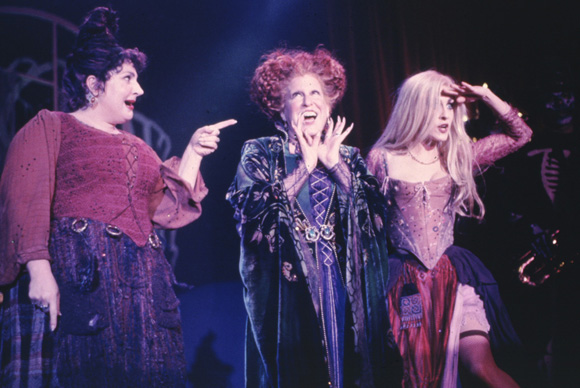
10 Things You Didn't Know About The Movie "Hocus Pocus"

This was the first movie I remember seeing in theaters. I guess I would have been 5 years old at the time. I feel like during the month of October this movie is shown on repeat and it still never gets old. Here are some trivia facts about the movie:

1. The role of Max Dennison was originally offered to Leonardo DiCaprio, but was given to Omri Katz when DiCaprio turned it down to appear in What's Eating Gilbert Grape.

2. After having locked the Sanderson sisters in the school kiln, the three kids celebrate as they walk to the park. The house shown directly behind Max and Thackery while they talk is the residential edifice used as Thora Birch's home in 1999's American Beauty.

3. During a February 10, 2008 interview on the BBC show "Breakfast", Bette Midler stated that out of all of her films, this was her favorite.

4. The three little girls who steal the witches' brooms from in front of the house are dressed as the sisters themselves: Winifred with red hair and green cape, Mary with black hair and red cape, and Sarah with blond hair and purple cape.

5. Rosie O'Donnell was originally offered the role of Mary Sanderson, but it was ultimately given to Kathy Najimy. O'Donnell claims on her blog that she turned down the offer to work with the Divine Miss M because she didn't want to be a "scary witch".

6. In this film, Sarah Jessica Parker plays a witch who was executed during the Salem Witch Trials in the late 1600s. While researching her family history for the show Who Do You Think You Are?, Parker was shocked to discover that her 10th great-grandmother Esther Elwell was arrested in Salem in the late 1600s for committing "sundry acts of witchcraft" and choking a neighbour to death. Esther's case never went to court, she escaped with her life and the accusation ended the Salem Witch Trials. Parker said: "It has changed everything about who I thought I was."

7. Strangely, the film was released in the Summer of 1993, rather then in the Fall.

8. Despite popular belief, Sara's song "Come Little Children" is actually a poem by Edgar Allan Poe, word for word. It was not an original song written for the film.

9. In the final scene, when Dani is crying over Binx's cat body, you can see that he happened to die right on his sister's grave.

10. The script was written as a Disney Channel Original Movie; however, it caught the eyes of a few bigger studio heads at Disney, and they felt it was strong enough to carry a good theatrical performance.

Source: imdb.com

Wednesday, October 19, 2011

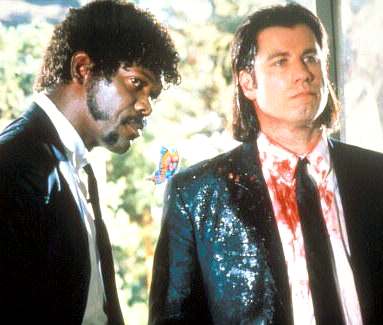
10 things you didn't know about the movie "Pulp Fiction"

This movie will always be in my top five favorite films. This movie is a classic due to Quentin Tarantino's directing, an all-star cast, and perfect dialogue ("They speak English in What?"). Here are some fun trivia facts I put together:

1.  The passage from the Bible that Jules has memorized was mostly made up by Quentin Tarantino and Samuel L. Jackson. The only part that's similar to what the Bible says is the part where he says, "And I will strike down upon thee with great vengeance and furious anger. And you will know My name is the Lord when I lay My vengeance upon thee." However, the parts about the righteous man and the shepherd are not real.

2.  Samuel L. Jackson auditioned for the part of Mr. Orange in Reservoir Dogs, but it went to Tim Roth. Tarantino enjoyed Jackson's work so much that he wrote the part of Jules specifically for him.

3.  The movie cost $8 million to make, $5 million of which went to pay the actors' salaries.

4. In the diner when Mia orders her $5 shake, "Buddy Holly" (the waiter) asks her if she wants it "Martin and Lewis or Amos and Andy?" He is referring to two comedy duos - Dean Martin and Jerry Lewis, two white men; Amos and Andy, two black men. Basically, he is asking her if she wants a vanilla shake or a chocolate shake. She has vanilla.

5. This movie contains the first product placement for a real world product of any Quentin Tarantino movie. When Esmerelda is waiting outside the arena for Butch we can clearly see 'THERMOS' on the bottom of the cup she is drinking from.

6. Many people believe that the band-aid on Ving Rhames' neck was an intentional choice by the filmmakers. In reality, it came from an accident Rhames had while shaving his head. When Quentin Tarantino noticed this, it inspired him to open the "Vincent Vega and Marsellus Wallace" sequence with a close-up of the band-aid instead. Ultimately Tarantino liked showing the band-aid rather than Rhames' face because it accentuated the character's mercurial nature and was more visually exciting than a series of single shots of Rhames and Bruce Willis.

7. Whenever Vincent Vega (John Travolta) goes to the toilet something bad happens.

8. The board games "The Game of Life" and "Operation" are both seen on a table while Vincent and Lance are administering the adrenaline shot.

9. The shot of Vincent plunging the syringe into Mia's chest was filmed by having John Travolta pull the needle out, then running the film backwards.

10. Jules's character was originally written to have a gigantic afro, but a crewmember obtained a variety of afro wigs and one jheri curl wig. Quentin Tarantino had never thought about a jheri curl wig, but Samuel L. Jackson tried it on, Tarantino liked it, and it was kept.

Source: imdb.com