Showing posts with label finance. Show all posts

Friday, April 17, 2015

Gwyneth Paltrow quits the food stamp challenge after four days

What Paltrow bought with her $29 (Twitter)

After four long days living like America’s poor, Gwyneth Paltrow broke her much-mocked attempt at shopping on a food stamp budget in search of some chicken and black licorice.

The multimillionaire mom was derided last week when she accepted the #FoodBankNYCChallenge from celebrity chef Mario Batali. The idea is to experience how difficult it is for families to live on the federal Supplemental Nutrition Assistance Program (SNAP) — better known as food stamps. So she set out with $29 — the amount the average person on food stamps receives — and every intention of showing those strapped for cash how to do it.

Less than a week later, the famished “Iron Man” actress has given up.

“As I suspected, we only made it through about four days, when I personally broke and had some chicken and fresh vegetables (and in full transparency, half a bag of black licorice),” she wrote on her blog, GOOP. “My perspective has been forever altered by how difficult it was to eat wholesome, nutritious food on that budget, even for just a few days — a challenge that 47 million Americans face every day, week, and year.”

Indeed, Paltrow’s grocery list was a little unusual given the task. She came home with a dozen eggs, some black beans and brown rice, and an array of fruits and veggies — including a baffling number of limes. Seven.

The Washington Post’s Abby Phillip said it looked like tacos in the making. Others noted the ingredients were better suited for a Paltrow detox recipe. The whole bag of food would have likely given her roughly 1,000 calories a day to work with, according to the Frisky’s Rebecca Vipond Brink.


Her noble attempt was mostly met with eye rolls.

“Don’t worry, poor people: Gwyneth Paltrow is here to show you how to GOOP your food-stamp benefits,” someone tweeted late last week.

The purpose, it seems, was really more about proving that it can’t be done. To be fair, SNAP is intended to be a supplemental program, according to the U.S. Department of Agriculture. Paltrow said the purpose of the challenge was to raise awareness and money for the Food Bank for New York City (as Batali attempts to fight against food stamp cuts.)

In the end, it gave Paltrow a reason to speak out about income equality.

“I am even more outraged that there is still not equal pay in the workplace,” she wrote. “Sorry to go on a tangent, but many hardworking mothers are being asked to do the impossible: Feed their families on a budget which can only support food businesses that provide low-quality food. The food system in our beautiful country needs to be subjected to a heavy revision — it is a cyclical problem, with repercussions that we all feel. I’m not suggesting everyone eat organic food from some high horse in the sky. I’m saying everyone should be able to afford fresh, real food. And if women were paid an equal wage, families might have more of a choice in the grocery aisles, not to mention in the rest of their lives.”

“I know hunger doesn’t always touch us all directly — but it does touch us all indirectly,” she added. “After this week, I am even more grateful I am able to provide high-quality food for my kids.”

Tuesday, April 7, 2015

Things that twenty-something year olds need to stop wasting money on

We’re all guilty of wasting money in one way or another. Millennials? Well, unchet’s just say our generation has an extra-special knack for blowing through our hard-earned cash.

One of our biggest hurdles? That would be food. We’ve been told to eat organic, locally-sourced ingredients—none of which comes cheap. Some of this stuff is so costly (is cold-pressed juice really worth $13?) that it’s not out of the realm to wonder if we’re being taken on a wild spending ride by food marketers.

Paying for convenience is another one of our pain points. It’s a relatively new phenomenon, thanks to the fact that all we have to do is press a button and we can have a car pick us up in three minutes, get sushi delivered in 15 minutes, or a pair of Jimmy Choos overnighted to our door.

Here, a list of 30 things twenty-somethings should think twice about before spending their money on. We aren’t saying you shouldn’t ever splurge—that’s no fun—but we are suggesting you give your spending habits a proper analysis in order to see where you could cut back that wouldn’t end up impacting your quality of living.

1. Daily lattes. Add up how much getting a fancy cup of coffee every day for 365 days is costing you and you might never be able to get out of bed again. Well, we did the math for you: Assuming your coffee is costing $5 a day, that’s a yearly spend of $1,825. Swallow that.

2. Unused gym memberships. We get it, you want to be fit, but sometimes saving money comes down to getting real with yourself. If you aren’t taking advantage of your gym membership, cancel it. You don’t need to be paying $100 a month for the idea that you could be going to the gym if you wanted to.

3. Seamless. The convenience factor of ordering takeout from basically any restaurant in your neighborhood is hard to resist (especially after a long day at work). Just like Uber, if you add up how much $20 here, and $35 there for dinner is costing you, you might just make a vow to never eat again.

4. Kale. We’ve been instructed en masse to eat superfoods like kale, goji berries, and chia seeds. Ever notice how expensive some of these foods are? We are starting to think this might be some massive conspiracy by grocery stores.

5. Credit card interest. Millenials are notorious for racking up credit card debt. Pay attention to your interest rates, and consider plans like debt consolidation, transferring your debt to another card, or simply working out a plan to pay off that debt once and for all.

Adam Katz Sinding

6. Fast fashion. You’ve probably rolled your eyes at stories told to you by your grandmother about how she bought one coat, and then wore it for the next 30 years. But that generation might have had it right. Raise your hand if you’re guilty of buying a huge quantity of clothes, and then only wearing each item a handful of times. Sometimes smart investment shopping will save you money in the long run.

7. Brand names. Do you really need brand-name cereal, brand-name toilet paper, brand-name chips, and brand-name aspirin? We didn’t think so.

8. Throwing away leftovers. Let’s also take a cue from previous generations here, and learn to make use of our food leftovers, not just throw them away.

9. Pressed juice. If you aren’t earning Harry Styles or Selena Gomez type money in your twenties, do yourself a favor and just stop drinking $12 pressed juices. You probably can’t afford it.

10. Late fees. We know, going out on your own is tough. Sometimes saving money simply means staying organized and on top of your bills to avoid late fees. Why pay extra when you don’t have to.


11. Uber. There’s nothing quite as easy as pressing a button and having a car appear to take you where you need to go. We don’t need to tell you that your Uber habit is adding up, big time. Give yourself an Uber (or taxi) cap for the month, and do your best to stick to it.

12. Eating out. This is a big one for millennials, many of which plan social activities around eating out. The best way to address this money-waster among your group of friends? Be the one to break the cycle and plan other, cheaper activities that are just as fun (pot-luck dinners, “House of Cards” binge watching sessions, you get the idea).

13. Overdraft fees. Make it a part of your routine to monitor how much money you have in your bank account to avoid overdraft fees.

14. Takeout lunch. How many days are you eating an over-priced salad for lunch during the workday? It requires a little bit of effort, but a huge money-saver is bringing your lunch to work. We know, you’ve heard this advice again and again, but think about it–you could easily end up spending $2,600 a year on salad (that’s five salads a week for 52 weeks).

15. Paying too much for smartpone data. Millenials love their smartphones. They love spending hours on Instagram, on the Internet, but we caution, watch how much money you are spending a month for your phone provider, and if you are paying overage charges for smartphone data. A quick (and beyond) easy trick to minimize these extra charges is to make sure you get on Wi-Fi wherever you can.


16. The latest tech gadgets. Is the next iPhone really going to be that different from the current one? Do you really need the latest tablet? Don’t fall under the marketing spell of rushing to buy the newest model of every gadget you own.

17. Not negotiating. Most things in life can and should be negotiated. The price of your cable package, the interest rate on your credit card, the rent increase on your apartment? Negotiate, negotiate, negotiate.

18. Overpriced cocktails. We know, that rosewater martini with liquid gold is just so damn pretty, but you don’t need to spend $25 on a drink to have a fun night out.

Friday, March 13, 2015

Should you do your own taxes or hire a professional?

Don't Dread Tax Time

Tax time is here again. Will you owe money to the IRS, or will they send you a refund? With the U.S. tax code spanning 74,000 pages and new changes being made every year, it can be difficult to find the answer, not to mention file your return on time.

There are plenty of individuals and firms vying to help you complete your taxes: The tax preparation industry represents more than $10 billion each year. And, while their expertise can certainly help some filers, people who have easy, straightforward returns may not need the help and could save money by filing on their own.

This guide will help you determine whether to file your taxes on your own or seek help; it'll also point you in the right direction if you do want to go the professional route.

When To Do It YourselfIf you work for a company and get a W-2 pay stub at the end of the year, as opposed to owning a business or being self-employed, you may be a good candidate for do-it-yourself tax preparation. If your employer provides you with a W-2, "taxes have already been taken out of your paycheck and going the DIY route is fairly simple," says Shannah Compton, a certified financial planner in California.

Even if you've recently married, moved, switched careers, or had a child, if all your income is reported on a W-2, filing on your own is doable. "The software that is out there now makes it very simple and intuitive to account for life changes," Compton says. "You can easily select if you are adding a dependent or if you are filing jointly with your spouse. I would still encourage a W-2 employee without a separate business and deductions to file on their own."

If you don't itemize deductions, filing on your own will likely be easy enough. "Two-thirds of the country takes the standard deduction, so odds are you will too," says Bill Hendricks, CEO and co-founder of Common Form, a tax software company in San Diego. Unless you have more than $6,200 in deductions to itemize, or $12,400 if you're married, you will likely need to take the standard deduction.

"The most common big-ticket deductions are mortgage interest and property taxes, so if you don't own an expensive home, it is extremely likely that the standard deduction is best for you," Hendricks says. "Donations to charity by themselves are usually not enough to itemize unless you are very generous. If you take the standard deduction, your taxes will be very simple and you should give DIY a try."

How To Do It YourselfIf you decide to do your taxes on your own, you can fill out the paper forms available from the IRS, but "the IRS is rapidly phasing this out, so it only accounts for 5% of the market and dropping," Hendricks says.

If your household adjusted gross income is $60,000 or less, you may be eligible to prepare and file your federal income tax return through the IRS's FreeFile program, says Brooke Balducci, a senior manager at CBIZ, a national accounting and professional services provider. "The FreeFile Alliance is a group of tax preparation software companies that have partnered with the IRS to allow individuals to prepare and electronically file their federal tax returns for free," Balducci says. "The software only includes the most commonly used forms, so if you have a more complex return or are required to file a state income tax return, there may be additional fees."

Even if you don't qualify for the FreeFile program, using a tax software program such as TurboTax, TaxAct, or Common Form can be a good option. Many software packages have tiered pricing based on the complexity of your taxes, Hendricks says.

While using software may not be free (the average cost is around $50), it can make the filing process less tedious. "Today's tax software does a very good job shielding users from the complexity underneath it," Hendricks says. "Instead of having to deal with forms, line numbers, and math, they ask you a series of questions and answers and do most of the work for you."

To be doubly sure you're doing it right, Hendricks recommends partially completing your taxes with two different software packages and seeing whether the results match. Because most online software programs allow you to try for free and pay when you file, this option won't cost you any extra money, just a little extra time. Some software programs offer an option to pay extra for an "audit" option, but it's not worth the money, Hendricks says. "They don't actually review your return if you buy it; rather, it's just an insurance policy," he says. "If you get audited, a tax professional will speak to the IRS on your behalf. But, it doesn't reduce your chance of getting audited."

This year, taxpayers have additional new reporting requirements related to the Affordable Care Act, Balducci says. "Taxpayers may be subject to additional taxes, called the Shared Responsibility Payment, if adequate health coverage was not maintained for themselves and their dependents during 2014. Additionally, some taxpayers may qualify for health insurance premium credits. These new ACA forms should be reviewed carefully to ensure they are properly reported."

Wednesday, January 14, 2015

The most entitled generation is not millennials

ITU/Rowan Farrell
For the first time in America’s history, an entire generation of her citizens are poorer, more indebted, and less employed than the preceding generations.

That generation is the millennials – our generation.

The culprit, say some social commenters, are millennials themselves. In this telling, we are a lazy cohort of entitled and narcissistic brats — the proverbial Generation Me. But this is a classic case of blaming the victim.

The true cause of this unfortunate situation is clear: It’s the economy. The Great Recession stymied economic growth, halted job creation, kept older Americans in the workforce longer, and encouraged younger Americans to continue debt-financed schooling.

Moreover, the Great Recession was not merely a one-off calamity — it was a symptom of economic ills long perpetuated and ignored. And the criticism and labels that have been heaped upon millennials bear much more resemblance to the type of intergenerational stereotyping that has always existed (“darn kids these days”) than to any measurable reality.

The truth: The economic tragedy of the Millennial generation was written before many of us had even learned to read — Baby Boomer parents and grandparents who, at once, genuinely love and care for us, but have also created or perpetuated institutions, policies, and economic realities that have now hobbled us.

Our generation has been called “entitled.” We beg to differ. If any generation is entitled, it’s our parents’ and grandparents’ generation: the baby boomers.

True entitlement is tripling the national debt since the 1980s and using the proceeds to spend lavishly on tax cuts and government programs that primarily provided short-term economic boosts, while refusing to raise the Social Security age of retirement or to reduce benefits, even as the gluttonous program careens toward unsustainability.

True entitlement is allowing the reasonable minimum wage that Baby Boomers enjoyed when they were our age to deteriorate while opting to cut taxes on the gains from stocks and bonds that they accrued during periods of debt-driven economic and stock-market surges — creating an economy where wage earners at all income levels, as of 2012, receive a smaller portion of economic output at any time since 1929.

True entitlement is, for decades, enjoying the benefits of the lowest energy costs in the world while refusing to price-in the external costs of carbon emissions, exacerbating the real changes to our planet that pose profound risks to the environment and economy for which millennials will soon be the primary stewards.

These grave consequences were entirely foreseeable — but they happened. Young Americans have been fleeced in order to fund the transient excesses of the old — and yet millennials are labeled “entitled” because we were given “participation trophies” and “personal tutors” before we were old enough to vote ... ?

Give us a break. Millennials are not entitled. But we are frustrated.

We’re frustrated, because the same baby-boomer bloc that created or tacitly perpetuated the policies that have hamstrung millennials now makes up almost a third of the American voting-aged population and holds nearly two-thirds of the seats of the US House of Representatives and Senate. This, during a decade-long span when incumbent House and Senate members are richly rewarded for being the most unproductive legislators in US history, respectively winning reelection 94% and 87% of the time.

Granted, many members of our generation need to learn how to vote every two years, not just every four. And we need to begin to fulfill the civic-minded label — “The Next Great Generation” — which social scientists have bestowed upon us. When we do begin to regularly share our opinions in the voting booth, not just on Twitter, you can be assured that we’ll act to keep this country great. We’ll make the “hard” choices the baby boomers have refused to make.

Already, we’ve learned how to be fiscally responsible — with the most student debt of any generation in history, we’ve had to. More than any other generation, we eschew expensive possessions like cars and large houses, opting instead for bikes and shared living spaces. Sure, we would like to own all that fancy stuff someday, but we realize that we can’t have everything we want.

We know that our government would be better off spending more of our tax dollars on jobs and education, and not just on Social Security and defense. We overwhelmingly recognize that the war on drugs has been an embarrassing waste of money and lives, and that anyone should be able to marry whomever they love.

Perhaps we millennials are entitled: We seemed to think that baby-boomer politicians would enact much-needed changes while we fiddled with our smartphones. We were definitely wrong on that one.

Sunday, January 4, 2015

Student tuition now officially pays more than states for public college funding

Students now pay more of the cost of attending public universities than state governments, according to a recent Government Accountability Office report, and the federal agency says it's making college unaffordable.

Tuition officially surpassed state funding in fiscal year 2012, the GAO found, accounting for 25 percent of public college revenue. Meanwhile all state sources dipped from 32 percent in 2003 to 23 percent in 2012.

"These increases have contributed to the decline in college affordability as students and their families are bearing the cost of college as a larger portion of their total family budgets," the GAO wrote.

The report was submitted on Dec. 16, 2014 to Sen. Tom Harkin (D-Iowa), the outgoing chair of the Senate Education committee, just as most college campuses were emptying out for winter break. The study looked at the revenue sources for state universities from 2003 through 2012.

According to the Delta Cost Project, many public, four-year universities were already getting more than half their revenue for educating students from tuition by 2008. It's a dramatic shift from the 1970s, when around three-quarters of the revenue for public colleges came from state governments.

The GAO report reinforces a study by the New York Federal Reserve that found state budget cuts drive up tuition at public colleges. However, a Harvard University Institute of Politics poll found many young Americans typically blame colleges -- public and private -- for rising student debt.

Considering the tuition increases, the federal government's Pell grant now covers smallest portion of the cost of college in the program's history.

During that period, state funding decreased by 12 percent, while the median published tuition prices have increased by 55 percent and average out-of-pocket costs have increased 19 percent since FY 2003, according to the GAO report.

"The reductions in state funding to public colleges are even more significant when enrollment levels are taken into account," the report states. "The number of students enrolled in public colleges rose by 20 percent from school year 2002-2003 to school year 2011-2012. Correspondingly, median state funding per student declined 24 percent -- from $6,211 in fiscal year 2003 to $4,695 in fiscal year 2012."

Sunday, November 30, 2014

10 Things I Learned by Studying Every "Shark Tank" Pitch Ever Made

ABC
I've spent years of studying entrepreneurship and am now involved in a new startup of my own. It might not be surprising, therefore, to learn that I'm addicted to the TV series Shark Tank.

Nearly 400 entrepreneurs have pitched the sharks since the show debuted in 2009. Recently, I set out to study almost every single one of them. I took an afternoon and poured every pitch from the show's first five seasons into a spreadsheet, tagged and analyzed them, and tried to draw some conclusions.

(This column might make more sense if you take a quick look at my chart on Cafe.com, which highlights some of the preliminary results of my analysis of 377 pitches that have been made on Shark Tank over the past five years.)

Here's what I learned.

1. Your odds are as good as anyone's.
Let's start by establishing a baseline. Out of 377 pitches that I reviewed, 185 were successful--meaning that the entrepreneurs on the show reached a handshake deal with at least one shark to invest in their company. That works out to a pretty amazing 49 percent success rate.

Of course, only a small percentage of entrepreneurs who apply for the show get picked to appear to begin with--0.4 percent, according to the show's producers. Even after a deal appears to be struck, there is usually an intense due diligence process that kills many--maybe even a majority--of deals.


2. Bigger markets are better.
I used seven categories to characterize each of the entrepreneur's pitches, and the most consistent predictor of success was "mass market." An amazing 78 percent of the pitches we tagged in this category were successful.

Granted, there were a number of pitches where the sharks held back because they were wary of getting into a big industry dominated by big players. However, where all else is equal, the sharks wanted to see massive potential for growth. If you don't have a big potential market, that's hard to demonstrate.

3. Don't get too far ahead of the customer.
Wannabe entrepreneurs often make a common mistake. They try to come up with a product idea that is actually too far ahead of the competition. The problem is that by doing so, you can get too far ahead of your customer as well.

Another way to look at this is that contrary to stubborn perception, real entrepreneurs and investors don't like risk. These kinds of risky pitches were often tagged as "niche" in my analysis, and they were successful only 23 percent of the time.

4. Customer needs beat customer wants.
We've already seen that mass-market categories do best on Shark Tank, but it turns out that some specific mass-market categories do better than others. What do they have in common? The customer need they help solve has more to do with an actual "need" than a mere "want."

Case in point: clothing, which is one of the most consistently successful categories on Shark Tank, with entrepreneurs getting a handshake deal 73 percent of the time. There have also been a heck of a lot of pitches for food, alcohol, and other related products--65 by my count. Those do better than average as well, with about a 55 percent success rate.

5. Don't be ridiculous.
There have been a fair number of pitches over the first five years that seem at first designed more for comic relief than for a serious attempt to get a shark to invest. Unsurprisingly, they are rarely successful. Pitches whose primary tag was "just plain weird" were successful only 11 percent of the time.

You can imagine that some of these pitches--things like the guy who wanted to surgically implant Bluetooth devices in people's heads, or the entrepreneur who said he could generate energy by harnessing the Earth's rotation (while mining gold and producing fresh drinking water as byproducts)--seem like they got on the show because they're fun television stunts. However, if you don't think there are many entrepreneurs out there trying to pitch similarly crazy ideas, let me give you a tour of my email inbox sometime.

Wednesday, May 14, 2014

Study shows that most people do not understand basic financial concepts

AP/Gerald Hebert
In The Atlantic, Moisés Naím points to a recent study that poses three simple questions on personal finance:

1. Suppose you had $100 in a savings account and the interest rate was 2 percent per year. After five years, how much do you think you would have in the account if you left the money to grow? A) more than $102; B) exactly $102; C) less than $102; D) do not know; refuse to answer.

2. Imagine that the interest rate on your savings account is 1 percent per year and inflation is 2 percent per year. After one year, would you be able to buy A) more than, B) exactly the same as, or C) less than today with the money in this account?; D) do not know; refuse to answer.

3. Do you think that the following statement is true or false? "Buying a single company stock usually provides a safer return than a stock mutual fund." A) true; B) false; C) do not know; refuse to answer. [The Atlantic]

These questions were asked to people around the world, and the correct answers are A, C, and B. Did you get them all right? If you did — congratulations, you understand the basics of how interest rates, inflation, and portfolio diversification work. Most people surveyed around the world didn't.

In Russia, 96 percent of those surveyed failed to answer the three questions correctly. In the U.S., 70 percent failed. The highest performing countries were Germany where 47 percent failed and Switzerland, where 50 percent did. But this isn't rocket science. The questions reflected basic financial concepts that are essential for saving for the future, using credit cards, taking on a student loan, purchasing a home, investing, and building up a pension.

Worse than this, Americans also showed overconfidence in their abilities. Asked to rank their financial knowledge on a scale of 1 (very low) to 7 (very high), 70 percent of Americans surveyed ranked themselves at level 4 or higher. Yet only 30 percent answered the questions correctly.

These surveys provide some pretty scary food for thought, because uninformed, overconfident people are more prone to make bad decisions that endanger their own financial health and the wider economy. As this paper from the World Bank shows, individuals who are financially literate have better financial situations.

One key aspect of the 2008 financial crisis was individuals taking out loans and mortgages that they couldn't afford to pay back. Now, it's true that lenders were also culpable — they were lending this money, and then selling the debt to a greater fool, which was irresponsible and dangerous, if not illegal. But how many of the bad subprime mortgages that triggered the 2008 crisis were taken on by people who didn't understand what they were getting themselves into? Given that nobody wants to end up bankrupt and have his or her home repossessed, it's safe to conclude an awful lot. As early as 2008 John Bryant, the vice chairman of President Bush's financial literacy councilargued: "Take the greed and the financial misrepresentation out of it, and the root of this crisis is massive financial illiteracy."

Every time the specter of financial illiteracy raises its head on the national stage, the widespread reaction tends to be to demand more spending on and resources for financial education, for example by including household finance in the basic high school curriculum. If the problem is lack of knowledge, give them more knowledge. But, as the economist Richard Thaler argues in The New York Times, it's not as easy as that. Thaler points to a 2013 paper that concluded that those who receive financial education do not perform noticeably better when it comes to saving a higher proportion of their income, or avoiding ruinously large debt. Additionally, the results of efforts to increase financial literacy aimed at low-income people are particularly weak.

And it's not like the rollout of nationwide economics and financial education has eliminated financial illiteracy, or even reduced it to world-leading levels. According to the National Assessment of Educational Progress in 2008, 9 out of 10 high school students were exposed to some economics education, up from 1 in 4 in 1982. And 17 states now require students to take an economics course to graduate, up from 13 states in 1998. Yet financial illiteracy still plagues us.

What gives? Well, how much high school level chemistry do you remember? Probably not a lot if you don't work in chemical engineering, or as a high school chemistry teacher, or in a related field like medicine. I remember dropping potassium into water and watching the explosive reaction, and little else. Point being that lessons delivered in an abstract way in high school tend to just not stick, especially if students don't realize its importance in later life. People memorize for exams, and forget afterward.

Of course, that doesn't mean that we should give up on financial education. Some like Thaler argue that instead of delivering it in school where its relevance may not immediately be apparent, financial education could be delivered at the point it is needed.

I'd go one step further, and suggest financial licensing. People wanting to take out a mortgage or get a credit card or a loan would face compulsory basic finance literacy testing. You can't get a mortgage unless you can demonstrate you understand how interest payments, inflation, and other basic financial concepts work. If access to financial services depended on financial literacy, financial literacy rates would shoot up.

After all, we demand that road users demonstrate their competence behind the wheel. Why not demand that mortgage and credit card users demonstrate their financial literacy as well? A "financial license" might be a pain to busy people trying to get a mortgage or loan or credit card. And obviously, this won't stop all irresponsible lending and borrowing — just as a driver's license doesn't stop all dangerous driving. But on the other hand, if it reduces delinquency and repossession, it could save a lot of people a lot of misery and, perhaps most importantly, prevent banks from taking advantage of people's ignorance.

And it might even prevent a few financial crises.

Source

Wednesday, May 7, 2014

New LSE report slams the War on Drugs

The ‘singular approach’ to fighting drug abuse isn’t working—and it’s time for a change, says a new report produced by the London School of Economics. What they suggest, in five steps.

In an 81-page report released Monday evening, the best and brightest minds in the economic drug policy world send the United Nations a loaded message about the drug war: Enough.

The individual analyses of the economists and drug policy experts, signed by five Nobel Prize winners in economics, expose the collateral damage of the drug war and offer suggestions on how the policies can—and should—change.

“Academics and economists have great insight into this issue—and for so long, they’ve been ignored,” said John Collins, the International Drug Policy Project Coordinator at the London School of Economics, which produced the report. “Evidenced-based data about the war on drugs has been lacking for too long. It’s time that something changes.”

Collins noted that the report, titled “Ending the Drug Wars,” is nowhere near a simple fix. “There is no single way to solve this issue,” he said. “It’s an extraordinarily complex issue. We’ve tried to fix it with a singular approach—the drug war—and that hasn’t worked.”

The LSE’s report joins a chorus of voices speaking out against the war on drugs in recent years. “We’re not saying, ‘In 30 years, this is what our drug policy landscape should look like,’” Collins said. “We’re saying, ‘This isn’t working. We need to start moving in a different direction.’”

Here, in five steps, is a summation of the LSE report’s road map:

1. A “drug-free world” is not plausible.
In the opening chapter, written by Collins, the economist argues that believing we’ll live in a world free from drugs one day is not only deluded, it’s counterproductive. Collins blames prohibitionist forces in 1961 for perpetuating this fantasy—which he says still exists. In a seemingly heroic attempt to make this fantasy come true, he argues, we’ve assumed that the illicit market can be tamed through enforcement. “A global system which predominantly encourages policies that transfer the costs of prohibition onto poorer producer and transit countries, as the current system does, is an ineffective and unsustainable way to control drugs in the long term.” Collins argues for the decriminalization of drugs, which he calls a “far more effective tool.”
“People are afraid of drugs—rightly so, these substances can destroy people’s lives. But their lack of knowledge results in vitriolic reactions, overreactions.”

2. Realize that prohibition isn’t necessarily the problem.
In the third chapter, “Effects of Prohibition, Enforcement and Interdiction on Drug Use,” Jonathan P. Caulkins, the H. Guyford Stever Professor of Operations Research and Public Policy at Carnegie Mellon, argues that there are benefits to prohibition—such as reduced dependence. Caulkins suggests that the current failures of prohibition are “overstated” and that the benefits may outweigh the costs. One example he offers to support his point is a group of friends who want to get stoned and listen to jazz but instead decide to go to a movie. “How much they actually enjoyed going to the movies is a loss whose value should be charged to prohibition,” he writes.

3. But prohibition isn’t the answer, either.
The fourth chapter, “Why Is Strict Prohibition Collapsing?,” written by Daniel Mejia, an associate economics professor in Colombia, and Pascual Restrepo, a Ph.D. candidate at MIT, shows the dark side of Caulkins’s argument. Classifying prohibition as a system based on “ideological positions,” the two elaborate on the violence and corruption that can result from banning drugs. Statistics to support it are staggering. Since 2007, 220,000 people have abandoned Ciudad Juárez as a result of the war on drugs, according to the London School of Economics. The war on drugs in Colombia has led to the second-largest internally displaced population in the world.

4. Stop sacrificing basic human rights.
Alejandro Madrazo Lajous, a professor in the Legal Studies Division of the Centro de Investigación y Docencia Económica (CIDE) in Mexico, argues that on top of the monetary costs of the war on drugs are the constitutional costs of “enforcing” what he views as an ideological war. “Creating an ‘exceptional’ regime of diminished fundamental rights goes against the logic of fundamental rights: that they can be universal,” he writes. “The structural design of constitutional government should not be adjusted in function of specific, purportedly transitory policies.”

5. Put an end to mass imprisonment of drug offenders.
On the heels of Madrazo’s claim, Ernest Drucker, adjunct professor of epidemiology at Columbia University, dives into one of the most costly, counterproductive byproducts of the war on drugs in America: mass imprisonment. Drucker details the grisly measures used to punish inmates brought in on drug charges in the U.S.—citing discipline that includes hard labor, severe mental and physical privations, isolation, body mutilation, and execution. The collateral effects, Drucker argues, show how imprisonment, human rights, and public health are related.

6. Make mistakes—then learn from them.
In the final chapter, UCLA drug policy expert Mark Kleiman and Jeremy Ziskind, a crime and drug policy analyst with BOTEC Analysis, dive into the early stages of cannabis legalization in the United States. In their chapter, the two stress the importance of allowing both Colorado and Washington the freedom to pursue their marijuana initiatives with “regulatory experimentation” to—put simply—figure out what works and what doesn’t. “The places that legalize cannabis first will provide—at some risk their own populations—an external benefit to the rest of the world in the form of knowledge, however the experiments turn out,” the two write. Most important, the two stress how vital the conversation surrounding these policies is. “Both sides of the legalization debate should acknowledge that the question is complex and the range of uncertainties wide.”

***

While Collins says he hopes the information in the LSE report will lead member states to back it publicly—so far, only Guatemala has formally done so—his main focus is on putting an end to the misinformation that has perpetuated the war on drugs. “People are afraid of drugs—rightly so, these substances can destroy people’s lives,” he said. “But their lack of knowledge results in vitriolic reactions, overreactions. At this point, they’re doing more harm than the drugs themselves.”

Monday, May 5, 2014

Why more restaurants are banning tips

In the United States, customers are expected to add an extra 10 to 20 percent to their tab at the end of a meal - but increasingly restaurants are foregoing these tips.

Leaving a gratuity is de rigueur when dining out because pay for restaurant servers is so low.

While the US federal minimum wage is $7.25 an hour, wait staff can legally be paid as little as $2.13 in some places. In New York, one of the most expensive US cities, salaries for waiters start at $5.00 per hour.

For wait staff, tips help bolster pay in line with other restaurant workers who don't receive gratuities.

However there is a new trend: Riki Restaurant in New York is one of a growing number of establishments eliminating tips by taking the unusual step of paying their staff higher wages.

"Riki Restaurant is now a non-tipping establishment," read notices at the popular Japanese eatery. "Tipping is not required nor expected."

Protection from customers' whims
The no-tip policy is especially being adopted by upscale restaurants, said Michael Lynn, a professor at Cornell University's School of Hotel Administration.

Folding tips into the meal tab protects waiters from being shortchanged by the occasional tight-fisted diner, said Lynn, who specializes in issues related to marketing and consumer behavior.

It's seen as an issue of equity, as restaurants attempt "to equalize the pay between the front and the back of the house," he said.

A downside is the sticker shock that patrons sometimes suffer when browsing through menus that have tips factored into the prices.

"American customers tend to not think of the tip as an expense, and they don't really factor that into their assessment of how expensive a restaurant is," Lynn said.

"It makes a restaurant look more expensive than a restaurant that has 15 percent lower prices, but expects tips."

Gabriel Frem, owner of the upscale Brand 158 restaurant in the Los Angeles suburb of Glendale, also sees his establishment's no-tipping policy as a way to protect staff from the whims of diners.

"We interview and hire our employees, not the guest, and we expect to pay them, and be responsible for their actions," he said.

"If they do great, we keep them, and if they don't, we let them go.

"We don't want their pay to be at the mercy of a guest's random calculation, based on unpredictable factors."

Tips vary wildly
As it turns out, tipping can vary wildly from guest to guest -- and not always because of the quality of the table service.

Some patrons withhold tips because they feel the server was not sufficiently cheerful ("I don't like her smile").

Others do so because they didn't particularly care for the food -- even if a meal's preparation is not under the control of the wait staff.

It's also a problem, Frem said, if workers don't know how much income they can count on from week to week.

"We want to ensure that they can pay their bills," he said.

Other managers say greater pay security in tip-less restaurant reduces turnover and improves morale.

The tipless restaurant is still a long way from becoming the norm, but some New Yorkers are beginning to warm to the idea.

"At first, I really thought that if a waiter was rude, I would want my discontent to be reflected in their tip," said Noel Warren, a young New Yorker who dines out at least twice a week.

"But then I thought, why would a waiter be disrespectful in the first place? Probably because he or she has lost faith that customers are going to tip well -- so why put in any effort?"

Warren mused that it might in fact be fairer to take the decision about tips out of the fickle hands of restaurant patrons -- which might even improve the table service that patrons.

"If they were properly compensated for their work, they might treat their customers better," Warren said.

Monday, April 21, 2014

The worst cities to live in for renters

The housing market is supposedly recovering, yet the homeownership rate is dropping. Meanwhile rents in urban areas were already high but now are absolutely skyrocketing. What’s going on? As millions lost their homes many of the houses were and are being bought up by large investors. And what do these investors want? They want rent and lots of it. According to a NY Times report, In Many Cities, Rent Is Rising Out of Reach of Middle Class, “In December, Housing Secretary Shaun Donovan declared ‘the worst rental affordability crisis that this country has ever known.’ ”

Since the Great Recession the squeeze on 99% of us has gotten much tighter. What does this mean for people looking for a place to live? People used to be able to buy a house and put down roots. But in most cities buying a house is just out of the question for most people. Prices are back up and climbing fast, while salaries and wages for most of us are stagnant if not falling. So coming up with a down payment and qualifying for a mortgage is beyond the reach of many city-dwellers.

And now already-strapped home-buyers are competing with the big money. Many of the houses that come up for sale are sold in “all cash” deals, which means regular people are competing with “investors.” Because these investors pay cash sellers know they don’t have to wait for a buyer to get approved for a mortgage that could fall through.

In The Coming Nightmare of Wall Street-Controlled Rental Markets, Rebecca Burns, Michael Donley and Carmilla Manzanet of In These Times explain that investors have already purchased around 200,000 single-family houses to convert into rentals. And even as the “recovery” takes hold, they write, “In the final months of 2013, the rate of homeownership dipped to an 18-year low of 65.2 percent, down from a 69.4 percent peak prior to the 2007 financial crisis, according to U.S. Census data.” These houses are not going to homeownership, they are being turned into rentals – to be rented back to the people who used to live in them. According to Stan Humphries, the chief economist of Zillow, between 2007 and 2013 the United States added, on net, about 6.2 million tenants, compared with 208,000 homeowners.

With Wall Street as your landlord things can only go one way. As rents rise you face eviction so they can move someone in who will pay more – especially in areas where tenants have been able to get rent control ordinances passed. Bloomberg News gives an example of a community facing an eviction assault. In the story, In Silicon Valley, a New Investment: Eviction, Bloomberg describes how one company now owns 70% of the apartments in East Palo Alto and is systematically evicting tenants in rent-controlled units, writing, “Equity Residential has filed 236 unlawful detainer, or eviction, cases that have been unsealed in San Mateo County Superior Court since December 2011, according to the court website. At least 160 cases -- or 68 percent -- ended with a writ of possession of real property, giving the tenant 24 hours to move out.”

So with home-buying out of the question in many cities rents are high and climbing fast. Especially if you want to rent a house instead of an apartment. Renting an apartment or a house brings different stresses because apartments are built to be rented, while houses can be sold and you have to move. In expensive (bubble?) places like Silicon Valley people who are lucky enough to find a house to rent (typically $3,000+ a month) live in fear that the owner will sell and boot them, or drastically increase the rent.

What does all of this mean for working people looking for a place to live? It depends on where you are. CBS News reports, “Although the average rent across the U.S. is $1,231 per month, in certain areas it can be triple that number.” What are the worst places in the country for renters? There are some considerations for looking into the worst cities to rent. It is not just which city has the highest rents, it also matters what the percent of median household income this represents – if you make the median income for the area. It costs more to live in Beverly Hills, but people who live in Beverly Hills generally make enough to afford it.

According to the National Low Income Housing Coalition Los Angeles is the “least affordable” big city because median rent now makes up 47 percent of median income, but it isn’t one of the 5 highest rent areas. It’s least affordable because so many people have low incomes. And Miami is next on the “least affordable” list because median rent makes up 43.2 percent of median income. Harvard’s Joint Center for Housing Studies also looked at what percent of their income renters are spending in various area and found that nationally half of all renters are spending more than 30 percent of their income on housing. This is up from 38 percent of renters in 2000.

Of course, this doesn’t matter to a person making the minimum wage. The National Low Income Housing Coalition looked at how many hours minimum-wage employees have to work per week in each state just to rent an apartment and still be able to survive. (See this chart.) West Virginia was lowest at 63 hours. Hawaii was 175 hours. California, Maryland, New Jersey, New York and Washington, D.C. were all over 130 hours.

So using a number of sources, here is a list of 5 cities with shockingly high rents.

#1 Williston, North Dakota
Why Williston? It is located right in the middle of the “oil boom” and as a result has some of the highest rents in the country. According to Courtney Craig at the Apartment Guide blog, “A 700-square-foot, one-bedroom, one-bath apartment in Williston easily can cost more than $2,000 per month. Looking for a little more space? A three-bedroom, three-bath apartment could cost as much as $4,500 per month.”

The reason for the high rents is more of a reflection on how bad things are in the rest of the country than how good things are in Williston. People are hurting for good-paying jobs and for a while there was so much work available that people flocked to Williston. The population grew from 14,700 in 2010 to more than 30,000 now, and the housing stock is used up. But so are the jobs. So with few jobs and even fewer places to live Williston is having problems. A recent Wall Street Journal story told of how “Jay Jones, a 25-year-old pipe fitter from Virginia, arrived in Williston last July in his 1993 Buick Century with a makeshift bed he installed in place of the back seats. He stayed in his car until October, when temperatures started to drop.” According to a local KFYR report, “Currently, Williston Public School District #1 has 133 homeless students.” And a recent FOX headline says even more: Dark side of ND's oil boom: Meth, heroin, cartels _ all part of growing drug trade.

#2 is San Francisco, Silicon Valley and San Jose
Census Bureau numbers from 2010 to 2012 show that San Francisco’s median rent was $1,463 and this holds all the way down to San Jose, with a median rent of $1,441. That means that half of the housing – almost all of which is occupied by longer-term tenants with rent control -- are rented for $1,463 or less, and half – the only places you will see on the market -- for more; often for much, much more. (Note that CNN reported in February that San Francisco has seen rents rise 12.3 percent year-over-year through January to a median average of $3,350 for a two-bedroom apartment. “An apartment in San Francisco's Pacific Heights neighborhood that rented for $2,100 in 2010, for example, now rents for $3,200 a month...”)

But median pay is higher in the city itself. 37.6 percent of rentals in San Francisco go for 35 percent or more of household income. As you go south this changes. In San Jose it is 43.8 percent of rentals going for more than 35 percent or more if household income. (The earlier-mentioned CBS report says the median San Jose studio apartment is $1,455 and the median two-bedroom apartment is $2,350.)

Part of the problem is that San Francisco itself has a very limited area for housing. Surrounded on three sides by water there’s only so much land to use. So if more housing is to be built it has to be in buildings that go upward – mid- to hi-rise. But the city has zoned most of the land to prohibit buildings taller than 40 feet! As a result most of the new housing is luxury housing for the wealthy that will bring the builder top dollar. One problem is landlords evicting lower-income apartment dwellers so they can turn the buildings into condominiums for higher-income people. According to a Reuters report, “evictions in the city jumped 25 percent to 1,716 in the year ended February 2013, according to a report by San Francisco's budget and legislative analyst.”

The result of these high -- and rapidly increasing – rents is social disruption. Well-paid Silicon Valley tech employees come to the city to live in hip neighborhoods, causing rents to skyrocket (never mind buying). People of more modest means are being pushed out, and they are not happy. People have been protesting what are called “Google buses.” These are plush, usually-white buses companies like Google, Yahoo, Facebook and other tech companies provide for their own employees to get to work. Meanwhile these and similar companies are famous for dodging their taxes, leaving cities and regions with little ability to upgrade transportation infrastructure or address larger social problems.

#3 Boston
According to the same Census Bureau survey of 2010-2012 Boston’s median rent is $1,260 per month (CBS: Median studio apartment: $2,000, median two-bedroom apartment: $3,505.)

Boston’s “Long-time insider” Mark Pearlstein explains the market, saying, “Rents are at an all-time high, as are sales prices. And I'm starting to see greed by all the property owners who are really trying to push the rents even higher.”

Bobby Sisk reports at WBZ-TV, in Future Of Boston: Expensive Housing Market Puts Squeeze On Workers, that “For many families, finding an affordable place to live is a struggle, whether buying or renting.” People are “moving farther and farther outside the city because it’s getting too pricey.”

#4 Washington, D.C.
Washington, DC’s median rent is $1,236 (Census Bureau 2010-2012) -- 40.7 percent of median household income. (CBS: median studio apartment: $1,675, median two-bedroom apartment: $3,110.) It would take a wage of $28.25 an hour to support a modest 2-bedroom home in DC.

Rents are so high and have been rising so fast in DC that it has inspired a group ofcandidates to run on the “The Rent Is Too Darn High” slate for D.C. mayor and the Democratic State Committee. The reason this committee matters is that DC is fighting to become a state so they can be represented in Congress. Republicans just oppose giving DC statehood because a large percent of the population is black and votes Democratic, states get two senators and Republicans don’t want two more Democrats in the Senate. The idea is to get DC statehood into the national Democratic Party platform.

Petula Dvorak at the Washington Post explains in D.C.: A city divided and increasingly unaffordable,

“We never could’ve imagined, 20 years ago, that this would be an issue, that the city would be too expensive to live in,” said Sekou Biddle, a former D.C. Council member who ran on the Rent slate and won a seat as the at-large member of the Democratic State Committee.

Her column notes that DC has lost half of its affordable housing units in the past decade. “Meanwhile, all those fancy high-rises we see going up are increasingly unaffordable for the new folks moving in and making decent salaries.”

#5 New York
It is so notoriously hard to find a place to rent in Manhattan that the joke goes, “I’m so sorry to hear about Mr. Collins. Does that mean his apartment is available?” And the frequently-heard 1%’er complaint is, “You Try to Live on 500K in This Town.”

But even for all of New York City -- not just Manhattan -- Census Bureau 2010-2012 puts the city at #5 with median rent at $1,187 and for a studio apartment: $2,300.

Like San Francisco there is little room in the New York area to build new housing, except up. And much of the new housing going up is targeted toward the luxury market that can afford to pay much higher prices. (See Ain't Nothin' Going On but the Rent: In NYC, $100 Million Apartments Are a Thing.) As a result rents are skyrocketing but New York City has rent control, allowing people to remain in their (rented) homes with reasonable rent increases. But as “market rate” rents increase dramatically landlords have been raising the stakes to get people to move out so they can charge more. There are reports of landlords destroying their own apartments in an effort to get tenants out. There is a bill before the NY state legislature making this kind of “rent sabotage” a crime.

According to a recent NY Times story, “New York’s new Mayor Bill de Blasio has promised to expand the number of homes affordable to low- and moderate-income New Yorkers to ease the housing crunch. But tenant advocates say that, in order to make a dent, the mayor must also focus on the loss of affordable apartments.” “The mayor has also promised to set up a fund to help tenants, most of whom go to housing court without lawyers, fight landlord wrongdoing.” De Blasio has also pledged to create 200,000 new homes for low- to moderate-income New Yorkers within 10 years.

In America you’re all set if you have a lot of money. People with a lot of money (the 1%) “own” almost everything. They have “property rights.” The rest of us have to pay them to let us use the things they own, like a place to live. The payment for those things is called “rent.” We even have to rent the money to buy things – for example mortgages, car loans, credit cards, etc.

But all is not lost Detroit is having an art boom and the rent is low. The average two-bedroom rental in the Detroit/Ann Arbor/Flint area goes for $843. Flint, Michigan’s median house sellsfor a little over $40,000.

Monday, March 31, 2014

Airbnb is possibly worth $1 billion

AP
Airbnb, the short-term couch and apartment rental site, could be worth more than some major hotel chains, if a deal that's in "advanced" stages of talks goes through. That's according to the Wall Street Journal, which notes that the plan to raise money for the site would place its value over $10 billion. That's more than hotel giants Wyndham Worldwide Corp. ($9.4 billion) and Hyatt Hotels Corp. ($8.4 billion).

While obviously a success, Airbnb has not been without controversy: for one thing, horror stories of rentals gone bad seem to regularly crop up in the news. Just this week, a New Yorker very nearly ended up with an "XXX freak fest" in his apartment after renting his home out for a night through the service. While he stopped the orgy before it began, Ari Teman now faces the possibility of eviction.

Plus, New York Attorney General Eric Schneiderman subpoenaed the company for its user data in order to determine whether the company allows some residents to break a 2010 law limiting short-term apartment rentals. But Airbnb has recently teased plans to expand its services into to other areas of the hospitality industry — picking up renters from the airport at the start of their trip, for instance. According to Time, the company has said it wants to become "the Apple of the hospitality business."

In 2012, the company did a fundraising round that put its valuation in the $2.5 billion range, according to a few reports. Airbnb hasn't yet disclosed its profitability or revenue, according to the Journal. There are currently about 600,000 rental listings on the site. For each successful listing, the company gets a portion of the rental fee.

Source

Friday, March 28, 2014

Broke grad students are the next debt crisis

Graduate students, not undergrads, are increasingly driving the country’s student debt crisis, and the federal government will likely end up footing much of the bill, according to a study released today by the New America Foundation.

Most studies have historically lumped together undergraduate and graduate debt, leading politicians and media reports to focus primarily on the high price of bachelor’s and associate degrees. But when graduate debt is isolated, as it was in this study, a striking picture emerges.

Around 40% of the more than $1 trillion in outstanding student loans went to financing graduate and professional degrees, the study found. Combined debt levels of the average graduate borrower, according to the study, have surged by $17,000 — from $40,000 in 2004 to more than $57,000 in 2012, adjusted for inflation. For the average undergraduate borrower, that increase was just $7,580, according to separate New America Foundation report.

While the higher debt level is more manageable for medical school student, for instance, it could be crippling for Master of Arts students, among whom the median debt is $58,000.

Some of the study’s more eye-popping statistics pertained to law school students, whose job prospects are famously declining. The level of indebtedness for this group rose by more than $50,000 from 2008 to 2012, with the typical law student now owing $140,000, the study found — a jump that’s unprecedented in any other field, including medicine.

“Most of these degrees are not intuitively worth it. They’re not gateways to the middle class,” says Jason Delisle, the study’s author. “Is a Master of Arts degree really worth $20,000 more than it was in 2004?”
New America Foundation
But thanks to changes in repayment terms, the federal government is likely to end up bankrolling many graduate degrees.

With an eye toward easing debt burdens in the wake of the financial crisis, the federal government began to offer income-based repayment plans and even total debt forgiveness for some students. One especially generous program forgives outstanding loan balances for graduates working in so-called “public service” jobs after just 10 years of income-based repayment plans. Public service sector jobs make up a full quarter of the workforce, according to a study by the Consumer Financial Protection Bureau, meaning huge numbers of graduate student borrowers will be eligible to have their debts forgiven after 10 years.

“People entering repayment programs with these kinds of loan balances have set themselves up to have the loans forgiven,” Delisle says.

Other data suggests that graduate students are some of the biggest users of the federal government’s debt-easing policies. An examination of outstanding student debt by the Consumer Financial Protection Bureau found that those enrolled in the government’s income-based repayment program had an average loan balance of $48,500 — more than triple the balance of those on a straightforward 10-year plan.

“That data does suggest that graduate students are using the plan more heavily, because the average balance is in excess of normal borrowing,” says Rohit Chopra, the Consumer Financial Protection Bureau report’s author.

The Department of Education did not respond to a request for comment.

There are a variety of explanations for the sharp rise in graduate debt, from the 2008 financial crisis — which left students with fewer resources to fund their educations — to rising tuition prices. But Delisle also draws a connection to the government’s policies, which he says may inadvertently be making borrowing huge sums easier and more feasible for graduate students.

“The Obama administration says they’re addressing the problem, but it’s also one they’ve helped cause,” Delisle suggests. He points to the example of President Obama’s push to eliminate the third year of law school, which many say is unnecessary and adds too much to students’ debt burden. The administration’s policies also make that the year most likely to be free under loan forgiveness, Delisle alleges, removing an incentive for both students and colleges to advocate for change.

“They’re saying ‘we have a huge debt problem,’” Delisle says, “but at the same time, they’re saying to grad students, ‘Borrow as much as you want.’”

Monday, March 17, 2014

How a bride and groom threw a 100-person wedding for $4,000

Abigail Dalton
When my husband and I got engaged back in 2010, I felt simultaneously thrilled ... and like I needed to brace myself for an oncoming wave whose only purpose was to sweep over me and pull all of my money out to sea.

The engagement wasn't a surprise -- being mature, rational adults, my then-fiancé and I had discussed marriage, finances, child-rearing and any number of important topics we thought we should cover before agreeing to be legally bound for life -- and I had already been poking around the internet, looking at wedding-themed websites and blogs.

I'd therefore had plenty of time to feel my heart drop into my stomach as I looked at people's budgets. From lovely outdoor weddings where tent rentals ran up to $20,000, to charming hotel affairs that cost $175 per person, I knew that a conventional (and expensive!) wedding wasn't for us. We're in our mid-twenties and have savings, but we certainly didn't want to spend them on a one-day event.

While I would have been happy to run off to City Hall and cover dinner for a few close family members, my husband had other ideas. He has a big family that expected a wedding ... so we gave them one, on our budget.

The Surprising Thing We Booked Sight-Unseen ...
After examining our finances, and considering our spending priorities, we thought about what kind of wedding we could agree on--and came up with relaxed and simple. That is, lacking tiny, expensive details that would stress me, and by extension, him, out.

The venue needed to be somewhere we could hold both the ceremony and the reception. Once we realized that a full meal was out of our budget (given that we would likely host about 100 guests!) we decided on a dessert reception. We also considered flowers and photography, as well as necessities like an officiant and invitations, and decided on a budget of $4,000.

A lot of crafty wedding blogs feature weddings where everyone involved seems to have some kind of incredible talent--

"My graphic designer brother designed all of our invitations!"

"My best friend is a professional florist and put together all of the flowers!"

I know my limitations. I am not even a little bit crafty. I can repair buttons and socks, poorly, and that's about it, and I felt uncomfortable outsourcing details to my friends and acquaintances.

But we found our perfect (and fantastically inexpensive) venue in Southern Virgina, where my husband is from. My mother-in-law had suggested looking at local parks for venues, and one option had a beautiful lakeside gazebo for a ceremony, and an indoor facility with a wraparound porch that would be a great location for the reception. We booked it sight-unseen (minus a largely ineffective Google search for "Claytor Lake State Park") for $1,000.

Flowers, Food and More
After receiving another excellent recommendation, we met with a local florist who very kindly took the few magazine photos I'd torn out and put together 12 beautiful mason-jar centerpieces with hydrangea and delphinium, and a bouquet and boutonnière for $400. She also very politely listened to me say "No" to just about everything -- "No, we wouldn't be having a bridal party"; "No, we don't need flowers for the gazebo"; etc.

I found our photographer during a late-night Craigslist search. Her photos looked lovely, and she was just starting her business in the area, so when I asked her if she could photograph our wedding day for $600, she agreed. After seeing constant reminders that wedding photography can start at $2,000, I was incredibly happy to have found someone willing to work with our budget (and the photographs turned out beautifully).

Especially since our reception was dessert-only, our most important expense was the cake and pie we'd be serving, as well as the drinks (an open bar was a non-negotiable). We found a local baker who makes wedding cakes as a hobby; she created a delicious three-tier confection for $200. We picked up a dozen pies the night before the wedding, and we bought beer and wine from a wholesale liquor store, bringing our total food and drink cost to $650.

A wonderful friend made pennant flag bunting for the reception venue as her wedding gift to us, and it was the perfect (and only) decorative detail, in addition to the flowers. My mother bought my wedding dress, which came in at $750, because she knew I would buy something cheap rather than something I loved, and wanted me to be happy with what I was wearing.

My mother-in-law anticipated we'd need extra hands on our wedding day, and found a few local students who served drinks and cake (and kept it all replenished) for $100 each. We rented the cheapest chairs available for $316 (even though they were a less-than-attractive brown) because I reasoned that people wouldn't be paying much attention to what they were sitting on. They didn't.

When we started planning, I kept things simple because I didn't want to add stressful detail after stressful detail to my plate. In the end, the simplicity made our wedding lovely, and kept us under budget.

The End Result
I did my own hair, a friend did my makeup and I felt perfect.

Once we threw in the incidentals -- the official's fee of $150, the invitations I found at an online press for $275, the $40 guestbook, the $30 marriage license, and the quirky $70 cake-toppers that sit on our mantle now -- we came in a few hundred dollars under budget.

Most importantly, the things we'd said "no" to didn't matter. Guests commented on how much they'd enjoyed the wedding, and no one seemed to notice that we didn't have a DJ (we used an iPod and speaker system), or that a professional hadn't done my hair, or that my husband wore a navy blue suit he'd owned for years.

We even ended up in the DC/Maryland/Virginia edition of The Knot, and our photographer threw in a CD of our photographs to thank us (for which some photographers charge extra).

The wedding industry constantly attempts to up-sell brides and grooms on so many items, and it was reassuring to realize that none of those (expensive) superfluities mattered.

At the end of the day, we have photographs we love, memories of delicious cake and happy friends, and the relief that we could throw a party without drowning ourselves in debt or liquidating our savings.

Friday, March 7, 2014

Places in Europe you never thought you could afford

Getty Images
It'll take more than a discreetly tucked money belt to protect your cash in Europe's most expensive cities. Here's how to experience London, Paris, Venice, and other delightful destinations for a whole lot less than the average traveler.

Oslo, Norway
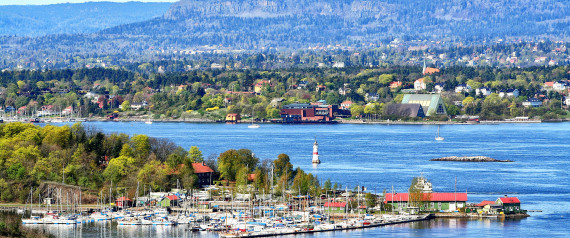
First, the bad news: Oslo earned top billing in our recent list of the world's most overpriced travel destinations, and the Norwegian capital makes it onto just about every other list, survey, and report about the most expensive places to live or visit, too.

But here's the better news: If you're determined, creative, and well informed, you can beat the high prices. Anyone willing to settle for modest accommodations has plenty of affordable options, including hostels, pensions, and guest houses (VisitOslo.com is a good place to start your search). Opt for free attractions like the Vigeland sculpture park and the Akershus Fortress, enjoy the abundance of free parks and gardens, and explore the many beautiful islands accessible by ferry.

If You Want to Save: Don't visit in late fall during the Nobel Prize Award Ceremonies, when accommodations prices are sky-high. And if you've been meaning to do a cleanse, do it during your visit. Alcohol is particularly expensive in Oslo, so you'll save a lot by skipping the drink.

Paris, FranceIt's a classic case of supply and demand. There's only so much Paris to go around, but the city's wild popularity drives prices for this valuable commodity up—way up in some cases. Even if you're a no-frills traveler, you can expect to pay nearly $200 per day for the basics. Luxury hotels run about $600 per night, mid-range hotels average around $210, and bare-bones (but not scary) hotels cost around $70 per night.

However, find ways to live like a local and you'll discover plenty of ways to save. For instance, by booking an apartment rental rather than a hotel room, you'll not only get more space for your money, but you'll also get a kitchen and a fridge. And that can help you cut costs. Because while there's plenty of fabulous food in Paris, there are also a lot of mediocre and overpriced options. Not eating out for every meal frees you up to explore the many wonderful (and less expensive) food purveyors and markets you'd otherwise miss.

If You Want to Save: Don't stick to the beaten tourist paths. Often, by straying just a block or two off heavily trafficked tourist streets such as the Champs-Elysees or rue de la Huchette, you'll find better food and shopping at much more reasonable prices.

Zurich, SwitzerlandYou know who thinks Zurich is expensive? Pretty much anyone who has ever bought a bottle of water, eaten a sandwich, or booked a hotel room there. Zurich regularly clinches a top-three spot on lists measuring the world's most expensive cities. And it's easy to see why: When you visit, you're rubbing shoulders with locals who earn among the highest salaries in the world.

So what's a budget traveler with a hankering for some clean air and a great view of Lake Zurich to do? EuroCheapo suggests a nightly hotel budget of about $170, although travelers willing to sacrifice more amenities and location can sometimes find rates closer to $100. Its editors' picks start at about $89 per night. And if sightseeing is on your itinerary, consider the ZurichCard, which offers considerable savings for anyone who plans on visiting multiple museums, taking tours, and eating out. The card also includes unlimited public transportation, including tram, bus, train, boat, and funicular.

If You Want to Save: Don't take a taxi. Zurich is a beautiful and walkable city, and it has some of the highest cab prices in the world. So strap on those walking shoes and explore the city on foot, by tram, or by free bike.

Venice, ItalyVenice has a starring role on bucket lists around the world, so it's no surprise that it's among Europe's most expensive destinations. You'll have to pay for the privilege of staying somewhere central, and eating out in the city inflates costs quickly. Price of Travel's Three-Star Traveler Index puts the average daily cost for a budget traveler at about $180.

However, the effort it takes to work within a budget can actually yield some pleasant surprises and give you a better sense of the real Venice. You'll find cheaper hotel rooms in less central locations, although getting around Venice is a pricey endeavor, so always factor in transportation costs before deciding on the lowest priced accommodations. When it comes to food, eat like a local and head to a bacaro (a small bar that serves cheap and delicious tapas-like cicheti, or snacks).

If You Want to Save: Don't hop a gondola. The tourist-magnet boats have long been glorified as a part of the Venice visitor experience, but they're wildly expensive and they aren't the only way to appreciate the city by boat. If you're planning on navigating Venice by water, consider a 24-hour travel card, which you'll only need to use about three times to recoup the cost. And if the gondola experience is a must-have, do it on the cheap by finding a traghetto. These large gondolas carry several passengers at a time across the Grand Canal for only a few euros.

Stockholm, SwedenTripAdvisor's recent TripIndex puts Stockholm at the ultra-pricey end of European cities, with an average daily vacation cost of more than $500 (including hotel, taxi, dinner, and cocktails). This makes sense when you consider that according to The Economist's Big Mac Index, the Swedish krona is overvalued by about 36 percent against the U.S. dollar. Modest travel tastes won't protect you from the high prices, either: Price of Travel estimates that the budget-conscious traveler can get by on about $215 per day.

Hotels in Stockholm are expensive, and it's quite difficult to find exceptions to the rule. However, if you're willing to consider a hostel, prices drop. Keep in mind that many hostels offer private rooms with private bathrooms, which can provide a more hotel-like experience, at least while you're sleeping.

If You Want to Save
: Don't visit in summer. Of course, this advice goes for all of these destinations, but Stockholm hotels in particular get crazy expensive during the summer. Spring and fall are comparatively affordable, and you'll still get some daylight during which to admire the city.

Geneva, Switzerland
If you thought the Big Mac Index was damning, wait until you hear this: Geneva clinched the number-one spot on Hotels.com's Club Sandwich Index (CSI), which compares this hotel-menu staple in cities around the world. At around $30, the average price of a club sandwich is an alarming indication of what you should expect to spend on a visit to Geneva. According to UBS CIO Wealth Management Research'sPrices and Earnings report, the cost of a meal in a nice restaurant in Geneva is twice the world average; a stay in a three-star hotel costs around $270 per night.

Geneva may be expensive, but you've got a secret weapon: You can get around for free. The fantastic Geneva Transport Card not only gets you from the airport to your hotel for free, it's also your ticket to unlimited free rides on trams, buses, trains, and yellow taxi boats. Geneva's tourism board also lists discounts and specials on accommodations, tips on where to find free Wi-Fi in the city, and details about theGeneva Pass, which provides discounted admission to visitors planning on hitting multiple sites.

If You Want to Save: Don't eat a club sandwich in a hotel. Seriously, $30 is way too much to pay for any sandwich not made of gold. TripAdvisor and About.com both list some cheaper dining options in this notoriously expensive city.

Moscow, Russia
Moscow consistently ranks among the world's most expensive cities. In Mercer's Cost of Living survey, the Russian capital is ranked the second costliest city for expats, and in the hysterically named Billionaire Census 2013, Moscow's Ostozhenka is listed as one of the 10 most expensive residential streets in the world. And what's expensive for residents is expensive for visitors. We're talking $200 per night for a room at a three-star hotel, $530 per night for a room at a luxe property, and more than $8 for a simple cup of coffee.

Since hotels tend to be pricey, it's worth your while to shop around and book in advance. Comparing rates across sites can yield better results, and looking beyond the city center may give you more affordable options. Remember that you'll need to book far enough in advance to deal with the complicated visa process, which includes getting an official invitation from your hotel.

If You Want to Save: Don't ignore the visa process. Allow plenty of time and follow the steps carefully, since fees to expedite any of the three stages of invitation, application, and registration drive costs up significantly. Paying fines is a waste of travel funds.

London, England
For most travelers, an empty wallet is the by-product, not the intent, of a great trip to London. Expensive hotels, steep taxi rates, and thousands of attractions, shows, and restaurants quickly drain the travel coffers. The city ranks in the TripAdvisor TripIndex's top 10 most expensive cities around the world, with an estimated hotel-meal-drinks-taxi cost of about $450.

Expensive it is, but most travelers can work around London's biggest wallet pitfalls without much trouble. There are so many ways to save, in fact, that Visit London devotes an entire section of its website to the many ways to make the most of London on a tight budget. Check out free attractions, cheap eats, inexpensive accommodations, and affordable days out.

If You Want to Save: Don't pay full price for a show without first checking to see if you can get tickets for less. TimeOut London rounds up some of the most popular ways to save. And some theaters offer discounted tickets at the very last minute if you go to the box office.

Copenhagen, Denmark
Coming in at $170 per day on Price of Travel's 2014 Three-Star Traveler Index for budget travelers, Copenhagen is pricey even if your vacation desires are modest. TripAdvisor's TripIndex ranks Copenhagen among the 10 most expensive international cities for a vacation, putting the cost of a night at a nice hotel, taxi, and dinner and cocktails for two at around $440.

That said, there are definitely ways to maximize your vacation budget. For instance, the Copenhagen Card cuts costs on attractions and transportation. And unlike many city cards, this one allows you to easily calculate how much you're likely to save before you purchase it. The calculator on the right side of the page lets you mark which sites you're likely to visit to compare the cost of the card against the a la carte pricing of individual attractions. And Copenhagen's many inexpensive bicycle-rental companiesallow you to experience the world's top cycling nation from the back of a bike.

If You Want to Save: Don't tip for services. In Denmark, gratuities are built into the price you see, so unless you experienced service that was so above and beyond that you think it deserves additional monetary acknowledgement, don't add extra money to your bill.

Brussels, Belgium
Brussels holds a unique place on this list as a city that is very expensive … some of the time. Headquarters of the European Union and home to the Manneken Pis statue, the city is a surprising mix of serious and playful. It's a city of contrasts, and the hotel prices reflect it. Brussels' standing as a major financial center draws business travelers and often drives up prices. But when the business travelers aren't in town, hotel prices drop and it becomes a more affordable destination for leisure travelers.

Helping things along, Brussels has an impressive number of inexpensive hotels, as well as hostels and B&Bs. It's home to the neo-canteen restaurant movement, built around the idea of fresh, delicious, and affordable food. And its USE-IT service is a tourism benefit targeted at young backpackers, offering free Internet, coffee, advice, and parties.

If You Want to Save: Don't eat in the Quartier de L'Ilot Sacre. The bustling narrow streets cater to tourists, but the food isn't great and there have been reports of a number of scams, including large-scale credit card fraud and hidden pricing. If you do go, make sure to find out the price of what you're ordering up front and pay with cash.