I'm moving to Roanoke, VA on June 12th! I need to lessen my moving load so I'm selling tons of clothes! Check out my closet on Poshmark. I also think this is a great site for anyone looking to sell their stuff.
Showing posts with label clothes. Show all posts
Showing posts with label clothes. Show all posts
Tuesday, May 19, 2015


Sunday, April 5, 2015
Spring cleaning
I'm moving in a few months, so I need to get rid of some clothes! Check out my poshmark closet (as well as my favorite closets) below.
Thursday, March 12, 2015
2015: Spring Wishlist

1) Target - Women's Bernice Taper Toe Two Piece Flats
2) Forever 21 - Boucle Knit Cardigan
3) Triangl - Milly Swimsuit
4) J. Crew Factory - Racerback Cami
5) Amazon - Fashion Vintage Round Thick Horn Style Sunglasses
6) H&M - Top with Butterfly Sleeves
7) Topshop - Scallop Frill Tee
8) Jessica Simpson - Jadyn Wedge
9) Claire V - Supreme Haircalf Fold Over Clutch
Tuesday, February 17, 2015
My winter 2015 purchases

Friday, February 13, 2015
How to "unshrink" clothes that shrunk in the dryer
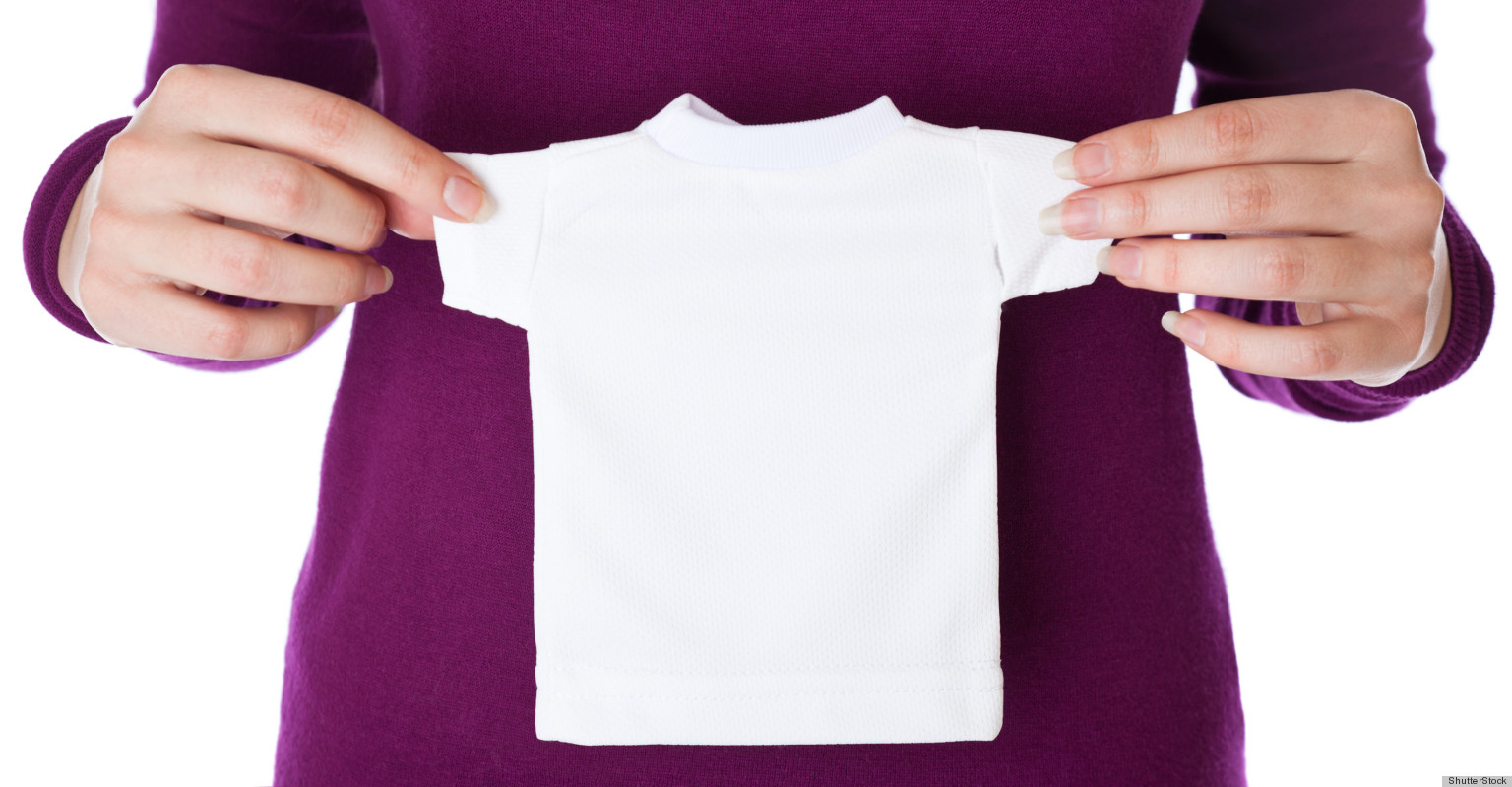
I did this for a wool sweater that accidentally went through the dryer and it worked marvelously!
1. Fill a sink with cold water (should be cold but not FREEZING cold) and add a capful of baby shampoo or adult condition into the water.
2. Let the item soak in the water and gently work it through. This will relax the fibers in the clothing.
3. Remove the garment from the water and gently squeeze it out. Do NOT rinse it.
4. Take a large towel and lay the clothing flat on it.
5. Roll the towel up with the clothing inside it.
6. Wait until the clothing is damp. Your goal is to absorb the extra moisture.
4. Take a large towel and lay the clothing flat on it.
5. Roll the towel up with the clothing inside it.
6. Wait until the clothing is damp. Your goal is to absorb the extra moisture.
7. Then, get another dry towel and put the piece of clothing out on the dry towel.
8. Gently stretch the clothing item as it lays out to dry.
9. Continue to do this until the clothing item returns to its original size. Allow the item to air dry on the towel.
8. Gently stretch the clothing item as it lays out to dry.
9. Continue to do this until the clothing item returns to its original size. Allow the item to air dry on the towel.
Thursday, January 22, 2015
My 2015 winter purchases

1) Sheinside - Black & white coat
2) Forever21 - Turtleneck poncho sweater
3) Nordstrom - Faux fur infinity scarf
4) Frye - Jane Boot in Redwood
5) Forever21 - Mesh-Trimmed Skater Dress
6) Banana Republic - Seamed Inset Tank
7) Forever21 - Heathered Metallic Bodycon Dress
Friday, January 9, 2015
Anti-paparazzi clothes are now a thing
 |
| betabrands.com |
Yes, this is your burden, you precious celebrity gem. But now — now is the time for you to exact your revenge, because designer-slash-DJ Chris Holmes has created the Anti-Paparazzi Collection. This shiny clothing line blurs photographs into a haze by reflecting light from the camera bulbs.
The Anti-Paparazzi Collection comes in three pieces: a hooded jacket (for the cool camera-magnet), a blazer (for the business-oriented paparazzi-bait), and an infinity scarf (for the cozy socialite). Choose your item and saunter forth. Ruin every image that might be made. Leave only disappointment and artsy images of a celebrity ghost in your wake.
Wednesday, January 7, 2015
C. Wonder to shut down completely
 |
| C. Wonder |
The company called an internal town hall meeting at 11 a.m. today, where its roughly 100 employees were told the brand would be shutting down, said a person at the meeting who declined to be identified citing a lack of authorization to speak publicly. Today was the last day for all but a handful of employees who will stay on to help C. Wonder close down, said two people familiar with the matter. The meeting lasted 15 minutes or less; most of the Flatiron office emptied out by 1 p.m., the first source said.
C. Wonder’s 11 U.S. stores, already pared down from a massive round of closings in recent months, will shutter completely in the next two to three weeks, while its website is slated to shut down by the end of next week, the person at the meeting said. They added that Chris Burch, who recently relocated his office from the Flatiron office to Miami, was not present at the meeting. C. Wonder has also abruptlyshut down its social media accounts on Twitter, Facebook, Instagram, and Pinterest.
Daniela Maron, a spokeswoman for C. Wonder, didn’t immediately respond to a voicemail and email seeking comment.
Venture capitalist J. Christopher Burch opened the first C. Wonder in 2011. The brand, which sells a variety of home goods, jewelry, and knick-knacks, drew immediate comparisons to his ex-wife Tory Burch’s more expensive namesake brand. Some in the industry dubbed C. Wonder an act of “revenge retail,” a mentality that may have pushed the chain into a number of ill-advised, costly leases. The company, for example, spent a couple of years opening an expensive Flatiron store in Manhattan; internally, it’s believed that Chris chose that spot because a hair salon favored by Tory Burch is upstairs.
BuzzFeed News reported in November that C. Wonder planned to close up to 20 of its 32 stores by Jan. 1, depending on how lease negotiations unfolded, and transition into a wholesale brand. Unnamed sources at Burch Creative Capital told WWD at the time that the report was “off-base,” and that the brand would “continue to run freestanding stores.”
The company has 11 U.S. stores listed on its website, excluding a seasonal Nantucket location, and was slated to call them at noon today to inform them of the closures, the person at the meeting said. It also has three international stores and has been in the process of expanding into the Philippines.
Harlan Kent, C. Wonder’s CEO of less than a year, told employees at the town hall meeting that the company tried many tactics to turn itself around in the past six months, from closing stores to cutting staff, but that it wasn’t enough, the person said. He went on to say the board of directors made the decision to close the entire business.
Employees weren’t completely shocked, given recent 75%-off discounts on merchandise and the closures, the person said. Suspicions were also raised after it appeared as though new tenants were scoping out the office and following Chris Burch’s office move, they said.
Sources told BuzzFeed News in November that Chris Burch has distanced himself from C. Wonder in the past year, focusing on other investments instead. He’s been working on a new line with Ellen DeGeneres called E.D. and spending a lot of time in Indonesia, two sources say, where he and a friend acquired a resort called Nihiwatu on the island of Sumba.
Monday, December 22, 2014
Winter purchases

1. Target - Oversized Plaid Scarf (Identical to the sold out one at Zara)
2. Zara - Fitted Down Jacket With Furry Collar
3. J. Crew Factory - Quilted Puffer Vest (Sold out online but is restocked from time to time. I also bought mine in store, which was fully stocked with them)
4. J. Crew Factory - Factory Crystal Domes Necklace
5. Rampage - Jaycer Boots (Via TJ Maxx)
6. J. Crew Factory - Class Button-Down Shirt in Gingham
8. J. Crew Factory - Knit Tweed Dress
Sunday, December 21, 2014
Friday, December 12, 2014
Clothing items women should buy from the men's department
 |
| BuzzFeed/Via hm.com |
First thing’s first: Men’s clothes are usually made better than women’s clothes.
Why? Affordable clothing brands usually have an allotted amount of money to spend on menswear and womenswear. Menswear will usually involve fewer clothing templates (or patterns) because they offer fewer style options. For womenswear, however, manufacturers use TONS of templates (for crop tops, boat necks, oversize tees, blouses, tank tops — and we’re only talking about shirts here!). Since the templates can get expensive, there may be less money left over in the budget to invest in materials.
Exhibit A: Boyfriend jeans versus your boyfriend’s actual jeans.
Your boyfriend is paying less — so why shouldn’t you? “If you get a smaller size in a skinny fit, men’s jeans can feel more comfortable and even cost less than boyfriend styles,” says Sara Qaddoura, curator of e-commerce at London-based fashion startup Not Just A Label. Plus, menswear offers a whole new range of sizes for your fine bod.
Cool? Cool. So here’s how to beat the system and buy up the men’s department…
Looking for a new sweater? Buy it in men’s.
“Chunky menswear knits tend to be cheaper than those found in the women’s department,” says Qaddoura. “And sometimes they’re even made from better material.”
Button-up for one? Get it in men’s.
Men’s shirts have more structure, which can give you a cool, boxy look, according to Sonny Oram, founder of Boston-based style blog Qwear. Button them up to the top or throw one on over a dress (the length can work in your favor). Roll up the sleeves and you’ve got this!
Baggy sweatpants or low-slung jeans, perhaps? Men’s all the way.
“I look for pants that hang on the hip and get them hemmed,” says Qwear fashion director Shiona Heru.
Could use a cute backpack or weekender, huh? Check out men’s.
Since backpacks are a central accessory in menswear, check out the other side of the store before you settle on a clutch (no handles, say wha?!).
Dying for a comfy tee? Shop in men’s.
Wear a white men’s tee with jeans or buy one a few sizes bigger to wear as a shirt dress, according to Qaddoura.
Oversize jacket, ya? Totes in the men’s department.
The world of oversize is your oyster in the men’s department. Jackets, blazers, sweaters, sweatpants: All of it can look cool and comfy.
Thick socks? Calling to you from menswear.
If you have a larger shoe size, this benefit is yours to reap. Thick, chunky knit socks are common fare in the men’s department — and they look cute with winter outfits like underwear and tea-stained robes.
Source
Sunday, November 30, 2014
Shop my closet and etsy shop!
I have over 70 items listed in my poshmark closet. Also, I listed five necklaces, handmade by me, available on my etsy page as well. Great gifts for the holiday season - either for yourself or for others.
Shop each at the links below:


Shop each at the links below:
Sunday, September 14, 2014
Friday, May 16, 2014
Do consumers really know what they are getting from outlet stores?
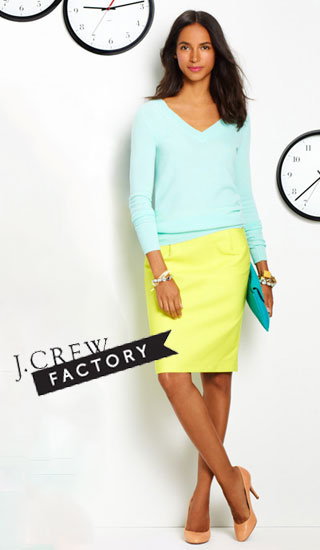
Once a destination for out-of-season or damaged full-priced inventory, outlets have grown into a lucrative and somewhat deceptive place for retailers to hawk an entirely new line of lower-quality goods geared toward a different customer. J.Crew, like many other retailers, notes in filings that it sells “a specific line of merchandise” through J.Crew Factory that’s “based on (full-price) products sold in previous seasons” — in other words, it’s kind of a knockoff of itself.
J.Crew and competitors like Gap and Off 5th, Saks’ outlet brand, have learned they can generate larger profit margins by selling cheaper, made-for-factory products, and so they are increasingly stocking outlets with such goods. But it’s spurred a heated debate in the industry over whether consumers are really aware of what they’re buying. Despite increased coverage of the issue in recent years, discussions abound online about how to tell outlet merchandise apart from the “real” stuff, an easier task with some brands than others. J.Crew Factory, for example, puts two diamonds under the “r” on its labels, while the Gap Outlet label uses three dots.
But it’s not always so visible. Executives from Off 5th, which carries brands like True Religion and Alice + Olivia, told investors last year its products are 10% leftover Saks inventory, 25% private-label goods, and the rest mostly merchandise created for the stores by “brand-appropriate” vendors. While price tags on outlet goods may list a manufacturer-suggested retail price (known as an MSRP) or, a “valued at” price, that’s little more than a number ascribed by the retailer and doesn’t mean it was ever sold for such a sum in an actual full-price retail location. (Giant discounters likeT.J. Maxx and Nordstrom Rack also label prices this way.)
When there are authentic items in the mix, it’s not easy to tell because there aren’t any rules around that from the Federal Trade Commission. On Off 5th’s website, a Rag & Bone knit dress is listed at $122.99, a 62% discount from the original price of $325. But when you hover over the price, it brings up a box that says: “The strikethrough price reflects the regular price at which we’ve normally sold that item or, if we have not previously sold an item, the price at which that item (or a comparable item) is normally sold in the market.” So, there’s a chance any of these items could be cheaper versions of the real thing, sent straight from the designer labels to outlets.
Retailers’ embrace of e-commerce for its outlet stores — once purposefully located many miles away from full-price stores — is giving consumers a new and powerful tool to compare and contrast such items. J.Crew’s factory website, launched in late 2012 with the tagline “It’s your stylish little secret,” makes side-by-side comparisons of similar merchandise possible for the first time. Gap and Banana Republic outlets also plan to test online by the end of this fiscal year, a spokeswoman said.
E-commerce represents “the change in the marketplace — the customer can compare without regard to geography what’s being made available to them, and that’s why expansion of these outlet strategies is very, very dangerous,” said Mark Cohen, a professor of marketing at Columbia Business School. “At what point does your outlet business become too visible to your regular business?”
Four members of Congress went so far as to ask the FTC in January to investigate “potentially misleading marketing practices by outlet stores,” citing the difficulty in identifying made-for-outlet goods and “deceptive reference pricing.” They also noted there is no standardized definition for “factory outlet” and “outlet store,” both largely interchangeable terms.
Connecticut’s Better Business Bureau also recently posted an article explaining to consumers that looking at factory goods versus full-price items might be an “apples to oranges” comparison, suggesting there’s confusion around what the merchandise actually is.
“There’s no regulation that defines use of the word ‘outlet’ — it’s wide open as an opportunity,” Cohen said.
This dress may never have been sold at $325.
The New York Times magazine noted as far back as 1997 that many outlet goods were made-for-factory. But brands have been increasing that proportion steadily in recent years, according to calls with analysts and investors — it’s so much more profitable to take “make” out of a product then sell it at a supposedly discounted price than to sell actual full-priced, high-quality goods at a discount.
In the past year, Bebe has said it believes it can sustain outlets with 65% made-for-outlet merchandise, while American Eagle has said it anticipates carrying 75% made-for-factory items starting this year. Under Armour said in September that its outlets have recently carried 75% made-for-outlet goods, while Children’s Place said its proportion is closer to 80%. Coach and high-end luggage maker Tumi have said 85% of their outlet goods are made-for-factory. Vera Bradley said it plans to carry more made-for-factory items because it has learned it’s downright problematic to carry retired designs “right on the heels” of selling them at full price. But adding to the confusion, you have some brands at the other end of the spectrum, like Lululemon, which carries only genuine excess inventory in its outlet stores, and Abercrombie, which only recently started testing two outlet stores with made-for-factory product.
It seems to be a lucrative business, especially in a deeply competitive retail environment. J.Crew stopped breaking out sales from J.Crew Factory years ago, but said in a 2005 filing that its outlets produced $447 in sales per gross square foot, just shy of the $462 for full-price stores.
Michael Kercheval, president and CEO of International Council of Shopping Centers, the industry’s largest trade group, contends that consumers “fully understand” that they’re typically not getting authentic brand leftovers at outlets.
“It has been a transition where going to the outlet was a little bit of an adventure, you didn’t know what you were going to find,” he said. “That doesn’t happen now. People go to the outlets knowing that if it’s an Eddie Bauer outlet, it’s Eddie Bauer outlet products. There may be full-price there, but most of the merchandise is going to be made for outlets … Quite frankly, if you get a pair of sunglasses from the outlet store that is a name brand, you will know there’s a reason why it cost one-fourth of what you would pay at a full-price store.”
Kervechal says the difference between outlet merchandise and non-outlet merchandise has become so distinct that regional malls may even open separate wings of factory stores in coming years. The availability of outlet goods online has actually made it clear the customer doesn’t care that the two are different, he says.
But Cohen, the Columbia professor, thinks retailers should be careful about how they operate their outlet businesses versus their main ones, especially as the web increases transparency.
“The folks that do this carefully will be fine, and the folks that will be careless and stupid are going to get hurt,” he said.
Source
Saturday, March 15, 2014
Clothing brand uses models with PhDs
 |
| Betabrand |
“When you look beyond the ranks of the professionally beautiful, photography becomes a lot more fun,” Betabrand founder Chris Lindland said in a statement, according to AdWeek. “Our designers cooked up a collection of smart fashions for spring, so why not display them on the bodies of women with really big brains?”
On the one hand, the promotion is an empowering statement, especially for STEM advocates, considering most of the models have or are pursuing PhDs in science and engineering. On the other hand, the women all have the same thin body type and are beautiful by conventional standards, so is it really a revolutionary campaign?
Sunday, February 9, 2014
Retailers ask: where did teenagers go?
 |
| Brian Thomas/NYT |
When 19-year-old Tsarina Merrin thinks of a typical shopper at some of the national chains, she doesn’t think of herself, her friends or even contemporaries.
“When I think of who is shopping at Abercrombie,” she said, “I think it’s more of people’s parents shopping for them.”
Sales are down across the shelves of many traditional teenage apparel retailers, and some analysts and others suggest that it’s not just a tired fashion sense causing the slump. The competition for teenage dollars, at a time of high unemployment within that age group, spans from more stores to shop in to more tempting technology.
And sometimes phones loaded with apps or a game box trump the latest in jeans.
Mainstays in the industry like Abercrombie & Fitch, American Eagle Outfitters and Aéropostale, which dominated teenage closets for years, have been among those hit hard.
The grim reports of the last holiday season have already proved punishing for senior executives at the helm of a few retailers. In a move that caught many analysts by surprise, the chief executive of American Eagle, Robert L. Hanson, announced he was leaving the company last week. And on Tuesday, Abercrombie announced they were making several changes to the company’s board and leadership, including separating the role of chief executive and chairman.
Aside from those shake-ups, analysts are saying they do not expect much improvement in this retail sector any time soon.
According to a survey of analysts conducted by Thomson Reuters, sales at teenage apparel retailers open for more than a year, like Wet Seal, Zumiez, Abercrombie and American Eagle, are expected to be 6.4 percent lower in the fourth quarter over the previous period. That is worse than any other retail category.
“It’s enough to make you think the teen is going to be walking around naked,” said John D. Morris, an analyst at BMO Capital Markets. “What happened to them?”
Paul Lejuez, an analyst at Wells Fargo, said he and his team put out a note in May on the health of the teenage sector and department stores called “Watch Out for the Kid With the Cough.” (Aéropostale was the coughing teenager.) Nonetheless, he said, “We ended up being surprised just how bad things got so quickly. There’s really no sign of life anywhere among the traditional players.”
Causes are ticked off easily. Mentioned often is the high teenage unemployment rate, reaching 20.2 percent among 16- to 19-year-olds, far above the national rate of 6.7 percent.
Cheap fashion has also driven a more competitive market. So-called fast-fashion companies, like Forever 21 and H&M, which sell trendy clothes at low prices, have muscled into the space, while some department stores and discount retailers like T. J. Maxx now cater to teenagers, as well.
“You can buy a plaid shirt at Abercrombie that’s like $70,” said Daniela Donayre, 17, standing in a Topshop in Manhattan. “Or I can go to Forever 21 and buy the same shirt for $20.”
Online shopping, which has been roiling the industry for years, may play an especially pronounced role in the teenage sector, analysts say. A study of a group of teenagers released in the fall by Piper Jaffray found that more than three-fourths of young men and women said they shopped online.
Not only did teenagers grow up on the Internet, but it has shaped and accelerated fashion cycles. Things take off quickly and fade even faster, watched by teenagers who are especially sensitive to the slightest shift in the winds of a trend.
Matthew McClintock, an analyst at Barclays, pointed to Justin Bieber as an example.
“Today, if you saw that Justin Bieber got arrested drag-racing,” Mr. McClintock said, “and you saw in the picture that he had on a cool red shirt, then you can go online and find that cool red shirt and have it delivered to you in two days from some boutique in Los Angeles.
“Ten years ago, teens were dependent on going to Abercrombie & Fitch and buying from the select items that Mike Jeffries, the C.E.O., thought would be popular nine months ago.”
Just last week, Mr. Bieber’s mug shot from his arrest showed him in a red jail-like top.
And this week, Mr. Jeffries lost one of his titles, chairman, which he held since 1996. He will continue on the board as a director and as the company’s chief executive.
In other shuffling, Abercrombie announced that the chief financial officer, Jonathan E. Ramsden, would become the chief operating officer, which is a new position at the company.
The announcement about Mr. Jeffries along with the elimination of the company’s shareholder rights plan — which is designed to prevent potential buyers from acquiring too much control of the company — was greeted favorably by the stock market when it was announced.
Earlier, Brian P. Logan, Abercrombie’s vice president for finance, released a statement in response to questions about the company’s health and the sector’s difficulties. In the statement, Mr. Logan said Abercrombie was “pleased” with its holiday performance, during which sales fell 6 percent over the previous year, because the company expected it to be worse.
Another factor chipping away at teenage retailers may be the shifting priorities among young people. Where clothing was once the key to signaling a teenager’s identity, other items may have become more important and now compete for their dollars.
“Probably the most important thing a teenage boy has is his smartphone,” said Richard Jaffe, an analyst at Stifel Nicolaus. “Second, is probably his sneakers. Third, maybe, we get to his jeans.”
What may trump all of those, Mr. Jaffe said, are gaming systems, especially over the last few months, because Xbox and PlayStation both released new game consoles in 2013. That may have taken a bite out of what teenagers had to spend on clothes.
But analysts also point to other broad factors, like still limited discretionary spending on the part of some parents, or too many store locations.
More immediately, it could be an issue of fashion. Last year was also a year that came and went without any must-have trends that might have helped nudge teenagers toward the mall, as brightly colored pants did in the previous years.
Many companies have had their own unique mix of challenges. The Urban Outfitters brand, for example, which focuses on teenagers more than the company’s other stores, Free People and Anthropologie, blamed a 1 percent dip in third-quarter sales on fashion misses.
At Abercrombie, analysts say, part of their problem is almost the opposite — that they do not focus on fashion enough, and what is on the racks does not substantially change.
“I was a fan, in middle school,” said Ava Tunnicliffe, 20. “I feel like style has moved on, and Abercrombie hasn’t.”
Monday, January 27, 2014
How Spanx really affect your body

Turns out, that star was on to something. While we can all relate to the aforementioned pain and suffering, most of us have no idea about the health ramifications of shapewear. Are we hurting our bodies in the name of smooth garment lines? We spoke to gastroenterologist Dr. John Kuemmerle, dermatologist Dr. Maryann Mikhail and chiropractor Dr. Karen Erickson to find out.
When you wear shapewear, you're compressing your organs.
Shapewear couldn't do its job if it wasn't tight. Unfortunately, this leaves your stomach, intestine and colon compressed, which Dr. Kuemmerle says can worsen acid reflux and heartburn. Restrictive clothing can also provoke erosive esophagitis.
Your digestive tract is also affected, explains Dr. Erickson. The intestines are supposed to contract and move food along, but when they're compressed over a long period of time, the flow of digestion is stifled. "It's like when people eat a huge meal and then unbuckle their jeans," Dr. Kuemmerle says. This damage, though not permanent, can lead to unpleasant symptoms like abdominal discomfort, bloating and gas.
Another hallmark of shapewear? Shallow breath. When you inhale, your diaphragm expands and your abdomen flares out, Dr. Erickson says, but shapewear restricts this movement and decreases the excursion in respiration.
That includes compressing your bowels.
Those with functional bowel disorders and irritable bowel syndrome should wear shapewear with caution. "In someone who has weakness down below and a tendency towards incontinence," Dr. Kuemmerle explains, "increasing intra-abdominal pressure can certainly provoke episodes of incontinence."
Dr. Erickson also notes that there can be a tendency for those wearing shapewear to not to want to go to the bathroom. "You've got all of this pressure on your bladder from the shapewear pressing down," she says. "If you postpone urinating, it can cause stress incontinence, where you leak, or it can exaggerate stress incontinence with people who already have it."
You can develop tingling, numbness and pain in your legs.
Sitting in shapewear can lead to a reversible condition called meralgia paresthetica, which is when the peripheral nerve in your thigh is compressed. This leads to tingling, numbness and pain in your legs, all of which can come and go or become constant. "It's like putting these giant rubber bands around your upper thighs and tightening them when you sit," Dr. Erickson says. (She's also seen this condition in those who wear too-tight pantyhose and pants.)
This rubber band effect can also decrease your circulation and lead to blood clots. When you sit in shapewear, Dr. Erickson explains that those genetically prone to varicosities can develop varicose veins and lymph congestion, which manifests as swollen ankles.
Your muscles will suffer if you rely on shapewear for good posture.
"Shapewear is not a substitute for having strong muscles," Dr. Erickson says. It's important to develop muscle tone, because it's those muscles that hold your posture in perfect alignment. Many people use shapewear as a crutch to avoid using those muscles, Dr. Erickson says.
And don't be fooled into thinking that shapewear works like a medical back brace. "Shapewear's a little different in that it's not therapeutically designed -- it's cosmetically designed," she explains.
Plus, shapewear can create an environment prone to infections.
Shapewear is occlusive, meaning it traps moisture and anything else under it, which predisposes shapewear wearers to both yeast and bacterial infections. Dr. Mikhail says that the most common infection she sees is folliculitis, since bacteria often gets trapped among hair follicles and causes red puss-filled bumps. "Usually folliculitis can be easily treated with topical antibiotics," she says. "But recurrent infections may develop antibiotic resistance, meaning they get harder and harder to treat."
Dr. Mikhail notes that the risks are higher in overweight individuals, diabetics and those who sweat excessively.
Like everything in life, it's important to exercise moderation: Don't wear them too often.
"Everyone I know owns shapewear -- it's kind of a miracle," Dr. Erickson admits. "But I think we want to be mindful to not wear it on a day-in and day-out basis." It's not a problem if you wear it for an evening or a special occasion, she says, but it's not a good idea to wear it daily and sit in it for hours on end.
If you're exhibiting any of the aforementioned symptoms, all three doctors recommend avoiding shapewear until the issues are completely resolved.
Lastly, choosing the right fit is key.
There are so many different types of shapewear out there. You should pick the right style, but you also need to pick the right size, Dr. Erickson says. "You really want to pick shapewear that actually fits you," she explains. "You want it to do its job, but you don't want to get something so small that it's damaging you." For example, shapewear that goes up to your bra line isn't a good idea for those with acid reflux or heartburn, as that area is particularly sensitive for people predisposed to those conditions.
A good way to tell if your shapewear fits correctly? "It's not cutting in anywhere," says Dr. Erickson, who recommends trying out different brands and materials. "All it really does is smooth out the rough edges and you can easily get in and out of it without a struggle."
Sunday, January 5, 2014
Where do the clothes at discount stores come from?

Not all overstock merchandise is sloppy seconds. Overstock happens when department stores overestimate the demand for an item. Sometimes merchandise is unusual: say, a pair of pleather, cheetah-print overalls. It might also be irregular, with flaws ranging from a tag sewn upside-down or two pant legs with different inseams. Much of the clothing at Ross Dress for Less is irregular overstock from lower-end department stores, like JCPenney. Even if it's irregular, overstock merchandise is usually current or from last season, not years old. Department stores start selling next season's clothing early, hence those comical swimsuit displays in the middle of winter. So manufacturers often buy back merchandise from department stores and sell it to off-price retailers all within the same season.
T.J. Maxx, whose parent company also owns Marshalls and HomeGoods, is the biggest off-price retailer in North America. It claims that 85 percent of its merchandise is from the current season and less than 5 percent is irregular. Instead of solely buying overstock merchandise after department stores can't sell it, T.J. Maxx often buys from brands and designers at the same time as stores like Macy's. Department stores make a few big orders and buy in an array of sizes and colors, but T.J. Maxx buys new merchandise every week and can buy it piecemeal. So the same in-season, designer items can be found at higher-end department stores and T.J. Maxx at the same time, only the latter sells them for up to 60 percent off. (And no, T.J. Maxx is not sponsoring this post.)
T.J. Maxx can offer discounts because it's getting a better deal up front. It all goes back to the buy-back clause. Once T.J. Maxx—or any off-price retailer—buys merchandise, it's responsible for selling it. Items that don't sell at one off-price location might be sent to another store, or put on clearance. If they still don't sell, they're eventually donated to a thrift store.
Moral of the story: Don't pay full-price for those pleather, cheetah-print overalls.
Sunday, December 15, 2013
America's most consumer-friendly retailers
 Shopping at one store versus another can mean a difference of hundreds—sometimes thousands—of dollars.
Let’s say you’re in a Home Depot (HD) , which offers a 110% price-match guarantee, and you see a refrigerator priced at $1,000. If you show the customer service agent that the same refrigerator is priced at $900 at a competitor, Home Depot will charge you only $820 for it. (Just be aware: Price-match guarantees have a lot of exclusions and they tend not to be retroactive, so you can’t buy the refrigerator one day and then come back in and get a refund if you later see a lower price.)
Other policies can save consumers plenty of dough as well: A generous return policy like L.L. Bean’s—you can return any item at any time without a receipt—means that if you bought a sweater five years ago, you can get your money back now—no explanation needed. And shoppers at the Gap, which has a lucrative rewards program (roughly 5% cash back) for store credit-card holders, can save hundreds of dollars a year.
The fine differences between store policies are particularly important because the sticker prices at many big-box retailers are nearly identical. In a study published in August of last year by industry research provider Bloomberg Industries, Target had lower prices than Wal-Mart (WMT) , but only by a smidge—for every $100 a consumer spent at Target (TGT) , she would save only 46 cents (that is, 0.46%) over shopping at Wal-Mart, on average; in earlier months, Wal-Mart’s prices had been a bit lower than Targets. And, as retail consultant Vanessa Ting, a former buyer for Target, points out, “when one store drops the price, the others tend to do it soon after as well.”
Even though many prices in big-box stores are similar, consumers should still do price checks, as there are plenty of exceptions to the rule. Trae Bodge, senior editor of coupon site RetailMeNot.com, recommends consumers use an app like ShopSavvy, which scans the barcodes of items to compare prices. Online shoppers can also use a browser add-on like Priceblink, which automatically searches for lower prices and alerts you if an item can be bought for less elsewhere.
To be sure, store policies like price matching, returns and free shipping often have a lot of restrictions and exceptions, and consumers need to read the fine print on them. Still, these policies and practices can help consumers save money. With that in mind, MarketWatch sifted through the offerings of major retailers, to see which offer the best price-matching guarantees (some match up to 110%), return policies (some allow you to return any item at any time), coupons and deals (some release them weekly or even more frequently), loyalty programs (some give 5% cash back) and free shipping offers (some offer it every day without minimums).
Price-matching guarantees
Roughly one in five large retailers offers a price-match guarantee, according to deal aggregator site DealScience.com. Among the best offers are those that offer a price match, plus an additional 10% off. These include Lowe’s (LOW) , Home Depot and Fry’s. Other retailers like Best Buy (BBY) , Sears, J.C. Penney (JCP) , Target and Wal-Mart offer a 100% price-match guarantee. What’s more, during the holidays this year, many retailers are ramping up their price-match guarantees: Best Buy and Wal-Mart will match competitors’ prices even after consumers have bought an item.
While these guarantees can save consumers money, they come with plenty of fine print. Often the policies require consumers to bring in a print ad showing the item at a lower price at another store, and stores will usually only match prices from a short list of online retailers. Guarantees also typically exclude limited-quantity sale offers, clearance items, refurbished items and more. And retail consultant Ting says that it can take a lot of time for consumers to get these savings, because they have to go to the trouble of finding the ad for the lower-priced item and then have to deal with customer service.
It’s also worth noting that many retailers—such as Anthropologie, Gap (GPS) , Abercrombie, J. Crew, Best Buy and Old Navy—offer price adjustments, which means that if you buy something in their store and it goes on sale within about seven to 14 days, they will refund you the difference between the price you paid and the sale price.
Free shipping every day with no minimum purchase
About one in three retailers offers free shipping year round, according to the National Retail Federation. But most of them have exceptions like a minimum purchase, says Ting, or they only offer it on certain days or via special promotions. Plus, some stores will give consumers who have their store’s credit card free shipping all the time, she adds.
However, some retailers stand out for having free shipping and free return shipping every day without minimums. These include Nordstrom, Neiman Marcus, Bergdorf Goodman, Zappo’s, ShopBop and Piperlime. L.L. Bean also offers free shipping without minimums, but consumers will pay $6.50 for returns unless they have an L.L. Bean store credit card.
These free shipping deals typically apply only to items shipped within the U.S. And consumers should note that with a little homework (such as on FreeShipping.org, which aggregates free shipping deals) or a minimum purchase of about $50, they can get a free shipping coupon code or deal even from retailers that don’t offer free shipping all the time. Also keep in mind that Dec. 18 is free shipping day—a day when hundreds of retailers offer free shipping with guaranteed delivery by Christmas Eve.
Generous return policies
Partly because return fraud costs the industry about $8.8 billion per year, many stores have tightened their return policies. But there are still a few that make returns easy for gift givers and recipients alike.
The best policies are those that allow consumers to return any item at any time even without a receipt. L.L. Bean falls into this category. You could return a shirt you bought 10 years ago and get a refund for it today at the retailer. Though Nordstrom doesn’t have a formal return policy, it sometimes (this is done on a case-by-case basis) will follow those same guidelines—any item, any time, even without a receipt. Other stores with generous return policies include Anthropologie, Athleta, Bloomingdale’s and Macy’s (XNYS:M) —all of which allow you to return many items at any time after purchase.
Frequent coupons and deals
Some retailers post new deals, discounts and coupons more frequently than others. According toDealScience.com, which aggregates deals from roughly 6,500 retailers, stores like Kohl’s, Bed Bath & Beyond, Kmart, Sears, Jo-Ann Fabric, Gap and Old Navy have coupons available about 90% of the time. Deal site RetailMeNot.com says that Kohl’s, Macy’s and Bed, Bath & Beyond (BBBY) are the retailers that most frequently put up new deals or refresh old ones. Kohl’s often offers 15%-off deals; Bed Bath & Beyond, 20%-off deals; and Macy’s, 15%-off or more, a spokesperson for the site says. Data from Savings.com shows that big department stores like Macy’s and Kohl’s tend to offer frequent discounts year-round (typically of about 10% to 20%), as do big-box retailers like Sears and Kmart (10% to 15% off). During the holidays, technology retailers like Dell and HP tend to have good deals available, but the offers are typically not long-lasting, according to Saving.com data.
Rewards programs
There’s no doubt that store credit cards, which have an average interest rate of 25%, can be expensive for consumers. But if you pay the bill in full and on time each month, they don’t have to be.
Retailers’ rewards programs differ greatly and some require you to sign up for the store credit or debit card to get the best rewards, while others don’t. Here are some notable rewards programs.
Both Target and Lowe’s offer cardholders 5% off at the register each time they swipe their card, which over time can add up to hundreds in savings. Gap cardholders can save 10% off every Tuesday at Gap, Old Navy and Piperlime and save 15% off their first purchase with the card; those with the J.C. Penney card can earn a $10 reward for every $100 spent each month at J.C. Penney and upon opening the card save 20% on their first purchase; and Macy’s cardholders regularly get coupons in the mail and can save 20%, up to a maximum of $100, the day they open their card and the day after that.
Friday, November 22, 2013
How donating clothes may do more harm than good
 Secondhand shopping is something we hold near and dear. It's the way many fashionphiles come to love brands like Prada or Versace in more intimate ways, beyond just seeing them in magazines. Those occasional rare finds, in addition to the many, many awesome '90s revival pieces we've found buried in the racks at Salvation Army, are a source of pride (not to mention an adrenaline rush) for many of us. Plus, it's an easy way to turn your shamefully excessive spending habit into something that actually does some good for the world.
 But, as Tansy Hoskins points out in this fascinating op-ed for Business of Fashion, it might not be quite as rosy as it sounds especially when it comes to the donated, sold in bulk, and shipped at low cost distribution of Westerners' clothing to markets in areas like sub-Saharan Africa. These goods can actually make a considerable profit, even though many are donated. Then, there's the issue that the massive influx of clothing into these areas suppresses the growth of local textile markets.
It's a further cost of the fast-fashion cycle. Clothes are purchased without a whim, donated practically unworn, and forgotten about with the vague sentiment that you've done a good deed. And, while providing clothing to those in need is not a bad thing in and of itself, the point here is that it's a complex process with more consequences than those donating might realize. It's not unlike the same debate behind whether or not we should be pouring aid money into foreign countries or working to stabilize and promote prosperity in other, more substantial ways. In short, there's a lot to be said for either side of the argument.
Subscribe to:
Posts (Atom)