Showing posts with label crime. Show all posts

Friday, March 27, 2015

Police department open up "safe lots" for craigslist transactions

Hartford Police Department
The online classified site Craigslist updated its safety page this week, encouraging users to make exchanges at local police stations. Some police departments across the country are already offering up their headquarters as voluntary "safe zones" for Craigslist deals.

Sebastian Rivera likes to ride BMX bikes. And when he's customizing his ride, he says he'll hop onto Craigslist to look for free stuff or to trade bike parts with people in his area.

"It's pretty easy, as long as like I get the person's number or I get their Facebook ... another way to communicate besides Craigslist," Rivera says.

As we talk in downtown Hartford, Conn., Rivera echoes what a lot of people have told me: Be cautious with anonymous online deals — get as much information as you can about the person you're dealing with and always meet in a public place.

Now, the Hartford Police Department is hoping the public's place of choice will be a parking lot right outside its headquarters.

"That parking lot is under 24-hour video surveillance. It's well lit. There's cops all around this building all the time," Chief of Detectives Brian Foley says.

Hartford police are calling it Operation Safe Lot and the idea is to provide the public a well-guarded space for buying and selling its stuff. Foley says it's in response to crime spikes tied to Craigslist deals in the city.

And even though the parking lot is small, he says officers are willing to work around occasional electronics or furniture swaps happening right outside their front door.

"If it's gonna prevent a robbery, if it's gonna prevent a homicide, if it's gonna make our citizens feel safe ... we can live with it," Foley says. "We don't want it to become a flea market out there, but certainly it hasn't been a problem."

Hartford police aren't the first department to try the idea, and others around the country have been starting this up too.

Boca Raton Police Chief Daniel Alexander says his department started offering up its parking lot last June.

"It's something that's positive for us to do for the community," he says. "A lot of people come down here for situations and circumstances that aren't very positive. This, to us, is a positive."

Since the "Safe Lot" programs are new, Alexander and other officers say it's hard to gauge yet whether it's working.

Craigslist wouldn't answer questions about why it's now telling users to consider police parking lots for high-value exchanges. But back in downtown Hartford, Mike Loin says he thinks the company should embrace this idea for smaller transactions, too.

"I think it would open it up for a bigger customer base," Loin says. "Especially for someone who may be a mother or a woman who may not feel as comfortable selling or buying a product that way."

Hartford police officials say they hope more stations start offering up their parking lots for all types of social media transactions. That is, of course, as long as they're legal.

Wednesday, March 4, 2015

D.C. man asks police for his weed back...and gets it

D.C. police often confiscate drugs during the course of searches and arrests, but now D.C. residents are legally allowed to ask for them back — and one recently did.

According to D.C. Council member Yvette Alexander (D-Ward 7), a resident walked into the Sixth District police station in Ward 7 on Monday and asked an officer on duty to return his marijuana to him, which had been confiscated during a prior arrest.

"He walked in to recover his property from a recent arrest," said Alexander, who was told of the exchange by a staff member who witnessed it. "He walked in and said, 'I want my property back, and want to make sure I get my weed back.'"

Alexander says that while the officer on duty was initially confused, the man did eventually recover his marijuana. "They gave him his weed back!" she said.

Under the marijuana legalization law that took effect last Thursday, residents over the age of 21 are allowed to possess up to two ounces of pot on their person, as well as use and grow marijuana within their private residence.

While police are allowed to confiscate the marijuana if no proof of age is provided or if an arrest for another offense occurs, a Special Order distributed to all officers last week specifies that the individual whose marijuana is seized is legally allowed to go to a police station to request that it be returned to them.

"A person whose marijuana or marijuana-infused edible goods was seized... may seek the return of their property by visiting the station in the District where the marijuana was seized no sooner than 24 hours after the seizure," says the order.

If the marijuana is not claimed within 30 days, it is destroyed as contraband.

"Only in 6D," laughed Alexander, referring to the police district that serves her ward.

Tuesday, January 13, 2015

Why police reform makes policing better

Allyson Joyce/Getty Images
On social media and other forums, there’s a vast gulf—and a lot of shouting—between critics of police departments (“Black Lives Matter”) and police defenders (“Blue Lives Matter”). But this ideological divide belies the fears and worries they have in common.

“They don’t go out every day saying, ‘I’m going to take a life today,’ ” said Mary Jo Graves, referring to police officers after she organized a pro-police march in Cleveland last month. “They go out saying, ‘I want to come home.’ They want to come home to their families.”

This sympathy—police officers just want to do their work without fear of death—isn’t too different from what police critics have to say about their friends and family. “I am tired of being scared that my son is not going to make it home from work,” said Dinetta Gilmore, who participated in the Justice for All march in Washington in December. “It’s time that this stops,” she said. “When are we going to be able to stop marching?”

All of this fear is understandable—but it’s not equal. High-profile cases aside, policing has never been safer. The rate of officer assaults has been on the decline since the 1990s, and the rate of officer deaths is at its lowest point in a century. “You’re more likely to be murdered simply by living in about half of the largest cities in America than you are while working as a police officer,” writes journalist Radley Balko.

And while black Americans are at greater risk of criminal victimization than they are police violence, it is also true that compared with other Americans, they are more likely to be shot or killed by police, regardless of circumstances. There’s also the fact of power. Police officers are empowered by the state to use lethal force, and when that doesn’t come with accountability—and in the case of wrongdoing, punishment—it appears arbitrary and frightening. Put differently, most Americans who kill other Americans—including blacks who kill blacks—will face justice. Most cops who kill will not.

With that said, fear isn’t always a bad thing. In the case of the “black lives matter” protests, it’s been constructive, prompting new calls for police reform and other efforts to improve minority communities. The problem is on the other side, the police side, where fear is an impediment to embracing beneficial reform. In New York City, mild criticism from Mayor Bill de Blasio—following the Eric Garner grand jury decision—sparked a bona fide police rebellion with work stoppages and aggressive, inflammatory rhetoric. At funerals for slain officers—killed by a criminal who claimed Garner and Michael Brown as a cause to commit violence—cops turned their backs on the mayor, shunning his leadership and the city he represents. The problem, besides the illiberalism inherent in the rejection of civil authority, is that de Blasio is on their side. The goal of police reform isn’t to punish cops; it’s to better connect them to the communities they serve, which makes it easier to fight crime and more likely they’ll come home at the end of each day.

Police reform doesn’t harm policing; it makes it better.

The best example of this is Los Angeles, which completed a major experiment in police reform a few years ago. If the 1992 Los Angeles riots revealed deep tensions and anger toward the LAPD, then the 1999 Rampart scandal—named so after the division in question—unveiled the astounding amount of corruption in the department. An investigation uncovered countless acts of police misconduct involving dozens of officers, from beatings and unprovoked shootings to stealing, drug dealing, evidence planting, and bank robbery. In 2000, the Department of Justice announced it had enough evidence to sue the LAPD for pervasive misconduct, and later that year, the city government entered into a “consent decree,” where it agreed to reform the department under supervision from federal courts.

This was a huge task. As researchers for Harvard University note in a study of the LAPD reforms, “The fact of federal oversight itself … can erode morale in a police department, sapping the confidence and spirit that effective policing requires.” In the first years of the consent decree, officials resisted any changes to their approach. But the result wasn’t a more confident police department; it was higher crime and lower morale.

This changed after Los Angeles brought in new leadership—including current NYPD Police Commissioner Bill Bratton—who embraced the decree. Over the next decade, the LAPD would work to comply with the decree while also reducing crime and improving morale. It was a success. Not only did crime decline over the period of the consent decree, but officer morale rose. The Harvard researchers, for instance, found a marked drop in crime and a decrease in the number of officers who were afraid of being “punished for an honest mistake” or having their career “negatively affected by civilian complaints.”

What’s important is that this improvement happened under a policing regime that discouraged the use of force, even as it ramped up enforcement. Under the consent decree, “The total number of … force incidents declined by almost 30 percent.” By 2009, there were fewer officer-involved shootings, chokeholds, head strikes, and suspect hospitalizations than at any point in the previous decade. And while minorities still experience police force out of proportion to their numbers, fewer blacks and Latinos have been subject to force than ever before.

Other, less flashy changes have also been essential to the LAPD’s effectiveness. Supervisors and senior officials have been tasked with devising stronger oversight procedures to increase accountability. And critically, there’s greater engagement with minority communities, through forums; active recruitment of black, Latino, and Asian officers; and regular activities with schools and other community institutions. The result is a marked increase in the number of Los Angeles residents who say that the police “treat all racial and ethnic groups fairly,” from under 40 percent in 2005 to roughly 50 percent in 2009.

The LAPD is not perfect, but it has improved, and that has made policing better for ordinary citizens and safer for officers themselves. Indeed, for a sense of what happens when police neglect communities, you only have to look east from L.A. to Missouri.

One of the reasons Ferguson was such a flashpoint was the pre-existing relationship between residents and police. For decades, the citizens of Ferguson and nearby towns were subject to unfair treatment, from targeted stops—used to collect revenue for individual municipalities—to unjustified violence. In 2000, for example, two unarmed men were killed by plainclothes detectives, who later escaped indictment by a grand jury.

That mistrust doesn’t dissipate—it builds. And when an event like the Michael Brown shooting occurs, it can explode into anger and disorder. It almost doesn’t matter that the details of Brown’s shooting were murky or that key parts of the early narrative were incomplete, impossible to verify, or false—Brown’s death was traumatic enough to prompt a huge response from Ferguson residents. At a time when local police needed the trust of the community, they didn’t have it.

The NYPD and so many other police departments are gripped by a fear of criticism and what could happen if it has to bend to change. But there’s no reason for fear; reform improved the NYPD in the 1990s, it turned around the LAPD in the 2000s, and it could strengthen New York cops for the next decade. Greater accountability and community contact doesn’t harm policing; it makes it better.

If you’re skeptical, consider this: At the same time that Los Angeles burned amid the Rodney King riots, San Diego—just a few hours away—was calm. It’s not that there weren’t racial tensions or episodes of police brutality, but that for several years—in the wake of San Diego’s own King-esque event and the killing of an officer—police had worked with city and community leaders to build bridges and improve policing. When turmoil came, notes Balko, “those goodwill gestures and the relationships they built paid off,” and police officials “could build a strategy around empathy, not antagonism.”

The NYPD can continue its strike, and its allies can continue their attacks on reformers. But they’re only hurting themselves and the city they serve.

Friday, December 19, 2014

What "Serial" really taught us

The final episode of the first season of “Serial”—the podcast to end all podcasts—came out this morning. The series has given us a lot to think about. Like other devotees, I’ve listened to many episodes more than once, felt sympathy for Adnan Syed and the loved ones of Hae Min Lee, confusion about Jay, and even more confusion about the cell-phone evidence. I’ve felt a listener’s kinship with the host, Sarah Koenig, and made jokes about MailChimp and the shrimp sale at the Crab Crib. “Serial” lured us in with the promise of a good story—a murder mystery given the “This American Life” treatment, but over an entire season, like an HBO drama. I got up at six this morning to listen to the conclusion. Long anticipated and much discussed, it was a major cultural event—even though by now we expected something closer to the mood of the “Sopranos” finale than to Sherlock Holmes.

Every episode began with the show’s contemplative theme and a prerecorded prison-call greeting, and we reflected, sadly, about the fate of a thirty-two-year-old man serving a life sentence, who may have been wrongfully convicted. The show presented us with the very best of what radio and podcasts can do. It provided listeners with the voices of the many people involved with the case, detailing accounts, ideas, memories. It made good-faith efforts to solve the dozens of small mysteries that were part of the big mystery—where people were on January 13, 1999, and what they were doing; whether there was a pay phone at a certain Best Buy; the implications of events at high-school dances. We felt like we were listening to a story, an entertainment, but in truth what we were listening to was much bigger than that.

In the beginning, Koenig, a “This American Life” producer, had wanted to do a spinoff podcast involving a story told over time. After a woman named Rabia Chaudry contacted her about her friend Adnan Syed’s case, which involved a defense attorney whom Koenig had written about in the past, Koenig investigated for a year and made it the basis of the first season. When the show began broadcasting, Koenig and the other producers were still gathering information. They knew they had enough for a great show, but they didn’t know how it would end. From the start, intentionally or not, the show was about doubt.

Ira Glass, in his introduction to “Serial” on “This American Life,” told us that “what really happened was actually much more complicated than what the jury heard,” and that “each week, we will go with Sarah on her hunt to figure out what really happened. And we will learn the answers as she does.” This implied that there was a thriller in the works, but he also said that the producers of “Serial”—Koenig, Dana Chivvis, and Julie Snyder—have “flipped back and forth” in their thinking about Adnan’s guilt, and so would we. When I talked to the producers in the “This American Life” office the week before “Serial” débuted, in early October, there was much discussion about the nature of truth and how, in a criminal investigation, you can uncover many facts that seem to point toward a suspect’s guilt or innocence, and then learn other facts that confuse it again. We cited examples: Snyder told me about the documentary “The Staircase,” which the producers of “Serial” had watched; I mentioned the 1994 William Finnegan piece “Doubt.” I also thought, both at the time and as I listened to “Serial” in the following weeks, about a jury I’d served as an alternate for, in a case involving a violent incident in which details and motives—like those in Syed’s case—were unclear. All of these cases involved considerable reasonable doubt about the suspect’s guilt. And all resulted in convictions.

In the course of “Serial,” we learned a huge amount of relevant information that proved inconclusive. Koenig managed to track down a woman named Asia McLean, who could have provided an alibi for Adnan, but the discovery was legally useless. Koenig and Chivvis learned that Mr. S., the person who found Hae’s body in Leakin Park, was a suspicious character with tenuous connections to both Hae and Adnan, who, it seemed, for a minute, might have known that the body was there to discover. But in the end it appeared that Mr. S. was, in fact, just a boozy streaker who happened upon the body, possibly while running naked though the woods.

Every episode was like that. Each character, central or fringe, was at worst odd, human, and even endearing; most of them were a little flawed, but no one was sinister. Jay, the chief witness for the prosecution, who testified that he had helped Adnan bury Hae’s body and who led the police to her car, also sold drugs, liked punk rock, and worked at a porn video store. He had provided conflicting stories about the details of the murder and his involvement several times. But he came across as a sympathetic outsider, not a thug, and as someone who was deeply uncomfortable with murder. He seemed genuinely traumatized by his involvement. And if he was involved, wasn’t Adnan? Who else could it have been? Many of us found ourselves feeling, or “believing,” an impossible logical tangle: that Jay helped bury Hae’s body, that Jay did not kill Hae, and that Adnan did not kill her either. We liked them both too much to believe otherwise. Just about everyone interviewed on “Serial” likes Adnan—even those who think he’s guilty. Even, we learned today, Don, Hae’s boyfriend and LensCrafters co-worker, thought Adnan was a good guy.

This morning, the twelfth and final episode, “What We Know” (spoilers follow), revealed that, in the end, the “answers” in “Serial” were much like those in “Doubt” and “The Staircase.” The episode had several amazing revelations. Koenig was finally able to interview Don. (He didn’t want to be on the show, so she read his comments to us.) Don seemed like another good egg. He loved Hae and admired her confidence. His seemingly airtight alibi was undermined a bit when we learned that his manager at LensCrafters that day had been his mom. He and Adnan had chatted amiably after coming to advise Hae after she got in a minor car accident the month before her murder—no hotheads, no jealousy, nothing untoward. And, rather stunningly, Don had not tried to contact Hae after her disappearance—a behavior that in Adnan’s case had seemed deeply suspicious, implying that he knew she was dead. This seemed to make Adnan less guilty. Koenig also talked to Josh, Jay’s porn-video-store co-worker, who provided details about Jay’s fear and anxiety the week of the murder, seeming to implicate Adnan—or, at least, the “Middle Eastern” guy whose name he didn’t quite know, but who had gone to prison. Snyder and Chivvis did more research into cell-phone practices of 1998 and learned that the incriminating “Nisha call” could indeed have been a butt dial. More reasonable doubt. Deirdre Enright, of the Innocence Project, called with exciting news about a serial killer who had been in prison in Baltimore and who had a “tiny window of being out and about” in January of 1999, when the murder took place. She and her students were filing a motion to have DNA from the scene tested, and Adnan wanted it tested too. “There’s nothing about my case that I’m afraid of,” he said.

Episode twelve conclusively proved that what we’ve been listening to is not a murder mystery: it’s a deep exploration of the concept of reasonable doubt, and therefore an exposé, if unwittingly so, of the terrible flaws in our justice system. Those among us who deign to be jurors, and don’t try to wriggle out of jury duty, too often don’t understand reasonable doubt, or can’t convince fellow-jurors about what it truly means. We convict people who haven’t been proved guilty because we feel that they are guilty. We feel that they’re guilty in part because they’re sitting in a courtroom having been accused of a terrible crime. In cases like this, the burden often ends up on proving the accused’s innocence—not innocent until proven guilty. And Adnan Syed is just the tip of the iceberg.

Many dozens of defendants are convicted or take pleas in the face of similarly inconclusive evidence. Adnan Syed, unlike many people who are convicted, was well-off; he was popular and beloved, with an incredible amount of support from his family, his mosque, his school. He had a passionate and respected attorney whom he still respects and appreciates, long after her disbarment and her death. Thousands of others do not have such support. Innocent or not, they are even easier to convict.

Koenig’s conclusion? In the end, she said, the only real piece of evidence against Adnan was that Jay was able to lead the police to Hae’s car—and that wasn’t enough to send a seventeen-year-old kid to prison for life. “As a juror, I vote to acquit Adnan Syed,” she said. As a person, she has doubts. That’s an essential distinction. “I feel like shaking everyone by the shoulders like an aggravated cop,” she says. “ ‘Just tell me the facts, ma’am.’ Because we didn’t have them fifteen years ago, and we still don’t have them now.”

Facts can only tell you so much; laws are meant to protect us all from the misapplication of facts, power, and force. “Serial” gave millions of people what felt like a personal connection to the realities of criminal prosecution, and it happened to come at a moment of heightened cultural awareness of the many injustices of that system, in part because of the deaths of Michael Brown, Eric Garner, Tamir Rice, and Akai Gurley, in part because of growing awareness of the need for prison reform, even in part because of shows like “The Wire” and “Orange Is the New Black.” As a public-defender friend of mine put it, “Terrible things have been happening for a long time with all of us not being aware of it. People go to jail whether they’re innocent or not. You can’t divorce ‘Serial’ from that.” The thing that’s important about “Serial,” he went on, is “not that that dude’s story is unique—it’s that it’s prosaic.”

Sunday, November 16, 2014

Why Serial is the greatest podcast ever made

For the past two months, quite a lot of us have been trying to solve a murder case. On crowded tube carriages, in the gym, while drifting off at night, we have pored over the evidence and attempted to make sense of a mystery to rival anything in the Agatha Christie canon.

Serial is a new podcast from the makers of the brilliant This American Life. Hosted by Sarah Koenig, the TAL veteran is looking at a murder case from 1999 in which a young high-school student, Hae Min Lee, was found dead in a Baltimore park having been strangled. Her ex-boyfriend, Adnan Syed, was charged with the crime and sentenced to life in prison plus 30 years. He has protested his innocence ever since.

This is The Wire of podcasts. Like the acclaimed television drama, it takes a novelistic approach. Just as one would not open a book in the middle and hope to understand what was going on, Serial needs to be listened to from episode one and in order. It cannot be dipped in and out of but, fortunately, one wouldn’t want to as it’s utterly addictive. Like The Wire, the series is predominantly concerned with crime and racial tension in Baltimore, it has redefined people’s expectations of the medium and, while David Simon’s masterpiece is considered by many to be the greatest TV show ever made, Serial might just be the best podcast.

Listening to the show is like watching one of cinema’s great documentaries but knowing there’ll be another instalment in a week’s time. The listener, like Koenig, cannot be sure whether the interviewees are telling the truth, lying outright or have had their memories distorted over the years. 15 years is a long time and high school seems a lifetime ago for most of the major players.

The most astonishing thing about the series is that Koenig is still working on the case. The host has no idea how long Serial might run or whether the conclusion will be satisfying. Her opinion on who was responsible, like ours, changes on a weekly basis. One week she’s chatting to Adnan over the prison phone and can’t believe this charming, handsome young man could possibly be capable of murder and the next she’s confronted with cell phone records that are problematic to say the least. Episodes are cut right up until the moment they’re broadcast, pretty remarkable when you consider it is now the most popular podcast in the world.

Serial is the fastest podcast to reach 5 million downloads and streams in iTunes history. Despite having become a global phenomenon (Juno director Jason Reitman has taught himself the show’s haunting theme tune on the piano as a way of biding time between episodes), something about the medium makes the whole thing seem somewhat intimate. Podcasting is a relatively recent trend and the appeal is obvious. Like radio, the listener feels as though they’re being addressed directly but, crucially, with a podcast one can fit it in as and when there is time. Also, unlike with television or film, listening to a podcast tends to be a solitary experience.

In many ways, Serial calls to mind the publishing format it shares its name with. In the Victorian era, books would be serialised in weekly instalments in magazines or newspapers. Charles Dickens would often be uncertain where a novel was heading at the time he started writing it. Koenig is in a similar boat but the stakes are a lot higher. Listening to Serial might feel like reading a classic novel but let’s just hope it gets an ending to match.

Thursday, May 8, 2014

What you need to know about the kidnapped Nigerian girls

AP Photo
It is potentially the largest human trafficking crime in recent history: Somewhere between 230 and 276 young women ages 16 to 18 are missing in northern Nigeria. They have been missing for nearly a month, since April 14.

Here, everything you need to know about this sickening tale:

Who took the girls?The militant Islamist group Boko Haram claimed responsibility. The group operates in northeast Nigeria, Niger, and Cameroon. The group, whose name literally means "Western education is forbidden/sinful," and which came into existence in 2002, seeks to reconstitute Nigeria as a Muslim state under Sharia, and reverse what they see as trends toward "westernization."

Boko Haram has been particularly active in bombings of public spaces, including churches in northeast Nigeria, since 2011. In March 2012, they burned down 12 public schools. While they have attacked UN compounds in the past, they are very internally focused on Nigeria.

What will happen to these girls?The BBC reports that most of have already been married off or sold to members of Boko Haram, and may further be sold to men in Chad and Cameroon. The leader of the group, Abubakar Shekau, did not confirm as much in a video obtained by AFP. Around 50 of the girls escaped, according to several reports, but the AP reports that 276 young women are still missing.

These girls also could potentially be shipped off to other continents. Dr. Lois Lee, the founder and president of the anti-child prostitution group Children of the Night, said that Europe tends to be a big hub for trafficked Nigerians.

How would they get into Europe? Through Italy, Lee said. "Entering the U.S. from foreign countries, particularly Nigeria, is more difficult than the easy access to Europe through Rome — and more expensive as well."

"We do not see them in America," Lee said of trafficked African girls and women. "In Europe it appears that Nigerian women are a 'sexual delicacy' for European men — and they do not have to compete with the African American teens who are sex trafficked, many who are much younger."

Why is this happening?Sadly, the exploitation of young girls is not exactly uncommon in Nigeria. According to Girls Not Brides, 39 percent of girls in Nigeria are married off before their 18th birthday. Sixteen percent are married before they turn 15. Only 23 of Nigeria's 36 states have adopted the 2003 UN Child Right's Act, which declares that anyone under the age of 18 is a child. One of the states that failed to ratify the Child Rights Act was Borno, where these girls were kidnapped.

Worse yet: Nigeria has one of the highest numbers of enslaved people in the world: between 670,000 and 740,000 people out of a total population of 168.8 million. For women and girls, and even boys, this often means sexual slavery.

Is this a problem only in Nigeria?No. Globally there are an estimated 29.8 million people living in slavery. Carol Smolenski, the executive director of ECPAT USA (End Child Prostitution and Trafficking), said that this incident in Nigeria was an extreme and very dramatic example of trafficking — but that this sort of thing, on a smaller scale, happens every day, all around the world.

Even in the U.S., there are an estimated 57,000 to 63,000 enslaved people, according to the Global Slavery Index.

Of all countries, Mauritania has the highest percentage of its population enslaved. Between 140,000 and 160,000 people are enslaved in a country with a population of just 3.8 million, GSI says. India has the largest total number of people enslaved (between 13.3 million and 14.7 million), followed by China (2.8 million to 3.1 million), and Pakistan (2 million to 2.2 million).

"It's a trade in bodies," Smolenski said. "It's a commodity that has to be moved. Unlike other businesses it's disgusting and demeaning and horrifying, but like other business it's just moving your supply to market."

So what's being done about it?Many of the anti-trafficking organizations that I contacted for this article said they were not commenting on this incident because of security concerns. Many regions of Nigeria are dangerous, and organizations operating in that country may be targeted if they are too outspoken.

Still, world leaders are beginning to take notice. On Tuesday the United Nations High Commissioner for Human Rights Navi Pillay said she had spoken with President Goodluck Jonathan and demanded that the girls be returned home. And the U.S. is sending law enforcement and military forces to Nigeria to help search for the missing girls.

Wednesday, May 7, 2014

New LSE report slams the War on Drugs

The ‘singular approach’ to fighting drug abuse isn’t working—and it’s time for a change, says a new report produced by the London School of Economics. What they suggest, in five steps.

In an 81-page report released Monday evening, the best and brightest minds in the economic drug policy world send the United Nations a loaded message about the drug war: Enough.

The individual analyses of the economists and drug policy experts, signed by five Nobel Prize winners in economics, expose the collateral damage of the drug war and offer suggestions on how the policies can—and should—change.

“Academics and economists have great insight into this issue—and for so long, they’ve been ignored,” said John Collins, the International Drug Policy Project Coordinator at the London School of Economics, which produced the report. “Evidenced-based data about the war on drugs has been lacking for too long. It’s time that something changes.”

Collins noted that the report, titled “Ending the Drug Wars,” is nowhere near a simple fix. “There is no single way to solve this issue,” he said. “It’s an extraordinarily complex issue. We’ve tried to fix it with a singular approach—the drug war—and that hasn’t worked.”

The LSE’s report joins a chorus of voices speaking out against the war on drugs in recent years. “We’re not saying, ‘In 30 years, this is what our drug policy landscape should look like,’” Collins said. “We’re saying, ‘This isn’t working. We need to start moving in a different direction.’”

Here, in five steps, is a summation of the LSE report’s road map:

1. A “drug-free world” is not plausible.
In the opening chapter, written by Collins, the economist argues that believing we’ll live in a world free from drugs one day is not only deluded, it’s counterproductive. Collins blames prohibitionist forces in 1961 for perpetuating this fantasy—which he says still exists. In a seemingly heroic attempt to make this fantasy come true, he argues, we’ve assumed that the illicit market can be tamed through enforcement. “A global system which predominantly encourages policies that transfer the costs of prohibition onto poorer producer and transit countries, as the current system does, is an ineffective and unsustainable way to control drugs in the long term.” Collins argues for the decriminalization of drugs, which he calls a “far more effective tool.”
“People are afraid of drugs—rightly so, these substances can destroy people’s lives. But their lack of knowledge results in vitriolic reactions, overreactions.”

2. Realize that prohibition isn’t necessarily the problem.
In the third chapter, “Effects of Prohibition, Enforcement and Interdiction on Drug Use,” Jonathan P. Caulkins, the H. Guyford Stever Professor of Operations Research and Public Policy at Carnegie Mellon, argues that there are benefits to prohibition—such as reduced dependence. Caulkins suggests that the current failures of prohibition are “overstated” and that the benefits may outweigh the costs. One example he offers to support his point is a group of friends who want to get stoned and listen to jazz but instead decide to go to a movie. “How much they actually enjoyed going to the movies is a loss whose value should be charged to prohibition,” he writes.

3. But prohibition isn’t the answer, either.
The fourth chapter, “Why Is Strict Prohibition Collapsing?,” written by Daniel Mejia, an associate economics professor in Colombia, and Pascual Restrepo, a Ph.D. candidate at MIT, shows the dark side of Caulkins’s argument. Classifying prohibition as a system based on “ideological positions,” the two elaborate on the violence and corruption that can result from banning drugs. Statistics to support it are staggering. Since 2007, 220,000 people have abandoned Ciudad Juárez as a result of the war on drugs, according to the London School of Economics. The war on drugs in Colombia has led to the second-largest internally displaced population in the world.

4. Stop sacrificing basic human rights.
Alejandro Madrazo Lajous, a professor in the Legal Studies Division of the Centro de Investigación y Docencia Económica (CIDE) in Mexico, argues that on top of the monetary costs of the war on drugs are the constitutional costs of “enforcing” what he views as an ideological war. “Creating an ‘exceptional’ regime of diminished fundamental rights goes against the logic of fundamental rights: that they can be universal,” he writes. “The structural design of constitutional government should not be adjusted in function of specific, purportedly transitory policies.”

5. Put an end to mass imprisonment of drug offenders.
On the heels of Madrazo’s claim, Ernest Drucker, adjunct professor of epidemiology at Columbia University, dives into one of the most costly, counterproductive byproducts of the war on drugs in America: mass imprisonment. Drucker details the grisly measures used to punish inmates brought in on drug charges in the U.S.—citing discipline that includes hard labor, severe mental and physical privations, isolation, body mutilation, and execution. The collateral effects, Drucker argues, show how imprisonment, human rights, and public health are related.

6. Make mistakes—then learn from them.
In the final chapter, UCLA drug policy expert Mark Kleiman and Jeremy Ziskind, a crime and drug policy analyst with BOTEC Analysis, dive into the early stages of cannabis legalization in the United States. In their chapter, the two stress the importance of allowing both Colorado and Washington the freedom to pursue their marijuana initiatives with “regulatory experimentation” to—put simply—figure out what works and what doesn’t. “The places that legalize cannabis first will provide—at some risk their own populations—an external benefit to the rest of the world in the form of knowledge, however the experiments turn out,” the two write. Most important, the two stress how vital the conversation surrounding these policies is. “Both sides of the legalization debate should acknowledge that the question is complex and the range of uncertainties wide.”

***

While Collins says he hopes the information in the LSE report will lead member states to back it publicly—so far, only Guatemala has formally done so—his main focus is on putting an end to the misinformation that has perpetuated the war on drugs. “People are afraid of drugs—rightly so, these substances can destroy people’s lives,” he said. “But their lack of knowledge results in vitriolic reactions, overreactions. At this point, they’re doing more harm than the drugs themselves.”

Monday, March 24, 2014

Infamous crime houses for sale

The Colorado home of JonBenet Ramsey is on the market again. From Amanda Knox's Perugia house to Jeffery Dahmer's childhood home, some murder houses are perpetually on sale—while others have made a real estate killing.

For $1.9 million, you could be the proud owner of a 7,240-square-foot, five-bedroom renovated 1920s home in one of Boulder, Colorado’s most desirable neighborhoods. The catch? The basement of this dream home is where six-year-old beauty queen JonBenet Ramsey was found dead in 1996. Still interested?

Despite the Bernardi Real Estate Group’s efforts to promote its “grand rooms, great light” and “elegance of past generations combined with modern updates,” the Ramsey estate clearly seems to be suffering from a textbook case of Haunted House Syndrome. JonBenet’s parents, who vacated immediately after the young pageant winner’s body was discovered, sold the house to investors for $650,000 in 1998. In 2004, televangelist Robert Schuller’s daughter, Carol Schuller Milner, and her husband Tim Milner, bought the place for $1.05 million, but it’s been on and off the market several times since then.

Whether or not they’re actually possessed, so-called “murder houses” can be the bane of a real estate agent’s existence. They’re often severely under-priced (unless their murders are fictional), impossible to sell and even harder to keep off the market—despite being a serious bargain for anyone who can get past their sordid backstory. Occasionally, realtors manage to avoid revealing the secrets of lesser-known houses, leaving their clients to learn of their new home’s horrific history after the deed has been signed. But, like the Ramsey house, the scenes of famous crimes that captured national headlines are often doomed to be haunted by the ghosts of murders past.
You’d never guess from the real-estate listing that this “charming Georgetown townhouse with three bedrooms and 2.5 bathrooms” was the site of one of the strangest murders in recent history.

The Yates' Family Spanish-Style Hacienda
It’s not hard to believe that the three-bedroom house at 942 Beachcomber Lane in Houston where Andrea Yates drowned her five children in 2001 became a neighborhood spectacle. Still, Peter Muller considered the 1,620-square-foot house, located near several schools and hospital, to be a steal at $87,000 when he bought it in 2004. “I don’t really care about [the home’s] history...It doesn’t really bother me,” Muller told AOL Real Estate in 2012, insisting then that he had no plans to move any time soon.

The Von Bulow Mansion
The curious case of Martha “Sunny” von Bulow captured the nation’s attention for the better part of the 1980s. At the beginning of the decade, the American heiress was found unconscious on the bathroom floor of her Newport, Rhode Island mansion. Von Bulow’s socialite husband, Claus, was convicted and then acquitted of trying to kill his hypoglycemic wife with insulin injections. In 2008, Sunny von Bulow died at 76, after almost 28 years in a coma. In 2012, the 7.2 acre estate on Newport’s famed Cliff Walk where she entered her twilight state was sold to an anonymous buyer for the record price of $13.1 million.
The house were JonBenet Ramsey was murdered has been sold to Tim and Carol Milner. (Andy Cross/Getty)

Amanda Knox’s Perugia House
The picturesque Perugia house where British student Meredith Kercher was brutally killed in 2007 is recognizable to anyone who followed the murder trial of Kercher’s American roommate, Amanda Knox. In January, the stucco converted farm building, divided into two apartments, went on the market for $500,000. At the time, the real-estate agent tasked with selling the now-infamous house was not optimistic. “It is obviously a property with a difficult history,” he told The Daily Beast. “Those types of houses are never easy to sell.” Concerned that the sale might inviting curious sightseers, the owners are also considering selling the property as a bed and breakfast or an office space. If it doesn’t sell, though, the scene of Meredith Kercher’s murder will likely be torn down.

Murdered Socialite’s Georgetown Townhouse
You’d never guess from the real-estate listing for 3206 Q St. Northwest, that this “charming Georgetown townhouse with three bedrooms and 2.5 bathrooms” was the site of one of the strangest murders in recent history. Even before the then-47-year-old Albrecht Muth was charged with strangling and beating his 91-year-old socialist wife to death in 2011, Viola Drath’s marriage to an Iraqi general-impersonating pretend “Count” 44 years her junior was the stuff of high-society lore. In January of this year, after delaying his trial with a hunger strike, Muth was convicted of first degre- murder. The rowhouse where Drath’s body was found is still on the market for $1.6 million.

Jeffrey Dahmer’s Childhood Home
“I didn’t stop shaking for another 24 hours,” musician Chris Butler told the Akron Beacon Journal of his reaction when he found out that the ridiculously cheap, three-bedroom, 1950s-style Ohio house he thought would be perfect for rehearsing with his bandmates was the childhood home of serial killer Jeffrey Dahmer, who raped and murdered 17 men and boys before he was arrested in 1991. Butler got over it, though, and bought the house anyway and even moved his mother into the place where Dahmer killed his first victim. Despite saying “I love, love, love the place,” he put the 2,170-square-foot house on the market for $329,000 in 2012 to move closer to his son in New Jersey.

Source

Thursday, February 6, 2014

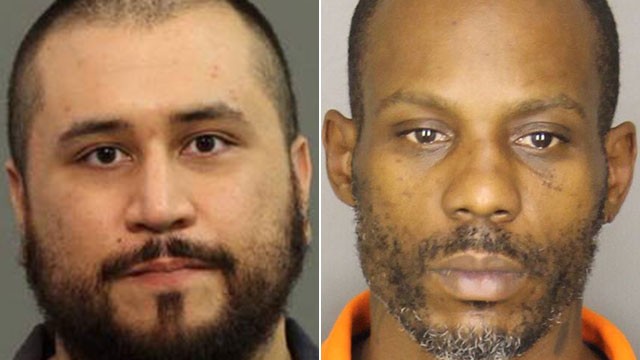
George Zimmerman to fight DMX in a boxing match


Let's get ready to ... mumble.

As in, what now, George Zimmerman?

Seems like the former neighborhood watchman has found yet another way to remain in the public limelight.

This time, he'll be stepping into a boxing ring to fight rapper DMX.

Zimmerman said the celebrity boxing match was his idea. Boxing was his hobby, he told Radar Online last month, even prior to the "incident."

The incident, of course, is the February 2012 encounter in which he shot dead an unarmed Trayvon Martin, 17. He stood trial for murder, but was acquitted.

"Prior to the incident, I was actually going to the gym for weight loss and doing boxing-type training for weight loss," he told Radar.

"A mutual friend put me in contact with Damon and provided me with an opportunity and motivation to get back in shape and continue with my weight loss goals and also be able to help a charity out."

Damon is Damon Feldman, owner of Celebrity Boxing and self-described opportunist, whose claim to fame is putting together bizarre matchups. Think Tonya Harding, Michael Lohan.

He said last week that he was accepting offers for someone to step into the ring for a three-round, pay-per-view fight with Zimmerman.

"The news has been out for an hour and my e-mail is overloaded with 8,000 people wanting to fight George," Feldman told CNN on Thursday.

Early Wednesday morning, he said he's picked the contender. Out of more than 15,000 e-mailed requests, he's going with DMX.

"The match will be one of the Biggest Celebrity Boxing matches of all time," his news release said (uppercase emphasis his).

But in order to find out where and when it will take place, we'll have to wait until next week.

DMX, as we know is a rapper, and braggadocio is his calling card.

He's out for blood, he told TMZ. Not only will he break every rule in boxing, he said, he'll "beat the living (expletive)" out of Zimmerman.

Ian Karmel, a writer for "Chelsea Lately," has a better idea.

"They should send Floyd Mayweather to the ring and tell George Zimmerman it's DMX," he tweeted. "He won't know the difference."

Sunday, January 26, 2014

Gov. Rick Perry supports the decriminalization of marijuana

Jessica Hill/AP
Gov. Rick Perry signaled Thursday that he's for the decriminalization of marijuana use — not legalization, but the softening of punishment for pot users in the border state.

“As governor, I have begun to implement policies that start us toward a decriminalization” by introducing alternative “drug courts” that provide treatment and softer penalties for minor offenses, Perry said during an international panel on drug legalization at the World Economic Forum in Davos, Switzerland.

It's the first time the governor, who's voiced support for drug courts in the past, took a position on decriminalization in Texas.

His spokeswoman confirmed that Perry is staunchly opposed to legalization of marijuana because of the dangers that have been associated with the drug but is committed to policies that would lower the punishment for its use to keep smokers out of jail.

“Legalization is no penalty at all, whereas decriminalization doesn't necessarily mean jail time (for minor possession offenses). It means more of a fine or counseling or some sort of program where you don't end up in jail but in a rehabilitative program,” said Lucy Nashed, a spokeswoman for Perry.

“The goal is to keep people out of jails and reduce recidivism, that kind of thing,” she said, adding that decriminalization would exclude violent offenders and dealers.

In Texas, an offender with less than 2 ounces of marijuana can be sentenced to up to 180 days in jail and a fine of up to $2,000. An offender with more than 5 pounds faces up to two years in jail.

Drug courts, which provide supervision and intense rehabilitation for some convicted drug users in lieu of jail time, were passed in Texas in 2001 by a group of Democrat lawmakers.

Bills have been introduced in the state Legislature to reduce penalties and allow the sale of medicinal marijuana over the past six years but have not made it out of committee.

In the past, Perry has discussed his opposition to legalization of marijuana but voiced his support for the 10th amendment and state's rights to legalize the drug, which he highlighted at the forum Thursday.

Perry did not address medicinal use of marijuana during the event.

Nashed said Perry has discussed support of drug courts in the past; however, the governor specifically has not gone as far as supporting decriminalization in public comments.

“I am shocked,” said Ana Yañez-Correa, executive director of the Texas Criminal Justice Coalition, adding that Perry killed a drug treatment bill the organization supported in 2007. “I am very happy to hear the governor supports a more rehabilitative approach.”

More than 15,000 people are imprisoned in Texas correctional facilities for possession of drugs, Yañez-Correa said.

Perry, who sought the Republican nomination to the office in 2012, announced in 2013 that he would not seek re-election to his office. He has not confirmed whether he will run for president again.

When asked whether Perry thinks it's a good idea to decriminalize small amounts of marijuana in Texas, Nashed said, “He has long supported diversionary programs like drug courts in Texas that have had remarkable results.”

Perry made the comments on a panel that included former United Nations Secretary-General Kofi Annan and Colombian President Juan Manuel.

Wednesday, January 8, 2014

Legalizing marijuana gets unlikely conservative supporter

The growing campaign for legalizing marijuana has what would appear to be an unlikely supporter: the National Review.

The conservative magazine published an editorial on Monday applauding Colorado for becoming the first state to make the "prudent choice" of legalizing recreational marijuana, "thus dispensing with the charade of medical restrictions and recognizing the fact that, while some people smoke marijuana to counter the effects of chemotherapy, most people smoke marijuana to get high.

The prohibition of marijuana, its editors argue, has led to "billions in enforcement costs, and hundreds of thousands of arrests each year, in a fruitless attempt to control a mostly benign drug."

"We make a lot of criminals while preventing very little crime," the National Review writes, "and do a great deal of harm in the course of trying to prevent an activity that presents little if any harm in and of itself."

The editorial comes less than a week after the world's first legal recreational marijuana sales began in Colorado, with pot stores seeing long lines and retailers reporting supply shortages, pushing prices as high as $400 an ounce.

Pot stores in the state of Washington, which also voted to legalize recreational marijuana, are expected to open later this year. And marijuana activists hope to help pass similar laws in 13 more states by 2017.

"Marijuana is a drug, as abusable as any intoxicant is, and its long-term use is in some people associated with undesirable effects," the National Review continues. "But its effects are relatively mild, and while nearly half of American adults have smoked marijuana, few develop habits, much less habits that are lifelong. ... Compared to binge drinking or alcohol addiction, marijuana use is a minor public-health concern. All that being the case, the price of prohibition is relatively high, whether measured in police and penal expenses or in liberty lost. The popularity of marijuana may not be the most admirable social trend of our time, but it simply is not worth suppressing."

Legalization, the National Review says, is "a sign that Americans still recognize some limitations" on the reach of government.

"It is perhaps a little dispiriting that of all the abusive overreaches of government to choose from, it is weed that has the nation’s attention," the National Review concludes, "but it is a victory nonetheless."

It's not the first time the National Review has weighed in on the legalization debate. In 1996, the magazine published an editorial that also favored legalization.

"It is our judgment that the war on drugs has failed, that it is diverting intelligent energy away from how to deal with the problem of addiction, that it is wasting our resources, and that it is encouraging civil, judicial, and penal procedures associated with police states," the editors wrote in letter to readers in February of that year. "We all agree on movement toward legalization, even though we may differ on just how far."

Sunday, December 1, 2013

Nine disturbing true crime books

Lately, I have had a horrible time getting to sleep. Last night, the anxiety was so bad that I had to put on an Audrey Hepburn movie on Netflix to calm my terrifying thoughts.

Why is this going on? Stress at work? Trouble with my family? Nope, it's because I'm currently reading Truman Capote's classic, In Cold Blood, and it is scaring the hell out of me.

I openly admit that I'm probably not the ideal reader of True Crime books; I definitely think about getting murdered more than the average person does, and my overactive imagination and extreme anxiety don't make matters any better.

What is it about the True Crime genre that keeps me coming back for more, even though these stories petrify me?

The truth is, I can't help it; the suspense reels me in. Who are these people who can take a life without thinking twice about it? Why are they the way they are?

Whether or not you're as anxious and jumpy as me, I can guarantee that these books will leave you keeping the hall light on all night and/or locking every single lock on your door at night:


In Cold Blood by Truman Capote: Capote's classic is about the murders of four members of the Clutter family. In 1959, two men broke into the Clutter house, tied them up and shot them, one by one. Not only was the method of the murders brutal, but the criminals remained pretty much remorseless the whole time. The murders also ended up being motiveless. Though the break-in began as a robbery, there was very little money to be found (under 50 dollars), but they killed everyone any way. There have been some discrepancies between fact and Capote's outline of what happened, but the facts of the murders remain true. The two men were executed for their crimes.


Helter Skelter by Vincent Bugliosi
Helter Skelter was written by Charles Manson's prosecutor, about both the case and the trial. That Manson managed to convince a group of people to perform a series of murders for him is chilling in and of itself. These murders were also extremely brutal - this book is not for the faint of heart. Sharon Tate (one of the murder victims) was stabbed 16 times and was two weeks away from giving birth to her child. Manson received the death penalty, but it was eventually outlawed in California. He is currently serving life imprisonment.


Fatal Vision by Joe McGinniss
In 1970, Jeffrey MacDonald was discovered slightly injured, and his pregnant wife and two young daughters were found murdered. MacDonald claimed that assailants had broken in, wounded him, and knocked him unconscious while they murdered his family. However, since there was no evidence of a break-in or any that anyone else had been inside the home, MacDonald ended up being tried for the murders. Though MacDonald maintains his innocence, the thought that a father could potentially murder his pregnant wife and two small children is absolutely terrifying. (This is another book with discrepancies. MacDonald had thought the book would prove his innocence, but instead it makes it appear that he is definitely guilty. Both Janet Malcolm and Errol Morris have written response books to McGinniss's bestseller. It still makes a horrifying read, though).


Gomorrah by Roberto Saviano
Campania, a region of Naples, Italy, has one of the highest murder rates in Europe. This is due to the Camorra, a Neapolitan mafia-like organization. The book traces the decline of Naples under the corruption of the organization, and also goes into the brutal details of how Comorra is run, and the lengths it will go to. Since 1979, 3600 people have been murdered at the hands of the Comorra, and the details of the deaths are gruesome.


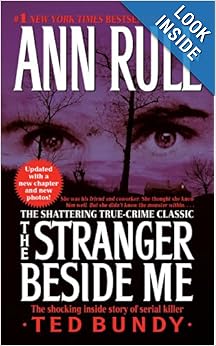
The Stranger Beside Me by Ann Rule
When Ann Rule was assigned to write a book about the as-of-yet unsolved murders of multiple women, she had no idea that the culprit would end up being someone she knew. When Ted Bundy was arrested and tried for the murders, Rule was so shocked that she hurried "to the ladies room and [threw] up." It turns out that she knew Bundy when they worked together at a suicide hotline; they were friends. It doesn't get much more unnerving than that.


For the Thrill of It by Simon Baatz 
In 1924, Nathan Leopold and Richard Loeb, two graduate students from wealthy families, kidnapped and murdered a 14-year-old boy. Psychiatrists testified that the two would actually have been harmless on their own, but combined, they were a toxic pair. One of the psychologists on the case noted, "There seems to have been so little normal motivation, the matter was so long planned, so unfeelingly carried out, that it represents nothing that I have ever seen or heard of before."


Columbine by Dave Cullen 
Cullen's nonfiction work about the Columbine mass shooting covers two topics: the killers' lives preceding the attack, and the survivors' struggles with the aftermath of the tragedy. There are also graphic depictions of the shooting. The book addresses many myths associated with Columbine. According to the author, the massacre had nothing to do with bullying, goth culture or Marilyn Manson. It is even more chilling when Cullen discusses that the attack was not initially intended as a shooting, but rather as a bombing. The shooters had wanted to create the worst terrorist attack in American history.


A Mind for Murder by Alston Chase
Chase's book describes the life of Ted Kaczynski, the Unabomber, who, from 1978 to 1995, sent 16 bombs to targets including universities and airlines, killing three people and injuring 23. Chase argues that Kaczynski wasn't the wild mountain man that the media assumed him to be and that, though Kaczynski was a cold-blooded killer, his ideas were actually pretty close to those of mainstream America.


The Last Victim by Jason Moss
 This book deals with not one, but five serial killers. Moss explores his fascination with the psychology of serial killers and begins to correspond with several of America's most infamous ones as part of his honors thesis in college: John Wayne Gacy, Richard Ramirez, Henry Lee Lucas, Jeffrey Dahmer, and Charles Manson. He formed the strongest relationship with Gacy (who sexually assaulted and killed at least 33 teen boys and young men between 1972 and 1978). Gacy maintained his innocence to Moss. The book gets its title in what is ultimately the most chilling aspect of the book: when Moss goes to visit Gacy, Gacy tries to murder him.

Source

Saturday, October 12, 2013

Eleven important Supreme Court cases in this upcoming term

At 10 a.m. Monday, in the midst of a government shutdown, Chief Justice John Roberts will begin his eighth term at the Supreme Court — beginning a session in which the justices are slated to hear cases affecting the future of legislative prayers, presidential power in making appointments and whether a meth addict can have a court-ordered mental evaluation used against him in fighting murder charges.

As court-watchers wonder what the term will hold for the future of Justice Ruth Bader Ginsburg and the legacy of retired Justice Sandra Day O’Connor, the justices themselves are preparing for a term that, at the outset, appears to focus on revisiting some precedents established in past decades and considering anew issues at the outer limits of the powers of the three branches of government.

In the first week of the term, the justices will be hearing a challenge to campaign finance contribution limits. The next week, a Michigan amendment that bars affirmative action in higher education admissions will be at the center of the court’s attention.

Other cases will address whether the impact of housing development decisions can violate the Fair Housing Act and whether roommates can authorize a police search later used against a tenant who previously objected to the search but is no longer there. The Massachusetts law creating a “buffer zone” around reproductive health clinics is being challenged in another case, and the limits of congressional power in enforcing treaties is at question in a case involving the Chemical Weapons Convention.

The incentives against lawsuits enforcing patent rights are at issue in a case that some say could affect the future of innovation in America, and another case about the role of bankruptcy judges — who are not lifetime-tenured judges — could impact the future role of those lifetime-tenured Article III judges.

Here are 11 cases that could change the way America and the government work in the coming year:

1. Presidential Recess Appointments - National Labor Relations Board v. Noel Canning
In a case that appears to be a courtroom-based continuation of ongoing partisan fighting in a city currently in shutdown mode could, depending on the way the justices rule, dramatically alter the balance of power between the president and Congress in the ever-present nominations fight. In answering whether President Obama had the authority to make so-called “recess appointments” of people to the National Labor Relations Board during “pro forma” sessions of the Senate in which no business was to be conducted in January 2012, the D.C. Circuit Court of Appeals held that he did not.

In a broad ruling, the judges said that the Constitution’s “recess appointment” clause — which allows presidents to fill vacancies temporarily that otherwise would need Senate approval during Senate recesses — only applies to the “intersession” recess between sessions of Congress and not “intrasession recesses” taken during a session of Congress. Although the opinion could have found against Obama’s decision on a more limited reasoning that the Senate was not actually recessed during a time when it held “pro forma” sessions, the D.C. Circuit issued the broader reasoning in its ruling.

The justices took the case and, if the D.C. Circuit’s reasoning becomes the law of the land, could create a significant change in the way nomination battles are fought in D.C.

2. Campaign Finance “Aggregate” Limits - McCutcheon v. Federal Election Commission

On Tuesday, the justices will consider whether “aggregate” limits faced by political donors are constitutional. Beyond the normal contribution limits, the aggregate limits — $48,600 to candidate committees and $74,600 to non-candidate committees like political parties — are limits on overall contributions to any federal candidates or non-candidate committees.

The Federal Election Commission argues that there has been a different standard applied to contributions than to campaign expenditures since the Supreme Court upheld the post-Watergate federal campaign finance law. Shaun McCutcheon and the Republican National Committee, with support from campaign finance restriction foe Sen. Mitch McConnell, say that distinction should be tossed out by the court or, at least, should nonetheless mean the aggregate limit is unconstitutional.

A broad array of groups has argued in support of the limits, and Public Campaign released a report last week showing how eliminating the limits would, primarily, benefit wealthy, white men. In the shadow of Citizens United, though, supporters of campaign finance restrictions are nervous. As law professor Rick Hasen has written, given the other members of the court, “liberals have to hope [Chief Justice John] Roberts will show some restraint.”

3. State Affirmative Action Bans - Schuette v. Coalition to Defend Affirmative Action
Next week, the Supreme Court will hear another affirmative action case. In the court’s last term, it made clear that those places that choose to utilize any form of affirmative action in higher education admissions need to show, under the “strict scrutiny” standard, that the plan is necessary to create a diverse student body. Now the court is considering the other side of that question: Does it violate the Constitution’s guarantee of equal protection when a state bans such considerations in public-university admissions across the state through a constitutional amendment?

Justice Elena Kagan is not participating in the case, but a 4-4 decision would mean the Sixth Circuit’s decision holding the ban unconstitutional would stand, so supporters of the amendment need at least 5 votes to uphold the amendment. The opponents of the amendment argue, in part, that the “political restructuring” of banning race and sex considerations by amendment limits considerations of those factors in a way that no other factor is limited and, as such, is unconstitutional. Proponents say, to the contrary, that this amendment is, by its terms, nondiscriminatory and could never violate the Constitution.

If the ban is upheld, as many observers expect, expect others to try and get other states to follow.

4. Reproductive Health Clinic Buffer-Zone Law - McCullen v. Coakley
In its January decision upholding the Massachusetts law banning those other than employees, law enforcement or those entering or leaving reproductive health care facilities from entering a 35-foot “buffer zone” around the entrance and exits of such facilities, the First Circuit judges were clearly frustrated with the challenge: “This case does not come to us as a stranger.”

In examining the First Amendment arguments put forth by opponents of the buffer zone, Judge Bruce Selya wrote, “The plaintiffs have also marshaled other recent Supreme Court cases in their ambitious effort to reinvent First Amendment doctrine. … For present purposes, it suffices that these decisions, by no stretch of even the most fertile imagination, sully either the reasoning or the doctrinal infrastructure of [the court’s earlier decision upholding the law].” Now however, the Supreme Court will examine whether the law is different from a 2000 decision upholding a Colorado buffer zone and, more broadly, whether that decision should be limited or overruled.

5. Scope Of The Fair Housing Act - Mount Holly v. Mt. Holly Gardens Citizens in Action
The question before the justices with regards to the New Jersey town of Mount Holly is very direct: Can so-called “disparate impact” claims be violations of the Fair Housing Act? Disparate impact claims are raised in those circumstances in which racial or other discrimination may not have been the purpose of a given rule or policy but in which the effect of the rule or policy “disproportionately affects or impacts one group more than another,” as the Third Circuit Court of Appeals held in finding that the Fair Housing Act can be violated by a policy with such a “disparate impact.”

The Supreme Court took the case, and part of the underlying question the justices will consider is whether it should defer to the Housing and Urban Development Department’s policy that such “disparate impact” cases are allowed under the law.

Monday, September 23, 2013

Let's stop naming mass shooters in media reporting

I got an email from an MSNBC producer Monday: “Topic: Another Mass Shooting. Theme: Why Does This Keep Happening?”

I’m sick of that question. Here’s mine: Why do we keep encouraging them?

There is no single cause for mass shootings, but we have an opening. The killers share four crucial traits: Nearly all are men. Nearly as many experienced a recent failure or loss. Most had easy access to guns. All were seeking attention.

We can’t eliminate men or failure. Gun reform is imperative, but Congress can’t find the courage. The stage, that’s our opportunity. Why do we keep ushering these goons onstage?

Stage access is governed entirely by the media. My profession has been as spineless as Congress — which at least admits the gun debate belongs to them. We keep pretending we have no role in this self-perpetuating succession of mass murder. We are helpless. We don’t create the stage, it just sort of … happens? That’s our story, and we are sticking to it.

The media didn’t start this. That is true. We didn’t cause Oklahoma City or Columbine. Those tragedies lit a terrible spark that has been smoldering and erupting for a decade and a half, and we have sure as hell been fanning the flames.

Now none of these killers are purely attention-seeking. Most are deeply, suicidally depressed; a fraction are mentally ill; and a smaller number are cold, calculating psychopaths. Notoriety is not the sole driver, but it is an essential one.

In his enlightening book Terror in the Mind of God, Mark Juergensmeyer distilled all mass murder into one pithy phrase: Performance violence. Murder as theater. Killing your boss or your girlfriend is revenge. But shooting up their entire building, or any symbolic building, is about raising your body count. You’re amping up the “wow” factor. It’s a performance. We know that.

Performances require an audience and demand a star. The media provides the audience and we cast the lead role.

Some have called for us to stop covering these mass shootings. That’s unrealistic, and no way to run a democracy. But what we can do, and remarkably easily, is withhold the spotlight.

The killing will get covered, but we can and should deprive the shooter of name recognition.