Showing posts with label business. Show all posts

Wednesday, March 25, 2015

The arsenic in two-buck chuck will not kill you

Flickr
Last Thursday, four California residents filed a lawsuit alleging that some of the state’s most popular (read: cheap) wines — including Franzia, Korbel, and the infamous two-buck Chuck, Charles Shaw — are laced with arsenic at up to five times the level of what’s considered safe.

According to the class-action suit, brought against 28 wine producers, “just a glass or two of these arsenic-contaminated wines a day over time could result in dangerous arsenic toxicity to the consumers.” Since California wines make up nearly 90% of the U.S. wine industry, American wine drinkers have become the “unwitting ‘guinea pigs’ of arsenic exposure,” the suit alleges.

But don’t dump your boxes of Franzia just yet. These wines do contain tiny amounts of the toxic compound — but so do expensive wines, as well as pretty much everything that we eat and drink.

If you live in the U.S., then your groundwater actually has a surprising amount of arsenic in it.
Arsenic is naturally present at high levels in much of the untreated groundwater in the U.S. and a handful of other countries. Taken in large doses or over long stretches of time, arsenic can cause cancer, brain toxicity, heart problems, or death. (As pointed out in the lawsuit, it led to the ultimate demise of Napoleon and King George III, among others.)

This is why the World Health Organization has labeled groundwater as the “greatest threat to public health from arsenic,” and why the U.S. Environmental Protection Agency is strict about keeping arsenic out of the water supply. Only 10 parts per billion (ppb) of arsenic are allowed in drinking water (meaning 10 parts arsenic for every 1 billion parts water). Assuming people drink roughly two liters of water a day, this amount of arsenic is totally harmless.

Water is also a big part of how arsenic gets into our food supply. Every winery, for example, bears the unique signature of its particular geography. The soil chemistry, water, and climate of a vineyard contributes to the flavors of whatever grapes are grown there. But because of arsenic present in soil and water, a wine’s terroir can also determine its level of toxicity.

“Plants will take it up into their tissues, so any plant material will have some arsenic,” Susan Ebeler, a professor of wine chemistry at University of California, Davis, told BuzzFeed News. “If animals eat the plant material, they’ll have some arsenic too. It’s ubiquitous. Everything we eat will probably have some low level of arsenic.”

As a result, wine isn’t the only product that’s been scrutinized for its arsenic content. A 2012 Consumer Reports study showed that fruit juice — which has a high water content — and rice, which is grown in water-flooded conditions and so absorbs more of the toxic compound, had arsenic levels on par with our water supply. In 2013, the FDA proposed a 10 ppb limit for arsenic in apple juice, but nothing has been made official. Water remains the only foodstuff monitored for arsenic — which means there’s no legal limit in the U.S. for how much arsenic can be in wine.

The plaintiffs’ claims rest on a chemical analysis by a Denver-based commercial lab named BeverageGrades.

The company did not respond to multiple requests for comment from BuzzFeed News. In a press release on March 19, the day the lawsuit was filed, the company said that its “state-of-the-art” lab could be used across the supply chain — for producers, retailers, and consumers — to make sure arsenic levels in the wine were up to scratch. The company sent the press release to many wine retailers the day the lawsuit was filed offering their paid testing services.

According to the lawsuit, BeverageGrades tested about 1,300 California wines and found that nearly one-fourth of them had arsenic levels exceeding the EPA’s accepted drinking water threshold of 10 ppb. Some, like Charles Shaw white zinfandel, clocked in around three times the limit, while Franzia’s white grenache came in at five times that level.

Although U.S. federal agencies have not set a safety threshold for arsenic levels in wine, the International Organization of Vine and Wine, the primary international review board for winemaking, has ruled that anything under 200 ppb is fine. Canadian authorities have decided anything under 100 ppb is safe. When held up to these international standards, all of the California wines pass muster.

Another reason not to worry: Most people drink far less wine than water. “The first principle of toxicology is: The dose makes the poison,” Carl Winter, a professor of food toxicology at UC Davis, told BuzzFeed News. “It’s the amount of a contaminant, not its presence or absence, that determines the potential for harm.”

The arsenic safety levels determined for water are based on drinking roughly two liters of water a day — equivalent to roughly 14 glasses of wine. If you’re drinking that much alcohol, arsenic is the least of your worries.

At a typical consumption rate — a few glasses of wine, say — arsenic levels are safe. Using water as the main comparison for how much arsenic we can consume in a glass of wine is “like comparing apples and oranges,” Winter said.

BeverageGrades’ analysis found that cheap wines have more arsenic than expensive ones.
There are several possible explanations. It could be that tiny amounts of arsenic leech out of materials used to store and transport the wine, such as metal pipes and containers, Ebeler said. Varying manufacturing procedures could potentially contribute to differences between bottom-shelf, mass-produced brands like two-buck Chuck and more expensive ones.

But the truth is, we don’t know. BeverageGrades has not published its full testing results, nor any details about its methodology. But in the $23 billion wine industry, some argue that the issue may boil down to money.

“You’re talking about some of the most successful wine companies in the country — that’s clear,” Nancy Light, a representative of the Wine Institute, an industry group representing more than 1,000 wineries in California, told BuzzFeed News. “This lawsuit is baseless and takes facts out of context — that’s financially motivated.”

Monday, March 23, 2015

Starbucks will stop writing ‘Race Together’ on your cups now

Stepen Brashear/Getty Images

After just one week, Starbucks employees will stop writing “Race Together” on your coffee cups.

CEO Howard Schultz ended the effort Sunday, after days of pushback against the company’s initiative to start a conversation about race within its more than 20,000 stores. Other parts of the year-long Race Together program will continue, including forum discussions and special sections in USA Today. But the scribbling of a somewhat-ambiguous message on lattes has been quickly phased out.

“While there has been criticism of the initiative — and I know this hasn’t been easy for any of you — let me assure you that we didn’t expect universal praise,” Schultz said in a memo.

The message was meant to be “just the catalyst” for a broad conversation about race, after a year in which the topic has figured prominently in news headlines and dinner-table conversations across America.

Instead, the announcement of Race Together was a conversation about Starbucks. Was the coffee giant exploiting a very real issue for financial gain? Did you know that 16 of the company’s 19 executives are white? What jokes can we make about this on Twitter?

A Starbucks spokesperson said the Race Together inscriptions were not canceled but instead concluded today “as originally planned.” The move will also have practical implications: As journalists went to Starbucks to try out talking about race, they quickly realized that making conversation with a barista really holds up the line.

Tuesday, March 10, 2015

Uber pledges to create 1 million jobs for women in five years


Taxi-driving is a male-dominated profession, but the ride-hailing app Uber is promising to put many more women behind the wheel.

Uber announced on Tuesday that it plans to create 1 million driver jobs for women by 2020. The pledge came in the form of a blog post on Uber's website, with a statement written by Uber CEO Travis Kalanick and Phumzile Mlambo-Ngcuka, the executive director of UN Women, which aims to economically empower women around the world.

In an email to The Huffington Post, Uber emphasized how its driver jobs can empower women by giving them flexible schedules and equal pay.

"Driving on the Uber platform allows women to set their own schedules," the spokesperson wrote. "With Uber, there is no gender-based wage gap: men and women earn equally on the platform."

Only about 14 percent of Uber's 160,000 drivers in the U.S. are women.

The safety of women who use Uber and other car services has been in the spotlight recently. An Uber driver last year was accused of raping a female passenger in New Delhi.

In India and around the world, a number of companies have sprouted up recently to meet demand from women passengers for women drivers.

In New York City, where nearly 99 percent of taxi drivers are men, a service called SheRides lets passengers use an app to request female drivers.

Uber told Reuters that women passengers won't be able to specifically request a woman driver.

In a promotional video on Uber's website, the company featured a number of female Uber drivers who touted the job as one that has given them flexibility and independence. A driver in Bogotá, Colombia, said she feels safe driving an Uber because it's a cash-free service.

Tuesday, March 3, 2015

A look behind the #killthekcup movement


Daniel Acker/Bloomberg/Getty Images
Keurig K-Cups, the single-serve brewing pods, have revolutionized the coffee experience for some. But for others, the non-recyclable and non-biodegradable cups have incited a lot of frustration, reports The Atlantic.

Last year, Keurig sold more than 9 billion of the pods, which accounted for most of the company's $4.7 billion in revenue.

But earlier this year a YouTube video called "Kill the K-Cup" went viral, anonymously calling out the pods as a hazard to the environment and "extremely wasteful and irresponsible."

The company has already announced plans to create a fully recyclable version of the product by 2020.

"I gotta be honest with you, we're not happy with where we are either," Monique Oxender, Keurig's chief sustainability officer, told The Atlantic. "We have to get a solution, and we have to get it in place quickly."

But the battle continues as some environmental advocates claim that"those things will never be recyclable."

Source

Tuesday, February 10, 2015

Heinz reveals new sriracha flavored ketchup


Heinz® Tomato Ketchup has been a key player in happy gatherings for generations – starting this month, Heinz is giving fans one more reason to smile with new Heinz Ketchup Blended with Sriracha Flavor. This exciting twist on a classic maintains the recognizable taste and consistency of America’s Favorite Ketchup®, with an added kick from spicy chili pepper and garlic flavors.

“We are thrilled to announce that Heinz Tomato Ketchup Blended with Sriracha Flavor will join the beloved Heinz Ketchup portfolio,” said Joseph Giallanella, Brand Manager of Heinz Tomato Ketchup. “Building off of our successful line of flavored ketchups, fans told us that they would love another bold take on their favorite condiment. The new offering adds a new kick to your favorite foods and recipes, pairing well with cheeseburgers, French fries and hot dogs, and is the perfect flavor boost for chicken and eggs.”

The flavor comes in the familiar upside-down 14-ounce plastic squeeze bottle featuring a green and red label. It joins a line of flavored ketchups currently offered by Heinz, including Heinz Tomato Ketchup Blended with Real Jalapeno, Heinz Tomato Ketchup Blended with Balsamic Vinegar and Heinz Hot & Spicy Ketchup Blended with Tabasco® Brand Pepper Sauce.

“From family gatherings to backyard BBQs and ballpark visits, Heinz Tomato Ketchup has been a mainstay in national celebrations for generations, inspiring unique, happy memories associated with the iconic brand,” Giallanella says. “This latest launch continues in this 140 year tradition.”

Heinz Ketchup Blended with Sriracha Flavor is now available at select retailers, including Walmart and Target locations, for a suggested retail price of $2.69.

Tuesday, January 27, 2015

Chipotle stops serving pork at hundreds of restaurants

Gene Puskar/AP

Chipotle says it stopped serving pork at hundreds of its restaurants after suspending a supplier that violated its standards.

Chris Arnold, a spokesman for the Mexican food chain, told The Associated Press it's the first time the company stopped serving a topping for its burritos and bowls. He said Chipotle learned of the violation by the supplier on Friday through a routine audit, and did not have a timeline for when carnitas would return to affected stores, about a third of its total base.

"It's hard to say how long it will last," he said.

In New York City on Tuesday, a sign on the door of a Chipotle location stated, "SORRY, NO CARNITAS."

Arnold said most of the issues related to the violations concerned the housing for the pigs. Chipotle demands that its suppliers raise pigs in humane conditions with access to the outdoors, rather than in cramped pens.

On other occasions, Chipotle customers may have noticed signs saying a restaurant is serving meat that doesn't meet the company's "responsibly raised" standards. That's typically because Chipotle has trouble securing supplies of beef raised without antibiotics or hormones, Arnold said. The company then serves beef that was "conventionally raised."

That is not happening with the carnitas, however.

"In this case, we won't make that kind of substitution," Arnold said in an email.

Chipotle Mexican Grill Inc. had 1,724 restaurants as of Sept. 30. The Denver-based chain has enjoyed strong sales growth, in part by positioning its food as a higher quality alternative to traditional fast-food restaurants. In the latest quarter, sales surged 19.8 percent at established locations.

Paul Shapiro, vice president of farm animal protection for The Humane Society of the United States, said that most breeding pigs in the country are kept in gestation crates with concrete floors. Pigs that are raised with access to the outdoors or bedding represent a "very small portion of the pork industry," he said.

Even among farms where pigs have better conditions, Shapiro said access to the outdoors can vary.

"It doesn't mean these animals are living in ideal conditions on Old MacDonald's farm," he said.

As for Chipotle, Arnold said the company is looking at a variety of ways to remedy its carnitas shortage, including the use of different cuts of pork or increasing orders from other suppliers. He said he hopes the supplier in question will fix its issues and eventually come "back on board."

Arnold said the carnitas topping typically accounts for about 6 to 7 percent of entree orders; chicken is the most popular topping.

Wednesday, January 14, 2015

Yelp accused of bullying businesses into paying for better reviews

Richard Vogel/AP
Nadia Kalnieva says she can no longer bear to check online reviews about her Toronto moving company on Yelp. “I feel it’s too much bad energy.”

Her troubles with the hugely popular customer review website began about two years ago when she noticed a couple of negative reviews about her business were prominently featured. To make matters worse, she says, positive reviews about her company were hidden below in a "not currently recommended" category.

Then she starting getting calls from a Yelp sales representative trying to convince her to pay to advertise on the site.

She says she got the distinct impression from the salesperson that if she accepted, her problem would disappear: "What I got without spoken direct words is, 'Start paying, and we’ll find a way to get rid of the bad reviews.'"

Kalnieva, who runs the small family company S & Sons Moving, refused to pay up. She believes Yelp continued to unfairly highlight her negative reviews, resulting in lost clients who got cold feet after reading them.

"I felt helpless,” she says.

Complaints piling up

Perhaps Kalnieva misread the situation. But she joins many small businesses in North America that have accused Yelp of a shakedown of sorts — implying in some way it can improve review listings for a price. Yelp is based in San Francisco, active in 29 countries, and boasts 139 million monthly visitors.

Ephraim Dloomy says his Yelp saga began about six months after he opened his Toronto restaurant, Ba-Li Laffa, in June 2012. Like Kalnieva, he says negative reviews about his business were posted prominently while positive, five-star reviews were hidden in the not currently recommended section.

Then he started getting frequent calls from a Yelp salesperson, trying to sell advertising. The restaurateur says the representative didn’t blatantly tell Dloomy he could solve his problem by paying up, but he believes that was the underlying message: "They said people who generally advertise with them end up having more stars. They implied it."

Dloomy turned down the $350 a month advertising offer because he couldn’t afford it. Then he says his situation only got worse: "What I would notice is, I would get three to four positive [reviews] and a day later they would be gone," dumped in the hidden section.

A furious Dloomy concludes, "Basically, I was being bullied into advertising."
'I was being bullied into advertising.'— Ephraim Dloomy, restaurateur

Mafia-like extortion?
Over the past few years, the Better Business Bureau has dealt with numerous complaints about Yelp involving allegations about manipulated reviews that Yelp offers to fix if the business pays to advertise.

One recent complainant went as far as to claim that "Yelp is trying to extort money from me … they are no different than the Mafia.” According to the Better Business Bureau, this issue has been resolved.

Yelp is also facing a class action lawsuit filed on behalf of shareholders. It alleges the company misled investors about its business practices to boost share prices. The suit filed this past August in the U.S. District Court in California claims Yelp posted unreliable reviews and offered to make negative ones go away if companies paid for advertising. The suit also notes that the company generates revenue primarily from ad sales.

Yelp fights back
In a statement, Yelp told CBC News that the lawsuit's allegations "are without merit and we will vigorously contest them."

The company also adamantly denies that businesses can pay to change their reviews or ratings: “There has never been any amount of money a business can pay Yelp to manipulate reviews and our automated recommendation software does not ‘punish’ businesses who don’t advertise."

Yelp also points out that, so far, none of the allegations against the company have stuck.

This past September, the Ninth U.S. Circuit Court of Appeals tossed out a lawsuit filed by several businesses accusing Yelp of extortion by trying to bully them into advertising. The court said the allegations could not be proven.

The U.S. Federal Trade Commission received more than 2,000 consumer complaints about Yelp from 2008 to March 4, 2014. But according to a Yelp announcement last week, the FTC has closed its investigation without taking any action. The commission said it could not comment.
The computer’s in control

So why do some businesses believe Yelp is posting reviews unfairly? The company says that its automated recommendation software weeds out reviews that might be biased or fake. For example, ones a business may have solicited from family to boost its profile.


That explanation doesn’t sit well with Nishi Sood. She says she wrote a genuine, positive review for Swansea Massage Clinic in Toronto. But on Swansea’s Yelp site, it’s hidden in the not currently recommended section.

“I wasn't even made aware that it got buried,” she says.

Yelp explained that sometimes the software filters out genuine reviewers because it doesn’t have enough information. But if the person writes more reviews, he or she could earn Yelp’s trust.

The co-owner of Swansea Massage, like others, complains of unjust review postings on Yelp. Beverly Gordon says that a few months ago the company approached her to buy advertising. But she claims the salesperson never implied he could manipulate her reviews: "They were very careful not to say that. They said they couldn't promise anything."

Even so, Gordon has signed up for the lowest ad package — $200 a month — in hopes her now hidden positive reviews, including Sood’s, willbe prominently displayed. She says she reached her decision based on “what I've heard from other business who get positive reviews posted and they’re paying [for advertising].”

Is Gordon misreading the situation? She says she’s paying to find out. So far, her review postings haven’t changed.

Wednesday, January 7, 2015

C. Wonder to shut down completely

C. Wonder
C. Wonder, the whimsical chain created by Tory Burch’s ex-husband Christopher Burch in 2011, is going belly-up, BuzzFeed News has learned.

The company called an internal town hall meeting at 11 a.m. today, where its roughly 100 employees were told the brand would be shutting down, said a person at the meeting who declined to be identified citing a lack of authorization to speak publicly. Today was the last day for all but a handful of employees who will stay on to help C. Wonder close down, said two people familiar with the matter. The meeting lasted 15 minutes or less; most of the Flatiron office emptied out by 1 p.m., the first source said.

C. Wonder’s 11 U.S. stores, already pared down from a massive round of closings in recent months, will shutter completely in the next two to three weeks, while its website is slated to shut down by the end of next week, the person at the meeting said. They added that Chris Burch, who recently relocated his office from the Flatiron office to Miami, was not present at the meeting. C. Wonder has also abruptlyshut down its social media accounts on Twitter, Facebook, Instagram, and Pinterest.

Daniela Maron, a spokeswoman for C. Wonder, didn’t immediately respond to a voicemail and email seeking comment.

Venture capitalist J. Christopher Burch opened the first C. Wonder in 2011. The brand, which sells a variety of home goods, jewelry, and knick-knacks, drew immediate comparisons to his ex-wife Tory Burch’s more expensive namesake brand. Some in the industry dubbed C. Wonder an act of “revenge retail,” a mentality that may have pushed the chain into a number of ill-advised, costly leases. The company, for example, spent a couple of years opening an expensive Flatiron store in Manhattan; internally, it’s believed that Chris chose that spot because a hair salon favored by Tory Burch is upstairs.

BuzzFeed News reported in November that C. Wonder planned to close up to 20 of its 32 stores by Jan. 1, depending on how lease negotiations unfolded, and transition into a wholesale brand. Unnamed sources at Burch Creative Capital told WWD at the time that the report was “off-base,” and that the brand would “continue to run freestanding stores.”

The company has 11 U.S. stores listed on its website, excluding a seasonal Nantucket location, and was slated to call them at noon today to inform them of the closures, the person at the meeting said. It also has three international stores and has been in the process of expanding into the Philippines.

Harlan Kent, C. Wonder’s CEO of less than a year, told employees at the town hall meeting that the company tried many tactics to turn itself around in the past six months, from closing stores to cutting staff, but that it wasn’t enough, the person said. He went on to say the board of directors made the decision to close the entire business.

Employees weren’t completely shocked, given recent 75%-off discounts on merchandise and the closures, the person said. Suspicions were also raised after it appeared as though new tenants were scoping out the office and following Chris Burch’s office move, they said.

Sources told BuzzFeed News in November that Chris Burch has distanced himself from C. Wonder in the past year, focusing on other investments instead. He’s been working on a new line with Ellen DeGeneres called E.D. and spending a lot of time in Indonesia, two sources say, where he and a friend acquired a resort called Nihiwatu on the island of Sumba.

Sunday, November 30, 2014

10 Things I Learned by Studying Every "Shark Tank" Pitch Ever Made

ABC
I've spent years of studying entrepreneurship and am now involved in a new startup of my own. It might not be surprising, therefore, to learn that I'm addicted to the TV series Shark Tank.

Nearly 400 entrepreneurs have pitched the sharks since the show debuted in 2009. Recently, I set out to study almost every single one of them. I took an afternoon and poured every pitch from the show's first five seasons into a spreadsheet, tagged and analyzed them, and tried to draw some conclusions.

(This column might make more sense if you take a quick look at my chart on Cafe.com, which highlights some of the preliminary results of my analysis of 377 pitches that have been made on Shark Tank over the past five years.)

Here's what I learned.

1. Your odds are as good as anyone's.
Let's start by establishing a baseline. Out of 377 pitches that I reviewed, 185 were successful--meaning that the entrepreneurs on the show reached a handshake deal with at least one shark to invest in their company. That works out to a pretty amazing 49 percent success rate.

Of course, only a small percentage of entrepreneurs who apply for the show get picked to appear to begin with--0.4 percent, according to the show's producers. Even after a deal appears to be struck, there is usually an intense due diligence process that kills many--maybe even a majority--of deals.


2. Bigger markets are better.
I used seven categories to characterize each of the entrepreneur's pitches, and the most consistent predictor of success was "mass market." An amazing 78 percent of the pitches we tagged in this category were successful.

Granted, there were a number of pitches where the sharks held back because they were wary of getting into a big industry dominated by big players. However, where all else is equal, the sharks wanted to see massive potential for growth. If you don't have a big potential market, that's hard to demonstrate.

3. Don't get too far ahead of the customer.
Wannabe entrepreneurs often make a common mistake. They try to come up with a product idea that is actually too far ahead of the competition. The problem is that by doing so, you can get too far ahead of your customer as well.

Another way to look at this is that contrary to stubborn perception, real entrepreneurs and investors don't like risk. These kinds of risky pitches were often tagged as "niche" in my analysis, and they were successful only 23 percent of the time.

4. Customer needs beat customer wants.
We've already seen that mass-market categories do best on Shark Tank, but it turns out that some specific mass-market categories do better than others. What do they have in common? The customer need they help solve has more to do with an actual "need" than a mere "want."

Case in point: clothing, which is one of the most consistently successful categories on Shark Tank, with entrepreneurs getting a handshake deal 73 percent of the time. There have also been a heck of a lot of pitches for food, alcohol, and other related products--65 by my count. Those do better than average as well, with about a 55 percent success rate.

5. Don't be ridiculous.
There have been a fair number of pitches over the first five years that seem at first designed more for comic relief than for a serious attempt to get a shark to invest. Unsurprisingly, they are rarely successful. Pitches whose primary tag was "just plain weird" were successful only 11 percent of the time.

You can imagine that some of these pitches--things like the guy who wanted to surgically implant Bluetooth devices in people's heads, or the entrepreneur who said he could generate energy by harnessing the Earth's rotation (while mining gold and producing fresh drinking water as byproducts)--seem like they got on the show because they're fun television stunts. However, if you don't think there are many entrepreneurs out there trying to pitch similarly crazy ideas, let me give you a tour of my email inbox sometime.

Wednesday, October 15, 2014

HBO to offer standalone service in 2015

HBO made it official on Wednesday: It will launch an online streaming service in the U.S. in 2015 that presumably in some ways will compete with similar offerings from Netflix and Amazon.com.

"In 2015 we will go beyond the wall and launch a standalone over-the-top service with the potential to produce hundreds of millions of dollars of additional revenue. And the international possibilities could be just as large, if not larger," HBO chairman and CEO Richard Plepler said during a presentation at Time Warner's investor day.

"That is a large and growing opportunity that should no longer be left untapped," Plepler said. "It is time to remove all barriers to those who want HBO."

Last month, at an investor conference, Time Warner CEO Jeff Bewkes hinted that HBO was considering such a service.

Plepler didn't give too many details about the service, such as on pricing and when it would launch or other details, saying he didn't want to tip off competitors too much. Shortly after Plepler's announcement, shares of Netflix dropped 4 percent, while shares of Time Warner have been about 3 percent higher as investors digested the HBO news as well as some other rosy predictions coming from the Time Warner investor day presentations.

Bewkes, for example, predicted per-share earnings would more than double by 2018. As of 11:30 a.m. ET, Netflix's stock was down 3.1 percent at $435.13. The company reports its third-quarter earnings later on Wednesday.

"So, in 2015, we will launch a stand-alone, over-the-top, HBO service in the United States," Plepler told the investor day Wednesday before addressing pay TV partners. "We will work with our current partners. And, we will explore models with new partners. All in, there are 80 million homes that do not have HBO and we will use all means at our disposal to go after them."

During a Q&A session later in the day, Plepler said: "First, we're going to look at the 10 million broadband-only homes with our partners," calling them the "low-hanging fruit."

He added: “This is the most exciting inflection point domestically and internationally in the history of HBO.” So far, the HBO Go service is not available without a pay TV subscription in the U.S. An online-only HBO Go service has done well after some initial challenges in Finland, Norway, Sweden and Denmark, Plepler said.

Friday, May 16, 2014

Do consumers really know what they are getting from outlet stores?

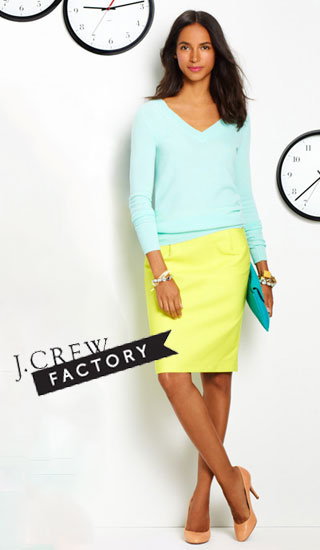
Reports last week that J.Crew may open a lower-priced chain under the “J.Crew Mercantile” label caused quite a stir in the retail industry. While CEO Mickey Drexler said it’s too early to discuss such a possibility, the fact is that J.Crew already has an affordable line — its incredibly robust outlet business, which exists not only physically but online as well.

Once a destination for out-of-season or damaged full-priced inventory, outlets have grown into a lucrative and somewhat deceptive place for retailers to hawk an entirely new line of lower-quality goods geared toward a different customer. J.Crew, like many other retailers, notes in filings that it sells “a specific line of merchandise” through J.Crew Factory that’s “based on (full-price) products sold in previous seasons” — in other words, it’s kind of a knockoff of itself.

J.Crew and competitors like Gap and Off 5th, Saks’ outlet brand, have learned they can generate larger profit margins by selling cheaper, made-for-factory products, and so they are increasingly stocking outlets with such goods. But it’s spurred a heated debate in the industry over whether consumers are really aware of what they’re buying. Despite increased coverage of the issue in recent years, discussions abound online about how to tell outlet merchandise apart from the “real” stuff, an easier task with some brands than others. J.Crew Factory, for example, puts two diamonds under the “r” on its labels, while the Gap Outlet label uses three dots.

But it’s not always so visible. Executives from Off 5th, which carries brands like True Religion and Alice + Olivia, told investors last year its products are 10% leftover Saks inventory, 25% private-label goods, and the rest mostly merchandise created for the stores by “brand-appropriate” vendors. While price tags on outlet goods may list a manufacturer-suggested retail price (known as an MSRP) or, a “valued at” price, that’s little more than a number ascribed by the retailer and doesn’t mean it was ever sold for such a sum in an actual full-price retail location. (Giant discounters likeT.J. Maxx and Nordstrom Rack also label prices this way.)

When there are authentic items in the mix, it’s not easy to tell because there aren’t any rules around that from the Federal Trade Commission. On Off 5th’s website, a Rag & Bone knit dress is listed at $122.99, a 62% discount from the original price of $325. But when you hover over the price, it brings up a box that says: “The strikethrough price reflects the regular price at which we’ve normally sold that item or, if we have not previously sold an item, the price at which that item (or a comparable item) is normally sold in the market.” So, there’s a chance any of these items could be cheaper versions of the real thing, sent straight from the designer labels to outlets.

Retailers’ embrace of e-commerce for its outlet stores — once purposefully located many miles away from full-price stores — is giving consumers a new and powerful tool to compare and contrast such items. J.Crew’s factory website, launched in late 2012 with the tagline “It’s your stylish little secret,” makes side-by-side comparisons of similar merchandise possible for the first time. Gap and Banana Republic outlets also plan to test online by the end of this fiscal year, a spokeswoman said.

E-commerce represents “the change in the marketplace — the customer can compare without regard to geography what’s being made available to them, and that’s why expansion of these outlet strategies is very, very dangerous,” said Mark Cohen, a professor of marketing at Columbia Business School. “At what point does your outlet business become too visible to your regular business?”

Four members of Congress went so far as to ask the FTC in January to investigate “potentially misleading marketing practices by outlet stores,” citing the difficulty in identifying made-for-outlet goods and “deceptive reference pricing.” They also noted there is no standardized definition for “factory outlet” and “outlet store,” both largely interchangeable terms.

Connecticut’s Better Business Bureau also recently posted an article explaining to consumers that looking at factory goods versus full-price items might be an “apples to oranges” comparison, suggesting there’s confusion around what the merchandise actually is.

“There’s no regulation that defines use of the word ‘outlet’ — it’s wide open as an opportunity,” Cohen said.

This dress may never have been sold at $325.

The New York Times magazine noted as far back as 1997 that many outlet goods were made-for-factory. But brands have been increasing that proportion steadily in recent years, according to calls with analysts and investors — it’s so much more profitable to take “make” out of a product then sell it at a supposedly discounted price than to sell actual full-priced, high-quality goods at a discount.

In the past year, Bebe has said it believes it can sustain outlets with 65% made-for-outlet merchandise, while American Eagle has said it anticipates carrying 75% made-for-factory items starting this year. Under Armour said in September that its outlets have recently carried 75% made-for-outlet goods, while Children’s Place said its proportion is closer to 80%. Coach and high-end luggage maker Tumi have said 85% of their outlet goods are made-for-factory. Vera Bradley said it plans to carry more made-for-factory items because it has learned it’s downright problematic to carry retired designs “right on the heels” of selling them at full price. But adding to the confusion, you have some brands at the other end of the spectrum, like Lululemon, which carries only genuine excess inventory in its outlet stores, and Abercrombie, which only recently started testing two outlet stores with made-for-factory product.

It seems to be a lucrative business, especially in a deeply competitive retail environment. J.Crew stopped breaking out sales from J.Crew Factory years ago, but said in a 2005 filing that its outlets produced $447 in sales per gross square foot, just shy of the $462 for full-price stores.

Michael Kercheval, president and CEO of International Council of Shopping Centers, the industry’s largest trade group, contends that consumers “fully understand” that they’re typically not getting authentic brand leftovers at outlets.

“It has been a transition where going to the outlet was a little bit of an adventure, you didn’t know what you were going to find,” he said. “That doesn’t happen now. People go to the outlets knowing that if it’s an Eddie Bauer outlet, it’s Eddie Bauer outlet products. There may be full-price there, but most of the merchandise is going to be made for outlets … Quite frankly, if you get a pair of sunglasses from the outlet store that is a name brand, you will know there’s a reason why it cost one-fourth of what you would pay at a full-price store.”

Kervechal says the difference between outlet merchandise and non-outlet merchandise has become so distinct that regional malls may even open separate wings of factory stores in coming years. The availability of outlet goods online has actually made it clear the customer doesn’t care that the two are different, he says.

But Cohen, the Columbia professor, thinks retailers should be careful about how they operate their outlet businesses versus their main ones, especially as the web increases transparency.

“The folks that do this carefully will be fine, and the folks that will be careless and stupid are going to get hurt,” he said.

Source

Thursday, May 15, 2014

Are subscription food delivery services worth the money?

Blue Apron Meals
Once upon a time, anyone who wanted to prepare a special meal had to first track down a recipe and then trek to the grocery store for the necessary components.

But these days, you can skip right ahead to the mixing and marinating, thanks to such services as Plated and Blue Apron, which bring ready-to-cook dinners — complete with detailed instructions and just the perfect amount of ingredients — to your doorstep.

But are they worth the cost? And are the results both tasty and healthy?

A growing number of people seem to think so, given that several of these companies have taken off in just the past few years. HelloFresh, for example, claims to have delivered more than 10 million meals internationally since 2012 — in the U.S. alone, their business more than quadrupled in 2013.

"Many people say they want to cook more, eat healthy, and waste less," says Seth Goldman, CEO of the U.S. division of HelloFresh. "And we provide a convenient way to do it."

The skinny on subscription food servicesWhile signing up for a subscription food service hardly means never setting foot in a supermarket again — you only receive meal kits for a few dinners per week — it can provide the tools and encouragement to experiment with new fare at a reasonable cost. Prices for subscription food services range from about $10 to $15 per serving.

"They allow you to have a 'restaurant' quality meal at home for much less money, and you won't have to stock your pantry with unfamiliar spices that you might never use again," says Keri Gans, R.D., author of The Small Change Diet.

Jackie Newgent, R.D., a culinary nutritionist and author of The With or Without Meat Cookbook, believes that these services are also well worth the price because they foster kitchen confidence. "Cooking can be a relaxing and enjoyable activity," she says. "It's a lovely learning experience to share with family too."

The downside, however, is that most of these plans aren't great for picky eaters. Although some allow you to customize your choices a little, flexibility is limited. PeachDish, in fact, sends all subscribers the same meals, emphasizing the "adventure" aspect, and urging people to think of it as a yearlong cooking course.

Then, of course, there's the question of nutrition. Gans warns that some of the keywords used by these services — including "local," "natural," and "real" — may lead consumers to mistakenly assume they're diet-friendly. While some of the dishes meet her criteria for acceptable calorie, fat, fiber, and sodium content, others fail.

"You really need to check the nutrition information," Gans says. With some services, this is easier said than done, because not every site provides detailed nutrition facts. Gans' advice? "If you wouldn't order it in a restaurant, don't make it at home," she says. "Fried chicken is still fried chicken."

That said, home-cooked meals do tend to be healthier than ordering a pizza or picking up Chinese after a long day at work. "We can't guarantee every dish is perfect if you're training for a marathon, but our meals are nutritious and better than what you'd probably get for delivery," says HelloFresh's Goldman. Newgent agrees, noting that these services provide perfectly portioned, well-balanced dinners. "And I'm a fan of using fresh, seasonal ingredients," she adds.

Curious to give one (or more) a try? We break down how four of the most popular services stack up.

Blue ApronHow it works: You sign up to receive ingredients and recipes for three meals per week for two, four, or six people.

Cost: $9.99 per person, per meal ($60 per week for the two-person plan).

Pros: You can customize your protein preference, so vegetarians and pescatarians are easily accommodated. And you can opt out of shellfish, fish, red meat, or pork. Plus, recipes include calorie counts.

"The variety of recipes and ingredients, quality of meats and produce, easy-to-follow directions, and pre-portioned ingredients are all great," says subscriber Marissa Kraft, 34, who works in advertising and lives in Brooklyn, New York.

Cons: If you hate certain vegetables or have food allergies, you're out of luck, since you can't customize these elements.

Sample dishes: Coconut curry salmon steaks with celery bok choy over barley; pizza panini with red leaf salad.

Best for: Budding chefs who are most picky about their protein sources.

HelloFreshHow it works: You choose the "classic" or "veggie" box and receive ingredients and recipes for three meals per week for two or four people. Classic category subscribers get to review five meal options each week and select three.

Cost: $11.50 per person, per meal, for the classic box ($69 per week for the two-person plan).

Pros: Classic subscribers get some choice — you can switch your box from classic to veggie at any time or vice versa. The recipes are also versatile: they include calorie counts, require few steps, and take 30 minutes or less to whip up.

"Everything that I have made, my husband and I have both enjoyed, and the produce is better than what I can get at my local grocery store," says Erica Bond, 26, an insurance company territory manager based in Panama City, Florida.

Cons: Having to picking three out of just five options might not be sufficient for choosy eaters, as well as those who have dietary restrictions. And veggie subscribers don't get any choice at all.

Sample dishes: White bean and porcini mushroom ragu; curried pork skewers with caramelized onion rice.

Best for: Gourmands who value speed and simplicity.

PlatedHow it works: No need to be a subscriber with this service — simply peruse the site whenever you'd like, review the current menu options, and then add meals that look appealing and pay "per plate." You can order each dish for two, four, or six people, although there's a four-plate-per-order minimum.

Cost: $15 per person, per meal. If you pay an optional monthly membership fee ($10 per month, or $8 per month if you commit to the whole year), the price drops to $12 per person, per meal.

Pros: You pick out each dish individually, so there are no surprises. And because nothing is on auto-ship, you'll never end up with something you don't like simply because you forgot to cancel a delivery.

"I really like how you can chose which meals you're sent," says Suzanne Lazear, 34, a grant writer in Los Angeles. "We have food allergies in the house, so this is vital in choosing a dinner subscription service."

Cons: Calorie counts, which are included with the recipes, can be high — some dishes clock in at around 900 calories — and prep time can be long, with some meals taking up to 50 minutes to complete. At $15 per plate for nonsubscribers, this is also the most expensive subscription-service option.

Sample dishes: Lemon asparagus cavatelli; pork tenderloin with apricot and arugula salad.

Best for: Finicky foodies and those with food allergies who crave lots of control.

PeachDishHow it works: Sign up for two meals' worth of ingredients and recipes each week that can feed either two or four people.

Cost: $12.50 per person, per meal, for the two-person plan ($50 per week).

Pros: The Atlanta-based company prides itself on providing creative, "Southern-infused" meals, which can be a boon if you're tired of traditional fare. Recipes are easy to follow and take 30 to 40 minutes to prepare.

Cons: No choice or flexibility; you either take the two set meals or cancel for the week, so vegetarians and other particular eaters may be unhappy. Also, calorie counts are not currently provided.

Sample dishes: Tilapia-and-kimchi tacos; flat iron steak with chimichurri, quinoa, and cinnamon-caramelized bananas.

Best for: Adventurous eaters who will try just about anything.

Tuesday, April 29, 2014

How "Office Space" got the modern workplace just right

The office could be any office. Cove fluorescents on a dimmer, modular shelving, the desk practically an abstraction. The whisper of sourceless ventilation. You are a trained observer and there is nothing to observe.
—David Foster Wallace, “The Pale King”

After the stock market crash, which emptied out the lofts and warehouses of San Francisco, eroding in an instant the frictionless, cloud-kicking fantasies of the dot-commers, another white-collar recession slung into place, and the office seemed to resume its role as the workplace everyone loved to hate.

Few cultural objects expressed this miasma of ill will better than the film “Office Space,” which appeared in 1999 at the very peak of the boom. Its theatrical run was a modest failure, but in retrospect it’s no surprise that a film so relentlessly dark and nasty would be overpowered by the delirium that gripped the end of the millennium. (From a reporter visiting a Microsoft annual meeting in 1997: “‘Why are we at Microsoft? ’ bellowed billionaire Steve Ballmer, then the company’s executive vice president, to a crowd of nine thousand employees packed into the Kingdome, Seattle’s indoor stadium. ‘For the money! ’ he screamed. ‘Show me the money! ’ The crowd responded with a roar: ‘Show me the money! ’ ”) Running gags about staplers, misplaced memos, “Hawaiian Shirt Day,” and the specter of working lives wasted in dead-end, purposeless jobs for a gray tech company: no one appeared ready for that sort of humor in an era of raging exuberance—and anyway, the cubicle was dead, right? Then the bubble burst; people woke up the following morning with their stock options erased; the beanbag chairs were gone, and they were in a cubicle again or unemployed and desperately searching for a cubicle. “Office Space” found new life on the small screen, a medium that suited the office worker existence depicted in the film: long days huddled in front of a computer, followed by short nights exhausted on the couch, staring at a television. In 1999 it barely recovered its $10 million budget in box office receipts; by 2003, it had become a cult classic, with more than two and a half million copies sold on video. (It screens on Comedy Central with the sort of mindless regularity that suggests a bored television office staff behind it all. “What do we fill the 2 to 5 p.m. slot with? ” “Fuck it, let’s just put on ‘Office Space’ again.”)

Source

Tuesday, April 15, 2014

How being a doctor became the most miserable profession

By the end of this year, it’s estimated that 300 physicians will commit suicide. While depression amongst physicians is not new—a few years back, it was named the second-most suicidal occupation—the level of sheer unhappiness amongst physicians is on the rise.

Simply put, being a doctor has become amiserable and humiliating undertaking. Indeed, many doctors feel that America has declared war on physicians—and both physicians and patients are the losers.

David Ramos/Getty
Not surprisingly, many doctors want out. Medical students opt for high-paying specialties so they can retire as quickly as possible. Physician MBA programs—that promise doctors a way into management—are flourishing. The website known as the Drop-Out-Club—which hooks doctors up with jobs at hedge funds and venture capital firms—has a solid following. In fact, physicians are so bummed out that 9 out of 10doctors would discourage anyone from entering the profession.

It’s hard for anyone outside the profession to understand just how rotten the job has become—and what bad news that is for America’s health care system. Perhaps that’s why author Malcolm Gladwell recently implied that to fix the healthcare crisis, the public needs to understand what it’s like to be a physician. Imagine, for things to get better for patients, they need to empathize with physicians—that’s a tall order in our noxious and decidedly un-empathetic times.

After all, the public sees ophthalmologists and radiologists making out like bandits and wonder why they should feel anything but scorn for such doctors—especially when Americans haven’t gotten a raise in decades. But being a primary care physician is not like being, say, a plastic surgeon—a profession that garners both respect and retirement savings. Given that primary care doctors do the work that no one else is willing to do, being a primary care physician is more like being a janitor—but without the social status or union protections.

Unfortunately, things are only getting worse for most doctors, especially those who still accept health insurance. Just processing the insurance forms costs $58 for every patient encounter, according to Dr. Stephen Schimpff, an internist and former CEO of University of Maryland Medical Center who is writing a book about the crisis in primary care. To make ends meet, physicians have had to increase the number of patients they see. The end result is that the average face-to-face clinic visit lasts about 12 minutes.

Neither patients nor doctors are happy about that. What worries many doctors, however, is that the Affordable Care Act has codified this broken system into law. While forcing everyone to buy health insurance, ACA might have mandated a uniform or streamlined claims procedure that would have gone a long way to improving access to care. As Malcolm Gladwell noted, “You don’t train someone for all of those years in [medicine]… and then have them run a claims processing operation for insurance companies.”

In fact, difficulty dealing with insurers has caused many physicians to close their practices and become employees. But for patients, seeing an employed doctor doesn’t give them more time with the doctor—since employed physicians also have high patient loads. “A panel size of 2,000 to 2,500 patients is too many,” says Dr. Schimpff. That’s the number of patients primary care doctors typically are forced to carry—and that means seeing 24 or more patients a day, and often these patients have 10 or more medical problems. As any seasoned physician knows, this is do-able, but it’s certainly not optimal.

Most patients have experienced the rushed clinic visit—and that’s where the breakdown in good medical care starts. “Doctors who are in a rush, don’t have the time to listen,” says Dr. Schimpff. “Often, patients get referred to specialists when the problem can be solved in the office visit.” It’s true that specialist referrals areon the rise, but the time crunch also causes doctors to rely on guidelines instead of personally tailoring medical care. Unfortunately, mindlessly following guidelines can result in bad outcomes.

Yet physicians have to go along, constantly trying to improve their “productivity” and patient satisfaction scores—or risk losing their jobs. Industry leaders are fixated on patient satisfaction, despite the fact that high scores are correlated with worse outcomes and higher costs. Indeed, trying to please whatever patient comes along destroys the integrity of our work. It’s a fact that doctors acquiesce to patient demands—for narcotics, X-rays, doctor’s notes—despite what survey advocates claim. And now that Medicare payments will be tied to patient satisfaction—this problem will get worse. Doctors need to have the ability to say no. If not, when patients go to see the doctor, they won’t actually have a physician—they’ll have a hostage.

But the primary care doctor doesn’t have the political power to say no to anything—so the “to-do” list continues to lengthen. A stunning and unmanageable number of forms—often illegible—show up daily on a physician’s desk needing to be signed. Reams of lab results, refill requests, emails, and callbacks pop up continually on the computer screen. Calls to plead with insurance companies are peppered throughout the day. Every decision carries with it an implied threat of malpractice litigation. Failing to attend to these things brings prompt disciplining or patient complaint. And mercilessly, all of these tasks have to be done on the exhausted doctor’s personal time.

Almost comically, the response of medical leadership—their solution— is to call for more physician testing. In fact, the American Board of Internal Medicine(ABIM)—in its own act of hostage-taking—has decided that in addition to being tested every ten years, doctors must comply with new, costly, "two year milestones." For many physicians, if they don't comply be the end of this month, the ABIM will advertise the doctor's "lack of compliance" on their website.


In an era when nurse practitioners and physician assistants have shown that they can provide excellent primary care, it’s nonsensical to raise the barriers for physicians to participate. In an era when you can call up guidelines on your smartphone, demanding more physician testing is a ludicrous and self-serving response.

It is tone deaf. It is punitive. It is wrong. And practicing doctors can’t do a damn thing about it. No wonder doctors are suicidal. No wonder young doctors want nothing to do with primary care.

But what is a bit of a wonder is how things got this bad.

Certainly, the relentlessly negative press coverage of physicians sets the tone. “There’s a media narrative that blames physicians for things the doctor has no control over,” says Kevin Pho, MD, an internist with a popular blog where physicians often vent their frustrations. Indeed, in the popular press recently doctors have been held responsible for everything from the wheelchair-unfriendly furniture to lab fees for pap smears.

The meme is that doctors are getting away with something and need constant training, watching and regulating. With this in mind, it’s almost a reflex for policy makers to pile on the regulations. Regulating the physician is an easy sell because it is a fantasy—a Freudian fever dream—the wish to diminish, punish and control a disappointing parent, give him a report card, and tell him to wash his hands.

To be sure many people with good intentions are working toward solving the healthcare crisis. But the answers they’ve come up with are driving up costs and driving out doctors. Maybe it’s too much to ask for empathy, and maybe physician lives don’t matter to most people.

But for America’s health to be safeguarded, the wellbeing of America’s caretakers is going to have to start mattering to someone.

Monday, March 31, 2014

Airbnb is possibly worth $1 billion

AP
Airbnb, the short-term couch and apartment rental site, could be worth more than some major hotel chains, if a deal that's in "advanced" stages of talks goes through. That's according to the Wall Street Journal, which notes that the plan to raise money for the site would place its value over $10 billion. That's more than hotel giants Wyndham Worldwide Corp. ($9.4 billion) and Hyatt Hotels Corp. ($8.4 billion).

While obviously a success, Airbnb has not been without controversy: for one thing, horror stories of rentals gone bad seem to regularly crop up in the news. Just this week, a New Yorker very nearly ended up with an "XXX freak fest" in his apartment after renting his home out for a night through the service. While he stopped the orgy before it began, Ari Teman now faces the possibility of eviction.

Plus, New York Attorney General Eric Schneiderman subpoenaed the company for its user data in order to determine whether the company allows some residents to break a 2010 law limiting short-term apartment rentals. But Airbnb has recently teased plans to expand its services into to other areas of the hospitality industry — picking up renters from the airport at the start of their trip, for instance. According to Time, the company has said it wants to become "the Apple of the hospitality business."

In 2012, the company did a fundraising round that put its valuation in the $2.5 billion range, according to a few reports. Airbnb hasn't yet disclosed its profitability or revenue, according to the Journal. There are currently about 600,000 rental listings on the site. For each successful listing, the company gets a portion of the rental fee.

Source

Wednesday, March 26, 2014

Starbucks to serve booze and alcohol

Starbucks
Colossal coffee shop chain Starbucks is looking to add some turn-up to its nighttime rush by enacting a new wave of beer and wine sales. Dubbed "Starbucks Evenings," chains in the Los Angeles, Chicago, Atlanta, Portland and Seattle areas will begin selling alcoholic beverages after 4 p.m. A new evening menu will also include an appetizer and dessert menu, including chicken skewers, macaroni and cheese and chocolate fondue. Wines and beers will vary based on location.

According Starbucks' website, "Starbucks Evenings" is an effort to substitute a loud bar for a more intimate happy hour meet-up.

"We’ve always been your neighborhood spot where you can take a moment to unwind, grab a well-deserved treat, and meet up with friends," the site reads. "But sometimes, you just want a glass of wine and a delicious bite to eat without going to a bar or making a restaurant reservation."

And while "Starbucks Evenings" includes new items for purchase, the barista setup will remain intact. The chain's regular coffee and tea menus will also still be available to order. And in case you were wondering if you could get that glass of wine with you lunch or have a cold brew with your breakfast, the answer is no. Starbucks will make the alcoholic beverages available after 4 p.m. only.

No word on whether "Starbucks Evenings" will expand to other areas, but if all goes well it would be safe to assume so.

Saturday, March 22, 2014

What happens during the filming of "Shark Tank"

During his South by Southwest keynote, Mark Cuban revealed some behind-the-scenes "Shark Tank" secrets.

"Shark Tank" airs every Friday night on ABC. Each week, entrepreneurs present their startups before a panel of judges, including Mark Cuban. The judges, or "sharks," can either decide to invest in the startup or pass.

Cuban revealed the secrets during an hour-long keynote. We recorded the conversation and pulled out the best quotes, organizing them into relevant topics.

Here's what Cuban had to say:

What a typical day filming 'Shark Tank' is like:
Mark Cuban: We get there in the morning. We go on stage at 8:00 which means I get there about 7:45. I rush my suit on. That gives them less time to do makeup and more time to screw up my hair.

They start bringing in the deals at about 8:15. We sit there, they set up the set-up thing that you see then the stage manager or producer basically says, “It’s [X-Person] and [Y-Person] and those are the two names.” Then they come in; we’re not allowed to use our phones or our tablets. You see us pick up whatever pads we have and pick up our pen and we start taking notes and they start pitching.

Is it real or staged?
MC: It’s all real. There’s nothing fixed and nothing staged. Literally those deals go from 30 minutes for just stupid-ass ones to 2.5 hours for some people.

How the sharks really react to pitches, both good and bad:
MC: The people who are true entrepreneurs, I want to be as supportive as I can. I want to protect them against Kevin [O'Leary].

...There are some gold diggers, which is someone who’s just doing it for the PR and they have no intention of doing a deal. You can tell because [in one case], they had $600,000 in sales and they wanted $100,000 for 1% — some amount that doesn’t reflect the valuation.

...I love the scams. “With these life pills you can go 8 days without eating.” Obviously [ABC] edits [the pitch] so it goes down from 2.5 hours down to a half-hour down to 8 to 14 minutes. And so knowing it’s going to be edited, I’ll rail into them and say like, “F*ck you, there’s NO WAY…” I love to mess with them.

Do the Sharks/judges all get along?
MC: We all get along but when you’re there from 8:00 in the morning until whenever we finish, and there’s 8, 10, 12 deals coming through and you’re shooting 8—9 hour days, just like any family you get annoyed as all get-up.

We all have our ways of doing things. I’ll try to give [entrepreneurs] advice and this and that, Lori [Greiner] wants to tell a story about how when she had nothing and this and that, Robert [Herjavec] wants to talk about his family being from Croatia…and all the other Sharks, their minds are everywhere else and I just can’t help but have a reaction so that’s when they show me making these dumb-ass faces all the time.

What happens after the show, and how many deals actually close:
MC: We get the opportunity to do due diligence. 60—70% of my deals close.

In [one] case, it was from some tiny town in the state of Washington, there were four owners, but the husband of one of these owners thought it was unconstitutional to pay income tax. He had never filed his taxes ever. I’m like, "Ok so, it’s going to be on national TV, what do you think happens next? They’re not coming after you, they’re going to come after me."

Why Cuban loves "Shark Tank":
MC: The reason I love doing the show — and it’s a lot of work — it’s the #1 show on television watched by families. Everyday I have people coming up to me saying, “My son...” “My daughter...they love the show and we watch it together on Friday nights."

Every parent wants their child to live the American dream. Shark Tank reinforces the American dream is alive and well.

...The show is real, it’s our money, we get along, but it does get intense.

Thursday, March 20, 2014

New company allows bridesmaids to rent their dress

Kelsey Doorey has been a bridesmaid six times, experiencing the excitement, the emotions — and the expense. While men in wedding parties typically rent their tuxedos, women get stuck paying for dresses they’ll probably never wear again.

“Many of my best friends aren’t engaged yet, so I have many more to come,” she says. “It’s an honor, but it’s an expensive honor.”

So the 28-year-old recent UCLA business school grad decided to do something about it.

Her new company, Vow to be Chic, rents designer dresses for bridesmaids from a website. Instead of paying hundreds of dollars for a new dress, customers pay $95 to $125 and, after the bride and groom head off into the sunset, the dresses go back.

Exclusive deals
The site has struck exclusive deals to carry several of the most popular styles each from five of the eight top designers of bridesmaid dresses, including Swoon and Lula Kate. Every dress is available in multiple colors and a full range of sizes.

Traditionally, a bride selects the dress for her bridesmaids, who then each must head to one particular boutique for a fitting. It’s often stressful as well as expensive – think of Katherine Heigl’s character in the movie “27 dresses.”

The average designer dress costs about $300, generating $2 billion annually amidst the overall $50 billion spent on weddings in the United States.

Vow to be Chic starts by helping a bride select a dress for her bridesmaids online. Then the renting bridesmaids send in their measurements and, way before the wedding, get the dress in two sizes to try on. Once the fit is confirmed, the sizing dresses go back to Vow to Be Chic, which sends final models out just before the nuptials.

The notion of renting fancy womens' wear has already been proven, thanks to the success of sites such as Rent the Runway, where Doorey worked before business school. During college, she also interned with a wedding planner in New York City and saw firsthand just how much stress arose from the bridesmaid dress-fitting process.

"Not okay with men outsmarting women"
“It dawned on me one day that men had been renting tuxedoes for decades,” she says. “I’m not okay with men outsmarting women in the fashion arena.”

The business plan comes amidst a boom for the so-called sharing economy, whether it's cheaper car rides from Uber, cheaper vacation rentals from AirBnb or cheaper vacuums from SnapGoods. It’s all fitting with the current post-boom, shallow recovery economic climate.

But it still wasn’t easy for Doorey to get all the designers on board. While many retailers sell bridesmaid dresses online, no one was renting high-end, designer styles. “I’m not sure about this Internet thing,” Doorey recalls one designer telling her.

Doorey was planning to head back East after graduating from UCLA’s Anderson School of Management last year. Then she and friend Anna Baxter won the school’s annual new-venture competition and a $15,000 prize to turn the idea of Vow to be Chic into a reality. Several of the judges, professional venture capitalists, offered to invest more on the spot.

One of those backers, Matt McCall of the Pritzker Group, says he generally doesn’t fund e-commerce startups like Vow to be chic. “I dislike that space – I hated that going into the contest,” he says. “But I ended up so impressed with Kelsey.”

Along with her prior experience and exhaustive market research, Doorey's calm, CEO-like demeanor under pressure helped convince the investors to come aboard. The site has been available to a limited, private audience since last year and opens to the public in a few weeks. She also has plans to expand into related areas as the business grows. Brides come to the site more than eight months before their wedding to sign up, creating a potentially lucrative market for other wedding vendors.

That’s all a ways down the road, however. For now, Vow to be Chic will stick to bridesmaids rentals and, hopefully, prevent anyone from having to become another 27-dress hoarder.