I'm moving to Roanoke, VA on June 12th! I need to lessen my moving load so I'm selling tons of clothes! Check out my closet on Poshmark. I also think this is a great site for anyone looking to sell their stuff.
Showing posts with label shopping. Show all posts
Showing posts with label shopping. Show all posts
Tuesday, May 19, 2015


Sunday, April 5, 2015
Spring cleaning
I'm moving in a few months, so I need to get rid of some clothes! Check out my poshmark closet (as well as my favorite closets) below.
Sunday, March 22, 2015
Mother's Day gift
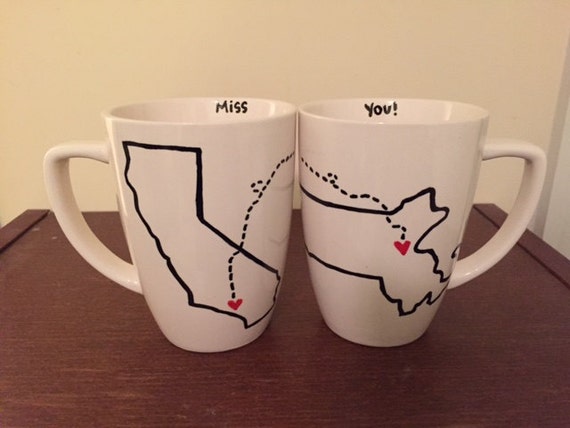
Mother's Day will be around the corner before you know it! Don't get caught scrambling to get a gift. If your mother lives in another state, check out my "Miss You!" mugs that I can customize for any two states. You can give mom the set or keep one for yourself. Check out my Etsy page here.
Thursday, March 12, 2015
2015: Spring Wishlist

1) Target - Women's Bernice Taper Toe Two Piece Flats
2) Forever 21 - Boucle Knit Cardigan
3) Triangl - Milly Swimsuit
4) J. Crew Factory - Racerback Cami
5) Amazon - Fashion Vintage Round Thick Horn Style Sunglasses
6) H&M - Top with Butterfly Sleeves
7) Topshop - Scallop Frill Tee
8) Jessica Simpson - Jadyn Wedge
9) Claire V - Supreme Haircalf Fold Over Clutch
Tuesday, February 17, 2015
My winter 2015 purchases

Thursday, January 22, 2015
My 2015 winter purchases

1) Sheinside - Black & white coat
2) Forever21 - Turtleneck poncho sweater
3) Nordstrom - Faux fur infinity scarf
4) Frye - Jane Boot in Redwood
5) Forever21 - Mesh-Trimmed Skater Dress
6) Banana Republic - Seamed Inset Tank
7) Forever21 - Heathered Metallic Bodycon Dress
Friday, January 9, 2015
Why Costco might be the best beauty store
Before celebrity makeup artist Kristofer Buckle was painting the faces of Mariah Carey and Blake Lively, he was a bouncer, of sorts. "I worked at the doors of several nightclubs and VIP velvet ropes in New York," he explains of his stints at iconic New York City hotspots of yore Limelight and The Makeup Room. "It was my job to keep people out and only let certain people in, and I just never felt comfortable with that," he says. "I just wanted everyone to come to my party."
That experience has taught him to turn down many a beauty contract over his decades in the industry — something that obviously surprised brands (and, perhaps more so, his agents). "I wanted to wait until I had my own line, and even then, I wanted to still use other products to hold on to my credibility."
So, when the bewilderingly elusive Ben Bennett, the CEO of "brand incubator" Hatch Beauty, called Buckle about creating his very own line for a mass-market brand, he was finally interested. The hook? It was to sell at Costco, home of value packs, deluxe-sized cereal, and discount everything.
Bennett, who was unavailable for comment for this piece, had only recently launched a project with the retailer called Beauty's Most Wanted. The concept was artist-based, artist-created products — no celebrity faces or faux endorsements. Just talented professionals making quality beauty buys — for the Costco consumer.
Beauty's Most Wanted launched with three industry heavyweights: Orlando Pita, who is easily one of the most in-demand (and notoriously perfectionist) hairstylists in the fashion world; Pati Dubroff, a celebrated makeup artist who's on speed-dial for celebrities from Charlize Theron to Taylor Swift; and Jenna Hipp, who can only be described as the celebrity manicurist (Miley, Lea Michele) who changed the game via Instagram. Buckle and Jessica Wu, MD, a renowned dermatologist in Los Angeles, joined the roster shortly afterward.
Each professional was tasked with creating products that would resonate with a large audience and that could sell in Costco's typical "deluxe" packaging. Pita's go-to styling tool, Revive Instant Boost Dry Shampoo, sells in packs of two, instead of one. His conditioners, only available in large sizes, come with bottles of argan hair oil. Dubroff''s eye palettes come with 12 shadows and a liner, Buckle's lip tints come in sets of four, and Hipp's polishes were initially available in sets of 16, and are now sold in sets of eight. The emphasis is on the money you save by buying in bulk, not on the initial pricetag. (For example, $35 could seem like a lot for lip crayons, but not when you're getting a pack of five.)
"Costco has a huge base of members [who] trust what's on their shelves," Pita explains. "They don't have 50 shampoos and conditioners, or styling products...they have five to 10 that they deem the best. This editing process is an asset for me to present my brand there." While a carefully selected mix benefits the artist by making sure they don't get lost on overcrowded shelves, it's also a benefit to consumers. Many beauty retailers tout the variety of brands they offer, which in theory sounds great, but often, an overwhelming array and lack of guidance can leave the average shopper lost.
From a wholesale perspective, buying in bulk, like Costco does, allows for a lower price point at retail, but also more spending on the product development side. "By producing a large volume of product that can be distributed nationwide through their stores, I'm able to lower the price that it costs for me to produce," Dr. Wu points out. This especially comes in handy with her serum, a 15% vitamin C formula that's packaged in four airtight containers, each with a 10-day supply of product to ensure maximum ingredient efficacy. "Those airtight pumps are not cheap, so being able to buy them in bulk makes a big difference, especially if you want to source high-quality ingredients and have efficient packaging," she says.
It also allowed Hipp, a woman known for preaching about the potentially dangerous ingredients in most nail polishes, to create a formula that actually met her standards. (It also afforded her the pleasure of naming every single nail color. "I would send pictures to Miley and ask her for ideas," she quips.) For Dubroff and Buckle, it was all about taking their most essential, go-to colors for the eyes and lips, and packaging them smartly in palettes or kits.
Unlike the very few big corporations you see at the drugstores, Beauty's Most Wanted is represented by individuals — that's a huge point of difference, especially for a customer base that's looking for personal connections and engagement (the success of YouTube gurus is good evidence for this). "There are all these brands at mass, but who the hell are they?" Hipp asks. "Can you go on Instagram and talk to them? No. But, you can talk to me! You can ask me a question on social media. I am 100% integrated into my brand, because I am my brand."
The funny thing is, most of the players here (except for Buckle) come from the world of luxury. Dubroff has been looking into a (very) high-end cosmetics line, Hipp had a collection with the $18-per-polish brand RGB, Pita collaborated with high-end hair tools manufacturer T3, and Dr. Wu had a line at Nordstrom. The decision to go mass-market, then, wasn't exactly a minor one. "Sure, I have a prestige line in my head and in my heart," Dubroff says. "But, my thought has been that the ability to reach a lot of people will help me make that dream a reality."
Dr. Wu says for her, it's an opportunity to engage a different type of consumer. "I was thinking about how I could reach people or patients who wouldn't be able to sit in my chair," she says. "I saw a study that showed only a small fraction of women nationwide go to a derm or a professional for their skin needs. I saw this and thought this project would be a way to reach a much larger group of women."
For Hipp, however, (amicably) parting ways with RGB and launching her eponymous brand at mass meant something entirely different. She is the owner and founder of Nailing Hollywood, an agency that promotes and books manicurists who are just starting out. "The most amazing part of what I'm doing with the Hipp brand is reinvesting it back into Nailing Hollywood," she explains. "I just feel like I'm responsible for the careers of eight young women. So, I have something to prove. How can they trust me if I haven't lived the career they want?"
Considering the product offerings from Beauty's Most Wanted just keep coming down the pipeline, it seems like Hipp's dream might just become a reality. "There are huge things happening," she says. "Seriously, I mean it. Hold on to your hats!" We can't wait.
 |
| Hatch Beauty |
That experience has taught him to turn down many a beauty contract over his decades in the industry — something that obviously surprised brands (and, perhaps more so, his agents). "I wanted to wait until I had my own line, and even then, I wanted to still use other products to hold on to my credibility."
So, when the bewilderingly elusive Ben Bennett, the CEO of "brand incubator" Hatch Beauty, called Buckle about creating his very own line for a mass-market brand, he was finally interested. The hook? It was to sell at Costco, home of value packs, deluxe-sized cereal, and discount everything.
Bennett, who was unavailable for comment for this piece, had only recently launched a project with the retailer called Beauty's Most Wanted. The concept was artist-based, artist-created products — no celebrity faces or faux endorsements. Just talented professionals making quality beauty buys — for the Costco consumer.
Beauty's Most Wanted launched with three industry heavyweights: Orlando Pita, who is easily one of the most in-demand (and notoriously perfectionist) hairstylists in the fashion world; Pati Dubroff, a celebrated makeup artist who's on speed-dial for celebrities from Charlize Theron to Taylor Swift; and Jenna Hipp, who can only be described as the celebrity manicurist (Miley, Lea Michele) who changed the game via Instagram. Buckle and Jessica Wu, MD, a renowned dermatologist in Los Angeles, joined the roster shortly afterward.
Each professional was tasked with creating products that would resonate with a large audience and that could sell in Costco's typical "deluxe" packaging. Pita's go-to styling tool, Revive Instant Boost Dry Shampoo, sells in packs of two, instead of one. His conditioners, only available in large sizes, come with bottles of argan hair oil. Dubroff''s eye palettes come with 12 shadows and a liner, Buckle's lip tints come in sets of four, and Hipp's polishes were initially available in sets of 16, and are now sold in sets of eight. The emphasis is on the money you save by buying in bulk, not on the initial pricetag. (For example, $35 could seem like a lot for lip crayons, but not when you're getting a pack of five.)
"Costco has a huge base of members [who] trust what's on their shelves," Pita explains. "They don't have 50 shampoos and conditioners, or styling products...they have five to 10 that they deem the best. This editing process is an asset for me to present my brand there." While a carefully selected mix benefits the artist by making sure they don't get lost on overcrowded shelves, it's also a benefit to consumers. Many beauty retailers tout the variety of brands they offer, which in theory sounds great, but often, an overwhelming array and lack of guidance can leave the average shopper lost.
From a wholesale perspective, buying in bulk, like Costco does, allows for a lower price point at retail, but also more spending on the product development side. "By producing a large volume of product that can be distributed nationwide through their stores, I'm able to lower the price that it costs for me to produce," Dr. Wu points out. This especially comes in handy with her serum, a 15% vitamin C formula that's packaged in four airtight containers, each with a 10-day supply of product to ensure maximum ingredient efficacy. "Those airtight pumps are not cheap, so being able to buy them in bulk makes a big difference, especially if you want to source high-quality ingredients and have efficient packaging," she says.
It also allowed Hipp, a woman known for preaching about the potentially dangerous ingredients in most nail polishes, to create a formula that actually met her standards. (It also afforded her the pleasure of naming every single nail color. "I would send pictures to Miley and ask her for ideas," she quips.) For Dubroff and Buckle, it was all about taking their most essential, go-to colors for the eyes and lips, and packaging them smartly in palettes or kits.
Unlike the very few big corporations you see at the drugstores, Beauty's Most Wanted is represented by individuals — that's a huge point of difference, especially for a customer base that's looking for personal connections and engagement (the success of YouTube gurus is good evidence for this). "There are all these brands at mass, but who the hell are they?" Hipp asks. "Can you go on Instagram and talk to them? No. But, you can talk to me! You can ask me a question on social media. I am 100% integrated into my brand, because I am my brand."
The funny thing is, most of the players here (except for Buckle) come from the world of luxury. Dubroff has been looking into a (very) high-end cosmetics line, Hipp had a collection with the $18-per-polish brand RGB, Pita collaborated with high-end hair tools manufacturer T3, and Dr. Wu had a line at Nordstrom. The decision to go mass-market, then, wasn't exactly a minor one. "Sure, I have a prestige line in my head and in my heart," Dubroff says. "But, my thought has been that the ability to reach a lot of people will help me make that dream a reality."
Dr. Wu says for her, it's an opportunity to engage a different type of consumer. "I was thinking about how I could reach people or patients who wouldn't be able to sit in my chair," she says. "I saw a study that showed only a small fraction of women nationwide go to a derm or a professional for their skin needs. I saw this and thought this project would be a way to reach a much larger group of women."
For Hipp, however, (amicably) parting ways with RGB and launching her eponymous brand at mass meant something entirely different. She is the owner and founder of Nailing Hollywood, an agency that promotes and books manicurists who are just starting out. "The most amazing part of what I'm doing with the Hipp brand is reinvesting it back into Nailing Hollywood," she explains. "I just feel like I'm responsible for the careers of eight young women. So, I have something to prove. How can they trust me if I haven't lived the career they want?"
Considering the product offerings from Beauty's Most Wanted just keep coming down the pipeline, it seems like Hipp's dream might just become a reality. "There are huge things happening," she says. "Seriously, I mean it. Hold on to your hats!" We can't wait.
Wednesday, January 7, 2015
C. Wonder to shut down completely
 |
| C. Wonder |
The company called an internal town hall meeting at 11 a.m. today, where its roughly 100 employees were told the brand would be shutting down, said a person at the meeting who declined to be identified citing a lack of authorization to speak publicly. Today was the last day for all but a handful of employees who will stay on to help C. Wonder close down, said two people familiar with the matter. The meeting lasted 15 minutes or less; most of the Flatiron office emptied out by 1 p.m., the first source said.
C. Wonder’s 11 U.S. stores, already pared down from a massive round of closings in recent months, will shutter completely in the next two to three weeks, while its website is slated to shut down by the end of next week, the person at the meeting said. They added that Chris Burch, who recently relocated his office from the Flatiron office to Miami, was not present at the meeting. C. Wonder has also abruptlyshut down its social media accounts on Twitter, Facebook, Instagram, and Pinterest.
Daniela Maron, a spokeswoman for C. Wonder, didn’t immediately respond to a voicemail and email seeking comment.
Venture capitalist J. Christopher Burch opened the first C. Wonder in 2011. The brand, which sells a variety of home goods, jewelry, and knick-knacks, drew immediate comparisons to his ex-wife Tory Burch’s more expensive namesake brand. Some in the industry dubbed C. Wonder an act of “revenge retail,” a mentality that may have pushed the chain into a number of ill-advised, costly leases. The company, for example, spent a couple of years opening an expensive Flatiron store in Manhattan; internally, it’s believed that Chris chose that spot because a hair salon favored by Tory Burch is upstairs.
BuzzFeed News reported in November that C. Wonder planned to close up to 20 of its 32 stores by Jan. 1, depending on how lease negotiations unfolded, and transition into a wholesale brand. Unnamed sources at Burch Creative Capital told WWD at the time that the report was “off-base,” and that the brand would “continue to run freestanding stores.”
The company has 11 U.S. stores listed on its website, excluding a seasonal Nantucket location, and was slated to call them at noon today to inform them of the closures, the person at the meeting said. It also has three international stores and has been in the process of expanding into the Philippines.
Harlan Kent, C. Wonder’s CEO of less than a year, told employees at the town hall meeting that the company tried many tactics to turn itself around in the past six months, from closing stores to cutting staff, but that it wasn’t enough, the person said. He went on to say the board of directors made the decision to close the entire business.
Employees weren’t completely shocked, given recent 75%-off discounts on merchandise and the closures, the person said. Suspicions were also raised after it appeared as though new tenants were scoping out the office and following Chris Burch’s office move, they said.
Sources told BuzzFeed News in November that Chris Burch has distanced himself from C. Wonder in the past year, focusing on other investments instead. He’s been working on a new line with Ellen DeGeneres called E.D. and spending a lot of time in Indonesia, two sources say, where he and a friend acquired a resort called Nihiwatu on the island of Sumba.
Monday, December 22, 2014
Winter purchases

1. Target - Oversized Plaid Scarf (Identical to the sold out one at Zara)
2. Zara - Fitted Down Jacket With Furry Collar
3. J. Crew Factory - Quilted Puffer Vest (Sold out online but is restocked from time to time. I also bought mine in store, which was fully stocked with them)
4. J. Crew Factory - Factory Crystal Domes Necklace
5. Rampage - Jaycer Boots (Via TJ Maxx)
6. J. Crew Factory - Class Button-Down Shirt in Gingham
8. J. Crew Factory - Knit Tweed Dress
Sunday, December 21, 2014
Sunday, November 30, 2014
Shop my closet and etsy shop!
I have over 70 items listed in my poshmark closet. Also, I listed five necklaces, handmade by me, available on my etsy page as well. Great gifts for the holiday season - either for yourself or for others.
Shop each at the links below:


Shop each at the links below:
Sunday, September 14, 2014
Saturday, March 8, 2014
How to save money at the grocery store
 |
| Thinkstock |
In other words, I like to keep things simple. To that end, I've got five easy grocery tips that will get you saving money in no time:
1. Shop at night.
Go to the store when other people are in bed. Most stores open late. Without the distraction of announcements, people and maybe even your kids, you can have your own Zen moment. When you are clear-headed, you're more likely to zone in on what you really need and leave out what you really don't. Plus, it's easier to give the cashier coupons without causing any delays for the line behind you.
2. Scan the Weekly Ad.
Not everyone coupons, but by glancing through your grocery store's weekly ad, you can save yourself up to 50 percent off. I normally try to buy everything organic, but it can add up easily if it's not on sale. The organic blueberries at my store usually costs around $5.99 for a small package, so I usually pass it up. But one day I got really lucky. I went to the store and grabbed the weekly ad (it's usually on a stand in front of the entrance). I scanned it quickly and saw that those organic blueberries were on sale for $2.49, which is more than half off. Scanning that ad requires almost no effort, but worth it in the end.
3. Get out of your routine.
As with most things in life, you tend to develop habits around your shopping. For example, do you notice that you always head to the dairy aisle first, then maybe the snack aisle, followed by the produce area? Instead, go venture out into the other parts of the store for things that you know you need for the future. The beauty is that they may be on sale and you can stock up while they're cheap. I always like to buy cans of beans even if I know I don't need it immediately because I know eventually I will. When they are on sale, I can save up to 60 percent.
4. Buy store-brand versus name-brand items.
Let's say you need to get chips for a party and while you scan the snack aisle, you find a store-brand chip on sale for $1.99. The name-brand counterpart costs $4.99. Both the same size, but of course you're not sure if the taste is the same. You'd be surprised how well many of these store-brand products did during a taste test. Plus, industry experts say that you can save an average of 25 percent just by buying store-brand goods.
5. Download a grocery app.
We are a society consumed by all sorts of apps, but if you want to grocery shop, save money and still be lazy, let Favado, an app created by Savings.com, do the work for you. The app will let you know all the sale items from different stores and if there is a store coupon or manufacturer coupon, it will also let you know that too (of course, you can just use it to scan the weekly ad to keep things simple). And if you're already glued to your smartphone, it's easy to incorporate into your routine.
Monday, February 24, 2014
Trader Joe's sued over peanut butter pretzels
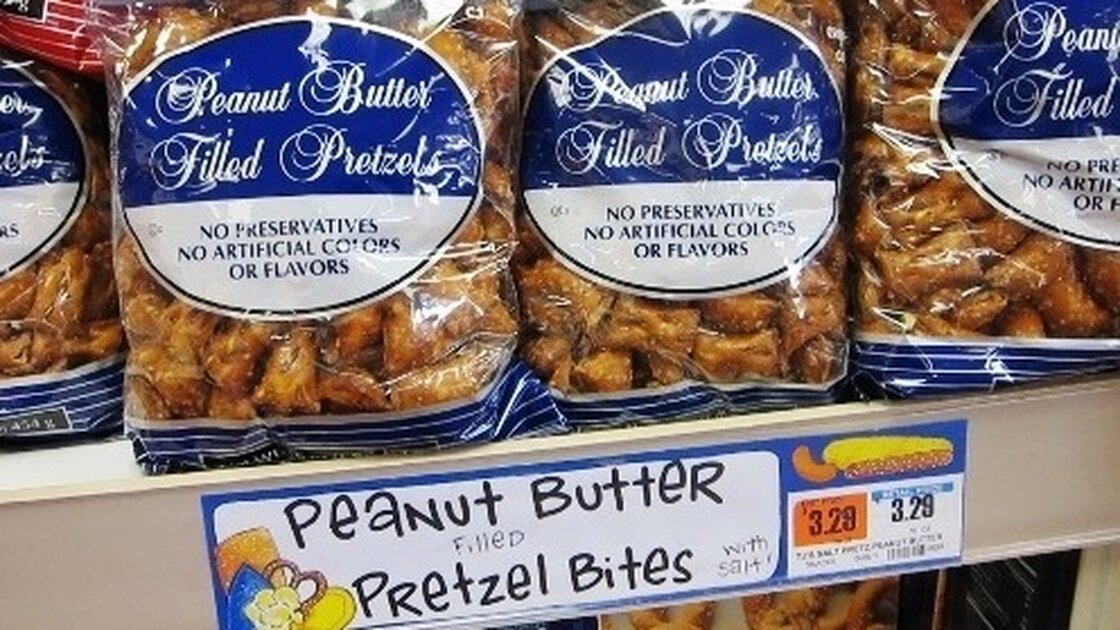 Among the many snacks you can find in the aisles of Trader Joe's is an icon of sweet and salty goodness: the peanut butter pretzel. It's a combination so tasty, famed food writer Ruth Reichl once raved, "You haven't lived until you've tried the two together."
But the beloved treats aren't just treasures for the palate — they're a pretty lucrative business worth millions of dollars. And now, Trader Joe's is being sued for allegedly cornering the market on the snack.
The plaintiff is Maxim Marketing, a Southern California company that claims to have invented the peanut butter pretzel in the early 1980s. And for more than 25 years, Maxim claims, it supplied the grocery chain with the snack, which is sold under the private Trader Joe's label. But Maxim says the retailer switched suppliers to packaged food giant ConAgra Foods, unfairly cutting it out of the business it pioneered. So Maxim is suing both companies, explains journalist Alfred Lee, who wrote about the lawsuit for the Los Angeles Business Journal.
"They're suing for alleged breach of contract and also alleging the existence of a peanut butter pretzel monopoly," Lee tells Morning Edition host David Greene. "I realize that sounds kind of funny, but this isn't some bite-sized niche, if you will. It's a market worth tens of millions of dollars."
Maxim claims it sold Trader Joe's $9 million worth of peanut butter pretzels each year, and the grocer, in turn, sold the snacks at a gross markup of roughly 35 percent.
"Maxim is a middle man that doesn't own its own factories," Lee explains. The company used to work with various independent manufacturers to create the pretzel snacks. But over the years, "ConAgra has bought up most of the peanut butter pretzel manufacturing capability in the United States."
That means ConAgra is now pretty much the only game in town when it comes to making the snacks. Indeed, Maxim says it used ConAgra to manufacture the pretzels until Trader Joe's made a deal directly with ConAgra that cut Maxim out.
"Maxim is saying that this deal prevents them from essentially doing business," Lee says.
Trader Joe's, which is privately held, is famously tight-lipped. It does not disclose its suppliers, and it has not commented publicly on the lawsuit nor responded to it in court.
Of course, Trader Joe's has the right to use any supplier it wants. And one way the company has traditionally cut costs is by bypassing the middle man and going straight to the manufacturer when it comes to creating its own private-label foods. So, really, it's up to the court to decide whether any contract was indeed breached, and whether the deal between Trader Joe's and ConAgra really does crumble competition in the pretzel marketplace.
One of the lawsuit's most surprising revelations? Turns out, the peanut butter pretzel is a marvel of food manufacturing. The technology to make a hard pretzel shell stuffed with peanut butter didn't even exist until the 1980s, Lee says. It's a process called co-extrusion — basically, an outer tube pumps out pretzel dough, while an inner tube pumps out peanut butter filling onto a conveyor belt. The whole thing is then sliced up and baked in a giant 100-foot oven.
"It turns out that getting the mix right and the proportions right was pretty tricky," Lee says. "If there is too much water in the pretzel or the shell is too thin, the things will explode. And imagine having to clean a 100-foot oven full of peanut butter."
Tuesday, February 18, 2014
Sneaky ways retailers get you to spend more
1. Supersized Carts

The trick: Just as goldfish expand to fill the container they’re in, it turns out the amount of groceries we buy is directly related to the dimensions of our cart—with a bigger one enticing us to spend up to 37% more. Watch out for that mini-cart your mini-me is pushing, too: “You might think, ‘Wow, this store is really kid-friendly,’” says Lindstrom. “Well, retailers are turning up kid-friendly elements because, on average, a consumer will spend 30% more when they have kids with them.” Retailers even place desirable products at children’s eye level, so they’ll beg you. “And it works,” he says.
The solution: Opt for a basket or smaller cart (or be OK with leaving a mammoth one half-full), and, if possible, shop alone. Even having a spouse along can hurt you: Seven out of ten people spend more time shopping when with a partner.
2. Nostalgic Music
The trick: It turns out Christmas music is a perennial hit for marketers. “It’s an old trick—it makes us feel nostalgic, like we’re children again,” says Lindstrom, who calls the phenomenon “rosy remembering.” In other words, it takes us back to life in simpler times. As a result, we tend to spend 17% more than when generic music is playing. But sound, in general, is a powerful motivator. Increasingly, stores are creating what Lindstrom calls “soundscapes”: The butcher department might play the sound of sizzling steak, or in the soft drink aisle, you’ll hear soda fizzing on ice. “It’s a way to activate an emotion we’re not aware of,” he says, “which stimulates us to buy.”
The solution: Bring your own soundtrack: “Wear your iPod and listen to upbeat music,” says Lindstrom. “It may sound crazy, but it not only will make you shop faster, it will also save you money.”
3. The Denomination Effect
The trick: Stop for a sec and imagine the cashier carefully counting out single bills as she gives you change. Did you know there’s a strategic reason stores do so? It’s called the Denomination Effect—or the fact that we’re much more likely to spend $100 if it’s broken down into smaller bills than if we’re carrying around a C-note. In fact, a 2009 study showed that breaking a $100 bill to make a purchase is 48% harder than spending exactly the same amount using smaller notes. That’s why we don’t mind spending spare change on gum or magazines at the cash register, but won’t necessarily break a $20 to do so: We tell ourselves that we’re spending less when only forking over singles.
The solution: “Test yourself,” advises Lindstrom. “Try carrying a $100 bill and see how long it takes you to break it. And resist checkout temptation, which adds up.”
4. The Rise of Vani-sizing
The trick: Maybe you’ve fallen prey to this at some point: “But these pants are a size 4, and they fit me!” Cue your triumphant march to the register. Vani-sizing—when stores make clothes bigger so we think we can fit into a smaller size—is “in nearly every store out there,” says Lindstrom, and works on both men and women. Take, for example, the fact that in three different stores, a pair of men’s pants with a 36-inch waist was found to actually measure anywhere from 37 (at H&M) to 39 (at the Gap) to 41 (at Old Navy.) Why it works: Our purchase decisions are one part logic and at least one part emotion. Advertisers play on feelings like size envy to motivate us to buy.
The solution: Remember, nobody’s ever going to see that tag. You’ll save more if you size up only how well a given piece fits—and disregard its number.
5. Mirror Manipulation
The trick: It turns out your dressing room mirror may not always reflect reality. “Playing with light is a huge one,” says Lindstrom. Many stores—as anyone who’s ever spent any time in a Victoria’s Secret knows—will add a slight tint of rosy color to their fitting room mirrors to make us look fresher and more tanned. In fact, a recent experiment showed we actually spend 19% more if we think we look better in the looking glass. We may even unwittingly be getting an in-store makeover: Mirrors at the front are typically untampered with, with flattering lighting happening only when you’re ready to try on the wares.
The solution: Make sure to study potential purchases on the store floor, not just in an idealized environment created to sway you.
6. Shopping Speed Bumps
The trick: “Most stores study the way we walk around and grab products, then design themselves around the concept,” says Lindstrom. Now retailers are even installing what the industry calls “speed bumps” into the floor. ”Subconsciously, when we feel those little bumps, we will slow down and look around rather than navigate our shopping cart,” he says. On average, the bumps create a 15-second delay, which, in a supermarket study, led to as much as 17% in additional spending as shoppers contemplated additional purchases.
The solution: Beating this comes down to being alert: You know each time you hit a speed bump on the road. Now that you’re aware they can exist indoors too, remember why they’re there—and that it has little to do with a speed limit.
7. Not-so-Free Samples
The trick: You’re cruising along with your cart, intent on getting laundry detergent and toilet paper—when suddenly you hear, “Can I offer you a sample?” Out of nowhere an employee extends a toothpick-speared bite of the latest pizza bagel. “Reject it,” says Lindstrom. “Whenever you grab a sample, you tell your body it’s dinner time, and your brain will tune into the topic of food.” In fact, 40% of people who accept an in-store sample will begin buying food, he says, even though they never planned to do so in the first place.
The solution: Just say no, of course. But the easiest way to resist this form of temptation is to avoid shopping on an empty stomach.
8. Built-In Interruptions
The trick: “You’re in Wal-Mart, when all of a sudden a display of canned corn the size of a small house blocks your path,” says Lindstrom, “and you can’t help but notice, ‘Hey, this is only $1.50.’” Guess what? That canned pyramid wasn’t built for aesthetic reasons. Whether it’s an in-store obstruction trumpeting a deal, or merely your cell phone ringing, the latest science proves that whenever we’re interrupted, we lose our focus and become more likely to spend. Specifically, when we abandon our shopping list to consider a deal a store presents us with, or revisit an item we were looking at before the phone rang, we’re 35% more likely to close the deal—and willing to spend up to 15% more for the very same product.
The solution: “Turn your cell phone off,” says Lindstrom, “and leave your shopping list at home.” While that latter point might seem counterintuitive, stores, he says, have gotten wise to our to-do lists—arranging products that would make more sense next to each other far apart for the express purpose of exposing us to more costly interruptors.
9. The Credit Card “Discount”
The trick: “Would you like to receive 15% of your purchase today?” the saleswoman trills, offering an application for the store’s credit card. At LearnVest, we’ve told you many times that opening an in-store card was a bad idea, but “millions of women still fall for it,” says Lindstrom. Here’s why what seems like a good offer actually works against you: again, the unexpected interruption. You were ready to pay, had your card out, and her offer catches you off guard. “That’s when they go in for the kill,” says Lindstrom. “You think: ‘Well, why not? What’s the harm?’ The harm is major.” First, that salesperson isn’t just being nice—she gets a bonus if you sign up. Research also shows that with that card in hand, you spend an average of 30% more. Plus, the store will now know all of your buying habits. “It’s a practice so deceptive,” says Lindstrom, “some members of Congress think this should be regulated.”
The solution: At LearnVest, we do believe in discounts—but not ones that will bite you back. If shopping online, look for coupon codes or open a separate email address just for deals, and invite stores you like to send you special offers there.
Source
The trick: Just as goldfish expand to fill the container they’re in, it turns out the amount of groceries we buy is directly related to the dimensions of our cart—with a bigger one enticing us to spend up to 37% more. Watch out for that mini-cart your mini-me is pushing, too: “You might think, ‘Wow, this store is really kid-friendly,’” says Lindstrom. “Well, retailers are turning up kid-friendly elements because, on average, a consumer will spend 30% more when they have kids with them.” Retailers even place desirable products at children’s eye level, so they’ll beg you. “And it works,” he says.
The solution: Opt for a basket or smaller cart (or be OK with leaving a mammoth one half-full), and, if possible, shop alone. Even having a spouse along can hurt you: Seven out of ten people spend more time shopping when with a partner.
2. Nostalgic Music
The trick: It turns out Christmas music is a perennial hit for marketers. “It’s an old trick—it makes us feel nostalgic, like we’re children again,” says Lindstrom, who calls the phenomenon “rosy remembering.” In other words, it takes us back to life in simpler times. As a result, we tend to spend 17% more than when generic music is playing. But sound, in general, is a powerful motivator. Increasingly, stores are creating what Lindstrom calls “soundscapes”: The butcher department might play the sound of sizzling steak, or in the soft drink aisle, you’ll hear soda fizzing on ice. “It’s a way to activate an emotion we’re not aware of,” he says, “which stimulates us to buy.”
The solution: Bring your own soundtrack: “Wear your iPod and listen to upbeat music,” says Lindstrom. “It may sound crazy, but it not only will make you shop faster, it will also save you money.”
3. The Denomination Effect
The trick: Stop for a sec and imagine the cashier carefully counting out single bills as she gives you change. Did you know there’s a strategic reason stores do so? It’s called the Denomination Effect—or the fact that we’re much more likely to spend $100 if it’s broken down into smaller bills than if we’re carrying around a C-note. In fact, a 2009 study showed that breaking a $100 bill to make a purchase is 48% harder than spending exactly the same amount using smaller notes. That’s why we don’t mind spending spare change on gum or magazines at the cash register, but won’t necessarily break a $20 to do so: We tell ourselves that we’re spending less when only forking over singles.
The solution: “Test yourself,” advises Lindstrom. “Try carrying a $100 bill and see how long it takes you to break it. And resist checkout temptation, which adds up.”
4. The Rise of Vani-sizing
The trick: Maybe you’ve fallen prey to this at some point: “But these pants are a size 4, and they fit me!” Cue your triumphant march to the register. Vani-sizing—when stores make clothes bigger so we think we can fit into a smaller size—is “in nearly every store out there,” says Lindstrom, and works on both men and women. Take, for example, the fact that in three different stores, a pair of men’s pants with a 36-inch waist was found to actually measure anywhere from 37 (at H&M) to 39 (at the Gap) to 41 (at Old Navy.) Why it works: Our purchase decisions are one part logic and at least one part emotion. Advertisers play on feelings like size envy to motivate us to buy.
The solution: Remember, nobody’s ever going to see that tag. You’ll save more if you size up only how well a given piece fits—and disregard its number.
5. Mirror Manipulation
The trick: It turns out your dressing room mirror may not always reflect reality. “Playing with light is a huge one,” says Lindstrom. Many stores—as anyone who’s ever spent any time in a Victoria’s Secret knows—will add a slight tint of rosy color to their fitting room mirrors to make us look fresher and more tanned. In fact, a recent experiment showed we actually spend 19% more if we think we look better in the looking glass. We may even unwittingly be getting an in-store makeover: Mirrors at the front are typically untampered with, with flattering lighting happening only when you’re ready to try on the wares.
The solution: Make sure to study potential purchases on the store floor, not just in an idealized environment created to sway you.
6. Shopping Speed Bumps
The trick: “Most stores study the way we walk around and grab products, then design themselves around the concept,” says Lindstrom. Now retailers are even installing what the industry calls “speed bumps” into the floor. ”Subconsciously, when we feel those little bumps, we will slow down and look around rather than navigate our shopping cart,” he says. On average, the bumps create a 15-second delay, which, in a supermarket study, led to as much as 17% in additional spending as shoppers contemplated additional purchases.
The solution: Beating this comes down to being alert: You know each time you hit a speed bump on the road. Now that you’re aware they can exist indoors too, remember why they’re there—and that it has little to do with a speed limit.
7. Not-so-Free Samples
The trick: You’re cruising along with your cart, intent on getting laundry detergent and toilet paper—when suddenly you hear, “Can I offer you a sample?” Out of nowhere an employee extends a toothpick-speared bite of the latest pizza bagel. “Reject it,” says Lindstrom. “Whenever you grab a sample, you tell your body it’s dinner time, and your brain will tune into the topic of food.” In fact, 40% of people who accept an in-store sample will begin buying food, he says, even though they never planned to do so in the first place.
The solution: Just say no, of course. But the easiest way to resist this form of temptation is to avoid shopping on an empty stomach.
8. Built-In Interruptions
The trick: “You’re in Wal-Mart, when all of a sudden a display of canned corn the size of a small house blocks your path,” says Lindstrom, “and you can’t help but notice, ‘Hey, this is only $1.50.’” Guess what? That canned pyramid wasn’t built for aesthetic reasons. Whether it’s an in-store obstruction trumpeting a deal, or merely your cell phone ringing, the latest science proves that whenever we’re interrupted, we lose our focus and become more likely to spend. Specifically, when we abandon our shopping list to consider a deal a store presents us with, or revisit an item we were looking at before the phone rang, we’re 35% more likely to close the deal—and willing to spend up to 15% more for the very same product.
The solution: “Turn your cell phone off,” says Lindstrom, “and leave your shopping list at home.” While that latter point might seem counterintuitive, stores, he says, have gotten wise to our to-do lists—arranging products that would make more sense next to each other far apart for the express purpose of exposing us to more costly interruptors.
9. The Credit Card “Discount”
The trick: “Would you like to receive 15% of your purchase today?” the saleswoman trills, offering an application for the store’s credit card. At LearnVest, we’ve told you many times that opening an in-store card was a bad idea, but “millions of women still fall for it,” says Lindstrom. Here’s why what seems like a good offer actually works against you: again, the unexpected interruption. You were ready to pay, had your card out, and her offer catches you off guard. “That’s when they go in for the kill,” says Lindstrom. “You think: ‘Well, why not? What’s the harm?’ The harm is major.” First, that salesperson isn’t just being nice—she gets a bonus if you sign up. Research also shows that with that card in hand, you spend an average of 30% more. Plus, the store will now know all of your buying habits. “It’s a practice so deceptive,” says Lindstrom, “some members of Congress think this should be regulated.”
The solution: At LearnVest, we do believe in discounts—but not ones that will bite you back. If shopping online, look for coupon codes or open a separate email address just for deals, and invite stores you like to send you special offers there.
Source
Friday, February 14, 2014
Eleven things you didn't know about Costco

Is it truly the "anti-Walmart?"
Often much less maligned than its retail warehouse counterparts, Costco has developed a sort of cult following among thrifty shoppers and supporters of workers' rights alike. But if you're one of these wholesale superfans, how much do you truly know about the company?
You may have heard that the first Costco warehouse opened in Seattle and that their Kirkland brand was originally supposed to be "Seattle Signature." Perhaps you're also aware that the company spends no money on advertisements, instead hoping programs like their "treasure hunts," which feature steep but limited-time discounts on luxury -- and occasionally outlandish -- items, will keep customers coming back. But if you're a true die-hard fan of the shopping mecca, you'll need to read on for the true treasures.
Time to earn that Gold Star!
1. Costco is actually one of America's largest pizza chains.
Although Costco's current CEO, Craig Jelinek, claims he never touches the pizza, the super large and cheesy slices have become an American cult favorite. Nobody really considers Costco to be a "pizza chain," but with more than 400 stores in the United States, all but a couple with food courts, it is one the biggest pizza sellers in the country. That's just slightly behind giants such as Chuck E. Cheese and CiCi's, and far more than the roughly 265 locations of California Pizza Kitchen. If you feel like their food court pizza doesn't make Costco a true pizzeria, then maybe their "Pizza Hotline," which allows customers to call in pizza orders ahead, will convince you.
Of course, their food courts are also famous for other items, like the hot dog and soda combo which has kept its price of $1.50 for almost three decades.
2. They once offered full barrels of Jack Daniel's whiskey.
Costco regularly rotates their partnerships with alcohol companies so this doesn't appear to be currently available, but there was a time when you could buy an actual "single barrel" of Jack Daniels' whiskey for $8499.99. Sam's Club ended up selling thesame thing so this wasn't exactly an exclusive, but the Walmart-owned brand sold the barrel for more than $1100 more than Costco's price. Although the barrel is kind of hard to top, Costco's Kirkland brand has also made interesting alcohol partnerships, such as an official version of luxury scotch The Macallan. What makes these Kirkland partnerships special is that they sell for much cheaper than the brands usually go for themselves.
Other non-alcoholic "treasure" purchases in the past have included wedding dressesand a $1 million engagement ring.
3. Their employee wages and benefits are well above competitors.
Costco has been called the "anti-Walmart" by publications from The New York Timesto Gawker, and this is largely because of the way Costco compensates its employees.
From Bloomberg Businessweek's 2013 profile of the company:
Despite the sagging economy and challenges to the industry, Costco pays its hourly workers an average of $20.89 an hour, not including overtime (vs. the minimum wage of $7.25 an hour). By comparison, Walmart said its average wage for full-time employees in the U.S. is $12.67 an hour, according to a letter it sent in April to activist Ralph Nader. Eighty-eight percent of Costco employees have company-sponsored health insurance; Walmart says that “more than half” of its do. Costco workers with coverage pay premiums that amount to less than 10 percent of the overall cost of their plans. It treats its employees well in the belief that a happier work environment will result in a more profitable company. “I just think people need to make a living wage with health benefits,” says Jelinek. “It also puts more money back into the economy and creates a healthier country. It’s really that simple."
This treatment of employees has often upset Wall Street. As one analyst from Deutsche Bank wonderfully summed up, "it's better to be an employee or a customer than a shareholder."
4. That said, some workers you see at Costco receive low pay and no benefits.
Costco works through contracting companies like Club Demonstration Services for help with certain store functions. These companies often don't offer benefits and paymuch lower wages than Costco. This appears to mostly involve the workers who hand out the much sought after free samples.
Reports have said people from these third-party contractors count for up to 10 percent of in-store Costco workers, though this number is unconfirmed. CDS did not respond to a request for comment.
5. Costco's founder was literally mentored by someone named Mr. Price.
Founder Jim Sinegal was once served as executive vice president for merchandising at one of the original wholesale retailers, FedMart, and became the protégé of its chairman, Sol Price.
Although not quite as directly, Price's business was the inspiration for Walmart as well. Walmart founder Sam Walton wrote in his book "Made In America" that he named his company Walmart because of the "mart" in FedMart.
Price apparently often told a joke about other retail executives meeting him and saying, “Sol, you are the father of everything we have inherited.” To which Price replied, “I really wish I had worn a condom.”
Mr. Price started FedMart in San Diego during the early 1950s and would also end up creating another warehouse store called Price Club in 1976, which Costco would eventually buy.
6. You can buy "doomsday supplies" and caskets at Costco.
If you're feeling particularly morbid about society's future, you can always go to Costco's Emergency Kits & Supplies page to order things like the "Emergency Cube," which provides over 30,000 servings of food with a shelf life of 25 years. That'll only set you back $4000!
Costco also has a pretty good selection of coffins that can even be ordered online.
7. Bibles at the store were labeled as "fiction" for a brief time.
In late 2013, Costco accidentally labeled a "small percentage" of its Bibles as "fiction," which set off an uproar. The company quickly apologized, blaming their distributors for mislabeling the books.
The company has also sold a book called "The Brick Bible." It's like the Bible, but with Legos ... and some mildly NSFW images like this. Sam's Club banned it, but you could still find it at Costco.
8. The apple pie from "American Pie" was reportedly bought at a Costco.
According to IMDb, the apple pie from iconic '90s movie "American Pie" was purchased at Costco. For those who don't remember, the scene features actor Jason Biggs violating an apple pie, only to have his father walk in and catch him in the act.
9. Costco often doesn't always get along with big name brands, including Tiffany & Co. and Apple.
Costco has had a history of conflict with some famous brands. A shortlist:
Tiffany & Company: In February of 2013, the jewelry company filed a multimillion-dollar lawsuit because Costco was selling rings labeled "Tiffany engagement rings," despite the jewelry not being authentic.
Apple: Costco stopped carrying Apple products in 2010, after only being allowed to sell the iPod in stores and being barred from selling any Apple products online. An ongoing animosity seems to exist between the companies.
Coca-Cola: After Coca-Cola failed to give Costco the price they wanted, the retailer took all of the soda off their shelves in 2009. This lasted about a month, until Costco felt they had won the negotiation battle. In 2013, Costco pulled Coca-Cola from their food courts and replaced it with Pepsi after a similar price disagreement.
Starbucks: Starbucks once failed to pass along savings to Costco after a price cut in coffee beans, which led the warehouse to threaten to pull all of their coffee products from their stores. Starbucks chairman Howard Schultz reportedly called Costco owner Jim Sinegal and asked, "Who do you think you are? The price police?" Sinegal answered, "yes."
10. The company refrains from hiring business school graduates.
Costco makes an attempt to hire managerial and higher-level positions from within the company. Some people who started working on the floor have even been subsidized by the company to get their graduate degrees. In an aim to keep a consistent employee culture, Costco actually doesn't hire business school graduates, according to the Bloomberg Businessweek profile from 2013.
11. Costco is the largest importer of high-end French wines.
Costco employs lead wine buyer Annette Alvarez-Peters, who is considered one of themost powerful wine buyers in the world and oversees the retailer's massive wine business. According to a 2012 report by CNBC, "Costco is the world's largest importer of high-end French wines."
Much like the liquors mentioned above, the Kirkland wines are usually just less-expensive versions of other well-respected wines.
Source
Sunday, February 9, 2014
Retailers ask: where did teenagers go?
 |
| Brian Thomas/NYT |
When 19-year-old Tsarina Merrin thinks of a typical shopper at some of the national chains, she doesn’t think of herself, her friends or even contemporaries.
“When I think of who is shopping at Abercrombie,” she said, “I think it’s more of people’s parents shopping for them.”
Sales are down across the shelves of many traditional teenage apparel retailers, and some analysts and others suggest that it’s not just a tired fashion sense causing the slump. The competition for teenage dollars, at a time of high unemployment within that age group, spans from more stores to shop in to more tempting technology.
And sometimes phones loaded with apps or a game box trump the latest in jeans.
Mainstays in the industry like Abercrombie & Fitch, American Eagle Outfitters and Aéropostale, which dominated teenage closets for years, have been among those hit hard.
The grim reports of the last holiday season have already proved punishing for senior executives at the helm of a few retailers. In a move that caught many analysts by surprise, the chief executive of American Eagle, Robert L. Hanson, announced he was leaving the company last week. And on Tuesday, Abercrombie announced they were making several changes to the company’s board and leadership, including separating the role of chief executive and chairman.
Aside from those shake-ups, analysts are saying they do not expect much improvement in this retail sector any time soon.
According to a survey of analysts conducted by Thomson Reuters, sales at teenage apparel retailers open for more than a year, like Wet Seal, Zumiez, Abercrombie and American Eagle, are expected to be 6.4 percent lower in the fourth quarter over the previous period. That is worse than any other retail category.
“It’s enough to make you think the teen is going to be walking around naked,” said John D. Morris, an analyst at BMO Capital Markets. “What happened to them?”
Paul Lejuez, an analyst at Wells Fargo, said he and his team put out a note in May on the health of the teenage sector and department stores called “Watch Out for the Kid With the Cough.” (Aéropostale was the coughing teenager.) Nonetheless, he said, “We ended up being surprised just how bad things got so quickly. There’s really no sign of life anywhere among the traditional players.”
Causes are ticked off easily. Mentioned often is the high teenage unemployment rate, reaching 20.2 percent among 16- to 19-year-olds, far above the national rate of 6.7 percent.
Cheap fashion has also driven a more competitive market. So-called fast-fashion companies, like Forever 21 and H&M, which sell trendy clothes at low prices, have muscled into the space, while some department stores and discount retailers like T. J. Maxx now cater to teenagers, as well.
“You can buy a plaid shirt at Abercrombie that’s like $70,” said Daniela Donayre, 17, standing in a Topshop in Manhattan. “Or I can go to Forever 21 and buy the same shirt for $20.”
Online shopping, which has been roiling the industry for years, may play an especially pronounced role in the teenage sector, analysts say. A study of a group of teenagers released in the fall by Piper Jaffray found that more than three-fourths of young men and women said they shopped online.
Not only did teenagers grow up on the Internet, but it has shaped and accelerated fashion cycles. Things take off quickly and fade even faster, watched by teenagers who are especially sensitive to the slightest shift in the winds of a trend.
Matthew McClintock, an analyst at Barclays, pointed to Justin Bieber as an example.
“Today, if you saw that Justin Bieber got arrested drag-racing,” Mr. McClintock said, “and you saw in the picture that he had on a cool red shirt, then you can go online and find that cool red shirt and have it delivered to you in two days from some boutique in Los Angeles.
“Ten years ago, teens were dependent on going to Abercrombie & Fitch and buying from the select items that Mike Jeffries, the C.E.O., thought would be popular nine months ago.”
Just last week, Mr. Bieber’s mug shot from his arrest showed him in a red jail-like top.
And this week, Mr. Jeffries lost one of his titles, chairman, which he held since 1996. He will continue on the board as a director and as the company’s chief executive.
In other shuffling, Abercrombie announced that the chief financial officer, Jonathan E. Ramsden, would become the chief operating officer, which is a new position at the company.
The announcement about Mr. Jeffries along with the elimination of the company’s shareholder rights plan — which is designed to prevent potential buyers from acquiring too much control of the company — was greeted favorably by the stock market when it was announced.
Earlier, Brian P. Logan, Abercrombie’s vice president for finance, released a statement in response to questions about the company’s health and the sector’s difficulties. In the statement, Mr. Logan said Abercrombie was “pleased” with its holiday performance, during which sales fell 6 percent over the previous year, because the company expected it to be worse.
Another factor chipping away at teenage retailers may be the shifting priorities among young people. Where clothing was once the key to signaling a teenager’s identity, other items may have become more important and now compete for their dollars.
“Probably the most important thing a teenage boy has is his smartphone,” said Richard Jaffe, an analyst at Stifel Nicolaus. “Second, is probably his sneakers. Third, maybe, we get to his jeans.”
What may trump all of those, Mr. Jaffe said, are gaming systems, especially over the last few months, because Xbox and PlayStation both released new game consoles in 2013. That may have taken a bite out of what teenagers had to spend on clothes.
But analysts also point to other broad factors, like still limited discretionary spending on the part of some parents, or too many store locations.
More immediately, it could be an issue of fashion. Last year was also a year that came and went without any must-have trends that might have helped nudge teenagers toward the mall, as brightly colored pants did in the previous years.
Many companies have had their own unique mix of challenges. The Urban Outfitters brand, for example, which focuses on teenagers more than the company’s other stores, Free People and Anthropologie, blamed a 1 percent dip in third-quarter sales on fashion misses.
At Abercrombie, analysts say, part of their problem is almost the opposite — that they do not focus on fashion enough, and what is on the racks does not substantially change.
“I was a fan, in middle school,” said Ava Tunnicliffe, 20. “I feel like style has moved on, and Abercrombie hasn’t.”
Friday, February 7, 2014
What grocery stores teach us about linguistics

Eventually, I give up and continue with my shopping, only to come across oats a few minutes later, in the cereal aisle.
I'm not sure why my brain can't seem to remember that oats are, at least according to grocery store designers, considered "cereal" and not "baking ingredients." And of course, there's no doubt that a store with the opposite layout would confuse some other group of shoppers. The problem is, some foods really belong in multiple grocery aisles at the same time.
The oats problem also gives us an insight about language. If a language was as rigidly structured as the layout of a grocery store, as various thinkers over the centuries have advocated, things would actually become more confusing.
The logic generally goes something like this: Wouldn't language be so much more efficient if the individual parts of a word actually had predictable and organized meanings? There are many rational appeals to such a system. For one thing, it's easily learned, a matter of remembering a relatively short list of basic concepts that can then be combined infinitely. For example, if you know that pa means "early" and lo means "food," then clearly palo means "breakfast." Furthermore, if you need to talk about something new, you could just combine a few existing syllables in a new way, and everyone would still know what you were talking about. So if ni is "late," then clearly nilo is "dinner."
Once we have the world divided up into basic categories, also known as a taxonomy, all we need to do is give each of them an associated syllable, and we'll have the most efficient, logical language the world has ever seen. Everyone shall learn it in a few hours! Universal world comprehension will be ours at last!
Unfortunately, it's not quite that easy. Sure, several people have tried to create universal taxonomic languages: some relatively well-known examples are Loglan, Lojban, and Ithkuil, which famously developed a cult following in Russia, while less familiar ones include A Common Writing, Real Character, Ars Signorum, and Ro. (For a more detailed examination of taxonomic language, check out In the land of invented languages by The Week's Arika Okrent.) All of them try to break the world down into basic semantic concepts, more basic than any natural language, and then re-build the words for more complex concepts by combining the pieces.
But it turns out that carving the world up into basic concepts isn't quite as easy as it looks. Some combinations of meanings can have multiple interpretations: for example, palo as early+food could mean "breakfast," but it could also mean "hors d'oeuvres." And some things, like oats, belong plausibly to multiple categories. (Let's not even get into the fact that my grocery store puts the ball-shaped mozzarella in the deli section with the fancy meats but the brick-shaped mozzarella in the dairy section with the yogurt.)
While taxonomies have found some application in things like the Dewey Decimal system and the categories in Roget's Thesaurus, they require considerable knowledge of the conventions of the system or a lot of cross-referencing in order to be useful. For actually speaking a language, fuzzy categories and ambiguity end up being more efficient.
Tuesday, January 28, 2014
Trader Joe's ex-president to open store selling expired food
 We’ve all heard about the massive food waste Americans incur every year.
'Sell-by', 'best-by' and 'use-by' dates are mostly unregulated and confusing for consumers when it comes to throwing items out --a factor that contributes to $165 billion of food wasted every year.
But the former president of Trader Joe's Doug Rauch says he’s got a solution.
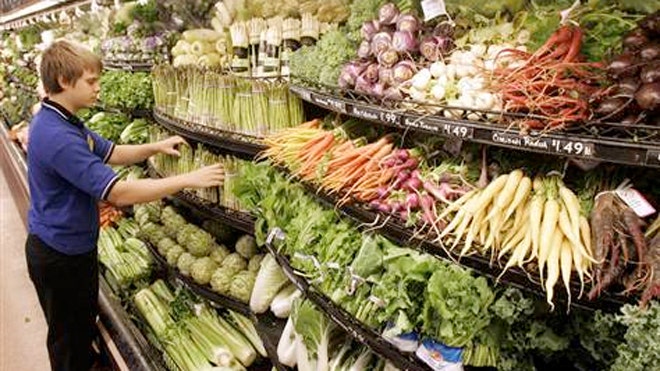
In May, he’s launching The Daily Table, a grocery store and restaurant in Dorchester, Mass., that will offer inexpensive food considered 'unsellable' by regular grocery stores.
Food available will include fruits and vegetables that are expired and repurposed food that will be incorporated into hot meals. Other items for sale will be products that are fine to eat but may have damaged packaging.
“Most families know that they’re not giving their kids the nutrition they need. But they just can’t afford it, they don’t have an option,” Rauch recently told Salon.
His big idea: Make healthy food available for the working poor at the same price as fast food by using expired food.
A recent report from the Natural Resources Defense Council and Harvard Law School's Food Law and Policy Clinic says Americans are prematurely throwing out food, largely because of confusion over what expiration dates actually mean.
Dana Gunders with the Natural Resources Defense Council and co-author of the study, said that as much as 40 percent of food in the U.S. –or the equivalent of $165 billion-- is wasted, thrown away to fill our landfills after spoiling in the refrigerator or pantry.
Although Daily Table will be setup as a non-profit, it is a retail store, not a food bank or a soup kitchen.
Rauch is hardly the first to sell expired food or slightly damaged items deemed unsellable for cosmetic reasons. Discount supermarkets already offer many of the same items, but don't sell prepared food.
Yet, critics have accused Rauch of taking rich people’s food, repurposing it, and selling it to the poor, something he just shrugs off.
“I might say, without naming the names, one of the leading, best regarded brands in the large, national, food industry — they basically recover the food within their stores, cook it up and put it out on their hot trays the next day,” Rauch said in an 2013 interview with NPR. “That’s the stuff that we’re going to be talking about. We’re talking about taking and recovering food. Most of what we offer will be fruits and vegetables that have a use-by date on it that’ll be several days out.”
Tuesday, December 24, 2013
Best gift cards for the holidays
Before you buy a stack of gift cards, the Federal Trade Commission (FTC), the nation's consumer protection agency, wants you to know about the different types of gift cards and tips for buying and using them. New rules for gift cards went into effect on August 22, 2010.
Here are the highlights:
Money on a gift card cannot expire for at least five years from the date the card was purchased, or from the last date any additional money was loaded onto the card. If the expiration date listed on the card is earlier than these dates, the money can be transferred to a replacement card at no cost. Inactivity fees can be charged only after a card hasn't been used for at least one year, and you can be charged only once per month. The expiration date of a card must be clearly disclosed on the card, and fees must be clearly disclosed on the card or its packaging.

When buying a gift card, look for sources you know and trust. Read the fine print. See if any fees will be deducted from the card after you purchase it. Finally, give the recipient your original receipt so they can verify the card's purchase in case it is lost or stolen.
1. Visa Gift Cards
The Visa Gift card is a prepaid card welcome everywhere Visa Debit cards are accepted. The Visa Gift cards are loaded with a set amount of funds on the card and can be used for multiple purchases for as long as value remains on the card. Additional funds cannot be added later if the card is a non-reloadable gift card. Maximum card values vary and are established by the issuers that issue the card. For more information, refer to the list of Visa Gift card providers. You can get a Visa Gift in person using the card locator to find a retail location closest to you. You can also use the online directory to locate online providers.
2. iTunes Gift Cards
5. Gasoline Gift Cards
6. Walmart Gift Cards
Walmart sells everything, and they have gift cards for everything, too. Some of their specialty gift card categories include Pamper Mom Gifts, Ecards, Crafty Mom Gifts and Gifts For Grandma. Gift cards can be mailed for free, purchased in store, ordered online or sent as eGift Cards that arrive via e-mail. Right now you can save 30% off Skype prepaid gift cards at walmart.com.
7. American Express Gift Cards
American Express calls their gift cards "One gift …Endless possibilities." They offer business and personal gift cards at their site, with features such as customized photos and other personalization tools. American Express does not ship Gift Cards to the states of Hawaii and Vermont. Their gift cards are refundable if lost or stolen. The funds do not expire and there are no inactivity fees or other fees after purchase. The maximum order value for an American Express Gift Card is $5,000.
8. Kindle Gift Cards
You can send a Kindle-branded Amazon.com Gift Card by e-mail, Facebook Wall post, print one at home or order by mail with free one-day shipping. Gift cards are redeemable for an Amazon Kindle, Kindle Books, accessories or the millions of other items at Amazon.
Before you buy a stack of gift cards, the Federal Trade Commission (FTC), the nation's consumer protection agency, wants you to know about the different types of gift cards and tips for buying and using them. New rules for gift cards went into effect on August 22, 2010.
9. Restaurant Gift Cards
Some people think giving a gift card is tacky, tantamount to simply giving cash. (What's wrong with that?) A restaurant gift card, however, shows that you want the recipient to have a nice evening or lunch at a place you know they'll love. These days you can purchase a gift card in person or online at nearly any restaurant with a web site. You can also check out OpenTable.com. They offer gift cards for more than 2,000 restaurants in more than 30 cities including San Francisco, New York, Los Angeles, Washington DC and Chicago.
10. eBay Gift Cards
Giving an eBay gift card is like saying: "Buy anything you want." Almost anything listed on eBay can be purchased with an eBay gift card. However, there is one stipulation for these cards that's unlike other gift cards. The listing must include PayPal as an accepted payment method, because you'll need to log into PayPal on checkout to redeem your gift card or certificate.
If you do not have a PayPal account, you must open one to redeem your gift card. You can create a PayPal account at any time, even after you've won an item on eBay. To use an eBay gift card, you are also required to link a bank account or credit card to your PayPal account, or apply and get approved for an eBay MasterCard, a PayPal Plus Credit Card, or PayPal Buyer Credit.
Source
Here are the highlights:
Money on a gift card cannot expire for at least five years from the date the card was purchased, or from the last date any additional money was loaded onto the card. If the expiration date listed on the card is earlier than these dates, the money can be transferred to a replacement card at no cost. Inactivity fees can be charged only after a card hasn't been used for at least one year, and you can be charged only once per month. The expiration date of a card must be clearly disclosed on the card, and fees must be clearly disclosed on the card or its packaging.

When buying a gift card, look for sources you know and trust. Read the fine print. See if any fees will be deducted from the card after you purchase it. Finally, give the recipient your original receipt so they can verify the card's purchase in case it is lost or stolen.
1. Visa Gift Cards
The Visa Gift card is a prepaid card welcome everywhere Visa Debit cards are accepted. The Visa Gift cards are loaded with a set amount of funds on the card and can be used for multiple purchases for as long as value remains on the card. Additional funds cannot be added later if the card is a non-reloadable gift card. Maximum card values vary and are established by the issuers that issue the card. For more information, refer to the list of Visa Gift card providers. You can get a Visa Gift in person using the card locator to find a retail location closest to you. You can also use the online directory to locate online providers.
2. iTunes Gift Cards
iTunes Gift Cards are easy to give and find – you can buy them from Apple and thousands of other retailers in a range of denominations. Every card works in the iTunes Store, App Store, iBooks Store, and Mac App Store — so your recipients can get exactly what they want. You can send iTunes Gifts for any occasion by purchasing them on the iTunes Store from your iOS device or computer in any whole-dollar amount between $10 and $100. You can choose a theme, add a personal message, and have your gifts emailed right away or at a time of your choice.
3. Target Gift Cards
3. Target Gift Cards
Target Gift Cards are available for purchase at Target stores in the U.S., Target.com or the Target mobile phone app. Target eGift Cards and Target Mobile Gift Cards are available for purchase at Target.com or the Target mobile applications. You can also purchase group Target eGift Cards with your friends using the Give with Friends application on Facebook.
Target Gift Cards can be redeemed for merchandise or services (excluding American Express and Visa gift cards and prepaid cards) at Target stores in the U.S. or Target.com. Target eGift Cards can be redeemed for merchandise at Target.com only. Target Gift Cards, Target Mobile Gift Cards, and Target eGift Cards cannot be redeemed for cash or credit except where required by law. The Gift Card of your choice will be sent directly to the recipient and does not expire. Gift Cards usually ship within 24 hours, using standard delivery; they should arrive within 5-8 business days. Upgraded 1 or 2 day shipping is available. Just select the shipping method you want in checkout.
4. Amazon Gift Cards
Target Gift Cards can be redeemed for merchandise or services (excluding American Express and Visa gift cards and prepaid cards) at Target stores in the U.S. or Target.com. Target eGift Cards can be redeemed for merchandise at Target.com only. Target Gift Cards, Target Mobile Gift Cards, and Target eGift Cards cannot be redeemed for cash or credit except where required by law. The Gift Card of your choice will be sent directly to the recipient and does not expire. Gift Cards usually ship within 24 hours, using standard delivery; they should arrive within 5-8 business days. Upgraded 1 or 2 day shipping is available. Just select the shipping method you want in checkout.
4. Amazon Gift Cards
Shopping for an Amazon Gift Card is as easy as shopping on Amazon. At the site, of to Gift Cards and choose the type of gift card you want to purchase. For E-Mail, Facebook, and Print at Home gift cards, click Purchase, or click Add another card to continue adding gift cards to your order. For Mail gift cards, click Add to Cart, and then click Proceed to Checkout. You can create up to 400 E-mail and Print at Home gift cards on the same order, but purchases of gift cards from Amazon.com and its affiliated websites are limited to up to $10,000 for any customer in a single day. Amazon.com physical gift cards are delivered with free One-Day shipping when you select One-Day shipping at checkout. For more information, go to FREE One-Day Shipping on Amazon.com Gift Cards.
Amazon.com Gift Cards can't be used to purchase other gift cards or applied to any order containing another gift card. You'll need to provide a credit card, debit card, or other valid payment method to pay for the order if you have gift cards in your Shopping Cart.
Amazon.com Gift Cards can't be used to purchase other gift cards or applied to any order containing another gift card. You'll need to provide a credit card, debit card, or other valid payment method to pay for the order if you have gift cards in your Shopping Cart.
5. Gasoline Gift Cards
In the movie "Heathers," Winnona Ryder's character uses her father's gift of a gas card to come up with rent money and salty snacks. These days, most slackers have other means. However, gasoline gift cards are incredibly popular gifts because no one likes paying for gas and nearly everyone can use one. SVM is a great place to shop for gasoline gift cards online. They offer a quick toll-free ordering process, efficient online ordering system and fast and friendly customer service. Along with gasoline gift cards from major gas providers, they offer gift cards from Fortune 500 companies to small privately owned businesses.
6. Walmart Gift Cards
Walmart sells everything, and they have gift cards for everything, too. Some of their specialty gift card categories include Pamper Mom Gifts, Ecards, Crafty Mom Gifts and Gifts For Grandma. Gift cards can be mailed for free, purchased in store, ordered online or sent as eGift Cards that arrive via e-mail. Right now you can save 30% off Skype prepaid gift cards at walmart.com.
7. American Express Gift Cards
American Express calls their gift cards "One gift …Endless possibilities." They offer business and personal gift cards at their site, with features such as customized photos and other personalization tools. American Express does not ship Gift Cards to the states of Hawaii and Vermont. Their gift cards are refundable if lost or stolen. The funds do not expire and there are no inactivity fees or other fees after purchase. The maximum order value for an American Express Gift Card is $5,000.
8. Kindle Gift Cards
You can send a Kindle-branded Amazon.com Gift Card by e-mail, Facebook Wall post, print one at home or order by mail with free one-day shipping. Gift cards are redeemable for an Amazon Kindle, Kindle Books, accessories or the millions of other items at Amazon.
Before you buy a stack of gift cards, the Federal Trade Commission (FTC), the nation's consumer protection agency, wants you to know about the different types of gift cards and tips for buying and using them. New rules for gift cards went into effect on August 22, 2010.
9. Restaurant Gift Cards
Some people think giving a gift card is tacky, tantamount to simply giving cash. (What's wrong with that?) A restaurant gift card, however, shows that you want the recipient to have a nice evening or lunch at a place you know they'll love. These days you can purchase a gift card in person or online at nearly any restaurant with a web site. You can also check out OpenTable.com. They offer gift cards for more than 2,000 restaurants in more than 30 cities including San Francisco, New York, Los Angeles, Washington DC and Chicago.
10. eBay Gift Cards
Giving an eBay gift card is like saying: "Buy anything you want." Almost anything listed on eBay can be purchased with an eBay gift card. However, there is one stipulation for these cards that's unlike other gift cards. The listing must include PayPal as an accepted payment method, because you'll need to log into PayPal on checkout to redeem your gift card or certificate.
If you do not have a PayPal account, you must open one to redeem your gift card. You can create a PayPal account at any time, even after you've won an item on eBay. To use an eBay gift card, you are also required to link a bank account or credit card to your PayPal account, or apply and get approved for an eBay MasterCard, a PayPal Plus Credit Card, or PayPal Buyer Credit.
Source
Subscribe to:
Posts (Atom)