Showing posts with label cnn. Show all posts

Thursday, February 6, 2014

George Zimmerman to fight DMX in a boxing match


Let's get ready to ... mumble.

As in, what now, George Zimmerman?

Seems like the former neighborhood watchman has found yet another way to remain in the public limelight.

This time, he'll be stepping into a boxing ring to fight rapper DMX.

Zimmerman said the celebrity boxing match was his idea. Boxing was his hobby, he told Radar Online last month, even prior to the "incident."

The incident, of course, is the February 2012 encounter in which he shot dead an unarmed Trayvon Martin, 17. He stood trial for murder, but was acquitted.

"Prior to the incident, I was actually going to the gym for weight loss and doing boxing-type training for weight loss," he told Radar.

"A mutual friend put me in contact with Damon and provided me with an opportunity and motivation to get back in shape and continue with my weight loss goals and also be able to help a charity out."

Damon is Damon Feldman, owner of Celebrity Boxing and self-described opportunist, whose claim to fame is putting together bizarre matchups. Think Tonya Harding, Michael Lohan.

He said last week that he was accepting offers for someone to step into the ring for a three-round, pay-per-view fight with Zimmerman.

"The news has been out for an hour and my e-mail is overloaded with 8,000 people wanting to fight George," Feldman told CNN on Thursday.

Early Wednesday morning, he said he's picked the contender. Out of more than 15,000 e-mailed requests, he's going with DMX.

"The match will be one of the Biggest Celebrity Boxing matches of all time," his news release said (uppercase emphasis his).

But in order to find out where and when it will take place, we'll have to wait until next week.

DMX, as we know is a rapper, and braggadocio is his calling card.

He's out for blood, he told TMZ. Not only will he break every rule in boxing, he said, he'll "beat the living (expletive)" out of Zimmerman.

Ian Karmel, a writer for "Chelsea Lately," has a better idea.

"They should send Floyd Mayweather to the ring and tell George Zimmerman it's DMX," he tweeted. "He won't know the difference."

Saturday, December 21, 2013

Are multivitamins useless?

More than half of all adults in the United States take some sort of multivitamin; many do so in hopes of preventing heart disease and cancer or even to aid with memory.

But an editorial published in this week's Annals of Internal Medicine says that using supplements and multivitamins to prevent chronic conditions is a waste of money.

"The (vitamin and supplement) industry is based on anecdote, people saying 'I take this, and it makes me feel better,' said Dr. Edgar Miller, professor of medicine and epidemiology at Johns Hopkins University School of Medicine and co-author of the editorial.

"It's perpetuated. But when you put it to the test, there's no evidence of benefit in the long term. It can't prevent mortality, stroke or heart attack."

The editorial, "Enough is Enough: Stop Wasting Money on Vitamin and Mineral Supplements," is based on three studies looking at the effects of multivitamins on preventing heart attacks and cancer, as well as improving cognitive function in men older than 65. All three studies were also published in this week's Annals of Internal Medicine.

The first study was a meta-analysis of 27 studies that covered more than 450,000 participants and found that multivitamins had no beneficial effect on preventing cardiovascular disease or cancer.

In addition, taking vitamins didn't prevent mortality in any way. However, the analysis did confirm that smokers who took only beta carotene supplements increased their risk of lung cancer.

When taking multivitamins to prevent a second heart attack, authors again found no beneficial evidence.

The second study looked at 1,700 patients who previously had heart attacks. They were assigned to take three multivitamins or placebos twice a day for five years. However, with more than 50% of patients stopping their medications, it was difficult for authors to come to any real conclusions about the vitamins' effectiveness.

With such a high drop-out rate, "interpretation is very difficult," said Miller.

The final study followed nearly 6,000 men older than 65, who took either a multivitamin or a placebo for 12 years. The men were administered cognitive functioning tests, and test results found no differences between the two groups.

However, Gladys Block, a professor of nutrition and epidemiology at University of California Berkeley, pointed out that the group of men followed in the cognitive study were all physicians with no health problems.

"These are very well-nourished, very health-conscious people," she said.

In fact, she says none of the studies accurately represents the American population.

Block has spent her life studying the role of Vitamin C, in particular, on disease risk factors and says that most Americans are undernourished. She says that most Americans don't have a healthy diet, and therefore don't get the vitamins and minerals they need.

"You're not getting any of these micronutrients from Coke and Twinkies," said Block.

"Two-thirds of us are overweight, a quarter over 50 have two or more chronic conditions, so there's a substantial population that one would hesitate to call healthy."

Block went on to say, "There's always a nontrivial minority that's actually getting a questionable level of some micronutrients. So multivitamins are a backstop against our poor diet."

Cara Welch, senior vice president of the Natural Products Association, agreed with Block.

"It is pretty common that in this day and age with the lifestyle many of us lead that we don't always take the time to have a balanced diet, and even if you do have a balanced diet, you can still have nutritional deficiencies."

The Natural Products Association is the largest trade organization representing the manufacturers and retailers of the natural products industry, including vitamins.

The vitamin and supplement industry rakes in nearly $12 billion annually, according to the researchers, with multivitamins its most popular product.

"Multivitamins address the nutritional deficiencies in people," Welch said. "We don't believe they are the answer to all life's ailments, as the editorial suggests."

Miller, however, disagreed that the studies didn't represent the general public.

"They didn't select people who eat good diets or bad diets," he said. "You assume that these people selected are the typical American diet. Taking a supplement in place of a poor diet doesn't work."

Some groups, however, do need supplements, he said.

"For people with deficiencies, malabsorption issues, and to prevent neural tube defects in pregnancy -- there are a small number of conditions where we prescribe them."

Miller also said the jury is still out on Vitamin D, which can help strengthen bones, and omega-3 fatty acids, including DHA and EPA.

Miller said the studies were unlikely to change any clinical standards, and that focusing on diet and exercise remain key to maintaining a healthy lifestyle.

It's something with which Block can agree. "Eat fruits and vegetables," she said.

Source
Tuesday, December 17, 2013

FDA tells manufacturers of antibacterial hand soap to prove that their products are effective

Manufacturers of antibacterial hand soap and body wash will be required to prove their products are more effective than plain soap and water in preventing illness and the spread of infection, under a proposed rule announced Monday by the Food and Drug Administration.


Those manufacturers also will be required to prove their products are safe for long-term use, the agency said.

"Millions of Americans use antibacterial hand soap and body wash products," the agency said in a statement. "Although consumers generally view these products as effective tools to help prevent the spread of germs, there is currently no evidence that they are any more effective at preventing illness than washing with plain soap and water.

"Further, some data suggest that long-term exposure to certain active ingredients used in antibacterial products -- for example, triclosan (liquid soaps) and triclocarban (bar soaps) -- could pose health risks, such as bacterial resistance or hormonal effects."

About 2,000 individual products contain these products, health officials said.

"Our goal is, if a company is making a claim that something is antibacterial and in this case promoting the concept that consumers who use these products can prevent the spread of germs, then there ought to be data behind that," said Dr. Sandra Kweder, deputy director of the Office of New Drugs in FDA's Center for Drug Evaluation and Research.

"We think that companies ought to have data before they make these claims."

Studies in rats have shown a decrease in thyroid hormones with long-term exposure, she said. Collecting data from humans is "very difficult" because the studies look at a long time period.

Get dangerous germs out of your home

Before the proposed rule is finalized, companies will need to provide data to support their claims, or -- if they do not -- the products will need to be reformulated or relabeled to remain on the market.

"This is a good first step toward getting unsafe triclosan off the market," said Mae Wu, an attorney for the Natural Resources Defense Council. "FDA is finally taking concerns about triclosan seriously. Washing your hands with soap containing triclosan doesn't make them cleaner than using regular soap and water and can carry potential health risks.

The FDA first proposed removing triclosan from certain products in 1978, the council said, "but because the agency took no final action, triclosan has been found in more and more soaps."

In 2010, the council said it sued FDA to force it to issue a final rule. The new proposed rule stems from a settlement in that suit, according to the NRDC.

The rule is available for public comment for 180 days, with a concurrent one-year period for companies to submit new data and information, followed by a 60-day period for rebuttal comments, according to the FDA.

The target deadline is June 2014 for the public comment period, then companies will have until December 2014 to submit data and studies. The FDA wants to finalize the rule and determine whether these products are "generally recognized as safe and effective" by September 2016.

"Antibacterial soaps and body washes are used widely and frequently by consumers in everyday home, work, school and public settings, where the risk of infection is relatively low," said Dr. Janet Woodcock, director of the FDA's Center for Drug Evaluation and Research.

"Due to consumers' extensive exposure to the ingredients in antibacterial soaps, we believe there should be a clearly demonstrated benefit from using antibacterial soap to balance any potential risk."

The action is part of FDA's ongoing review of antibacterial active ingredients, the agency said.

Hand sanitizers, wipes and antibacterial products used in health care settings are not affected.

Most hand sanitizers have 60% alcohol or ethanol and are generally recognized as safe when water isn't available, Kweder said. However, health officials still believe washing hands with soap and water is the best method.

Tuesday, September 24, 2013

How a government shutdown would affect your daily life

Just over a week remains. If the Democrats and Republicans don't stop bickering and agree to how the U.S. should pay its bills, the federal government will shut down, come October 1.

And at a time when the economy's finally showing signs of life, that could be troubling.

Shutdowns don't come cheap. Federal agencies have to use up time, energy and resources to plan for one. Shutting down and then reopening the government also costs money.

According to the Congressional Research Service, the two previous shutdowns -- in late 1995 and early 1996 -- cost the country $1.4 billion.

But what would a shutdown mean for you? Would your daily life be affected? (The answer's yes, so keep reading.)

Here are 10 ways a government shutdown would affect you.

10. Vacation all I ever wanted: Need to get away? Well, you can't.At least not to national parks. Or to national zoos. Or to national museums. They'd all be closed. That's 368 National Park Service sites closed, millions of visitors turned away.

Were you thinking more along the lines of a trip to France? If you don't already have a passport, you could bid that adieu. It's unlikely you'd get your blue book in time. The last time the government threw a hissy fit, 200,000 applications for passports went unprocessed. Tourism and airline revenues reeled.

9. Holiday. Celebrate: Don't come to work if you're a federal employee. You're on furlough. (Offer not valid for workers in "critical services," such as air traffic controllers, hazardous waste handlers and food inspectors.)

Do take some time to celebrate. In previous shutdowns, everyone who stayed home was paid retroactively after peace returned to Washington.

8. I won't back down: The good news (for you) is that the men and women in uniform would continue to keep you safe. The bad news (for them) is that they'd be paid in IOUs until the shutdown ended. In January, Sens. Mark Udall, D-Colorado, and Jerry Moran, R-Kansas, introduced legislation that would have protected pay for the troops during a shutdown, but it didn't get anywhere.

Rep. C.W. Young, chairman of the House Defense Appropriations Subcommittee, told the Air Force Times, "All military personnel will continue to serve and accrue pay but will not actually be paid until appropriations are available."

Their mid-October paycheck would be the first affected. In addition, the congressman told the paper, changes of station would be delayed, medical offerings would be scaled back, facility and weapons maintenance would be suspended and most civilian employees would be furloughed until appropriations are available.

Scenarios of the shutdown

7. If you drive a car, I'll tax the street: You may be thinking, "No functioning government, no need to pay taxes." Think again. The Man would continue to collect taxes. U.S. bonds would still be issued. And other essential banking functions would go on.

6. Wait a minute, Mr. Postman: You know that whole "Neither snow, nor rain, nor heat, nor gloom of night" thing? Apparently, the U.S. Postal Service works through shutdowns as well. Sorry, you won't catch a break from the junk mail. But hey, you may already be a winner!

5. I want a new drug: Oh, the irony. The Republicans want to defund Obamacare in exchange for funding the government. But the health care act at the center of this storm would continue its implementation process during a shutdown. That's because its funds aren't dependent on the congressional budget process.

4. Pass the ammunition: Not so fast. A shutdown would affect the Bureau of Alcohol, Tobacco, Firearms and Explosives. Translation: That gun permit you wanted processed wouldn't happen anytime soon.

3. Money (that's what I want): Well, if you own a small business and needed a loan from the government, you'd have to wait. If you were planning to buy a house and needed a federal loan, you'd have to wait. If you're a veteran, you might have to make a few trips to the mailbox before that check arrived.

If you're on Social Security, however, don't worry -- probably. Social Security payments were sent during the last shutdown. President Obama's expected to keep workers on the payroll to process checks. But would there be enough employees to process new benefits for the newly retired?

2. Anything dirty or dingy or dusty: Oscar the Grouch is a company of one. No one loves trash. But if you live in Washington, expect it to pile up if there's a shutdown. There wouldn't be anyone to collect your garbage. Washington's budget has to be approved by Congress. No budget for the city = no trash collection. And, according to The Washington Post, D.C. produces about 500 tons of garbage each week.

1. I'm proud to be an American: Perhaps the biggest hit would be to the collective psyche. America is the largest economy in the world and a beacon for how democracy ought to work. To watch elected lawmakers engage in a high-stakes staring contest with no one willing to blink is no way to do business. A recent CNN/Opinion Research Corp. poll found that 51% will blame Republicans if the government closes its doors. The U.S. has operated without a budget since 2009 and has avoided a government shutdown with last-minute deals. It's been one stomach-turning sequel after another.

Not only does the government run out of money on October 1, the nation is set to hit the debt ceiling and go into default in mid-October. Together, they serve -- in the words of CNN senior White House correspondent Jim Acosta -- as a dysfunction double whammy.

Sunday, February 24, 2013

Donations pour in for a homeless man who returned engagement ring


Talk about good karma.

Well-wishers from around the world are opening their wallets to a homeless man who returned a diamond engagement ring to its rightful owner, after she accidentally dropped it in his donation cup.

"I actually feel like I'm especially lucky to have this ring now. I loved it before. I loved it so much, but I love it so much more now. I feel like it has such great karma," Sarah Darling told CNN's "Starting Point with Soledad O'Brien."

Darling, who is from Kansas City, Missouri, said she was devastated when she realized she'd lost her ring.

She almost never takes it off, but it was giving her a bit of a rash so she did, zipping it in her coin purse for safe keeping.

Later, she absentmindedly emptied the contents of that purse into the collection cup of Billy Ray Harris, who is homeless and often stays under a bridge in Darling's hometown.

It wasn't until the next day that she realized her ring was gone.

"It was horrible. It was such a feeling of loss," Darling said. "It meant so much to me beyond just the financial value."

She went back to look for Harris, but he was gone. She returned the next day and found him.

"I asked him ... 'I don't know if you remember me, but I think I gave you something that's very precious to me,' and he says, 'Was it a ring? Yeah, I have it, I kept it for you,'" Darling said.

She was floored.

To show their appreciation, Darling and her husband set up an online fundraiser for Harris. The donations and praise have poured in.

"In life what goes around comes around... Billy - your sweet actions, despite being in dire straits yourself, prove that there is humility in the world... you are one shining example. Lots of love from across the pond," wrote Chris and Mel, from Brentwood, England, on the giveforward.com site, which is collecting money. They gave $20.

"I am from Singapore and I greatly am grateful for your honesty!" wrote Ophelia Wong Zen-na, who gave $10.

Brian Paul also gave $10.

"If I wasn't jobless I would give much more, but felt compelled to do something. Billy Ray do your best to become what you've always dreamed you could be. Its never too late. God Bless and thanks for never loosing your character in tough times," he wrote.

So far, in about a week, more than 3,400 donations have been made, totaling nearly $95,000. The money will be given to Harris at the end of a 90-day campaign.

In an update Saturday, Darling's husband, Bill Krejci, called the response "unreal."

Krejci met with Harris to tell him about the flood of donations and to get to know him better. They went together to make some repairs to Harris' bike.

"We talked about a lot of things related to my family's ring and the many donations. We talked about one day in the future the ring may one day be passed down to my daughter," Krejci wrote on the website. "We talked about how insanely positive all this has been."

Harris told Krejci that he has found a place to stay where he is "safe and sound."

CNN affiliate KCTV caught up with Harris and asked him how he felt about all the attention he's attracted since returning the ring.

"I like it, but I don't think I deserve it," he said.

"What I actually feel like is, 'what has the world come to when a person who returns something that doesn't belong to him and all this happens?'" Harris said.

But for her part, Darling said she is just grateful for what he did. Many others, she said, would have kept the ring, or sold it.

"I really just hope that my kind of flightiness in that moment leads to something really good for him," she said.

Source

Tuesday, June 26, 2012

Facebook unveils new "stalking" app

Facebook appears to have quietly unveiled a new feature designed to let people see which Facebook users are nearby at any given time.

The company calls the feature "Find Friends Nearby," and on Monday it was available through Facebook's mobile apps and website despite the fact that it hasn't been formally announced. The blog ReadWriteWeb already has dubbed the feature a "stalking app" because it could open people up to potentially awkward or threatening interactions with strangers on the social network who know you're nearby.

To test out the feature, go to fb.com/ffn in a browser, or follow this path in the Facebook's mobile apps: menu > apps > find friends > other tools > Find Friends Nearby.

It appears that Facebook users must opt in to the feature by going to that site, otherwise their profiles will not appear in a list of people who are nearby.

The blog TechCrunch first reported on the feature Sunday after a non-Facebook developer tipped off the site to the feature's existence. In a comment on that site's post about the new feature, Facebook developer Ryan Patterson, who says he developed Find Friends Nearby, described how he hopes the app will be used:
"For me, the ideal use case for this product is the one where when you're out with a group of people whom you've recently met and want to stay in contact with. Facebook search might be effective, or sharing your vanity addresses or business cards, but this tool provides a really easy way to exchange contact information with multiple people with minimal friction."

A Facebook spokeswoman declined to provide additional information.

"We are constantly testing new features but have nothing more to share at this time," she wrote in an e-mail to CNN.

Reactions to the news were mixed in the tech blogosphere.

The site Gizmodo finds the new feature to be potentially useful -- and dangerous.
"You meet a cute somebody at a concert, you're like, 'Hey, we should be Facebook friends,' and they're like 'OMG, totes!' Then rather than having to spell your names and search around, you've got a much smaller group of people to choose from. I guess that's great, right?" Brent Rose writes on that tech news site.

But Rose adds: "Sure, it'd be great to easily add a contact quicker, but imagine this: some creeper has been molesting you with his/her eyes all night. She opens the app, can kinda recognize your face from your profile picture, and now said creeper knows (your) name and possibly some of your personal info."

That would be the downside.

Others say the app simply isn't ready for prime time.

The blog Engadget calls the app "fairly primitive," and The Next Web says it amounts to "nothing more than a parlor trick at this point" since other location-based friend finders haven't caught on with the general public despite their buzziness in tech circles.

Facebook recently acquired a company called Glancee, which did something similar to the Find Friends Nearby feature. So there's speculation that the company's technology may have contributed to the new Facebook feature. Patterson, however, the Facebook developer, wrote on TechCrunch's post that he created the feature during a hackathon.

Other similar mobile "social discovery" apps include Highlight, Banjo and Sonar. Some of these apps will also show you nearby friends of friends or even strangers who share your interests, based on your social-network profile.

It's unclear exactly how much information the Find Friends Nearby feature gives away. For now at least, users have to log into that site intentionally to see a list of people who are nearby, and that list of people appears to be quite limited for now.
Also to be determined is how large of a radius the feature employs. Does it search for people who are within eyeshot of you? Or within a mile?

Source

Saturday, May 19, 2012

New guidelines would classify 40% of college students as alcoholics


We could see the number of college students considered alcoholics hit 40%, but not because more kids are drinking heavily. Psychiatrists and specialists are literally redefining the term alcoholic.

In new guidelines due to be released in a year, you could be considered an alcoholic. And you're not alone.

In fact, 20 million "more" Americans could be diagnosed as having some sort of addiction. That amounts to about 60% of the country and addictions could include drugs, alcohol, shopping or gambling.

The new guidelines are included in a revision of the Diagnostic and Statistical Manual of Mental Disorders, also known as the DSM. That's the nation's arbiter of mental illness - the so-called psychiatric "bible."

Currently, there are two ways of categorizing drug and alcohol problems. One is as "substance abuse," referring to a short-term problem that includes binge drinking in college. The other is "substance dependence," meaning a long-term problem like alcoholism.

Under the new guidelines, there is only one diagnosis for addiction but with varying degrees – mild, moderate or severe.

A big reason why more will diagnosed is that doctors are "adding" to the list of symptoms of addiction while at the same time "reducing" the number of symptoms needed for a diagnosis. This could mean millions more people could be labeled addicts, even without picking up another drink.

Why is this so important? It's the standard the government embraces, and it also dictates whether health insurers, like Medicare and Medicaid, will pay for treatment.

Saturday, March 10, 2012

Pat Robertson speaks out in favor of marijuana legalization

Televangelist Pat Robertson is raising eyebrows, and cheers from activists who are usually his opponents on political issues, by calling for the legalization of marijuana.

“I really believe we should treat marijuana the way we treat beverage alcohol,” Robertson told The New York Times on Wednesday. “I’ve never used marijuana and I don’t intend to, but it’s just one of those things that I think: this war on drugs just hasn’t succeeded.”

The comments came after Robertson affirmed his support for marijuana decriminalization – which he had voiced in 2010 – on his TV show, “The 700 Club,” last week.

“I became sort of a hero of the hippie culture, I guess, when I said I think we ought to decriminalize the possession of marijuana,” Robertson, 81, said on his Christian Broadcasting Network show.

“I just think it's shocking how many of these young people wind up in prison and they get turned into hard-core criminals because they had a possession of a very small amount of controlled substance,” he said on his show. “The whole thing is crazy.”

Robertson told the Times that he “absolutely” supports pro-marijuana legalization ballot initiatives in Colorado and Washington, though he said he would not actively campaign for them.

Many marijuana legalization advocates, who tend to be liberal or libertarian and who often see Robertson as a boogeyman for his opposition to same-sex marriage and abortion rights, have welcomed Robertson’s support while also noting their surprise.

“Pat Robertson's clearly stated and well-reasoned comments throw a curve ball into the growing debate over legalizing marijuana,” said Ethan Nadelmann, executive director of the pro-marijuana legalization Drug Policy Alliance, in a statement Thursday.

“The millions of people who listen to and respect him are mostly conservatives, Republicans and older Americans (who) … have been the least likely to support legalizing marijuana,” Nadelmann said.

A spokesman for Robertson said Thursday that the televangelist was inundated with interview requests and that he was unavailable for immediate comment.

Robertson said on his show last week that he opposed incarceration for marijuana offenses on humanitarian grounds and because of the costs involved.

“We've just got to change the laws,” he said. “We cannot allow this to continue. It is sapping our vitality. Think of this great land of freedom. We have the highest rate of incarceration of any nation on the face of the Earth. That's a shocking statistic.”

In 2010, Robertson spoke on “The 700 Club” about decriminalizing marijuana but didn’t go so far as to advocate legalizing it.

“We’re locking up people that have taken a couple puffs of marijuana, and next thing you know they’ve got 10 years with mandatory sentences,” Robertson said at the time. “…We’ve got to take a look at what we’re considering crimes and that’s one of ’em.”

Source

Wednesday, January 11, 2012

What to take away from the NH primary

There wasn't much drama in Tuesday's New Hampshire primary — CNN called the race for long-time front-runner Mitt Romney as soon as the polls closed. But there were things we learned from the results and the exit polls. Here are five of them:

An historic night but were expectations met?
Call it one for the record books.

"Thank you New Hampshire. Tonight we made history," said Mitt Romney at his victory speech Tuesday night, after winning the New Hampshire primary. (Romney wins big in New Hampshire)

The former Massachusetts governor became the first non-incumbent Republican to ever win the Iowa caucuses and then the Granite State primary, the first two contests in the primary and caucus calendar.

New Hampshire is Romney country. He owns a home there and has spent lots of time in the Granite State over the past six years campaigning for himself and for fellow Republicans.

He was expected to win big. So, did he beat expectations?

Romney finished with around 40% of the vote, slightly better than what Sen. John McCain captured when he beat Romney to win the primary here in 2008. Romney finished around 17 points ahead Rep. Ron Paul of Texas, who came in second. Very strong numbers, but are they spectacular? Maybe not, but they're more than good enough to propel him towards South Carolina with most of his rivals for the nomination divided and weakened.

Second place can be just as good as first
How do you top a strong third-place finish in Iowa? By finishing an ever stronger second a week later in New Hampshire.

Thanks in part to an outpouring of independent voters, Rep. Ron Paul of Texas captured the silver medal in the Granite State, which he calls a win.

"I called Gov. Romney a short while ago before he gave his talk and congratulated him because he had a clear-cut victory, but we are nibbling at his heels," Paul said in his speech Tuesday night, adding that, "there was another victory tonight. He had a victory, but we have had a victory for the cause of liberty."

Exit polls indicate Paul scored big among younger voters, first-time voters, and held his own against Romney among independents. (What do the exit polls say?)

Paul may not perform as well in South Carolina and Florida, the next two states to hold contests. But thanks to showing in Iowa and placing in New Hampshire, the libertarian-leaning Paul can keep his "revolution" alive for months to come.

Third's enough for Huntsman
He didn't win the gold or silver, but it seems a bronze medal is good enough for Jon Huntsman to fight another day.
"I'd say third-place is a ticket to ride," Huntsman told supporters Tuesday night, adding at the end of this speech, "Here we go to South Carolina."

The former Utah governor and ambassador to China placed all his chips on New Hampshire, skipping campaigning in Iowa, the state that kicked off the presidential primary and caucus calendar, to concentrate just about all of his time on the Granite State.

Exit polls of people who voted in the primary indicate that Huntsman performed well with independent voters, grabbing nearly a quarter of their vote. He also came out on top among the small percentage of Republicans who say they're not supporters of the Tea Party movement. Those factors may have helped him in fiercely independent New Hampshire, but it won't give him a boost in South Carolina, which has a much more conservative Republican electorate.

Huntsman got his "ticket to ride" to move on to South Carolina, but its not clear how much longer his ride will last.

...in a blaze of glory
He was hoping for third but finished fourth. Now he's hoping to make a stand in South Carolina.

Newt Gingrich turned off the niceness that he had avowed — and runs against his political history — after the blistering attacks from super PACs that support Romney toppled him from front-runner to also-ran in a couple of weeks.

But Gingrich's new line of attack — condemning Romney's history at private equity firm Bain Capital — has turned a key part of his own party, including one-time ally Rush Limbaugh who compared Gingrich to Occupy Wall Street, against the former House speaker.

Attacks on capitalism is a dubious strategy in Republican primaries, but Gingrich appears to be intent on doing as much damage to the front-runner as he can, no matter the cost.

A super PAC supporting Gingrich plans to launch a video on Wednesday called "When Mitt Romney Came to Town," which portrays Romney as Bain chief as a heartless corporate raider who maximized profits at the expense of workers.
Republican strategist John Feheery dubbed Gingrich "Kamikaze Newt" and asks whether the attacks will do more harm to Romney than to Gingrich's reputation.

Democrats are happy to have Gingrich launch what will certainly be one of their lines of attack against Romney should he become the nominee.

Santorum surge
Rick Santorum knew he had no chance to win New Hampshire despite his near-upset of Romney a week ago. New Hampshire doesn't have the large numbers of those who consider themselves social conservatives like that who helped carry him in Iowa.

But Santorum couldn't even capture those voters in his fifth-place finish behind Romney, Paul, Huntsman and Gingrich.

Romney carried those who consider themselves conservative on social issues like abortion and those who consider themselves evangelical or born-again Christian. The staunch Catholic even lost to Romney those of his own faith.

The only segment that the anti-abortion Santorum carried were those who considered abortion a more important issue than the budget deficit, the economy and health care.

Source

Friday, November 11, 2011

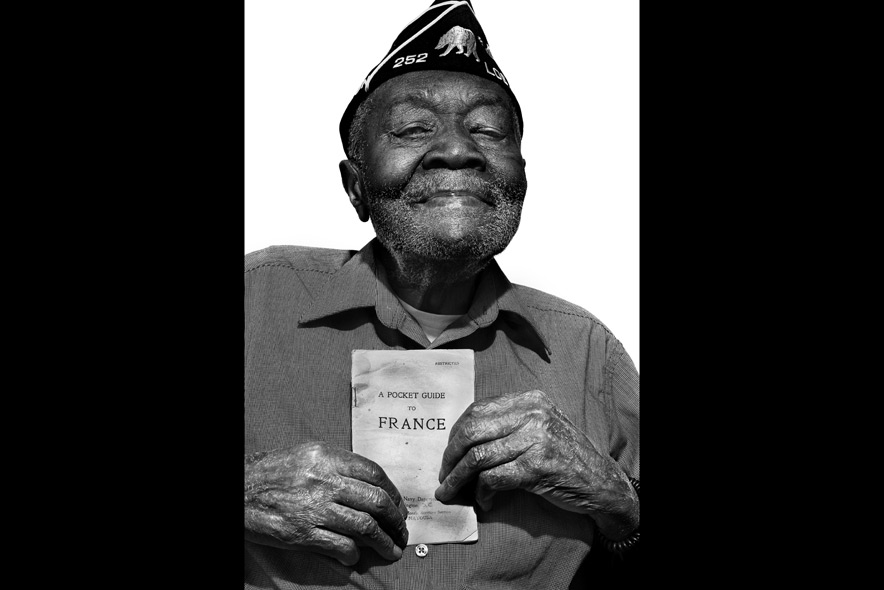
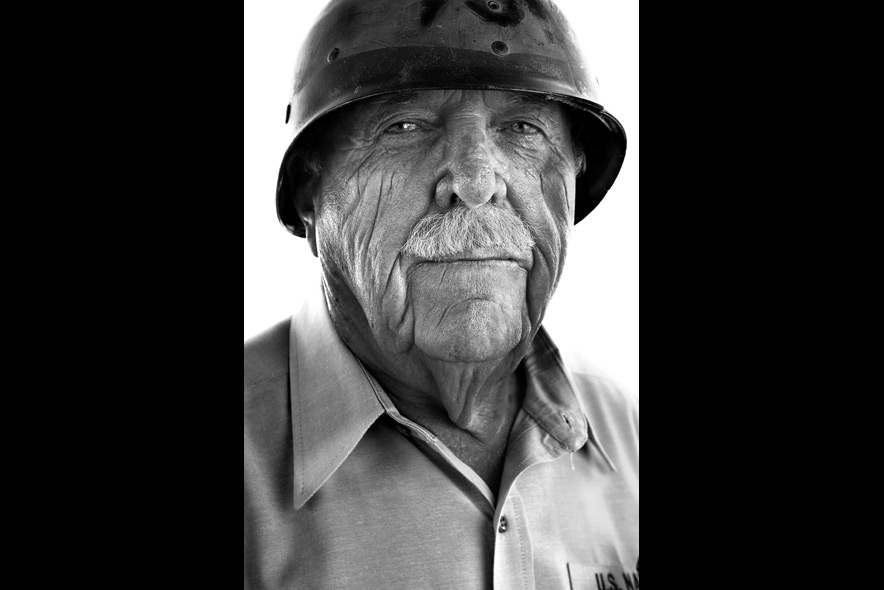
Happy Veteran's Day!

CNN's Faces of WWII


See more here.

Google launches YouTube and Google+ project to connect returning vets


In 2010, Dan Savage launched the "It Gets Better Project" to connect gay teens with video messages of support from older gay people. The site now has thousands of video messages and has been credited with saving the lives of LGBT youth who were pondering suicide.

Now Google is launching a similar project for veterans. Called "Vet Connect," the YouTube and Google+ project is a collection of support videos from veterans who speak about their experiences of returning home from war.

The goal, according to a Google spokeswoman, is to have a database of stories for vets to turn to when they come back home from Iraq and Afghanistan. By browsing the videos and G+ profiles, vets may not feel so alone.

Here's how Carrie Laureno, founder of the project, explained it in a post Friday morning on Google's official blog:
"We believe that technology can be a force for good; one that builds and binds community. As a Googler, my proudest moments are when we take that technology and put it in the hands of people who can use it to communicate, collaborate, build and explore."
A website called Google for Veterans and Families is the hub for this project. More on that from Google's blog:
"This single interface brings together Google products and platforms for service members and their families. We believe it will be useful to all veterans, whether still in the service, transitioning out, or on a new path in their civilian lives."
To post a video tribute to veterans, or to share your story of returning home from war, visit the Google Veterans YouTube channel.

Here's a look at a few of the more-compelling videos that have been posted on the site. So far, many of them are from vets who work at Google.


Source

Friday, October 14, 2011

Apple co-founder is first in line for new iPhone 4S


A line began to form at the Apple Store here on the eve of the iPhone 4S release, as is often the case around the world during the company's product launches.

At the front of this particular line Thursday, Steve Wozniak sits in a Pico armchair, sipping Diet Dr Pepper and scanning e-mails from his white iPad.

The Apple co-founder, who gets a paycheck of "a couple hundred dollars every two weeks" and still maintains his status as employee No. 1 in company records, hasn't been able to stay put for long. Crowds of Apple fans, family friends and people who have seen him riding his Segway around the neighborhood stop to say hi, take pictures and ask for his autograph.

"I'll be taking a thousand pictures," Wozniak whispered with a smile. "I'm going to sit down and see if I can get a little e-mail done, because there's no way I'm going to get it all done today."

Seconds later, an enthusiastic man in a yellow polo shirt positioned his two kids near the computer legend and pleaded for him to pose. Wozniak immediately sprang to his feet with a grin on his face.

People brought iPhones, iPods and iPads for Wozniak to sign with a marker. "Now your phone is not going to be worth as much when you sell it," Wozniak said to one woman before signing her iPhone 4.

Fans gave Wozniak their condolences over the late Steve Jobs, the Apple co-founder who died last week. Flowers, partially eaten apples and notes were laid in front of Apple Stores around the world, including this one, where the memorial was set just a few feet from Wozniak's spot in line.

Wozniak explained that sending flowers or onetime celebrations are the kinds of traditions he and Jobs agreed were unnecessary. However, he talked openly about how much he misses his high-school pal, with whom he built a technology empire.

Wozniak acknowledged that he could have easily made one phone call to Apple and gotten the phone he's waiting in line for, but he didn't. He has yet to play with an iPhone 4S or its Siri voice-controlled assistant. He has said previously that he does not ask colleagues about products in development because he does not want to ruin the surprise for himself.

"I want to get mine along with the millions of other fans," Wozniak said. "I just want to be able to talk to my phone."

Wednesday, October 5, 2011

CNN: Why Men Are In Trouble

For the first time in history, women are better educated, more ambitious and arguably more successful than men.

Now, society has rightly celebrated the ascension of one sex. We said, "You go girl," and they went. We celebrate the ascension of women but what will we do about what appears to be the very real decline of the other sex?

The data does not bode well for men. In 1970, men earned 60% of all college degrees. In 1980, the figure fell to 50%, by 2006 it was 43%. Women now surpass men in college degrees by almost three to two. Women's earnings grew 44% in real dollars from 1970 to 2007, compared with 6% growth for men.

In 1950, 5% of men at the prime working age were unemployed. As of last year, 20% were not working, the highest ever recorded. Men still maintain a majority of the highest paid and most powerful occupations, but women are catching them and will soon be passing them if this trend continues.

The warning signs for men stretch far beyond their wallets. Men are more distant from a family or their children then they have ever been. The out-of-wedlock birthrate is more than 40% in America. In 1960, only 11% of children in the U.S. lived apart from their fathers. In 2010, that share had risen to 27%. Men are also less religious than ever before. According to Gallup polling, 39% of men reported attending church regularly in 2010, compared to 47% of women.

If you don't believe the numbers, just ask young women about men today. You will find them talking about prolonged adolescence and men who refuse to grow up. I've heard too many young women asking, "Where are the decent single men?" There is a maturity deficit among men out there, and men are falling behind.

This decline in founding virtues -- work, marriage, and religion -- has caught the eye of social commentators from all corners. In her seminal article, "The End of Men," Hanna Rosin unearthed the unprecedented role reversal that is taking place today. "Man has been the dominant sex since, well, the dawn of mankind. But for the first time in human history, that is changing—and with shocking speed," writes Rosin. The changes in modern labor -- from backs to brains -- have catapulted women to the top of the work force, leaving men in their dust.

Tuesday, October 4, 2011

Starbuck's promoting job growth program

Starbucks hopes customers will be willing to pay at least $5 more when they stop in for their morning cup of Joe.
Credit: CNN

Starting Nov. 1, Starbucks will begin collecting donations of $5 or more from customers to stimulate U.S. job growth through its "Jobs for USA" program. The Seattle-based coffee chain is collaborating with the Opportunity Finance Network, a nonprofit that works with nearly 200 community development financial institutions to provide loans to small businesses and community groups. Starbucks says 100 percent of the donations will go toward loans for firms and organizations that can add jobs or stem job losses.

Starbucks, which pioneered how Americans drink coffee, declined to estimate how much money it plans to raise, but millions of people visit its nearly 7,000 company-owned U.S. stores each day. Customers who give will get a red, white and blue wristband that says "Indivisible."

"This is about using Starbuck's scale for good," said Howard Schultz, Starbucks Corp.'s CEO.

The program is the latest effort by Schultz to address the nation's economic woes. In August, he sent more than 200,000 Starbucks employees a memo urging them to do what they can to help business thrive. Then, he asked fellow CEOs to stop contributing to political campaigns until the nation's leaders reached a long-term economic solution. After that, he hosted a national telephone forum, bought full-page ads in two major newspapers and started a website, Upwardspiral2011.org.

Schultz said he feels personal responsibility to do something to stimulate the U.S. economy. Starbucks is hiring about 200 people a day in the U.S. as part of its efforts to remodel thousands of stores and add about 200 more locations in the next year. But Schultz said he wanted to do more.

Starbucks is covering the operational costs to get loans out through the program, which will run indefinitely. Its charitable arm, The Starbucks Foundation, is giving $5 million to get the program started, with the hope that funds will be invested in communities within a month of a donation being made.

Opportunity Finance Network works with 180 financial institutions -- banks, credit, unions, loan funds and venture capital funds -- that give loans in low-income communities that don't have easy access to credit. The organization, created 27 years ago, has invested $23.2 billion and generated nearly 300,000 jobs through 2009.

Loans through the network have supported everything from charter schools to grocery stores nationwide. The organization found that, even during the recession, more than 98 percent of the money loaned out has been repaid, which is in line with traditional lenders.

Through the program, businesses will apply to financial institutions, which along with the Opportunity Finance Network will assess their potential for adding jobs. Preference will be given to applicants who can add jobs within six months. An outside organization will audit the program within a year.

"We want to match up every person who has $5 to share with every person who can't spare $5," said Mark Pinsky, CEO of Opportunity Finance Network.

The effort has the potential to be successful, say some experts. Community institutions succeed, they say, because they understand the needs in the areas they serve.

"I think it's a really worthy effort," said Mark Zandi, chief economist at Moody's Analytics. "In theory, this is a great idea and should have impact."

Online: For more information, visit createjobsforusa.org or for information on Opportunity Finance Network and how to find a community development funding institution, visit opportunityfinance.net

Monday, October 3, 2011

Amanda Knox exonerated and free to go

Credit: CNN
[Updated at 3:55 p.m. ET] As one of Sollecito's lawyers left court a group outside the Perugia building began booing.

[Updated at 3:52 p.m. ET] There was an audible gasp outside the courthouse when the verdict was read in court.

Knox and Sollecito were swiftly taken out of the courtroom.

Knox's family hugged and celebrated inside the courtroom after hearing the news as Amanda Knox appeared to turn around and smile at them.

Knox and Sollecito will go back to prison to pick up their things and then will be free to leave.

[Updated at 3:48 p.m. ET] A jury has partially overturned the conviction of Amanda Knox.

The jury as overturned the murder conviction but upheld the conviction on the defamation charges after she accused club owner Patrick Lumumba of killing British college student Meredith Kercher in 2007 in Perugia

The judge has called for silence in the courtroom as applause erupts.

The jury has also overturned the murder conviction of Raffaelle Sollecito. Both will be free to leave.

Source

I've been really fascinated with this case from the beginning and I think the ruling was just. As more evidence came to the light and the Italian police's poor handling of the case was apparent, I found it difficult to believe that she truly was the murderer. 

Saturday, October 1, 2011

CNN Blog: Eating on $30 A Week

On Sunday night I’m finishing up the last of my big pot of black beans. The bag of dry beans I purchased along with a bag of rice has been three of my main meals this week.

I’m not against leftovers; I eat them. It's just that I normally wouldn’t plan to eat the same thing again and again but this past week it was that, or go hungry. I didn’t have the luxury of variety or choice.

My $30 food stamp challenge forced some difficult shopping choices and as many readers pointed out, I may not have made the wisest. I’m more accustomed to shopping for convenience than hunting for bargains. But I am keenly aware that each purchase I made for this week is accounted for, either for a breakfast, a lunch, or a dinner and maybe a snack.

There is no room for waste, and one bad choice is all it takes to go hungry. If a jar of pasta sauce breaks an entire meal could be lost.

I spend all of my $30 before realizing I've forgotten sauce for my box of pasta. The peppers I'd initially regretted buying come in handy and along with three tomatoes I make my own sauce. Cooking big pots of food is a necessary strategy.

The first two days are filled with periods of hunger. 5:30 on Tuesday seems too early to be thinking about dinner but that’s all I can think about it. I race home from work to fix a chicken breast, broccoli and rice; the best and most nutritious meal in my week. I get to have it twice.

Wednesday’s the most difficult; I wake up hungry and help myself to a big bowl of Farina but realize a ‘bigger portion’ strategy isn’t the answer. It’ll fill me up now but I’m afraid if I eat too much I will run out of my allotted food before the end of the week.

I count the slices of bread in my loaf and discover there are a few extra slices– which means one day I can have two sandwiches! I decide today is that day and bring two PB&J sandwiches to work for lunch.

It's clear food has been on my mind more than usual this week. I think when you have a limited budget and fewer choices; you’re forced to do more thinking and planning around meals. I’m so very conscious, too, of all the things I have to forego. I can’t just grab a coffee or go to dinner with friends. I feel a bit isolated. Not having enough money for food affects not just your mood and health, but also your social life.

Thursday is the first morning I don’t wake up hungry. I think my body may be getting used to less food. Still, I’m afraid I’ll get hungry so I eat a bowl of Farina anyway. I get through the day fine but decide against going to the gym after work. How do parents, who may skip meals so their kids can eat, find the energy they need to shop, cook, and care for the kids?

Coffee may be a luxury, but I’m glad I bought some. If my calorie count this week is low, my morning cup of joe helps make up for it and keeps me going.

A weekend out of city limits proves a bit tricky. Not only do I have to bring food, I can't share it! “Sorry honey, can’t offer you any,” is what I keep saying.

Sounds selfish, right? But my food supply is limited, and this last chicken breast is what I’ve set aside and planned for my dinner tonight. It’s all I have. On Sunday rushing to catch an afternoon train back to the city leaves me no time to make a sandwich, and so I have to go without lunch. Ugh!

Definitely knowing that this challenge is only for a week has been helpful in getting me through it. I’m grateful for the new insight and lesson in empathy. At times I realize it’s difficult to avoid hunger, to afford nutritious food. I certainly won’t look at the cost of fresh fruit and vegetables in the same way.

Next week I can go back to more options and more food. But for millions of Americans across the country this challenge is real. week in and week out.

One in four families - according to the Food Research and Action Center - worry about having enough money to feed themselves and their families. And for those who may get the help of the Supplemental Nutrition Assistance Program or food stamps, it still may not be enough to buy the minimum amount of food the United States Department of Agriculture says people need to survive.

Source

Tuesday, September 27, 2011

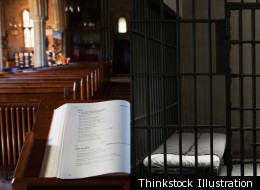
Jesus or jail? You get to decide in a small town in Alabama

If you're charged with a nonviolent crime in one Alabama town, you might just have the chance to pray it all away.

Starting this week, under a new program called Operation ROC (Restore Our Community), local judges in Bay Minette, Alabama, will give those found guilty of misdemeanors the choice of serving out their time in jail, paying a fine or attending church each Sunday for a year.

The goal of the program is to help steer those who are not yet hardened criminals the chance to turn their lives around. Those who choose to go to church (there are no mosques or synagogues in the area) will have to check in with a pastor and the police department each week, CNN affiliate WKRG reported. Once you attend church every week for a year the case would be dismissed.

Police Chief Mike Rowland said the measure is one that would help save money and help direct people down the right path. Rowland told WKRG it costs $75 a day to house each inmate.

"Longevity is the key," he told WKRG.

He said he believes 30-day drug programs don't have the long-term capabilities to heal someone in the ways the ROC program might.

Police in the town said they think it is a simple choice, but others think it's a choice that shouldn't even be offered.

The ACLU in Alabama said the idea is "blatantly unconstitutional," according to the Alabama Press-Register.

"It violates one basic tenet of the Constitution, namely that government can’t force participation in religious activity," Olivia Turner, executive director for the ACLU of Alabama told the paper.

Rowland acknowledged there were concerns about separation of church and state complaints but said he didn't see it as too big of a problem because offenders weren't being forced to attend church, they are just being given the option.

The offenders who voluntarily choose church over jail get to pick the churches they attend. If they complete a year’s attendance, Rowland said, their criminal case would be dismissed.

Source

Wednesday, September 14, 2011

CNN: Missoni For Targent line crashes website

Talk about an overwhelming response.

The much-anticipated launch of a new collaborative line between Italian designer Missoni and Target caused the retailer's website to crash several times Tuesday.
Missoni For Target scarf priced at $19.99

"Target.com is seeing greater item demand than we do on a typical Black Friday, and the excitement for this limited-time designer collection is unprecedented," the store said in a statement. "We are slowly bringing the site back online to ensure we can provide a positive shopping experience to our guests."

By Wednesday, the site was back up and running, but many of the colorful, zigzag designs were out of stock.
Between 7:47 and 8 a.m. ET Tuesday, the Target.com homepage was completely down with a connection timeout error, according to AlertSite, a Web performance monitoring business. For most of Tuesday afternoon and evening, the homepage displayed a courtesy page of the Target dog letting visitors know the site was overloaded.

"We are suddenly extremely popular," the page said.