Tuesday, April 7, 2015

Monday, April 6, 2015
ABC may be bringing back "The Muppet Show"
 |
| Fredrick M. Brown/Getty Images |
ABC is considering the new Muppets show, and THR suggests that they might announce a decision as soon as next month. The Muppets’ variety television show originally ran from 1976 to 1981, followed by its reprisal, Muppets Tonight, from 1996 to 1998. After the success of the recently rebooted Muppets movies, I can’t imagine anyone saying anything bad about this news. (Well, except for you, Statler and Waldorf.)
Sunday, April 5, 2015
Spring cleaning
I'm moving in a few months, so I need to get rid of some clothes! Check out my poshmark closet (as well as my favorite closets) below.


Thursday, April 2, 2015
Wednesday, April 1, 2015
Google maps easter egg sets pac man loose on the streets
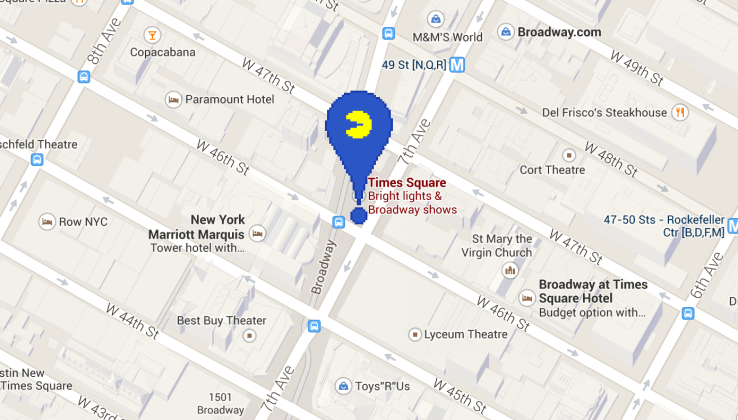
Google has created a new Easter Egg for Google Maps (pretty much just in time for actual Easter) which lets you play Pac-Man in real-world locales on the company’s Maps apps for desktop and mobie devices. It’s easy to play, by either navigating to the Google Maps website or opening the app on your Android or iOS device, and then just searching for a location where Pac-Man might show up.
Google is offering hints to help you find the iconic 1980s video game protagonist, but if you’re in a hurry just search for “times square” and you should see a pixelated map flag icon like the one pictured here. Click on that and you’ll launch into a game with simple controls, letting you control Pac-Man as he evades his ghostly enemies with either the arrow keys on a computer or by swiping up, down, left and right to change direction on mobile.
Rack up a decent high score with your five lives and then share it with others to see how well you can Pac in the streets.
Source
Friday, March 27, 2015
Police department open up "safe lots" for craigslist transactions
 |
| Hartford Police Department |
Sebastian Rivera likes to ride BMX bikes. And when he's customizing his ride, he says he'll hop onto Craigslist to look for free stuff or to trade bike parts with people in his area.
"It's pretty easy, as long as like I get the person's number or I get their Facebook ... another way to communicate besides Craigslist," Rivera says.
As we talk in downtown Hartford, Conn., Rivera echoes what a lot of people have told me: Be cautious with anonymous online deals — get as much information as you can about the person you're dealing with and always meet in a public place.
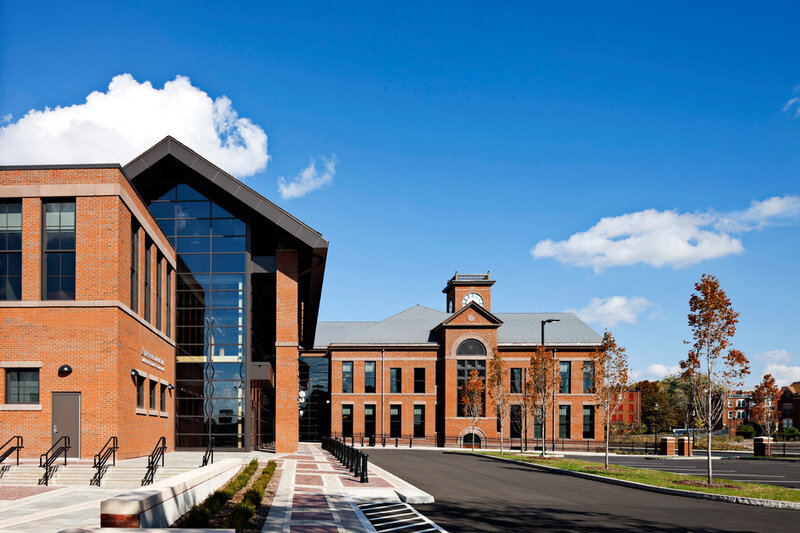
Now, the Hartford Police Department is hoping the public's place of choice will be a parking lot right outside its headquarters.
"That parking lot is under 24-hour video surveillance. It's well lit. There's cops all around this building all the time," Chief of Detectives Brian Foley says.
Hartford police are calling it Operation Safe Lot and the idea is to provide the public a well-guarded space for buying and selling its stuff. Foley says it's in response to crime spikes tied to Craigslist deals in the city.
And even though the parking lot is small, he says officers are willing to work around occasional electronics or furniture swaps happening right outside their front door.
"If it's gonna prevent a robbery, if it's gonna prevent a homicide, if it's gonna make our citizens feel safe ... we can live with it," Foley says. "We don't want it to become a flea market out there, but certainly it hasn't been a problem."
Hartford police aren't the first department to try the idea, and others around the country have been starting this up too.
Boca Raton Police Chief Daniel Alexander says his department started offering up its parking lot last June.
"It's something that's positive for us to do for the community," he says. "A lot of people come down here for situations and circumstances that aren't very positive. This, to us, is a positive."
Since the "Safe Lot" programs are new, Alexander and other officers say it's hard to gauge yet whether it's working.
Craigslist wouldn't answer questions about why it's now telling users to consider police parking lots for high-value exchanges. But back in downtown Hartford, Mike Loin says he thinks the company should embrace this idea for smaller transactions, too.
"I think it would open it up for a bigger customer base," Loin says. "Especially for someone who may be a mother or a woman who may not feel as comfortable selling or buying a product that way."
Hartford police officials say they hope more stations start offering up their parking lots for all types of social media transactions. That is, of course, as long as they're legal.
Wednesday, March 25, 2015
The arsenic in two-buck chuck will not kill you
 |
| Flickr |
According to the class-action suit, brought against 28 wine producers, “just a glass or two of these arsenic-contaminated wines a day over time could result in dangerous arsenic toxicity to the consumers.” Since California wines make up nearly 90% of the U.S. wine industry, American wine drinkers have become the “unwitting ‘guinea pigs’ of arsenic exposure,” the suit alleges.
But don’t dump your boxes of Franzia just yet. These wines do contain tiny amounts of the toxic compound — but so do expensive wines, as well as pretty much everything that we eat and drink.
If you live in the U.S., then your groundwater actually has a surprising amount of arsenic in it.
Arsenic is naturally present at high levels in much of the untreated groundwater in the U.S. and a handful of other countries. Taken in large doses or over long stretches of time, arsenic can cause cancer, brain toxicity, heart problems, or death. (As pointed out in the lawsuit, it led to the ultimate demise of Napoleon and King George III, among others.)
This is why the World Health Organization has labeled groundwater as the “greatest threat to public health from arsenic,” and why the U.S. Environmental Protection Agency is strict about keeping arsenic out of the water supply. Only 10 parts per billion (ppb) of arsenic are allowed in drinking water (meaning 10 parts arsenic for every 1 billion parts water). Assuming people drink roughly two liters of water a day, this amount of arsenic is totally harmless.
Water is also a big part of how arsenic gets into our food supply. Every winery, for example, bears the unique signature of its particular geography. The soil chemistry, water, and climate of a vineyard contributes to the flavors of whatever grapes are grown there. But because of arsenic present in soil and water, a wine’s terroir can also determine its level of toxicity.
“Plants will take it up into their tissues, so any plant material will have some arsenic,” Susan Ebeler, a professor of wine chemistry at University of California, Davis, told BuzzFeed News. “If animals eat the plant material, they’ll have some arsenic too. It’s ubiquitous. Everything we eat will probably have some low level of arsenic.”
As a result, wine isn’t the only product that’s been scrutinized for its arsenic content. A 2012 Consumer Reports study showed that fruit juice — which has a high water content — and rice, which is grown in water-flooded conditions and so absorbs more of the toxic compound, had arsenic levels on par with our water supply. In 2013, the FDA proposed a 10 ppb limit for arsenic in apple juice, but nothing has been made official. Water remains the only foodstuff monitored for arsenic — which means there’s no legal limit in the U.S. for how much arsenic can be in wine.
The plaintiffs’ claims rest on a chemical analysis by a Denver-based commercial lab named BeverageGrades.
The company did not respond to multiple requests for comment from BuzzFeed News. In a press release on March 19, the day the lawsuit was filed, the company said that its “state-of-the-art” lab could be used across the supply chain — for producers, retailers, and consumers — to make sure arsenic levels in the wine were up to scratch. The company sent the press release to many wine retailers the day the lawsuit was filed offering their paid testing services.
According to the lawsuit, BeverageGrades tested about 1,300 California wines and found that nearly one-fourth of them had arsenic levels exceeding the EPA’s accepted drinking water threshold of 10 ppb. Some, like Charles Shaw white zinfandel, clocked in around three times the limit, while Franzia’s white grenache came in at five times that level.
Although U.S. federal agencies have not set a safety threshold for arsenic levels in wine, the International Organization of Vine and Wine, the primary international review board for winemaking, has ruled that anything under 200 ppb is fine. Canadian authorities have decided anything under 100 ppb is safe. When held up to these international standards, all of the California wines pass muster.
Another reason not to worry: Most people drink far less wine than water. “The first principle of toxicology is: The dose makes the poison,” Carl Winter, a professor of food toxicology at UC Davis, told BuzzFeed News. “It’s the amount of a contaminant, not its presence or absence, that determines the potential for harm.”
The arsenic safety levels determined for water are based on drinking roughly two liters of water a day — equivalent to roughly 14 glasses of wine. If you’re drinking that much alcohol, arsenic is the least of your worries.
At a typical consumption rate — a few glasses of wine, say — arsenic levels are safe. Using water as the main comparison for how much arsenic we can consume in a glass of wine is “like comparing apples and oranges,” Winter said.
BeverageGrades’ analysis found that cheap wines have more arsenic than expensive ones.
There are several possible explanations. It could be that tiny amounts of arsenic leech out of materials used to store and transport the wine, such as metal pipes and containers, Ebeler said. Varying manufacturing procedures could potentially contribute to differences between bottom-shelf, mass-produced brands like two-buck Chuck and more expensive ones.
But the truth is, we don’t know. BeverageGrades has not published its full testing results, nor any details about its methodology. But in the $23 billion wine industry, some argue that the issue may boil down to money.
“You’re talking about some of the most successful wine companies in the country — that’s clear,” Nancy Light, a representative of the Wine Institute, an industry group representing more than 1,000 wineries in California, told BuzzFeed News. “This lawsuit is baseless and takes facts out of context — that’s financially motivated.”
Subscribe to:
Posts (Atom)